
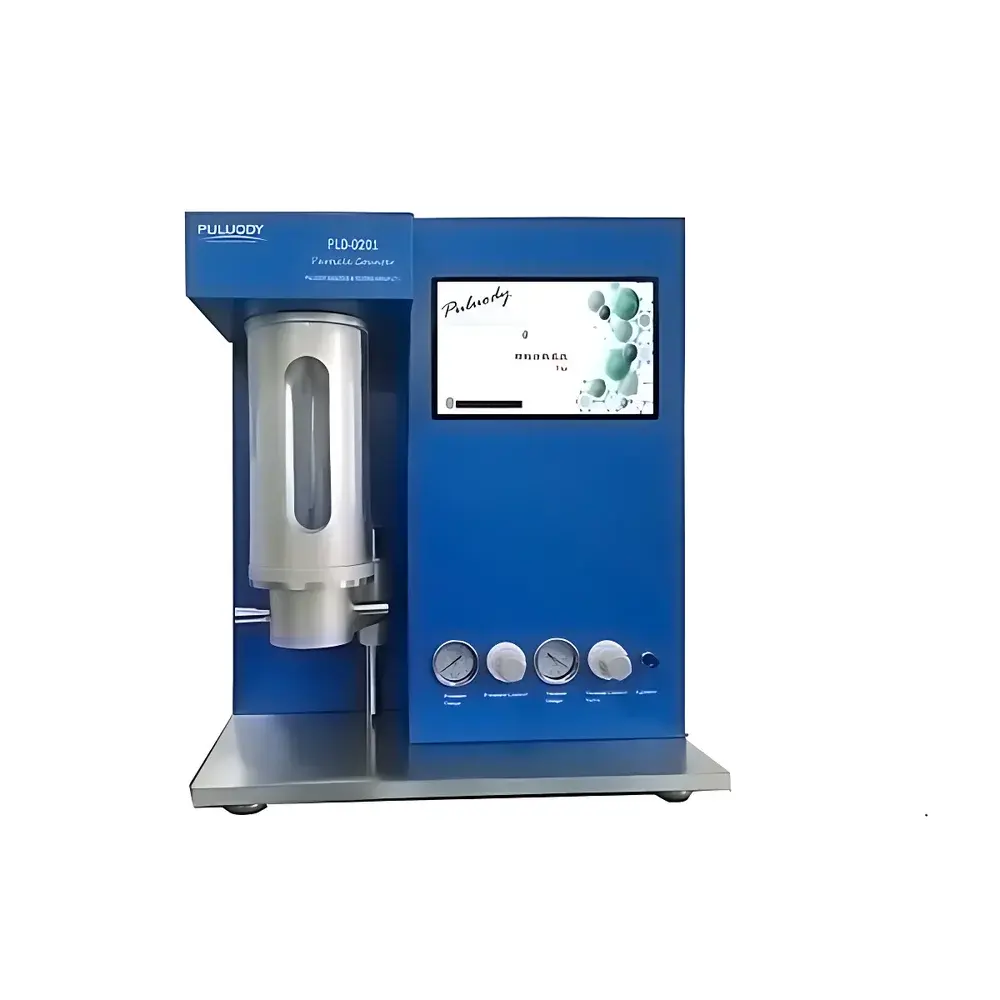
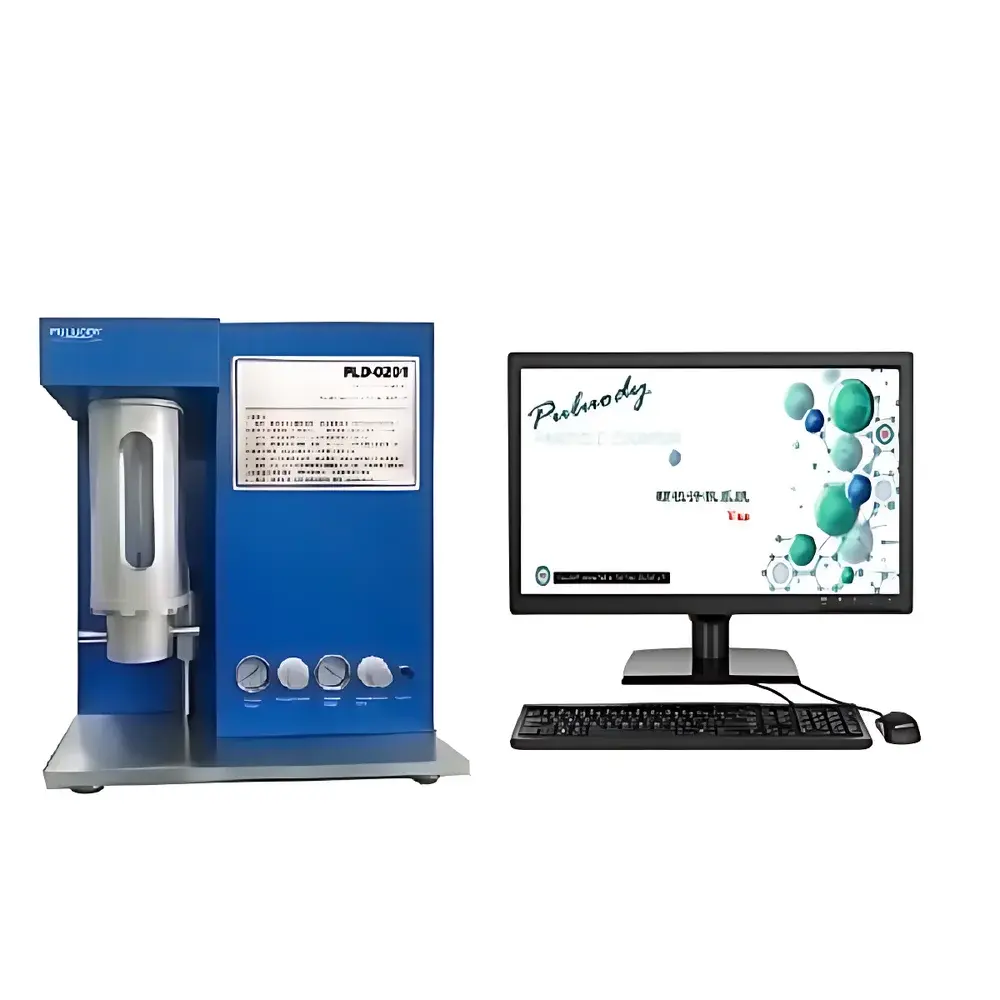
PULUODY PLD-0201-04 Optical Particle Counter for Power Transformer Oil
| Brand | PULUODY |
|---|---|
| Origin | Shaanxi, China |
| Instrument Type | Optical Particle Counter |
| Model | PLD-0201-04 |
| Measurement Principle | Light Obscuration (LO) |
| Standards Compliance | ISO 4406, NAS 1638, ISO 11171, ISO 4402 |
| Sample Flow Control | Dual-precision piston pump + electromagnetic flow regulation |
| Adjustable Sizing Channels | User-definable threshold settings with built-in pulse-height calibration |
| Sample Handling | Integrated pressurized/depressurized sampling chamber with stirring and degassing functions |
| Display & Interface | 7-inch color TFT-LCD touchscreen with dual-input (touch + keypad) |
| Data Output | RS232 serial port, on-device thermal printer, iPad-compatible data acquisition |
| Software Architecture | Decoupled analysis & calibration modules |
| Calibration Support | Traceable to GBW reference materials |
Overview
The PULUODY PLD-0201-04 Optical Particle Counter is an industrial-grade, light obscuration (LO)-based instrument engineered for quantitative particulate contamination assessment in insulating oils and other non-aqueous fluids used in critical power infrastructure. It operates on the principle of single-particle optical sensing: as a fluid sample passes through a precisely defined flow cell, suspended particles interrupt a collimated laser beam, generating voltage pulses proportional to their cross-sectional area. These pulses are classified into user-configurable size channels—enabling direct compliance with international cleanliness standards including ISO 4406:2017, NAS 1638 Class Code, and ASTM D6786. Designed specifically for transformer oil, turbine oil, and hydraulic fluid monitoring, the PLD-0201-04 meets the stringent repeatability and traceability requirements of asset integrity programs in electric utilities, grid operators, and maintenance-certified laboratories.
Key Features
- 8th-generation dual-laser narrow-beam optical detection system with optimized signal-to-noise ratio for sub-micron particle resolution in high-refractive-index oils
- Dual-mode volumetric control architecture: precision ceramic piston pump (1–100 mL/min adjustable) coupled with closed-loop electromagnetic flow regulation ensures ±0.5% volumetric accuracy per sample draw
- Integrated sample conditioning module featuring programmable positive/negative pressure cycles, magnetic stirring (0–600 rpm), and vacuum-assisted degassing—enabling reliable analysis of viscous, aerated, or sediment-prone samples without manual pretreatment
- Modular firmware design separates analytical measurement routines from calibration workflows, satisfying FDA 21 CFR Part 11 and ISO/IEC 17025 requirements for independent validation of metrological functions
- Onboard operating system with embedded thermal printer and 7-inch capacitive touchscreen interface supports fully autonomous operation—no external PC required for routine testing or report generation
- RS232 serial interface and iPad-compatible wireless data acquisition enable seamless integration into enterprise LIMS environments and centralized fleet-monitoring dashboards
Sample Compatibility & Compliance
The PLD-0201-04 is validated for use with mineral-based and synthetic transformer oils (IEC 60296), turbine oils (ASTM D4378), hydraulic fluids (ISO 11158), and water-glycol emulsions. Its optical path design accommodates refractive index ranges from 1.33 (aqueous solutions) to 1.52 (high-aromatic insulating oils), eliminating need for solvent dilution or index-matching agents. The instrument supports full traceability per ISO 11171:2010 using certified GBW 12001–12004 reference suspensions and allows multi-standard reporting within a single test sequence (e.g., simultaneous ISO 4406 and NAS 1638 classification). All internal calibration parameters—including photodetector gain, pulse threshold mapping, and flow-rate compensation curves—are digitally signed and version-controlled to satisfy GLP/GMP documentation requirements.
Software & Data Management
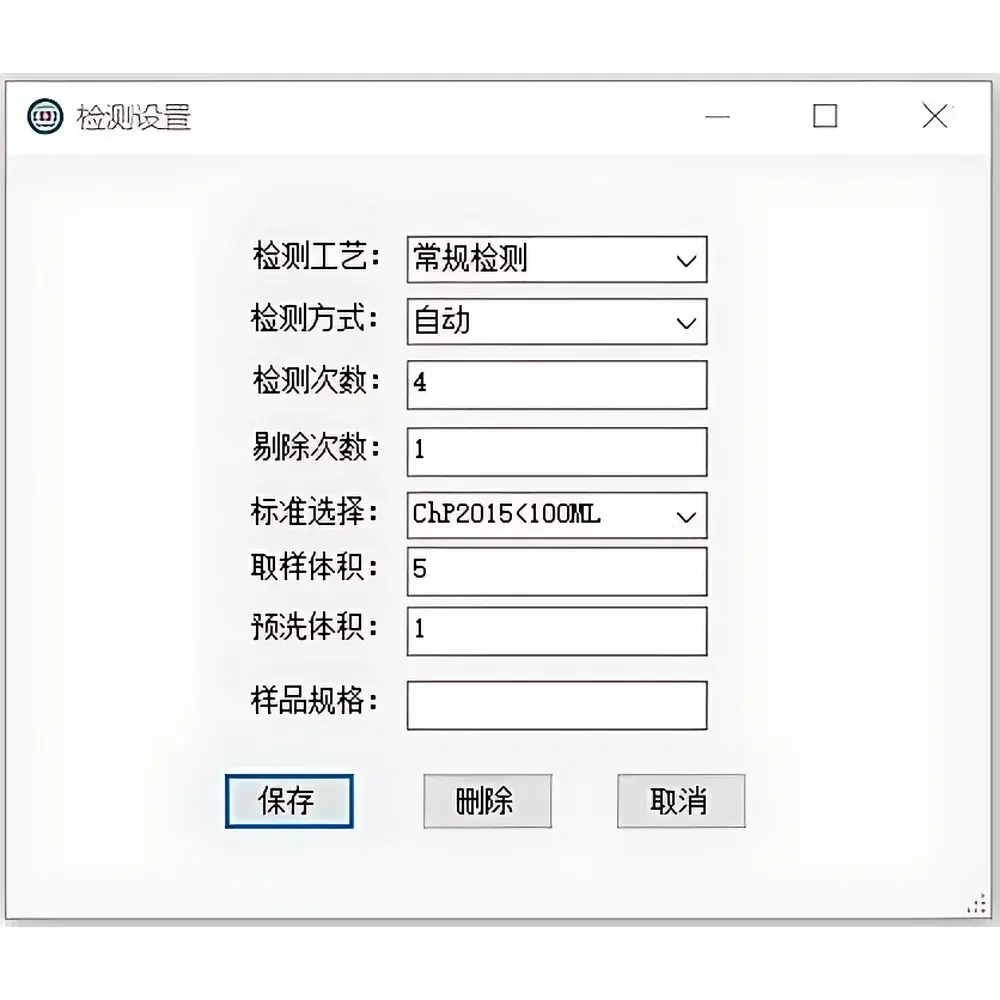
The embedded test platform runs a real-time Linux kernel with deterministic I/O scheduling, ensuring microsecond-level timing consistency across all particle event captures. The analysis software provides configurable pass/fail logic against user-defined cleanliness thresholds, automatic histogram generation (log-normal binning), and cumulative distribution plots. Each test record includes timestamped metadata: operator ID, ambient temperature/humidity, syringe lot number, calibration certificate ID, and raw pulse-height histogram data. Local storage retains up to 3,000 complete test sessions with SHA-256 checksums. PC-side software (Windows/Linux/macOS compatible) enables batch export in CSV, XML, and PDF formats—with embedded digital signatures compliant with EU Annex 11 and USP analytical instrument qualification guidelines.
Applications
This counter serves as a primary diagnostic tool in predictive maintenance programs across energy transmission, aviation, and heavy manufacturing sectors. Typical use cases include: periodic insulating oil screening per IEC 60429 and DL/T 421; wear debris trending in gearbox and servo-valve hydraulic circuits; qualification of reclaimed oil batches prior to re-injection; validation of filtration efficiency in offline purification skids; and particulate baseline establishment during commissioning of new transformers or turbines. It is also deployed in R&D labs evaluating additive stability, oxidation byproduct formation, and colloidal particle generation under accelerated aging protocols.
FAQ
Does the PLD-0201-04 comply with ISO 11171:2010 for sensor calibration?
Yes—the instrument accepts ISO 11171-accredited GBW reference materials and performs automated calibration verification with documented uncertainty budgets.
Can it measure particles in water-based coolants or glycol solutions?
Yes—its dual-laser optical configuration and refractive index compensation algorithm ensure accurate sizing down to 4 µm in aqueous media without dilution.
Is remote firmware update supported over RS232?
Firmware updates require secure USB key authentication; RS232 is reserved for data export and command-and-control operations only.
What is the minimum detectable particle size in transformer oil?
The validated lower detection limit is 4 µm(c) per ISO 4402:1991 and 5 µm(c) per ISO 11171:2010, confirmed via NIST-traceable latex sphere challenge tests.
Does the system generate 21 CFR Part 11–compliant electronic records?
Yes—audit trails record all user actions, parameter changes, and calibration events with immutable timestamps and operator biometric or PIN-based authentication logs.



