
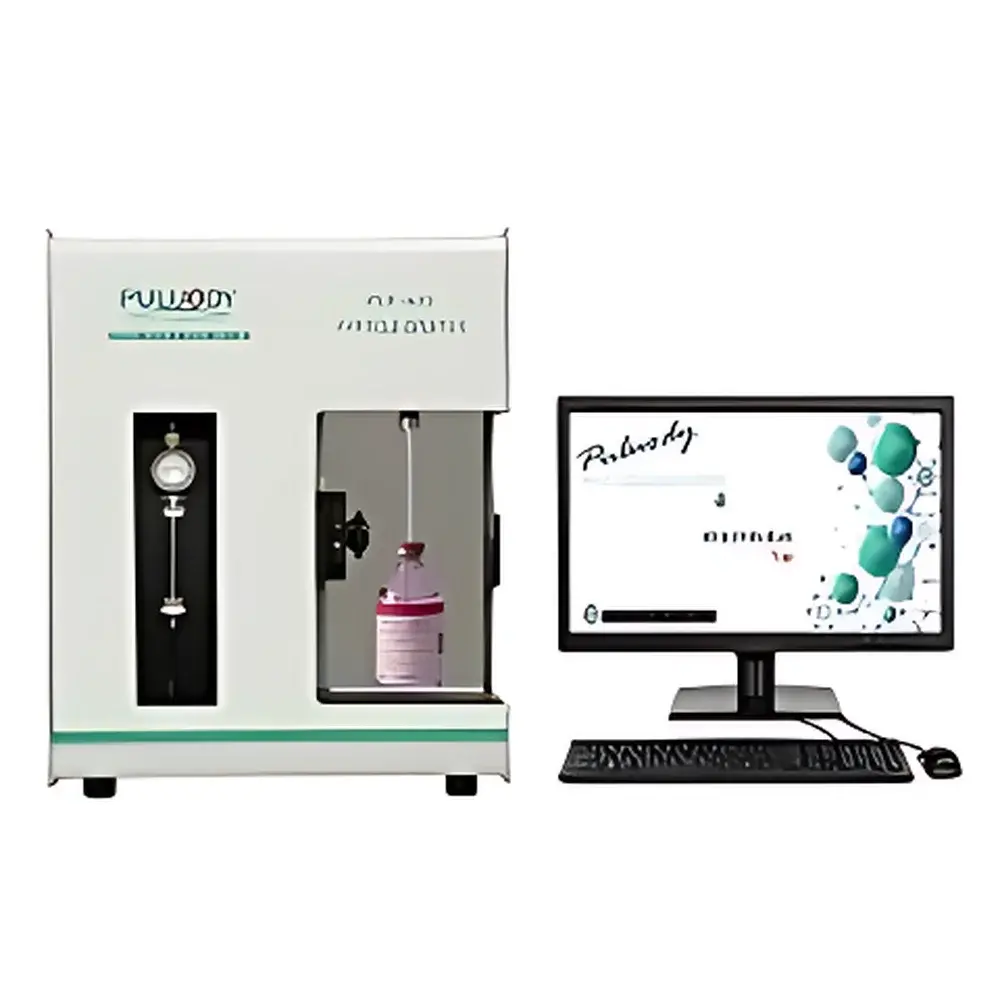
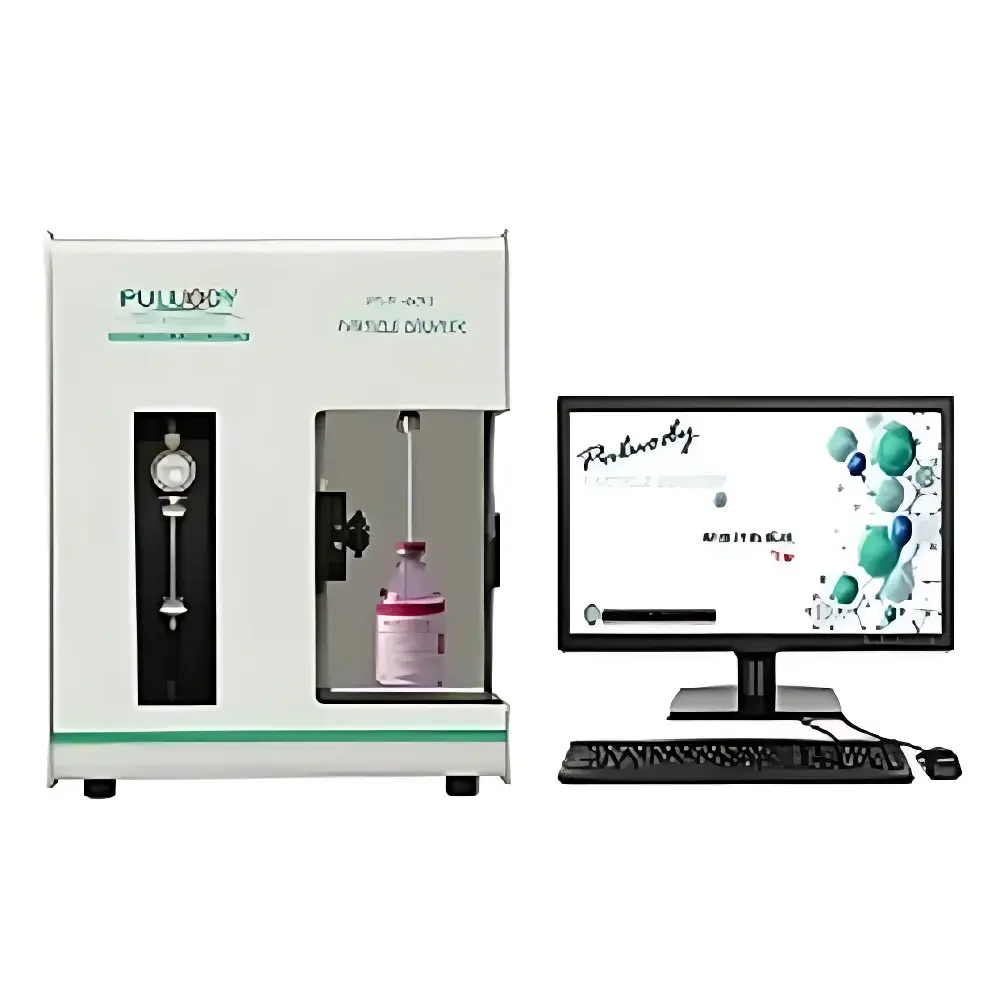
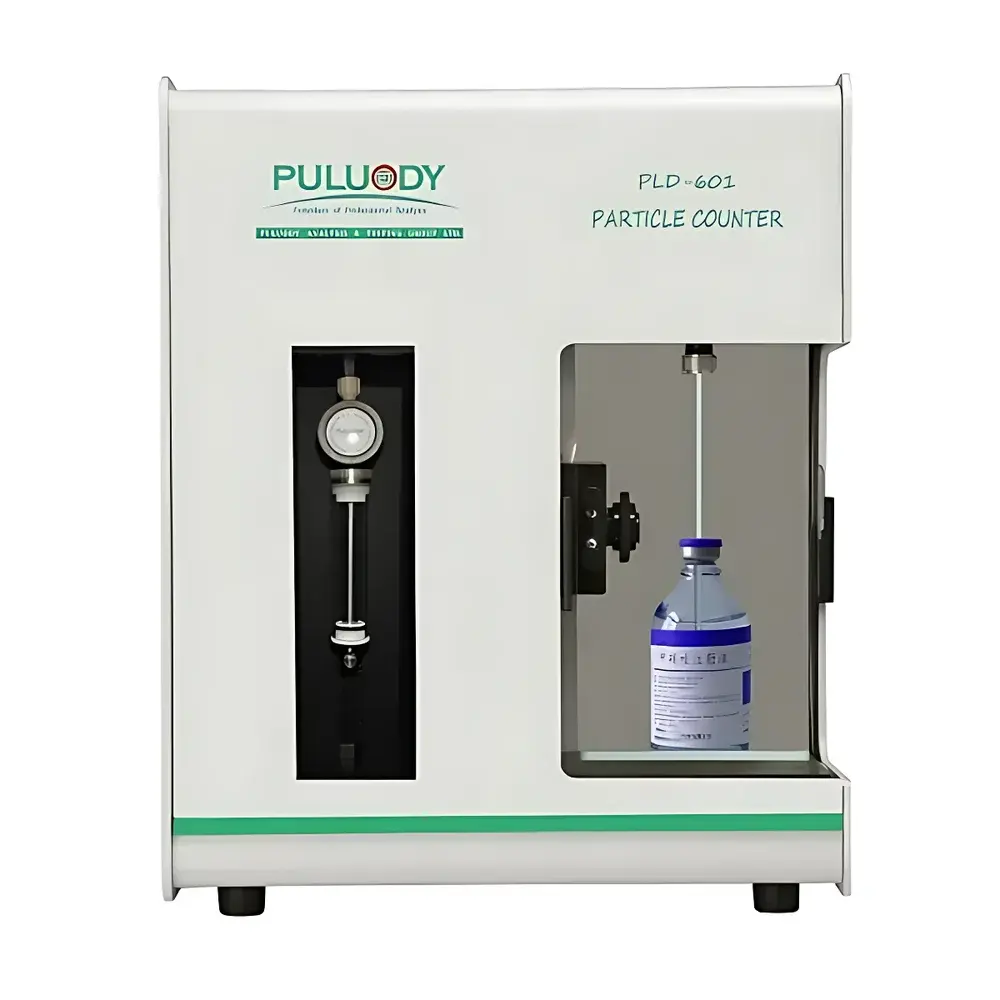
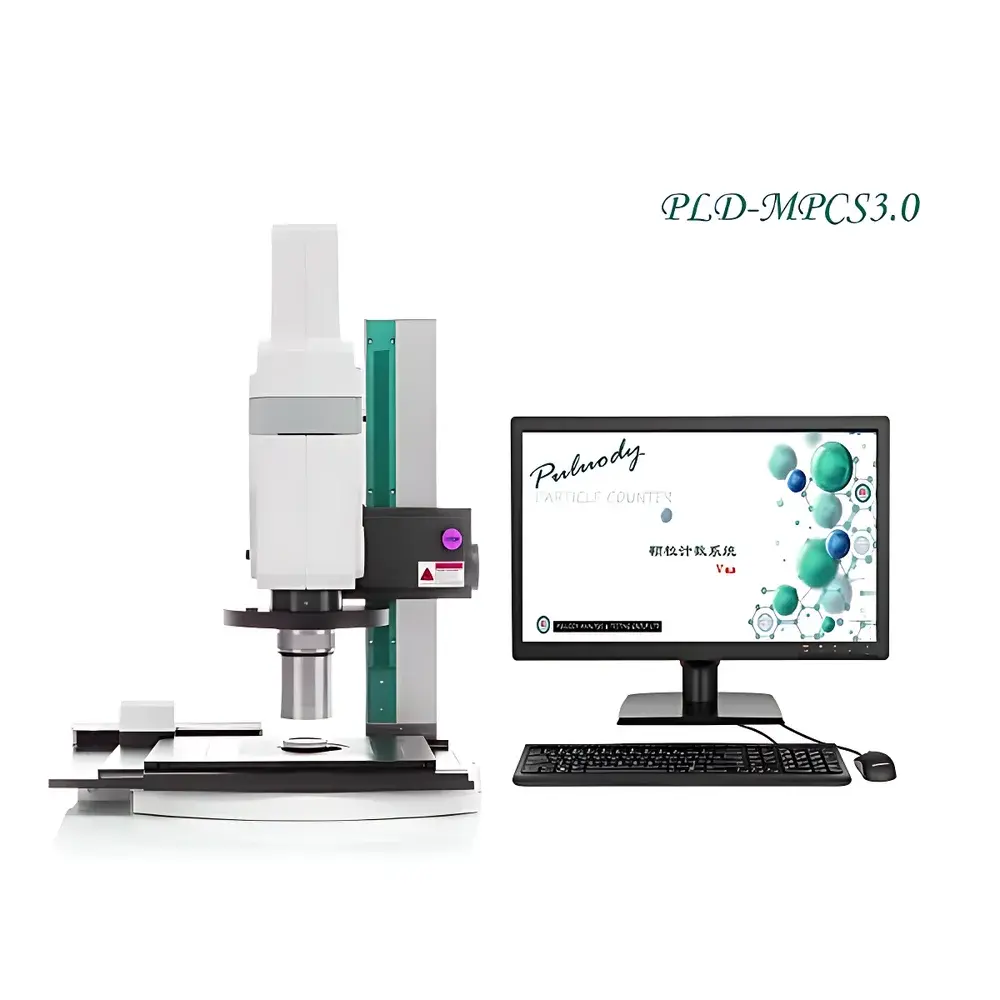
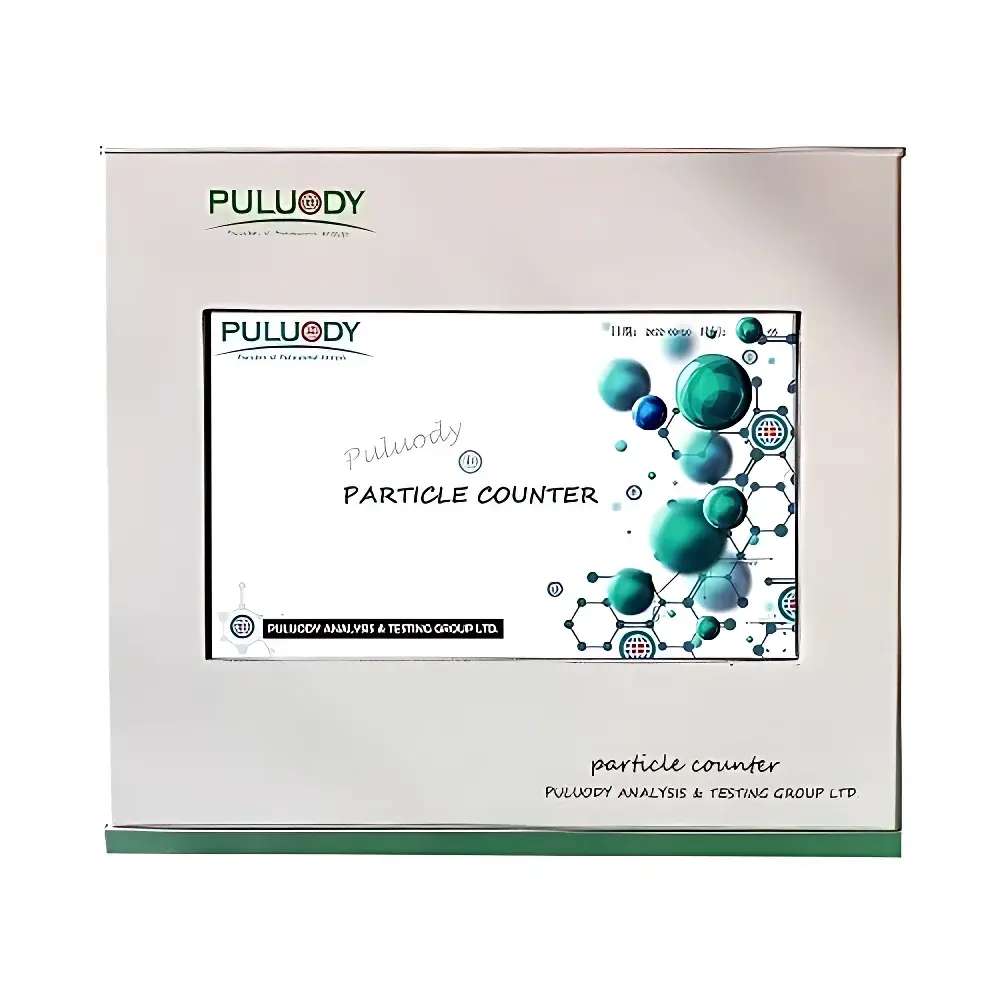
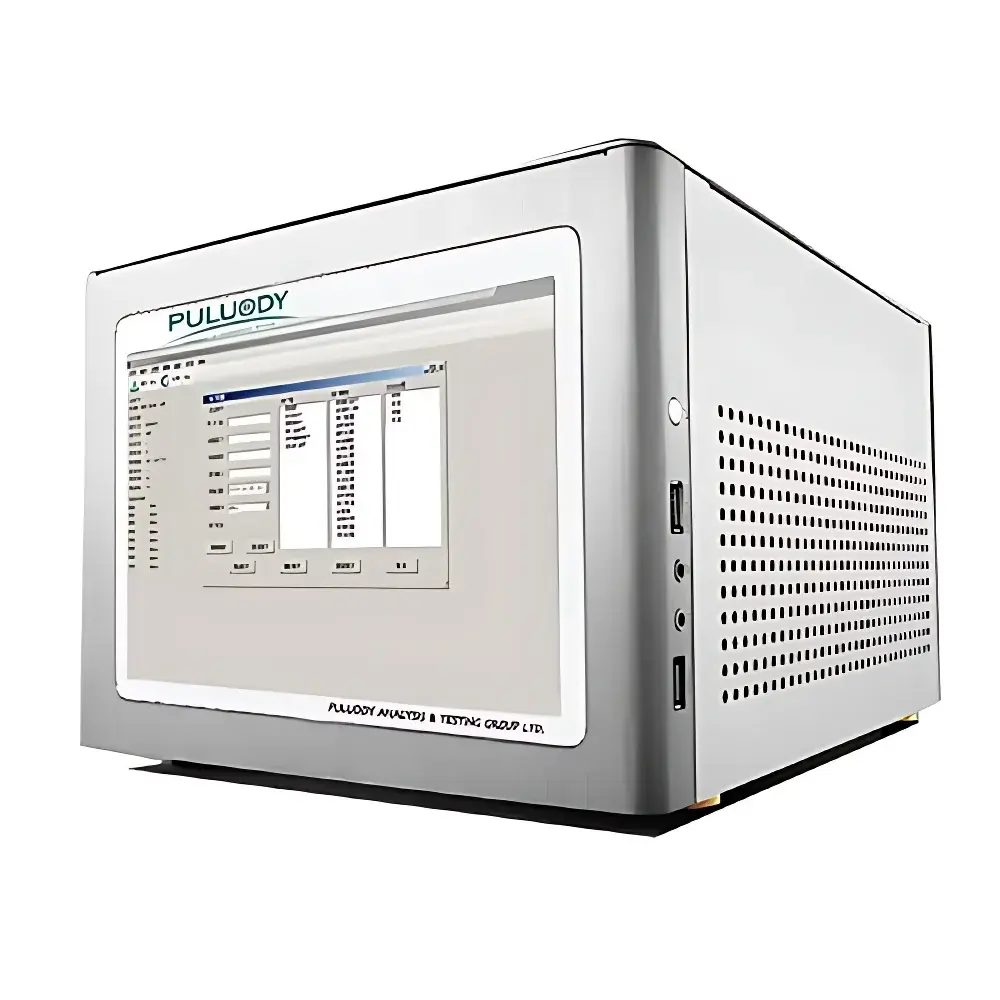
PULUODY PLD-601 Pharmaceutical Insoluble Particle Analyzer for Parenteral Packaging and Human Serum Albumin
| Key | Brand: PULUODY |
|---|---|
| Model | PLD-601 |
| Origin | Shaanxi, China |
| Detection Principle | Light Obscuration (LO) with Dual-Laser Narrow-Beam Sensor |
| Measurement Range | 1–450 µm (optional extension to 0.03–3000 µm) |
| Channel Count | 1000 adjustable size channels |
| Flow Rate (Sampling) | 5–150 mL/min |
| Flow Rate (Cleaning) | 5–500 mL/min |
| Accuracy | ±5% typical (per ChP 2020 & USP <788>) |
| Resolution | >95% (ChP-calibrated), <10% RSD (USP/ISO 21501-calibrated) |
| Sample Temperature Range | 0–80 °C |
| Environmental Operating Range | 0–50 °C |
| Compliance | ChP 2020 <0903>, USP <788>/<789>/<797>, EP 10.0, BP 2019, JP 17, ISO 21501-4, ISO 11171, GB/T 11446.9-2013, YBB00272004-2015, GB 8368 |
| Software | V8.9 PC & Embedded Analysis Suite with 21 CFR Part 11 Compliance (Audit Trail, Electronic Signature, Role-Based 5-Tier Access, Data Backup/Restore, Power-Fail Recovery) |
Overview
The PULUODY PLD-601 Pharmaceutical Insoluble Particle Analyzer is an advanced light obscuration (LO)-based instrument engineered for quantitative detection and sizing of insoluble particulate matter in parenteral drug products, biologics (including human serum albumin formulations), pharmaceutical packaging materials, and medical devices. Designed in strict alignment with global pharmacopoeial standards—including Chinese Pharmacopoeia (ChP) 2020 Edition , United States Pharmacopeia (USP) , , and , European Pharmacopoeia (EP) 10.0, and Japanese Pharmacopoeia (JP) 17—the PLD-601 employs eighth-generation dual-laser narrow-beam sensor technology to deliver high-resolution particle counting across a dynamic range of 1–450 µm (with optional extended ranges). Its core measurement principle relies on the transient attenuation of collimated laser light as particles pass through the sensing zone, generating pulse signals proportional to cross-sectional area. This method satisfies the regulatory definition of “optical particle counting” under ISO 21501-4 and ensures traceable, reproducible data suitable for GMP-compliant quality control laboratories.
Key Features
- Eighth-generation dual-laser narrow-beam optical sensor with optimized signal-to-noise ratio and minimized coincidence error (<5% at 1000 particles/mL)
- Dual-precision fluidic control system: high-accuracy metering piston pump combined with ultra-stable electromagnetic flow regulation for consistent sample delivery (±1% volumetric precision)
- 1000 fully customizable particle size channels—enabling granular histogram analysis and seamless mapping to multi-standard thresholds (e.g., ChP 2020, USP , EP 10.0, YBB00272004-2015)
- V8.9 integrated analytical software suite compliant with FDA 21 CFR Part 11: featuring role-based five-tier user access, full electronic audit trail, time-stamped electronic signatures, automatic data backup/restore, and power-fail recovery
- Wide operational flexibility: sampling flow rate adjustable from 5–150 mL/min; cleaning flow up to 500 mL/min; sample temperature support from 0–80 °C
- Touchscreen-enabled embedded interface with optional wireless keyboard/mouse operation; bilingual (English/Chinese) UI designed for international lab workflows
Sample Compatibility & Compliance
The PLD-601 supports direct analysis of a broad spectrum of pharmaceutical and biopharmaceutical liquids without filtration or dilution—provided viscosity and opacity remain within LO method limits. Validated applications include: sterile injectables (solution, lyophilized powder, concentrated solution), intravenous raw materials, ophthalmic solutions, vaccines, water-for-injection (WFI), pharmaceutical packaging extracts (e.g., rubber stoppers, plastic containers per YBB00272004-2015), infusion sets (per GB 8368), and terminal filter challenge testing. It further accommodates non-pharma matrices such as ultrapure water (GB/T 11446.9-2013), CMP slurries, semiconductor process chemicals, and cosmetic emulsions. All measurements adhere to ISO/IEC 17025-aligned verification protocols, with optional calibration traceability to NIM (National Institute of Metrology, China) or DFKW 116 (State-Level Particle Calibration Station, Northwest China), and compliance with GLP/GMP documentation requirements.
Software & Data Management
The V8.9 software platform provides end-to-end data integrity governance. Raw pulse data, size distribution histograms, pass/fail reports, and audit logs are stored in encrypted, tamper-evident formats. The system enforces ALCOA+ principles: Attributable, Legible, Contemporaneous, Original, Accurate, Complete, Consistent, Enduring, and Available. Each user action—including parameter changes, report generation, and data export—is timestamped and linked to a unique digital identity. Electronic signatures meet ICH GCP and Annex 11 expectations. Export options include CSV, PDF, XML, and LIMS-compatible formats. Validation documentation (IQ/OQ/PQ templates), URS alignment records, and change control logs are provided to support regulatory inspections.
Applications
- QC release testing of injectables per ChP , USP , and EP 2.9.19
- Extractables and leachables assessment of primary packaging components (vials, syringes, IV bags)
- Filter validation and retention efficiency studies for 0.22 µm and 0.45 µm sterilizing-grade membranes
- Particulate monitoring during bioprocess development—especially for monoclonal antibodies and plasma-derived therapeutics like human serum albumin
- Cleanliness verification of manufacturing equipment, filling lines, and isolators (per ISO 14644-1 Class 5/7 environments)
- Contamination root-cause analysis in deviations involving visible particles or subvisible aggregates
FAQ
Does the PLD-601 comply with FDA 21 CFR Part 11 requirements for electronic records and signatures?
Yes. The V8.9 software implements full Part 11 functionality including audit trail with immutable records, role-based access control, electronic signatures with biometric or token-based authentication, and secure data archiving.
Can the instrument be calibrated to ISO 21501-4 and USP reference standards?
Yes. Calibration is performed using NIST-traceable polystyrene latex (PSL) spheres per ISO 21501-4 and JJG 1061 national metrological verification procedures. Certificate of Calibration includes uncertainty budget and traceability statement.
Is method transfer support available for labs migrating from legacy particle counters?
Yes. PULUODY provides protocol development, comparative testing reports, and co-validation assistance aligned with ICH Q5A(R2) and ASTM E2454 guidance.
What maintenance intervals and service coverage are included?
The standard package includes one year of “Sunshine Customer Service,” 24/7 remote diagnostics, and 100 business days of complimentary data interpretation consulting. Optional extended service agreements cover preventive maintenance, sensor recalibration, and on-site technical support.
Can the PLD-601 analyze highly viscous or opaque samples?
The instrument is optimized for low-viscosity aqueous solutions. For viscous or turbid matrices (e.g., oil-based injectables), dilution or alternative methods (e.g., membrane microscopy per USP Microscopic Particle Count Test) may be required—method suitability must be demonstrated per ICH Q2(R2).





