
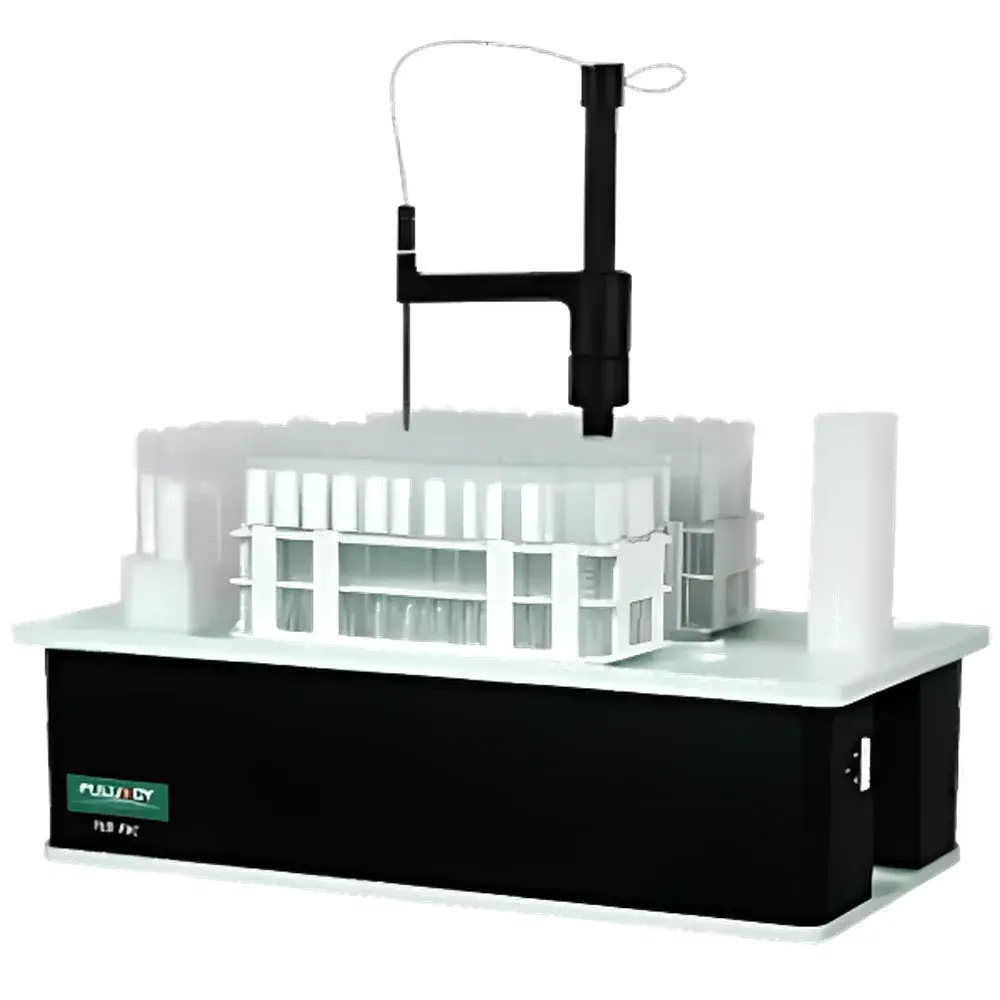
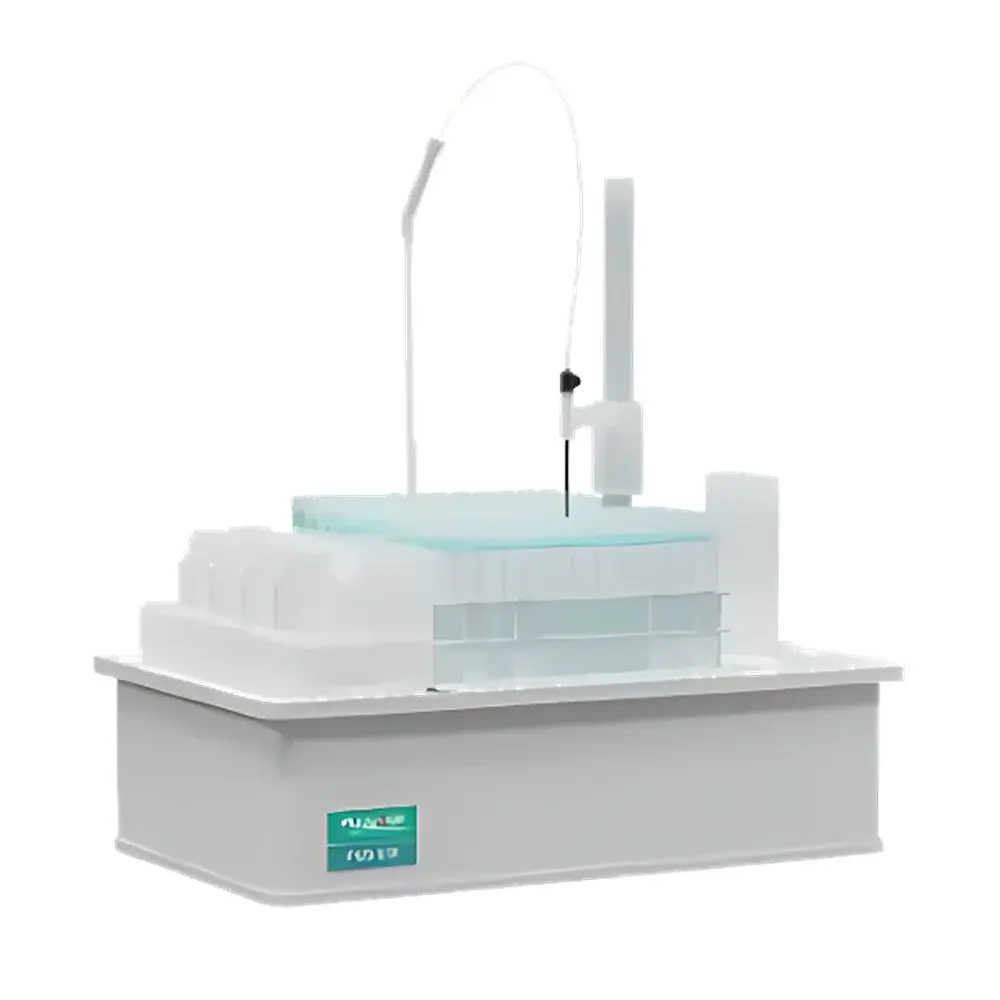
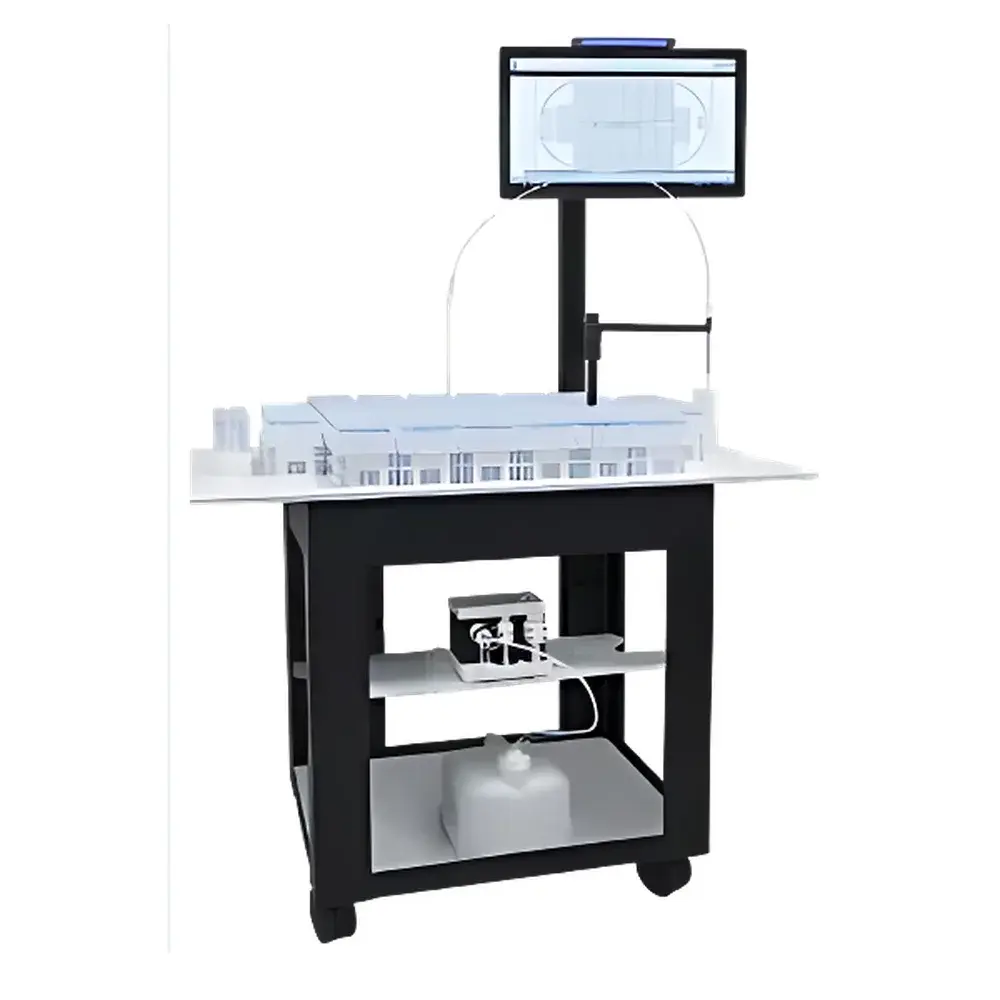
PULUODY PST-890SIS Automated Sampling Insoluble Particle Detection System
| Brand | PULUODY |
|---|---|
| Origin | Shaanxi, China |
| Model | PST-890SIS |
| Detection Principle | Light Obscuration (LO) with Dual-Laser Narrow-Beam Sensor |
| Particle Size Range | 1–450 µm (optional 0.03–3000 µm) |
| Channel Count | 1000 adjustable channels (down to 4-channel custom binning) |
| Sample Flow Rate | 5–150 mL/min |
| Rinse Flow Rate | 5–500 mL/min |
| Accuracy | ±3% typical (per ChP 2020 & USP <788>) |
| Coincidence Limit | ≤2.5% at 1000 particles/mL |
| Resolution | >95% (ChP-calibrated), <10% (USP/ISO 21501-calibrated) |
| Temperature Range (Fluid) | 0–80 °C |
| Compliance | FDA 21 CFR Part 11, GLP/GMP-ready, Audit Trail, Electronic Signature, 5-Tier User Permission Architecture |
| Software | V8.9 Particle Analysis Suite (PC + embedded touchscreen) |
| Calibration Standards | ISO 21501-4, JJG 1061, NIST-traceable latex spheres |
| Regulatory Alignment | ChP 0903 (2015/2020), USP <788>/<789>/<797>, EP 10.0, BP 2019, JP 17, ISO 21510, ISO 11171, NAS 1638, ISO 4406 |
Overview
The PULUODY PST-890SIS Automated Sampling Insoluble Particle Detection System is a regulatory-grade light obscuration (LO) instrument engineered for quantitative analysis of insoluble particulate matter in parenteral and ophthalmic pharmaceuticals, biologics, medical device extracts, and ultra-pure process liquids. It operates on the principle of single-particle optical sensing: as each particle traverses a precisely collimated dual-laser narrow-beam detection zone, it generates a transient pulse proportional to its cross-sectional area. The system digitizes and classifies these pulses across 1000 programmable size channels—from 0.01 µm upward—enabling high-fidelity particle distribution profiling per pharmacopoeial requirements. Designed for compliance-critical environments, the PST-890SIS meets the physical and data integrity demands of global regulatory submissions, including FDA, EMA, PMDA, and WHO prequalification pathways.
Key Features
- Dual-laser narrow-beam sensor (8th-generation PULUODY optical architecture) delivering improved signal-to-noise ratio and reduced coincidence error at high particle concentrations.
- Two-stage precision fluid control: a volumetric metering plunger pump for absolute sample volume delivery, coupled with an ultra-stable electromagnetic flow regulator for real-time velocity compensation.
- Full 1000-channel resolution with user-definable binning (4–128 bins), supporting simultaneous compliance with ChP 0903, USP , EP 2.9.19, and ISO 21510 without hardware reconfiguration.
- V8.9 Particle Analysis Software with embedded audit trail, electronic signatures, role-based 5-tier permissions (Administrator, Supervisor, Analyst, Reviewer, Auditor), and automatic backup/recovery protocols.
- FDA 21 CFR Part 11-compliant data management: immutable timestamps, operator attribution, change history logging, and exportable electronic audit reports in PDF/A-2 format.
- Integrated thermal management system maintaining fluid temperature stability from 0 °C to 80 °C—critical for viscosity-sensitive formulations such as lipid emulsions and polymer solutions.
Sample Compatibility & Compliance
The PST-890SIS accommodates a broad spectrum of liquid matrices under GMP/GLP conditions: sterile aqueous solutions (e.g., saline, dextrose), lipid-based injectables (e.g., propofol emulsions), lyophilized reconstitutes, ophthalmic suspensions, vaccine suspensions, purified water (PW), water for injection (WFI), and ultrapure water (UPW). It supports direct testing of medical device leachates—including infusion sets, IV bags, stopcocks, and terminal filters—per GB 8368 and ISO 8536-4. All measurement protocols are traceable to ISO/IEC 17025-accredited calibration using NIST-traceable polystyrene latex standards (PSL) or certified reference materials compliant with ISO 21501-4. The system satisfies data integrity requirements for regulatory inspections per MHRA GPG, PIC/S PI 011, and WHO TRS 992 Annex 11.
Software & Data Management
The V8.9 software suite provides both embedded touchscreen operation and full PC-based analysis. It includes pre-loaded pharmacopoeial templates (ChP, USP, EP, JP), customizable pass/fail criteria, dynamic threshold adjustment, and automated report generation compliant with ALCOA+ principles. Raw pulse data, channel histograms, cumulative distributions, and statistical summaries (mean, SD, CV%) are stored in encrypted SQLite databases with SHA-256 hashing. Data exports support CSV, XML, and PDF/A-2 formats with embedded digital signatures. System validation documentation—including IQ/OQ/PQ protocols, risk assessments (ICH Q9), and computerized system validation (CSV) packages—is available upon request.
Applications
- Pharmaceutical QC: Routine batch release testing of injectables, lyophilized powders, and ophthalmic preparations per ChP 0903 and USP .
- Filter validation: Quantitative assessment of terminal filter retention efficiency (e.g., 0.22 µm PVDF membranes) and challenge studies with standardized particle suspensions.
- Extractables & leachables: Particulate shedding evaluation from elastomeric closures, plastic containers, and tubing systems used in aseptic processing.
- Water system monitoring: Continuous or periodic verification of PW/WFI/UPW purity against ISO 8573-7, ASTM D5127, and semiconductor-grade specifications (SEMI F63).
- Biomanufacturing support: Monitoring of cell culture media, buffer solutions, and final fill streams for sub-visible particle excursions indicative of process drift or equipment wear.
- Cleanroom & component qualification: Verification of cleanliness levels for isolators, filling lines, and stainless-steel surfaces via rinse extract analysis.
FAQ
Does the PST-890SIS comply with FDA 21 CFR Part 11 for electronic records and signatures?
Yes. The system implements full Part 11 controls including audit trail activation, electronic signature workflows with biometric or token-based authentication, and secure, time-stamped record retention.
Can the instrument be validated for use in regulated GMP environments?
Yes. Comprehensive IQ/OQ/PQ documentation, URS alignment, and CSV support packages are provided. Calibration is traceable to national metrology institutes (NIM Northwest Center, DL-116 Defense Metrology Station).
What particle size standards are supported for calibration and verification?
Calibration follows ISO 21501-4 using NIST-traceable PSL spheres; verification may also employ JJG 1061-certified reference materials or pharmacopoeial latex suspensions per USP .
Is method transfer possible between different PST-890SIS units?
Yes. Inter-instrument comparability is ensured through standardized optical alignment procedures, identical fluidic calibration routines, and synchronized firmware/software versions across the fleet.
How does the system handle viscous or non-Newtonian samples such as lipid emulsions?
The dual-stage flow control system dynamically compensates for viscosity-induced pressure fluctuations. Optional heated sample path modules maintain consistent fluid rheology during analysis.






