
PULUODY PSD-250 Negative-Pressure Oil Sampling Kit for Particle Contamination Analysis
| Brand | PULUODY |
|---|---|
| Origin | Shaanxi, China |
| Manufacturer | Producer |
| Country of Origin | Domestic (China) |
| Model | PSD-250 |
| Instrument Type | Optical Particle Counter Accessory |
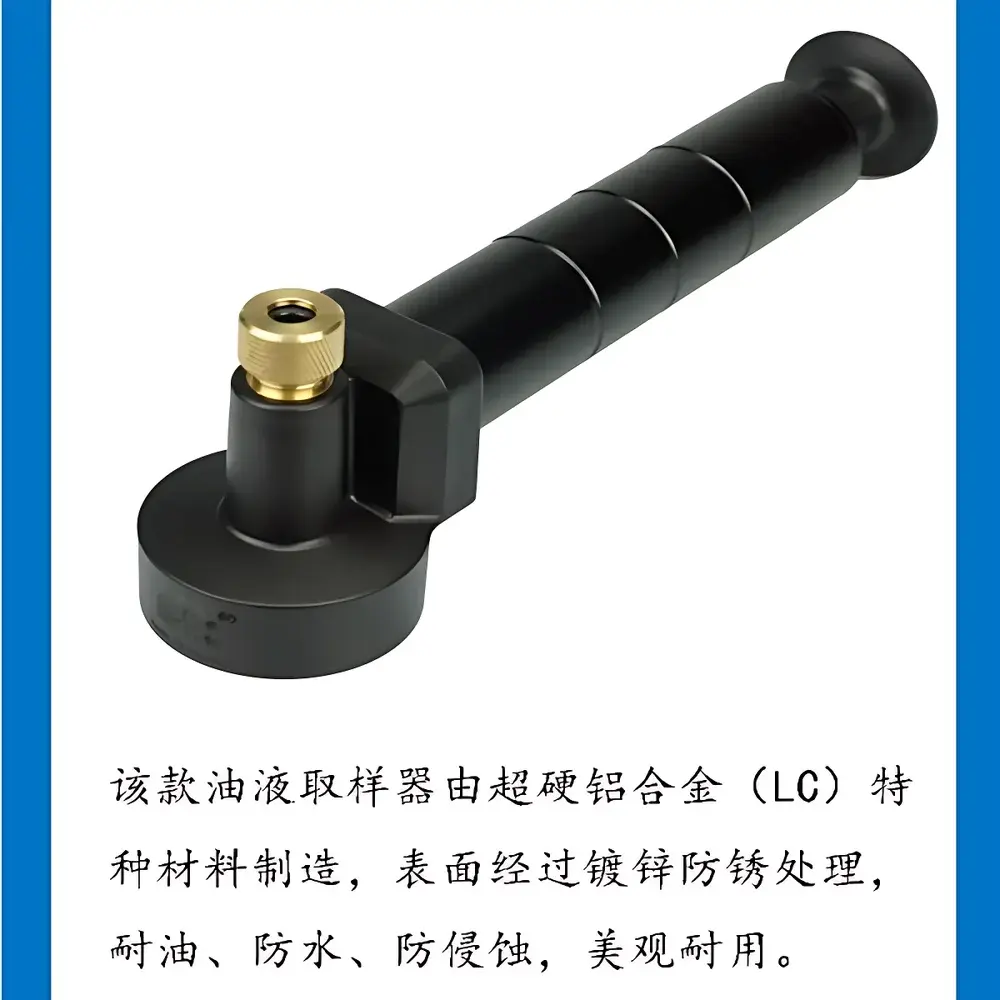
| Material | LC Super-Hard Aluminum Alloy |
| Surface Treatment | Zinc Plating for Corrosion Resistance |
| Capacity | 250 mL |
| Operating Vacuum Pressure | 2 kPa |
| Compliance | GB/T 17489–1998, Q/CT 29105.3–1992, DL/T 571–2007 |
| Sampling Vessel Cleanliness Grade | NAS 1638 Class 0 |
| Cleanliness Performance | ≤15 particles ≥4 µm per 100 mL (RCL ≤15/100mL) |
| Tubing Specification | NAS 1638 Class 0 fluoropolymer tubing |
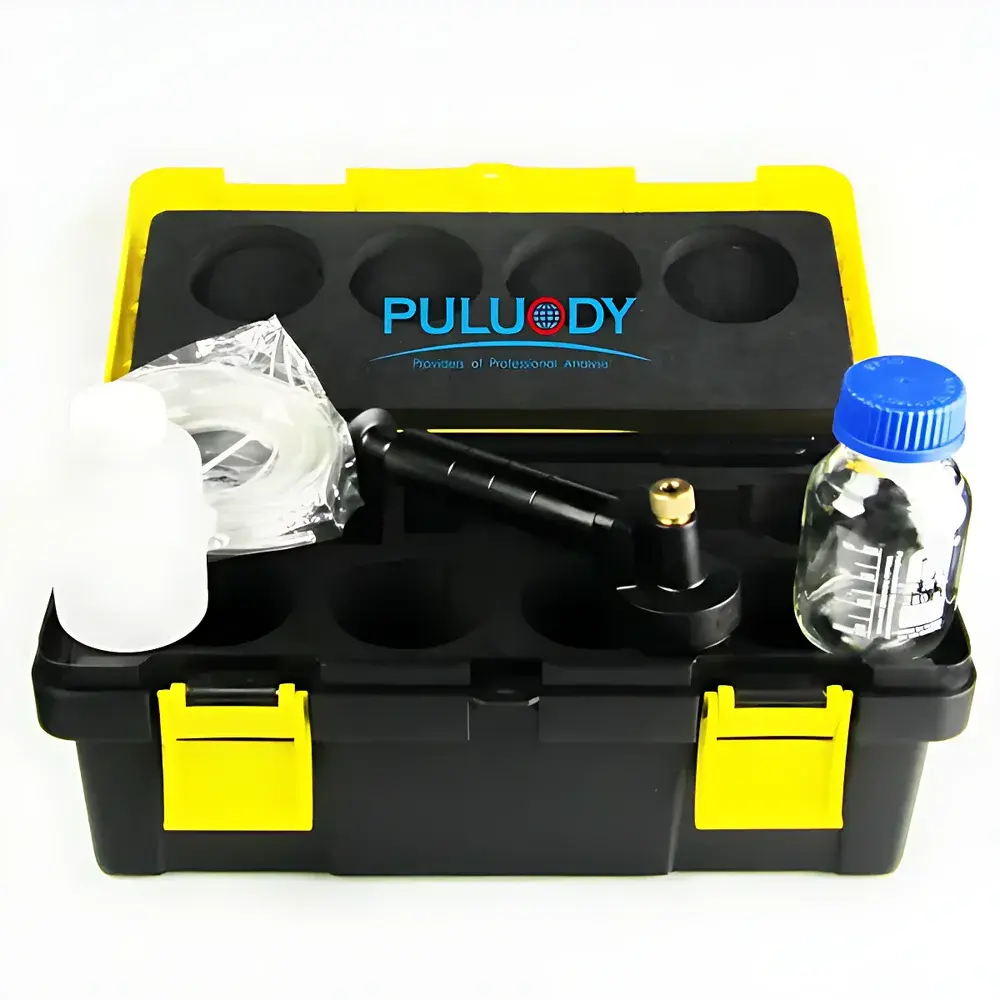
| Included Components | 1 × negative-pressure sampling gun, 1 × 250 mL NAS Class 0 clean bottle, 1 × NAS Class 0 tubing (length adjustable) |
Overview
The PULUODY PSD-250 Negative-Pressure Oil Sampling Kit is an engineered solution designed to meet the stringent requirements of particle contamination control in lubricant and hydraulic fluid analysis. It functions on the principle of controlled vacuum aspiration—generating a consistent 2 kPa negative pressure via manual reciprocating action—to extract representative oil samples without introducing extraneous particulate, moisture, or residual carryover. This method eliminates reliance on pressurized system taps or invasive extraction techniques, thereby preserving sample integrity across critical applications including turbine oils, transformer insulating fluids, servo-grade hydraulic media, and gear oils. As a dedicated accessory for optical particle counters (e.g., PULUODY’s 7th-generation dual-laser narrow-beam analyzers), the PSD-250 ensures that downstream particle counting results reflect true in-service fluid condition—not artifacts introduced during sampling. Its design directly addresses ASTM D6786 and ISO 4021 sampling best practices, emphasizing containment, inert material compatibility, and procedural repeatability.
Key Features
- LC super-hard aluminum alloy construction with zinc plating for long-term resistance to hydrocarbon exposure, oxidation, and mechanical wear
- NAS 1638 Class 0 certified sampling bottle (250 mL volume) and fluoropolymer tubing—both pre-cleaned, double-bagged, and verified per ISO 11171 Annex C protocols
- Integrated vacuum generation mechanism requiring no external power source or compressed gas; calibrated for reproducible 2 kPa suction pressure
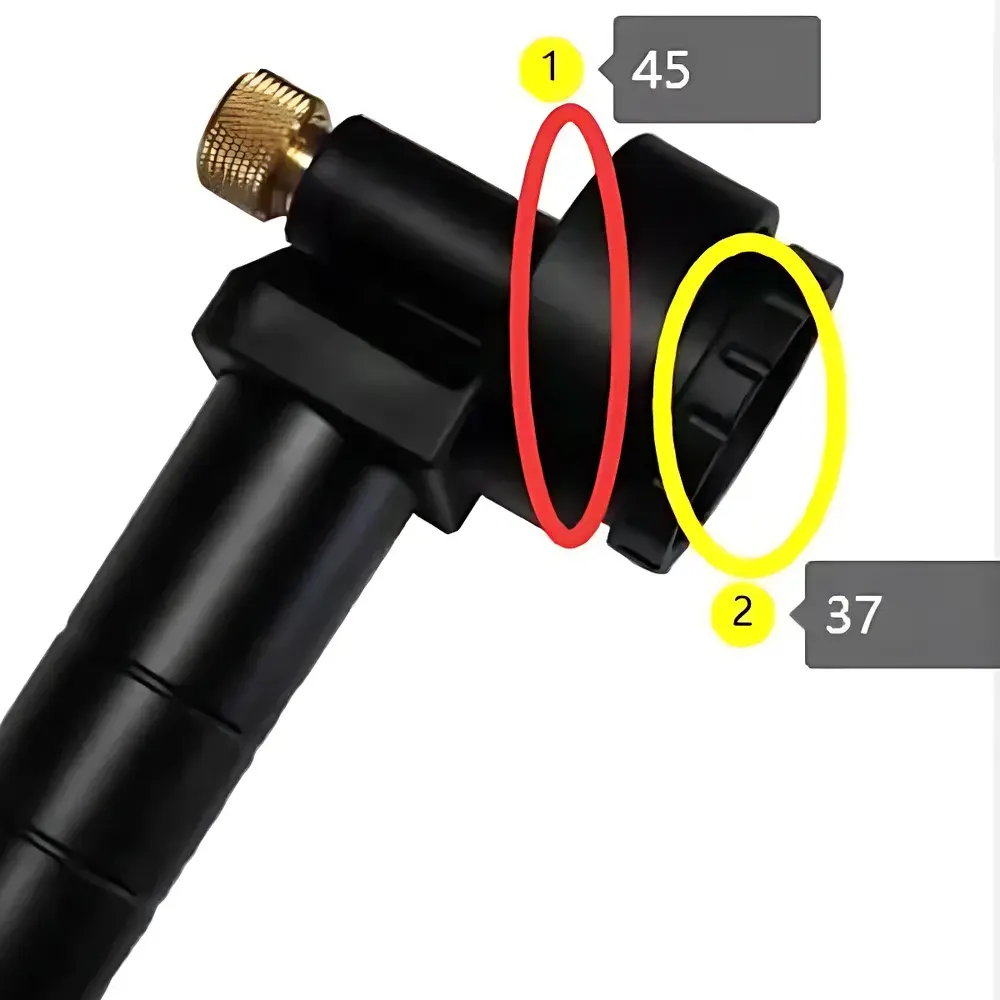
- Ergonomic lever-action sampling gun with precision-machined sealing interface to prevent cross-contamination between sequential samples
- Modular assembly: tubing passes through a lockable retaining nut to ensure secure, leak-free connection while enabling rapid replacement of single-use components
- Optimized immersion depth geometry (50 mm nominal tubing extension) to avoid sediment resuspension during draw
Sample Compatibility & Compliance
The PSD-250 is validated for use with mineral-based, synthetic, and bio-based lubricants—including phosphate ester anti-wear fluids (e.g., for steam turbine control systems), polyalphaolefin (PAO) gear oils, and silicone dielectric coolants. All wetted surfaces comply with USP Class VI biocompatibility criteria and exhibit no measurable leachables under ASTM D4552 extraction testing. The kit meets mandatory sampling provisions in GB/T 17489–1998 (Hydraulic Fluid Particle Contamination Analysis), Q/CT 29105.3–1992 (Automotive Hydraulic Systems), and DL/T 571–2007 (Power Plant EH Oil Management). Its RCL (Residual Contamination Level) of ≤15 particles ≥4 µm per 100 mL satisfies ISO 4406:2022 cleanliness verification requirements for Class 12/9/6 reporting. Each batch of bottles and tubing undergoes independent third-party certification against NAS 1638 Class 0 specifications, with full traceability documentation provided.
Software & Data Management
While the PSD-250 itself is a hardware-only sampling tool, it integrates seamlessly into digital oil analysis workflows. When used with PULUODY’s compliant optical particle counters (e.g., DV-7000 series), sample metadata—including lot number, sampling date, equipment ID, and operator signature—is automatically logged into the instrument’s audit-trail-enabled software platform. This platform supports 21 CFR Part 11-compliant electronic records, configurable user roles, and GLP/GMP-aligned report generation. Raw particle count data from subsequent analysis can be linked back to the specific PSD-250 sampling event, enabling full chain-of-custody tracking from point-of-extraction to final ISO 4406 classification.
Applications
- Condition monitoring of hydraulic systems in aerospace actuators, wind turbine pitch controls, and industrial injection molding presses
- Routine sampling of transformer oil per IEC 60599 and IEEE C57.104 for dissolved gas and particle load assessment
- Acceptance testing of new lubricants prior to commissioning of steam turbines, gas compressors, and marine propulsion gearboxes
- Root cause analysis of premature bearing wear, servo valve stiction, or filter clogging incidents
- Validation of cleaning procedures following system overhauls or component replacements
- Field-based predictive maintenance programs where portability, battery independence, and procedural standardization are essential
FAQ
Is the PSD-250 compatible with non-PULUODY particle counters?
Yes—the kit delivers standardized, contamination-controlled samples suitable for any optical particle counter meeting ISO 11171 calibration requirements.
Can the NAS Class 0 bottle be reused after cleaning?
No. Per ISO 4406 Annex B, Class 0 vessels are single-use to guarantee baseline cleanliness; reuse invalidates certified RCL performance.
What is the maximum viscosity range supported?
The PSD-250 is validated for fluids up to ISO VG 220 (≈220 cSt at 40°C); higher viscosities require pre-heating to ≤50°C to maintain laminar flow during aspiration.
Does the kit include calibration documentation?
Each shipment includes a Certificate of Conformance listing batch-specific RCL test results, NAS 1638 Class 0 verification reports, and material traceability for all components.
How often should the tubing be replaced?
Tubing must be discarded after each sampling event to prevent cross-contamination; the kit supports modular replacement with certified NAS Class 0 spares.



