
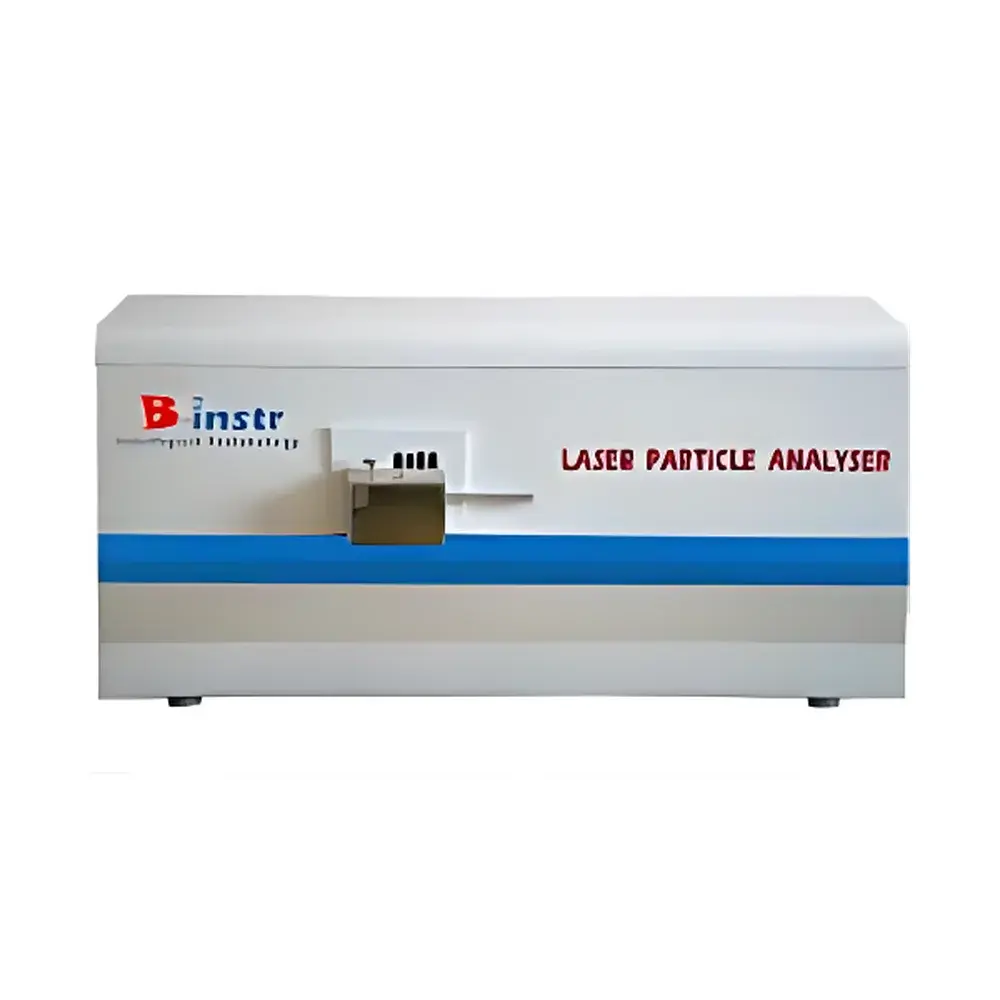
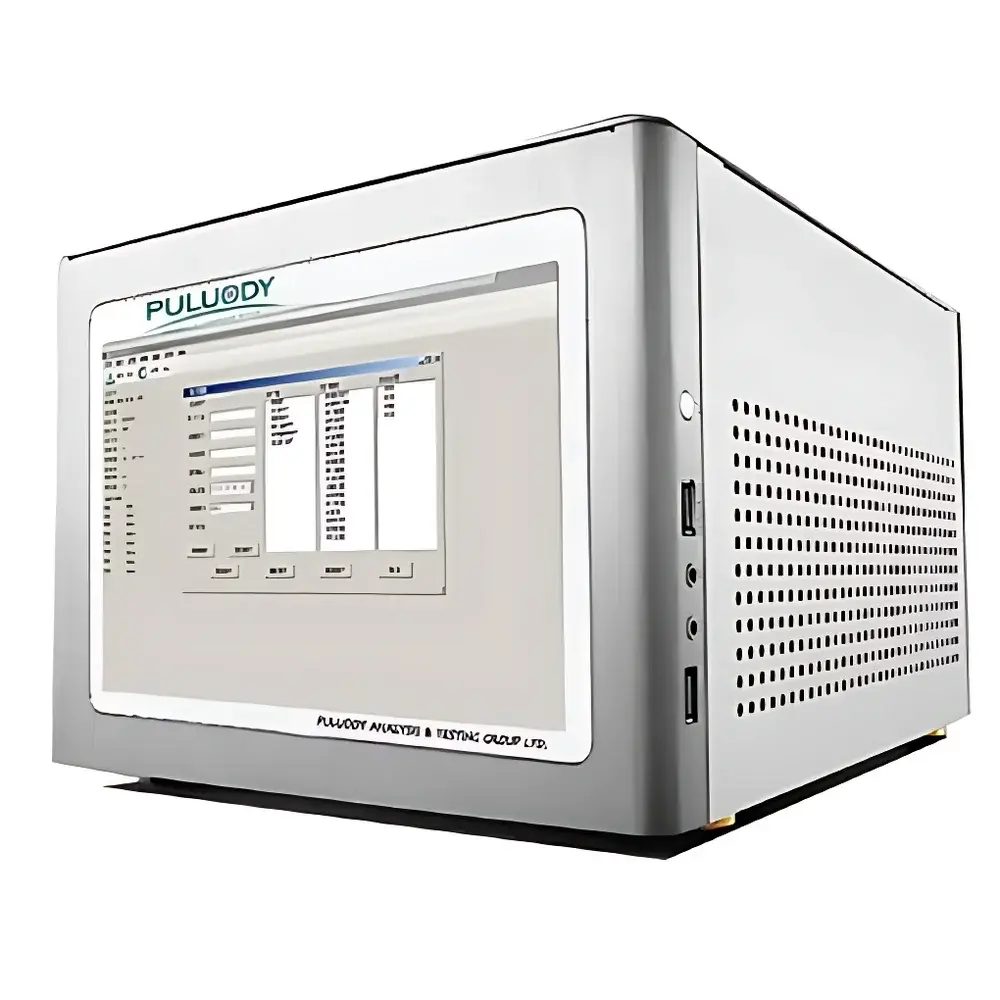
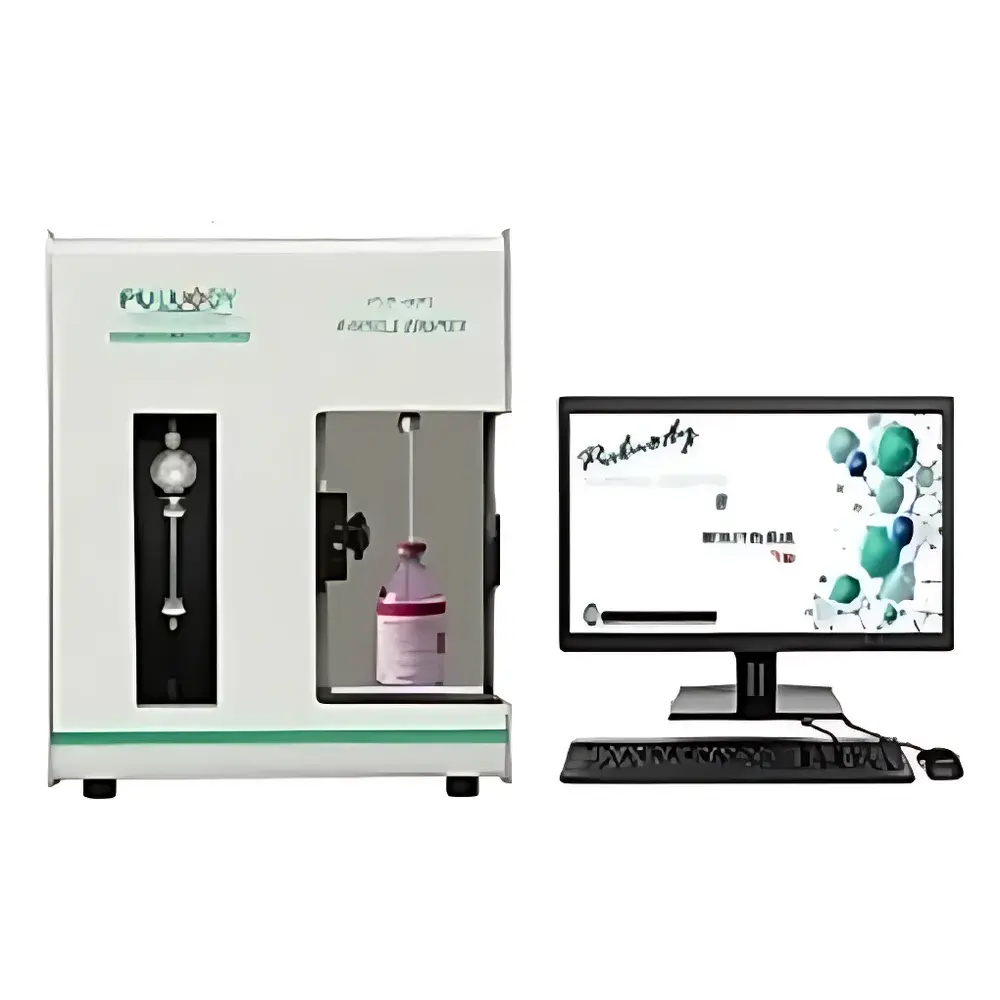
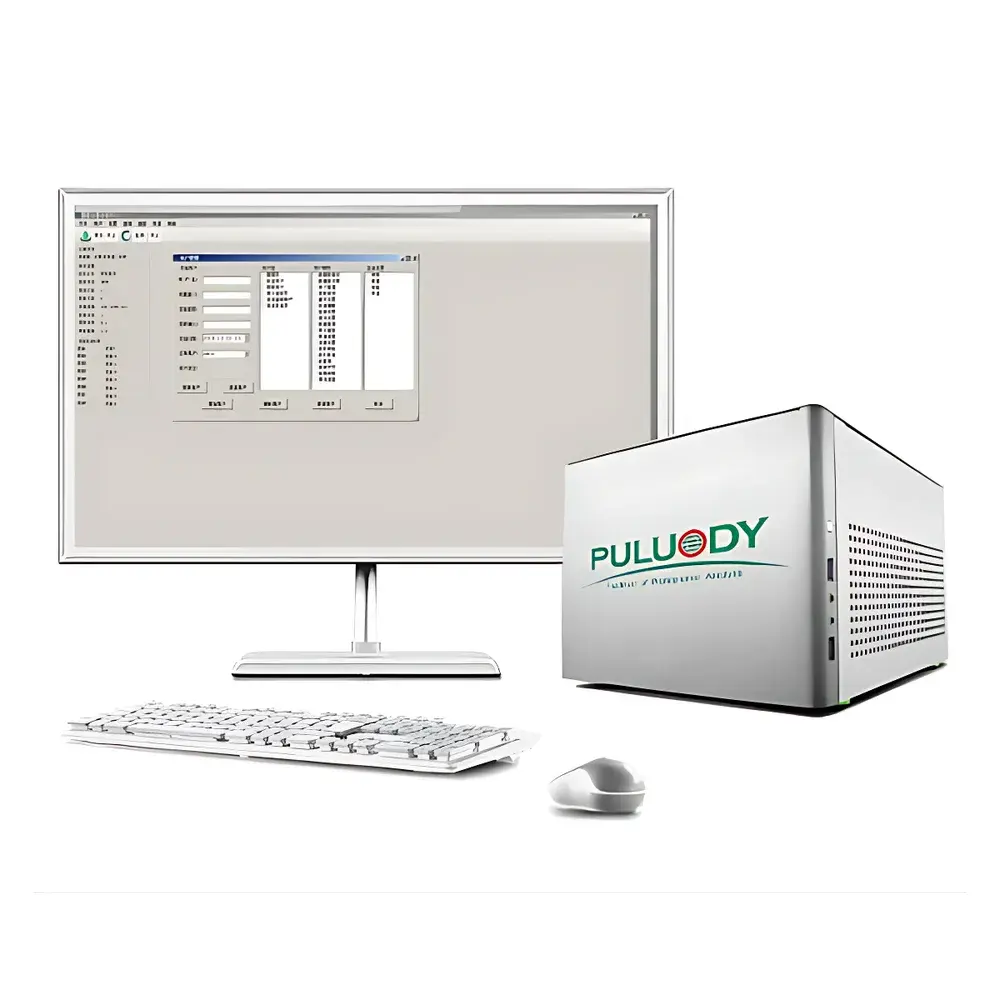
PULUODY DPC-1511 Oilfield Re-injection Water Particle Analyzer
| Brand | PULUODY |
|---|---|
| Origin | Shaanxi, China |
| Manufacturer Type | Authorized Distributor |
| Regional Category | Domestic (China) |
| Model | DPC-1511 |
| Instrument Type | Optical Particle Counter |
| Measurement Principle | Laser Diffraction & Dynamic Light Scattering (DLS) / Flow Imaging |
| Test Range | 1 nm – 2000 µm (configurable sub-ranges: 1–10,000 nm |
| Detection System | 7th-Generation Dual-Laser Narrow-Beam Sensor |
| Compliance | ISO 13320, ISO 13321, SY/T 5329-2012, SY/T 6596-2016 |
| Repeatability | ≤ ±1% for D50 (certified reference materials) |
| Sample Throughput | ≤ 2 min per sample |
| Power Supply | AC 220 V ±10%, 50 Hz, 300 W |
| Operating Environment | 10–30 °C, RH < 85%, vibration-free, EMI-shielded, grounded power |
Overview
The PULUODY DPC-1511 Oilfield Re-injection Water Particle Analyzer is a dual-mode optical particle characterization system engineered for high-fidelity monitoring of suspended particulate matter in produced water, reinjection streams, and downstream treatment effluents within upstream oil and gas operations. It integrates two complementary measurement principles—laser diffraction (LD) for broad-range size distribution analysis and flow imaging (FI) for morphology-resolved particle counting—enabling simultaneous quantification of particle concentration, size distribution (D10, D50, D90, etc.), shape descriptors (aspect ratio, circularity), and volumetric equivalent diameters (e.g., area-equivalent and volume-equivalent sphere diameters). The instrument adheres to ISO 13320 (laser diffraction) and ISO 13321 (dynamic light scattering) standards, while its operational protocols are aligned with industry-specific specifications including SY/T 5329-2012 (recommended water quality criteria for clastic reservoirs) and SY/T 6596-2016 (gas field water reinjection technical requirements). Its 1 nm–2000 µm dynamic range supports both nanoscale colloidal stability assessment and coarse silt/sand monitoring—critical for evaluating filter integrity, corrosion inhibitor efficacy, and formation damage risk.
Key Features
- Dual-principle architecture: Switchable or concurrent operation between laser diffraction and hydrodynamic flow imaging modes—optimized for either statistical ensemble analysis or individual particle morphometrics.
- 7th-generation dual-laser narrow-beam detection system: Delivers enhanced signal-to-noise ratio, long-term photometric stability (>10,000 hours MTBF), and immunity to ambient light interference.
- Modular, field-configurable test ranges: User-selectable sub-ranges—including 1–10,000 nm (DLS mode), 0.02–2000 µm (LD mode), and 1–1000 µm (reinjection-specific validation mode)—to match application-critical resolution needs.
- Integrated fluidic design: Dual-path microfluidic cell with coaxial sheath flow ensures laminar, single-file particle alignment during imaging—eliminating out-of-focus blur and enabling pixel-accurate projection-area measurement.
- Automated workflow engine: One-touch execution of parameter selection, optical alignment, background acquisition, concentration optimization, signal capture, statistical analysis, report generation, and system flush—reducing operator dependency and inter-lab variability.
- Robust mechanical architecture: Fully isolated electrical and hydraulic subsystems minimize electromagnetic coupling; monolithic chassis with integrated sampling module reduces footprint and enhances transport stability.
Sample Compatibility & Compliance
The DPC-1511 accommodates aqueous-based reinjection fluids—including filtered produced water, polymer-flooding brines, scale inhibitor solutions, and biocide-treated streams—without requiring organic solvent dilution or ultrasonication pretreatment. Its static cuvette and recirculating flow cell options support both discrete batch analysis and inline process monitoring integration. All measurement protocols comply with GLP-aligned data governance: audit trails record user actions, instrument status, calibration events, and raw data timestamps. Software output files meet FDA 21 CFR Part 11 requirements for electronic records and signatures when configured with password-protected user roles and digital signature workflows. Traceable calibration is supported via NIST-traceable polystyrene latex standards (PSL) supplied with each unit and validated annually by national metrology institutes.
Software & Data Management
PULUODY ParticleStudio™ v4.x software operates natively on Windows 10/11 (64-bit) and provides bilingual (English/Chinese) GUI with customizable dashboards. It generates 20 standardized report templates compliant with ISO/IEC 17025 reporting clauses—including cumulative distribution curves, histogrammed interval data, tabulated D-values (D3, D10, D25, D50, D75, D80, D90, D97, D100), specific surface area, and shape factor distributions. Raw data exports support CSV, TXT, PNG, and PDF formats; metadata embedding enables LIMS interoperability via HL7 or ASTM E1461-compliant interfaces. Real-time trend plotting supports SPC charting (X-bar/R charts) for QC release decisions, and batch comparison tools facilitate longitudinal performance tracking across well clusters or treatment trains.
Applications
- Monitoring suspended solids in produced water prior to reinjection to ensure compliance with SY/T 5329-2012 maximum allowable concentrations (e.g., ≤ 2 mg/L for particles > 2 µm in sandstone reservoirs).
- Evaluating filter breakthrough events by detecting transient spikes in 1–10 µm particle counts—indicative of media fatigue or channeling.
- Quantifying colloidal iron oxide and clay dispersion stability under varying salinity/pH conditions to predict formation damage potential.
- Validating chemical treatment efficacy (e.g., coagulants, dispersants) via time-resolved particle size evolution metrics.
- Supporting root-cause analysis of downhole equipment fouling by correlating particle morphology (e.g., high aspect ratio fragments) with mechanical wear signatures.
- Providing input data for reservoir simulation models that incorporate fines migration kinetics and permeability impairment functions.
FAQ
What particle size standards are included for factory calibration?
Each DPC-1511 ships with a certified set of NIST-traceable polystyrene latex (PSL) standards covering 100 nm, 500 nm, 1 µm, 5 µm, 10 µm, and 50 µm—validated against ISO 21501-4 reference methods.
Can the instrument be integrated into an existing SCADA or DCS environment?
Yes—via Modbus TCP or OPC UA protocol adapters (optional hardware module); analog 4–20 mA outputs are available for real-time turbidity-equivalent particle concentration streaming.
Is third-party metrological verification supported beyond initial commissioning?
Absolutely—the system design permits full traceability to national metrology institutes (e.g., CNAS-accredited labs in China); lifetime recalibration services are offered under PULUODY’s ISO/IEC 17025-certified service program.
How does the dual-laser configuration improve measurement robustness in high-salinity water?
Independent wavelength channels (e.g., 405 nm + 638 nm) enable differential scattering compensation for ionic strength-induced refractive index shifts—reducing bias in D50 estimation across TDS ranges up to 250,000 ppm.
Does the flow imaging module require sample filtration or dilution prior to analysis?
No—sheath-flow hydrodynamic focusing eliminates clogging risks; the system tolerates undiluted reinjection water with turbidity up to 4000 NTU and total suspended solids (TSS) ≤ 500 mg/L.



