
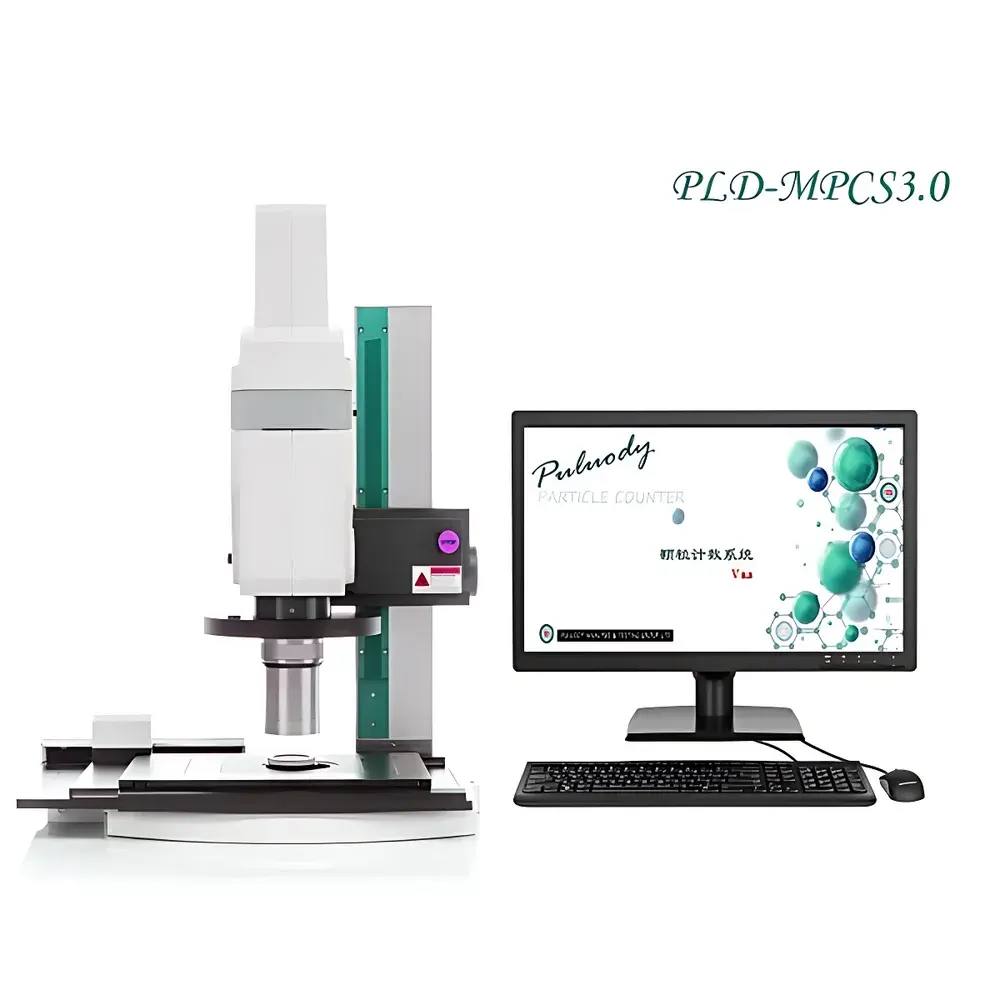
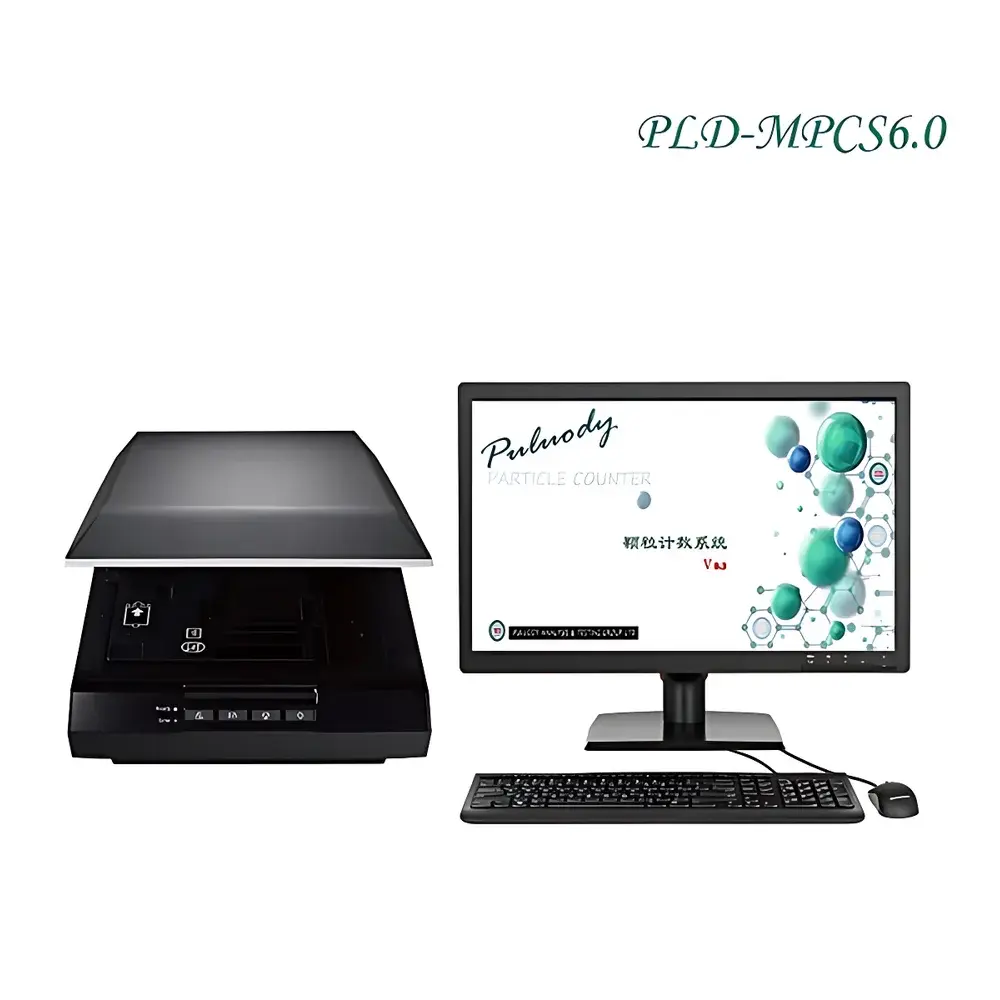
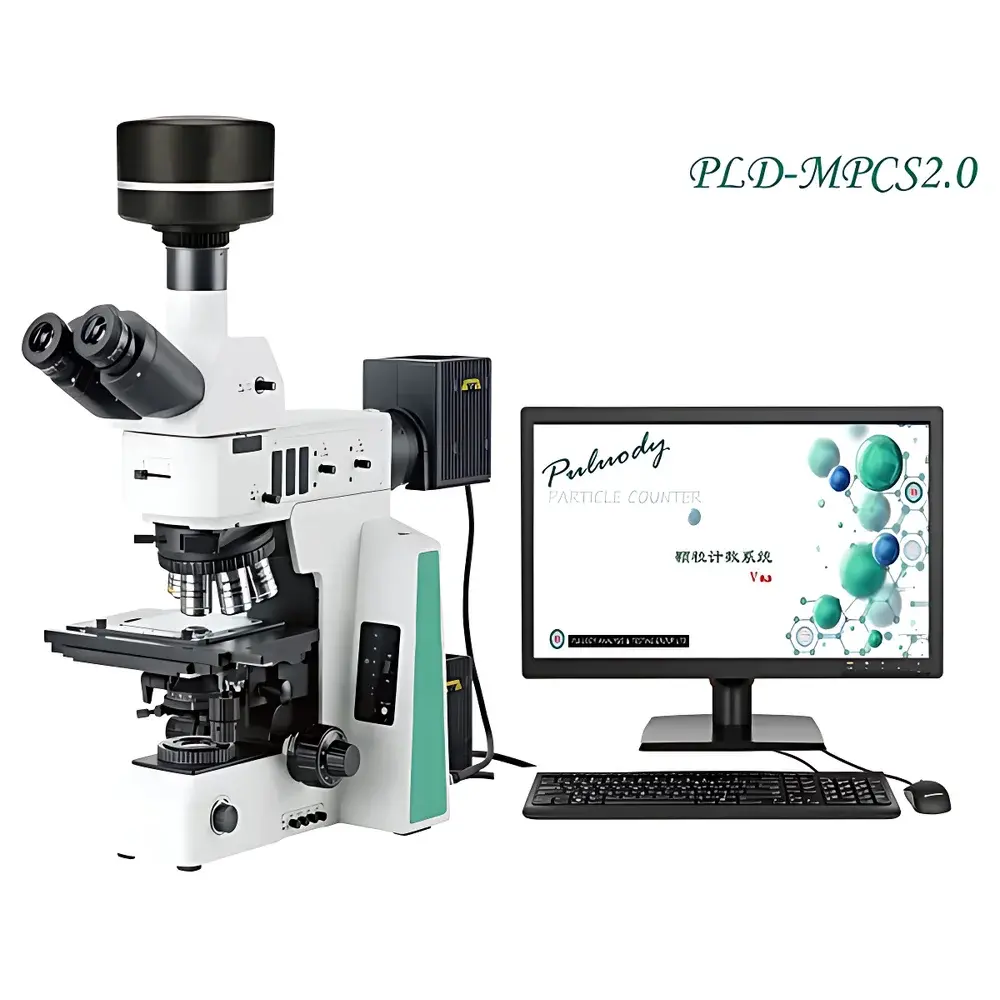
PULUODY PLD-MPCS2.0-C Pharmacopoeial Microscopic Particle Analysis System (ChP 0903 Compliant)
| Brand | PULUODY |
|---|---|
| Origin | Shaanxi, China |
| Model | PLD-MPCS2.0-C |
| Microscope Type | Upright Metallurgical Microscope |
| Image Analysis System | Integrated |
| Total Magnification Range | 40× to 1000× |
| Eyepiece | 10× |
| Objective Lenses | 20× (standard), with full parfocal objective set supporting 4×, 10×, 40×, 100× oil immersion |
| Resolution | 0.1 µm |
| Measurement Accuracy | ±3% (typical, per ChP 2020 calibration) |
| Repeatability Error | <5% (excluding sample preparation variability) |
| Digital CCD Camera | 3 MP |
| Particle Detection Efficiency | >95% (per ChP 2020) |
| Particle Concentration Limit | Up to 10,000 particles/mL (5% coincidence error threshold) |
| Automatic Segmentation Speed | <1 s per field-of-view |
| Segmentation Success Rate | >93% |
| Calibration Standard Traceability | Certified by Northwest National Metrology & Testing Center (Civil Products) |
| Compliance Standards | ChP 0903 (2015/2020), USP <788>, <789>, EP 6.0–8.0, BP 2009–2013, JP 14–16, IP 2010, WHO IntPh V, GB/T 11446.9–2013, ISO 21510, ISO 11171, GB 8368 |
Overview
The PULUODY PLD-MPCS2.0-C Pharmacopoeial Microscopic Particle Analysis System is an upright metallurgical microscope-based imaging platform engineered for quantitative, morphologically resolved particulate contamination assessment in parenteral pharmaceuticals, injectables, ophthalmic solutions, and medical device rinsates. It implements the second method—microscopic particle count—as specified in Chinese Pharmacopoeia (ChP) General Chapter 0903, aligning with internationally harmonized regulatory frameworks including USP , , EP, BP, JP, and ISO 21501-1. Unlike light-obscuration (LO) or laser diffraction techniques, this system relies on high-resolution brightfield microscopy coupled with calibrated digital imaging and deterministic image segmentation algorithms to deliver not only particle size distribution (PSD) but also shape descriptors—including aspect ratio, circularity, convexity, and Feret diameters—enabling root-cause analysis of particulate origin (e.g., silicone oil droplets vs. cellulose fibers vs. metal wear debris). Its optical architecture supports standardized membrane filtration workflows per ChP 0903, with a total magnification range from 40× to 1000× and sub-micron resolution down to 0.1 µm, ensuring compliance with detection thresholds for ≥10 µm and ≥25 µm particles mandated across global pharmacopoeias.
Key Features
- Upright metallurgical microscope configuration optimized for transmitted-light imaging of filter membranes (e.g., mixed cellulose ester, polycarbonate) mounted on standard glass slides.
- Parfocal, apochromatic objective turret (4×, 10×, 20×, 40×, 100× oil) enabling seamless transition between overview scanning and high-magnification morphological validation.
- Integrated 3-megapixel monochrome CCD camera with 12-bit dynamic range and hardware-level shutter synchronization to eliminate motion blur during automated stage scanning.
- Automated motorized XY stage with 0.1 µm positional repeatability and programmable scan grid mapping for systematic field-of-view coverage per ISO 21501-1 Annex B.
- Real-time particle segmentation engine utilizing adaptive thresholding, watershed separation, and top-hat morphology filtering—achieving >93% segmentation success rate and <1 s processing time per 1.2 mm² field.
- Traceable calibration protocol aligned with ChP 2020 Appendix 0903, including NIST-traceable stage micrometer (0.1 µm刻度) and certified reference particle standards (ISO 11171 latex spheres, 3–100 µm).
Sample Compatibility & Compliance
The PLD-MPCS2.0-C accommodates standard 25 mm or 13 mm pore-size filter membranes post-filtration of aqueous and non-aqueous parenteral solutions, including lipid emulsions, monoclonal antibody formulations, and radiopharmaceuticals. It supports both direct-mount and solvent-clearing protocols per USP . All measurement outputs—including particle counts per size bin (≥10 µm, ≥25 µm), cumulative distributions, aspect ratio histograms, and circularity heatmaps—are exportable in CSV and PDF formats compliant with 21 CFR Part 11 requirements when deployed with audit-trail-enabled software configuration. The system has been independently verified by the Northwest National Metrology & Testing Center (civil product division) for measurement uncertainty, linearity, and repeatability against GB/T 11446.9–2013 and ISO 21510. Full traceability documentation—including instrument qualification reports (IQ/OQ/PQ templates), calibration certificates, and SOP templates—is provided for GMP/GLP environments.
Software & Data Management
The proprietary MPCS Analysis Suite v2.0 operates on Windows 10 (64-bit) and features dual-mode operation: guided workflow mode for routine QC testing (aligned with ChP 0903 step-by-step procedures) and expert mode for research-grade morphometric analysis. Software modules include automatic focus stacking, multi-field stitching, batch report generation with configurable pass/fail logic per pharmacopoeial limits, and raw image archiving with embedded EXIF metadata (magnification, exposure, stage coordinates, timestamp). Audit trails record all user actions—including parameter edits, manual corrections, and report approvals—with SHA-256 hashing and electronic signature support. Data export conforms to ASTM E2917 and ISO/IEC 17025 reporting structures, enabling seamless integration into LIMS platforms via ODBC or REST API interfaces.
Applications
- Final container testing of sterile injectables, vaccines, and biologics per ChP 0903, USP , and EP 2.9.19.
- Raw material particulate screening (e.g., excipients, buffer salts) to pre-empt filter clogging and stability issues.
- Medical device extractables and leachables characterization, particularly for silicone-coated syringes and IV tubing (GB 8368).
- Process troubleshooting in aseptic filling lines—differentiating process-related particles (glass delamination, stainless steel wear) from environmental contaminants (fibers, skin cells).
- Method development and validation studies supporting regulatory submissions (e.g., CMC sections of IND/BLA dossiers).
- Reference laboratory inter-laboratory comparison programs under ISO/IEC 17043 accreditation scope.
FAQ
Does the PLD-MPCS2.0-C meet FDA requirements for particle testing in commercial manufacturing?
Yes—it fulfills analytical procedure validation expectations outlined in FDA Guidance for Industry: Container Closure Systems for Packaging Human Drugs and Biologics (2022) and supports data integrity requirements under 21 CFR Part 11 when configured with enabled audit trail and electronic signature modules.
Can the system be validated for use in GMP environments?
Yes—comprehensive IQ/OQ/PQ documentation packages, including installation checklists, operational test protocols (e.g., magnification verification, stage repeatability, segmentation accuracy using NIST SRM 1963), and performance qualification reports against ChP 2020 acceptance criteria are supplied.
Is it possible to add light-obscuration (LO) correlation functionality?
Yes—the platform supports optional integration with PULUODY’s LO-based particle counters (e.g., PLS-02 series) via synchronized sample routing and cross-platform data fusion in MPCS Suite, facilitating method equivalency studies per USP .
What is the minimum detectable particle size under routine operating conditions?
At 1000× magnification with oil immersion and optimal contrast enhancement, the practical lower limit is 1.0 µm for high-contrast particles (e.g., titanium dioxide); the system’s calibrated resolution is 0.1 µm per stage micrometer verification, though regulatory reporting begins at ≥10 µm per pharmacopoeial mandates.
How does the system handle particle agglomeration or overlapping objects?
The segmentation algorithm applies iterative watershed decomposition combined with shape-prior constraints (minimum bounding rectangle aspect ratio, solidity thresholding) to resolve clustered particles; validation data per ISO 21501-1 confirms <5% undercounting at concentrations up to 10,000 particles/mL.




