
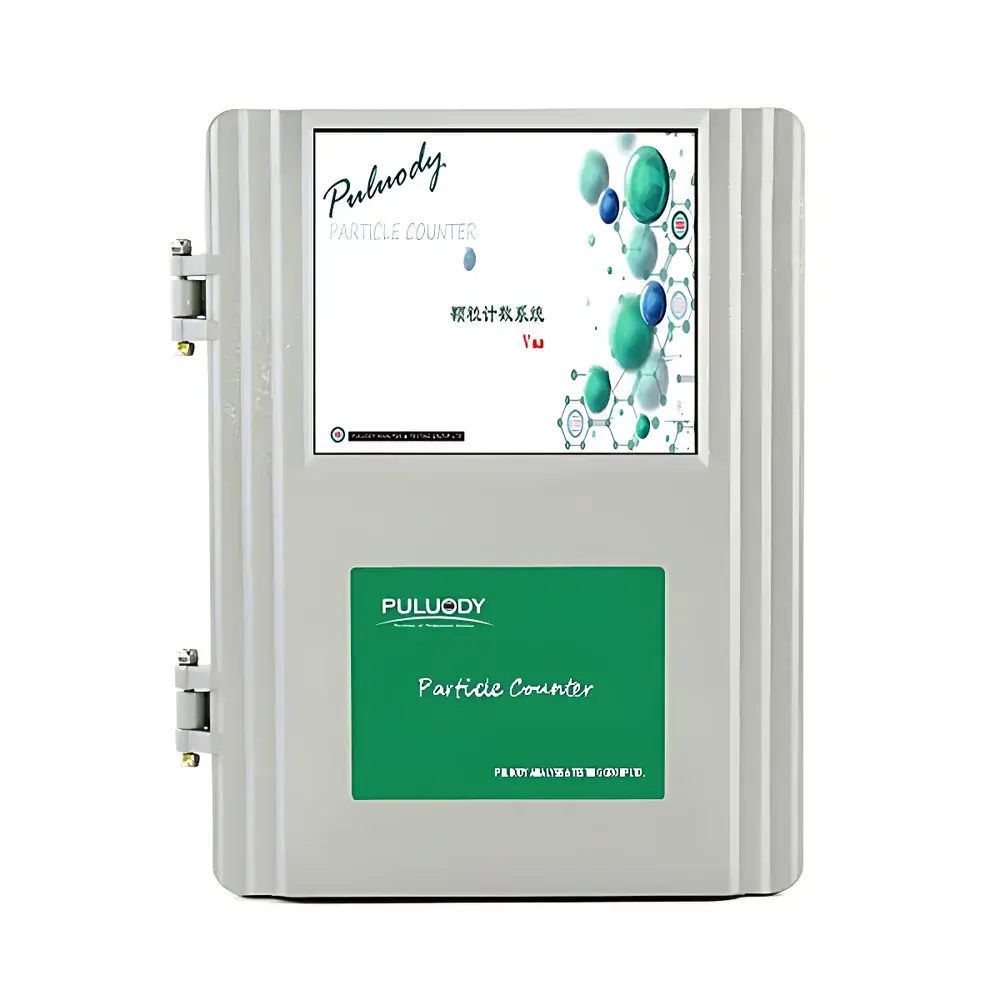
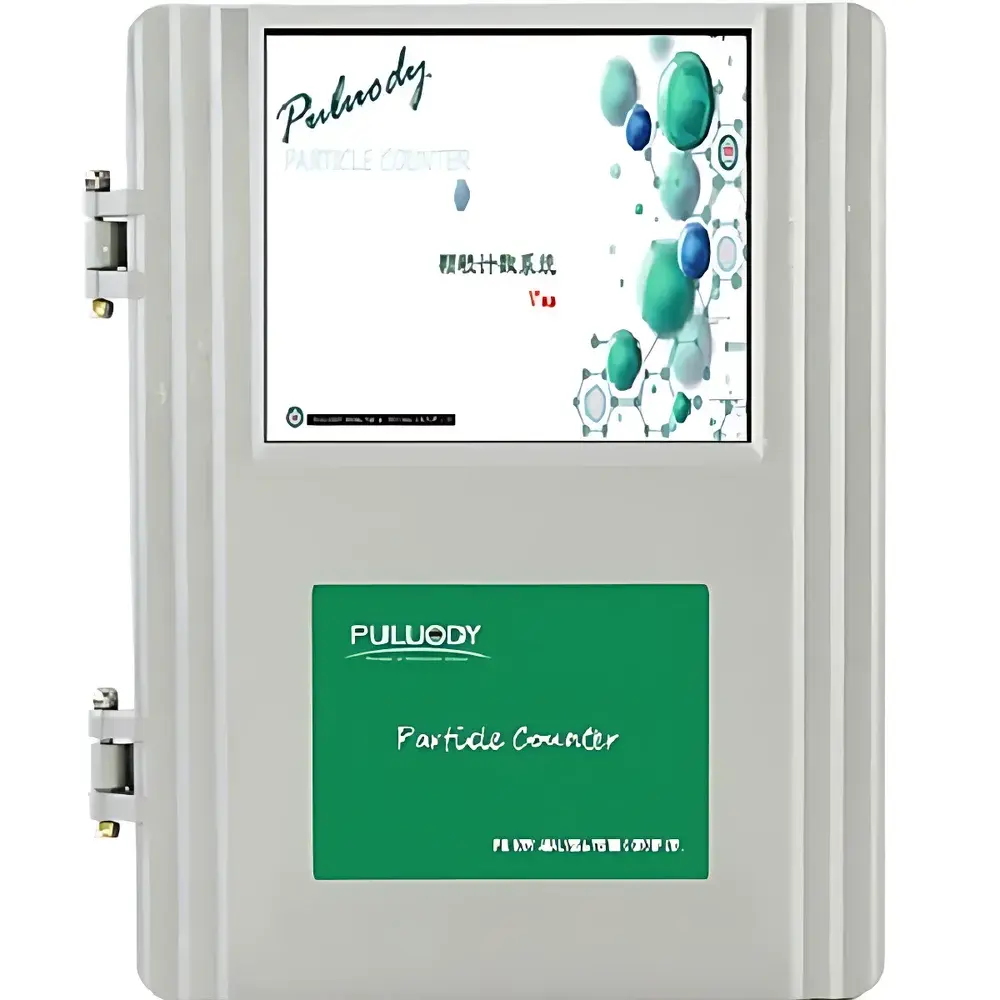
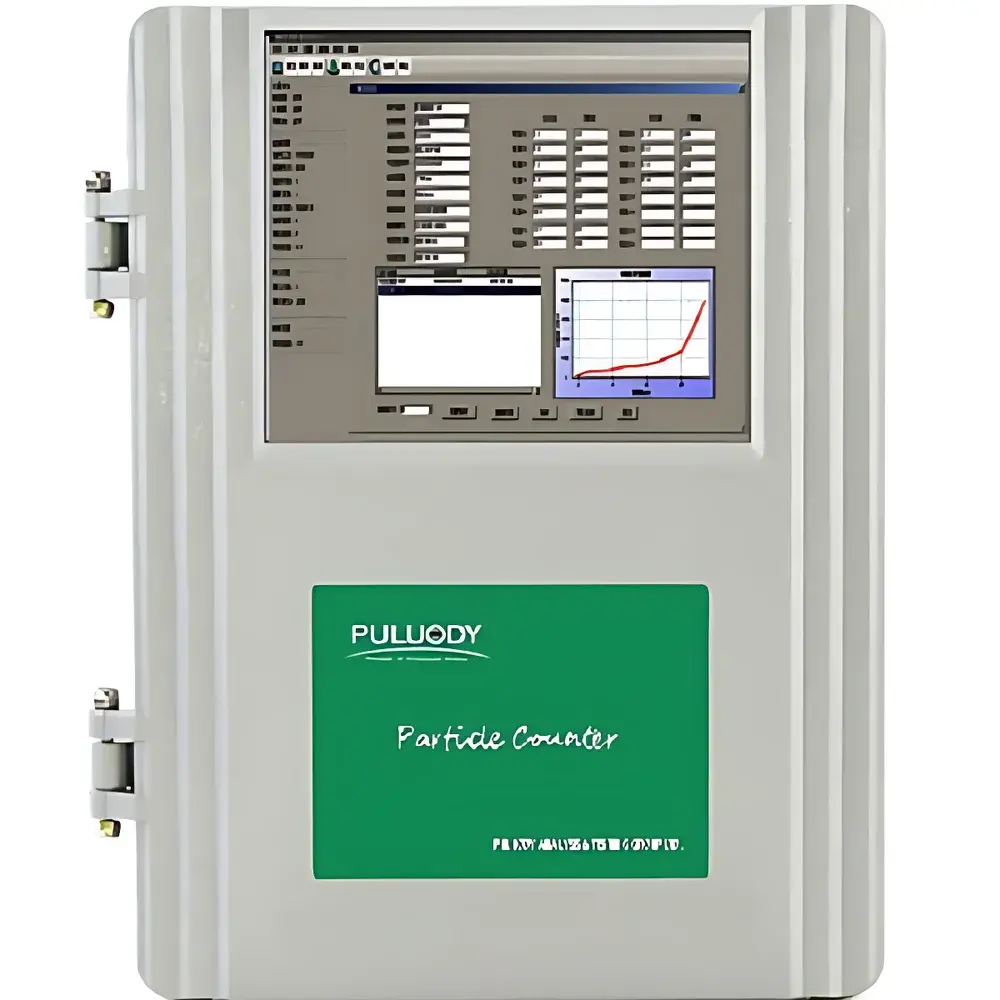
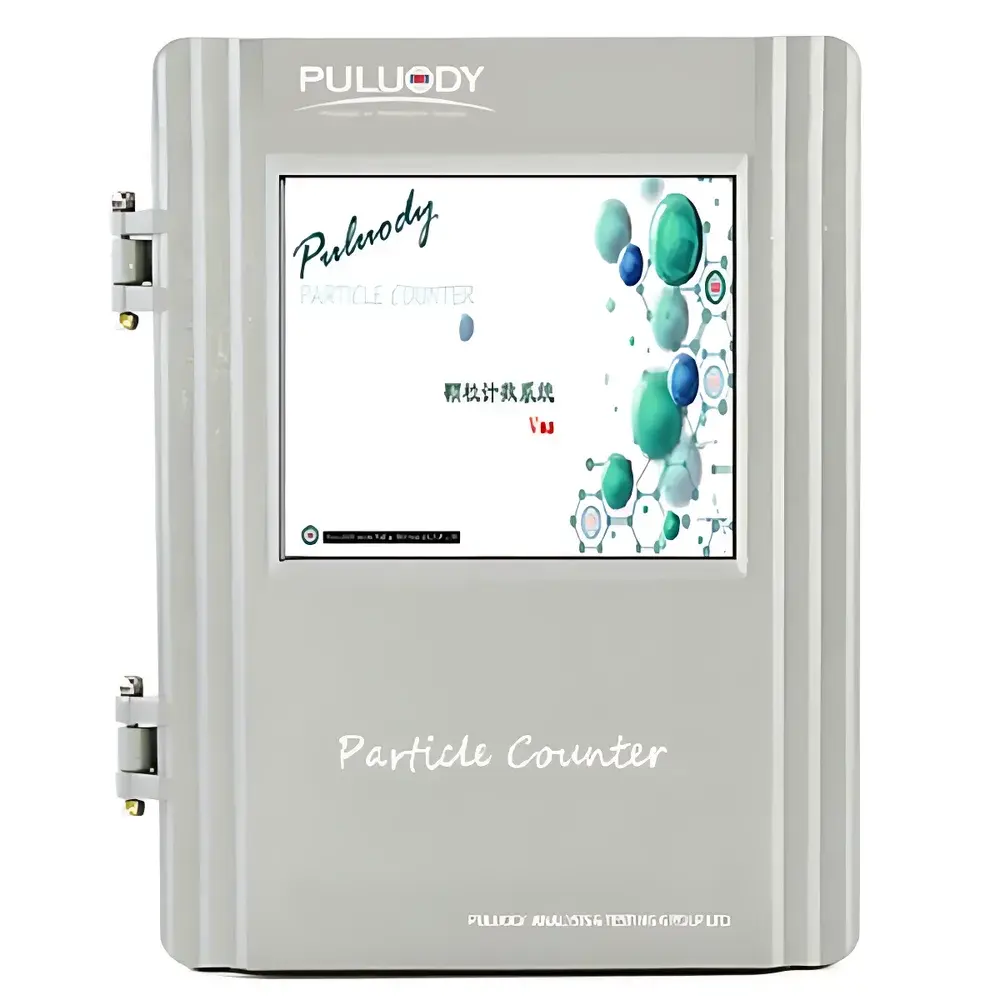
PULUODY OPC-2300 Online Waterborne Particle Counter
| Brand | PULUODY |
|---|---|
| Origin | Shaanxi, China |
| Manufacturer Type | Authorized Distributor |
| Country of Origin | China |
| Model | OPC-2300 |
| Instrument Type | Optical Particle Counter |
| Detection Principle | Light Obscuration (LO) with Dual-Laser Narrow-Beam Technology |
| Sensor Range | 2–750 µm (configurable up to 1000 µm) |
| Size Resolution | 0.1 µm |
| Accuracy | <±3% typical |
| Counting Resolution | 10% |
| Coincidence Error | ≤5% |
| Maximum Concentration | 9,999,999 particles/mL |
| Sampling Flow Rate | 6–500 mL/min |
| Operating Pressure | 0–0.6 MPa (standard), up to 31.5 MPa (with pressure regulator) |
| Fluid Temperature Range | −10 °C to +80 °C |
| Output Interfaces | 4–20 mA analog, RS232/RS485 digital |
| Data Storage | Unlimited (internal + external SD/USB support) |
| Alarm Functions | Particle count threshold, sensor health diagnostics |
| Calibration Standards | NIST-traceable latex spheres, AC fine test dust, MTD |
Overview
The PULUODY OPC-2300 Online Waterborne Particle Counter is an industrial-grade, real-time optical particle counter engineered for continuous monitoring of suspended particulate contamination in water-based process streams. Based on the eighth-generation dual-laser narrow-beam light obscuration (LO) detection principle—developed and validated by PULUODY Analytical Testing Group UK—the OPC-2300 delivers high-fidelity, statistically robust particle size distribution (PSD) data across a configurable range of 2–750 µm (extendable to 1000 µm per application requirements). Designed specifically for unattended operation in municipal and industrial water infrastructure—including drinking water treatment plants, wastewater reclamation facilities, beverage production lines, and membrane filtration validation stations—the instrument operates under demanding hydraulic conditions (up to 31.5 MPa with integrated pressure regulation) and thermal environments (−10 °C to +80 °C). Its core architecture adheres to ISO 21501-4, USP , and ASTM F312-22 guidelines for liquid-borne particle counting, ensuring metrological traceability and regulatory alignment for quality assurance and compliance reporting.
Key Features
- Dual-laser narrow-beam optical sensing platform optimized for high signal-to-noise ratio and minimal pulse distortion in turbid or low-conductivity aqueous media
- Configurable channel resolution: 1000-size-bin spectrum with user-selectable 8-, 16-, or 32-channel grouping for targeted size-class reporting (e.g., ≥4 µm, ≥6 µm, ≥10 µm, ≥25 µm)
- Real-time sampling at adjustable intervals from 5 seconds to 9 hours, supporting both transient event capture and long-term trend analysis
- Ruggedized stainless-steel housing rated IP65, compatible with Class I Div 2 hazardous locations when equipped with optional explosion-proof enclosure
- Integrated analog (4–20 mA) and digital (RS232/RS485 Modbus RTU) outputs for seamless integration into DCS, SCADA, and PLC control systems
- On-device LCD interface with membrane keypad enables local configuration, alarm threshold setting, and immediate pass/fail status visualization without external software
- Modular design supports both inline installation (direct pipe mounting via SS316 compression or flange fittings) and offline mode using portable sample chamber for lab or field verification
Sample Compatibility & Compliance
The OPC-2300 is validated for use with potable water, clarified effluent, filtered process water, ultrapure water (UPW) pre- and post-membrane, beverage base solutions, and cleaning-in-place (CIP) rinse water. It meets ISO 11171:2016 calibration traceability requirements when calibrated with NIST-certified polystyrene latex (PSL) standards or ISO-accredited AC fine test dust. The system supports configurable reporting formats aligned with NAS 1638, ISO 4406:2022, and SAE AS4059F contamination codes. For regulated environments—including pharmaceutical water systems governed by EU GMP Annex 1 and FDA CGMP—data integrity is maintained via time-stamped audit trails, user-access controls, and electronic signature-ready export logs compliant with 21 CFR Part 11 principles.
Software & Data Management
The embedded firmware includes a fully integrated data acquisition engine capable of storing unlimited measurement records internally (microSD expansion supported). Optional PULUODY ParticleView™ desktop software provides advanced visualization tools: time-series concentration overlays, cumulative/differential PSD plots, statistical process control (SPC) charts, and automated report generation in PDF/CSV/XLSX. All exported datasets include metadata headers specifying calibration date, sensor ID, flow rate, temperature, pressure, and operator credentials. Remote firmware updates and diagnostic telemetry are enabled via secure TLS-encrypted Ethernet or cellular gateway modules (optional).
Applications
- Real-time integrity testing of microfiltration (MF), ultrafiltration (UF), and reverse osmosis (RO) membranes in water treatment plants
- Early detection of filter breakthrough, biofilm shedding, or corrosion debris in municipal distribution networks
- Validation of final rinse water quality in food & beverage filling lines per SQF Code Edition 9.2 Section 11.4
- Monitoring of activated carbon backwash effluent to assess granular media attrition
- Supporting risk-based assessment of microbiological hazards through correlation of particle load with heterotrophic plate count (HPC) trends
- Commissioning and routine verification of point-of-use (POU) water purification systems in semiconductor fab utilities
FAQ
What particle size standards can the OPC-2300 be calibrated against?
The instrument supports calibration using NIST-traceable PSL spheres (e.g., 3.0 µm, 10.0 µm), ISO 12103-1 A4 AC fine test dust, and MTD standard reference materials—all traceable to national metrology institutes.
Does the OPC-2300 meet FDA 21 CFR Part 11 requirements for electronic records?
While the base unit does not include full Part 11 functionality, the optional ParticleView™ software package provides audit trail logging, role-based access control, and electronic signature capability required for regulated biopharma and medical device manufacturing environments.
Can the OPC-2300 operate continuously at elevated temperatures?
Yes—its fluid path components are rated for sustained operation at 80 °C; optional high-temp sensor variants extend this limit to 120 °C for steam condensate or thermal loop monitoring.
Is remote firmware update supported?
Firmware updates may be performed locally via USB or remotely over Ethernet using authenticated HTTPS protocols; cellular LTE-M connectivity is available as an add-on module.
How is coincidence error managed during high-concentration sampling?
The OPC-2300 employs adaptive pulse-pair discrimination algorithms and automatic dilution control (when interfaced with external proportional diluters) to maintain counting accuracy below the 5% coincidence error threshold specified in ISO 21501-4.
Related Products



