
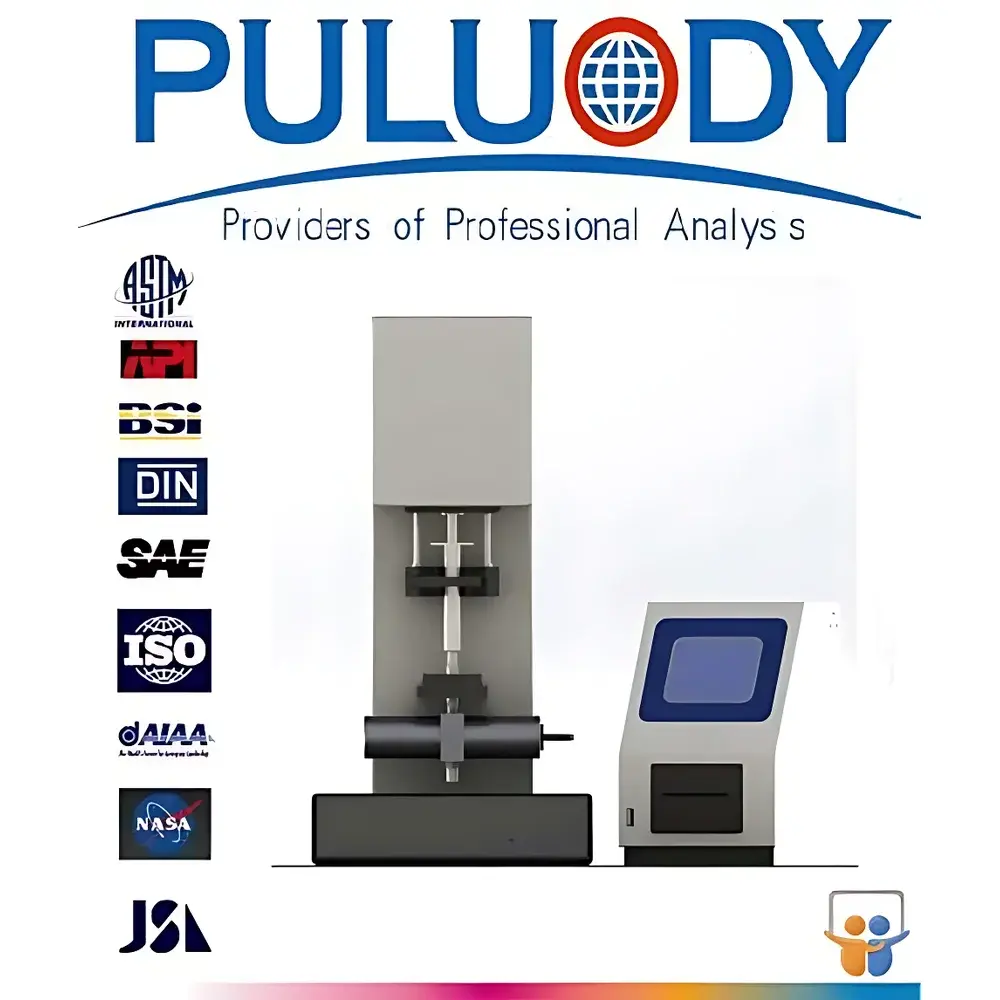
PULUODY PLD-820X High-Viscosity Oil Particle Counter
| Brand | PULUODY |
|---|---|
| Origin | Shaanxi, China |
| Manufacturer Type | Authorized Distributor |
| Regional Category | Domestic (China) |
| Model | PLD-820X |
| Instrument Type | Optical Particle Counter |
| Detection Principle | Light Obscuration (LO) |
| Measurement Range | 1–450 µm |
| Sensitivity | 1 µm (per ISO 4402) or 4 µm(c) (per ISO 11171 / GB/T 18854) |
| Channel Resolution | 1000 adjustable channels (16 user-selectable) |
| Viscosity Handling | Up to 1850 mm²/s (cSt) without dilution or heating |
| Sample Volume | 1 mL to unlimited (user-defined) |
| Sampling Flow Rate | 5–60 mL/min |
| Accuracy | ±1% volumetric delivery |
| Coincidence Limit | 10,000 particles/mL (≤5% coincidence error) |
| Standards Compliance | ISO 4406, ISO 11500, ISO 11171, NAS 1638, GJB 420A/B, DL/T 432, MIL-STD-1246, ASTM D6786 (referenced), GB/T 18854-2002 |
| Calibration Reference | NIST-traceable GBW standard reference materials |
| Operating Temperature | Ambient to 65°C (sample), 0–50°C (ambient) |
| Power Supply | 220 VAC, 50 Hz, <80 W |
Overview
The PULUODY PLD-820X High-Viscosity Oil Particle Counter is an industrial-grade optical particle counter engineered for direct, non-invasive measurement of solid particulate contamination in undiluted, high-viscosity fluids—up to 1850 mm²/s (cSt)—using the internationally standardized light obscuration (LO) principle. Unlike conventional particle counters requiring solvent dilution, thermal thinning, or ultrasonic dispersion—processes that risk altering particle morphology, inducing agglomeration, or introducing secondary contamination—the PLD-820X employs a seventh-generation dual-laser narrow-beam sensor architecture co-developed with PULUODY UK’s metrology division. This design ensures stable signal-to-noise ratio across broad dynamic viscosity ranges while maintaining traceable alignment with ISO 11171:2010 and GB/T 18854-2002 calibration protocols. The instrument operates on a closed-loop hydraulic path incorporating a precision positive-displacement plunger pump and electromagnetic flow control, enabling repeatable volumetric sampling (±1% accuracy) and programmable test durations from 20 seconds to continuous monitoring. Its primary application domain includes real-time cleanliness verification of hydraulic oils, turbine oils, gear oils, transformer insulating fluids, aviation fuels, and polymer solutions where particle-induced wear, valve stiction, or dielectric breakdown must be quantitatively controlled per aerospace, power generation, and defense maintenance standards.
Key Features
- Direct high-viscosity measurement: No dilution, heating, or filtration required for fluids up to 1850 mm²/s—preserving native particle size distribution and avoiding method-induced bias.
- Seventh-generation dual-laser narrow-beam detection: Optimized for high signal fidelity in optically dense media; improved stability against refractive index variation and bubble interference.
- Full internalization: Integrated industrial PC, color TFT touchscreen (8.2″ OS interface), thermal printer, and RS232 serial port—no external computer or peripherals needed for operation or reporting.
- Configurable channel architecture: 1000-resolution particle sizing matrix; users may define any 16 channels within 1–450 µm range, including sub-micron thresholds (e.g., 1.0, 2.5, 4.0, 5.0, 6.0, 10, 14, 25, 50, 100 µm).
- Automated calibration & diagnostics: Built-in self-check routines, automatic zero calibration, and guided validation using certified GBW reference materials compliant with ISO 11171 Annex B.
- Regulatory-ready data handling: Audit trail logging, user-access levels, electronic signature support, and export formats compatible with LIMS integration and FDA 21 CFR Part 11–aligned workflows (when deployed with optional software module).
Sample Compatibility & Compliance
The PLD-820X accommodates undiluted samples across multiple fluid classes: mineral- and synthetic-based hydraulic oils (ISO VG 32–680), turbine oils (including phosphate ester types), insulating oils (IEC 60296), jet fuels (JP-5, JP-8), lubricating greases (via integrated syringe-style injector), adhesives, and polymer melts. It meets or references 17 national and international standards—including ISO 4406:2017 (contamination code assignment), ISO 11500:2019 (LO methodology), GJB 420B-2015 (Chinese military hydraulic fluid classification), MIL-STD-1246C (cleanliness levels for space systems), and DL/T 1096-2008 (power plant oil cleanliness). All reported particle counts are corrected for coincidence error per ISO 11171 Clause 7.3, with documented linearity verified from 10² to 10⁴ particles/mL. Calibration traceability is maintained via annual verification using GBW(E)130327 or equivalent NIST-traceable suspensions.
Software & Data Management
The embedded P6.4 Analysis Suite supports real-time histogram generation, cumulative/differential distribution plots, NAS 1638 and ISO 4406 code auto-assignment, and customizable pass/fail thresholds per channel. Data files (.csv, .txt, .pdf) store raw pulse data, metadata (operator ID, timestamp, sample ID, temperature), and instrument configuration logs. Internal storage retains ≥3,000 test records; external PC synchronization enables long-term trending, statistical process control (SPC) charting, and multi-site fleet-level analysis. Optional firmware upgrades provide GLP/GMP audit trail modules, electronic signatures, and secure cloud backup via TLS 1.2–encrypted Wi-Fi or Bluetooth 5.0 (custom-configurable per client IT policy).
Applications
- Condition monitoring of in-service hydraulic systems in aerospace ground support equipment, wind turbine pitch controls, and naval propulsion units.
- Acceptance testing of new oil batches prior to commissioning transformers, turbines, and servo-valve assemblies.
- Wear debris analysis during component bench testing (e.g., pump durability trials per ISO 10770-1).
- Quality release of pharmaceutical-grade silicone oils and biocompatible polymer solvents under USP guidance.
- Contamination control in semiconductor manufacturing tool lubricants and photolithography chemical delivery lines.
- Research into particle generation mechanisms in elastohydrodynamic lubrication (EHL) regimes.
FAQ
Does the PLD-820X require sample dilution for ISO VG 460 gear oil?
No. The instrument is validated for direct analysis of undiluted oils up to 1850 mm²/s at 40°C, eliminating dilution-related uncertainty and preparation time.
Can it comply with FDA 21 CFR Part 11 for regulated pharmaceutical applications?
Yes—when configured with the optional P6.4 GxP Edition firmware, it provides electronic signatures, audit trails, role-based access control, and data integrity safeguards aligned with Part 11 Annex 11 expectations.
What calibration standards are supplied with the instrument?
Each unit ships with GBW(E)130327 ISO Medium Test Dust suspension (certified per GB/T 18854-2002), plus full documentation for traceable annual recalibration.
Is temperature-controlled sampling available?
The system supports sample inlet temperatures from ambient to 65°C; for precise thermal management, external thermostatic baths or heated sample lines may be integrated via auxiliary I/O ports.
How is sensor fouling mitigated during extended use with sticky residues?
An automated post-analysis rinse cycle flushes the flow cell and sensor aperture with clean solvent (e.g., isopropyl alcohol or filtered hexane); optional ultrasonic cleaning mode is available in advanced configurations.



