
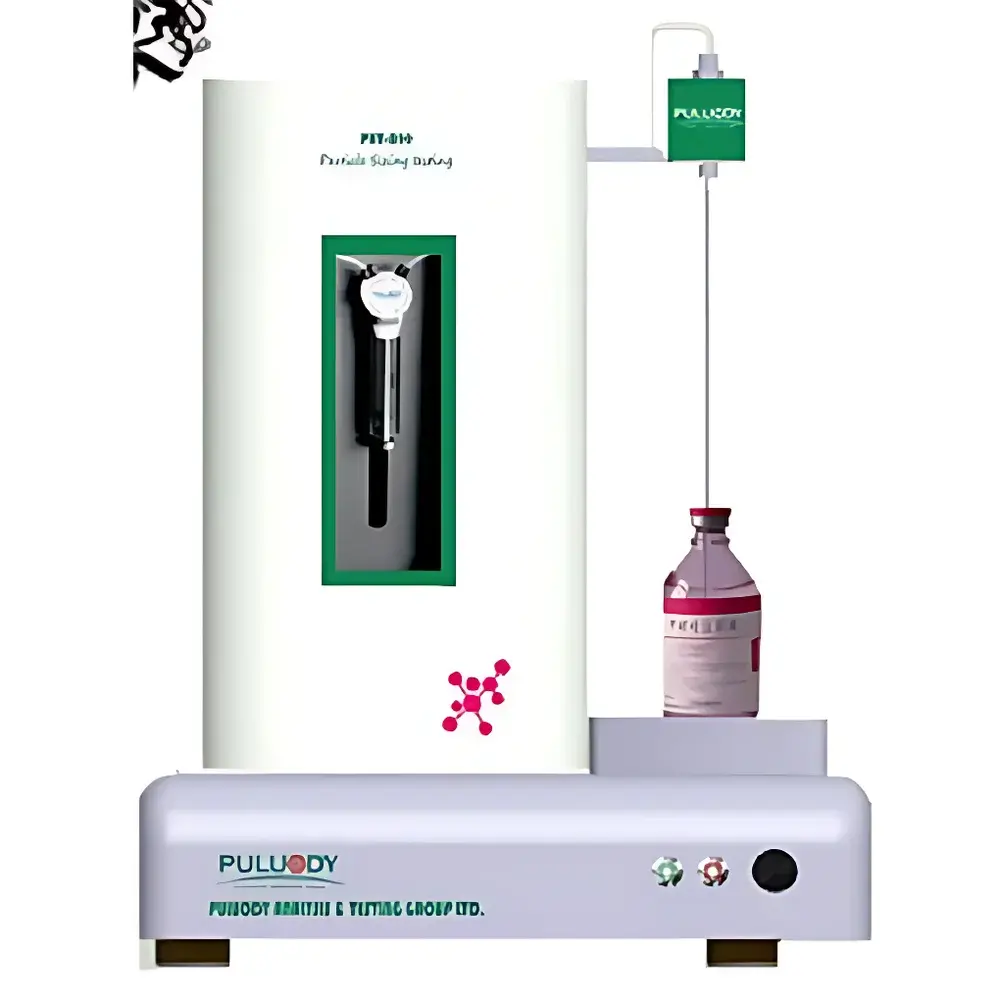
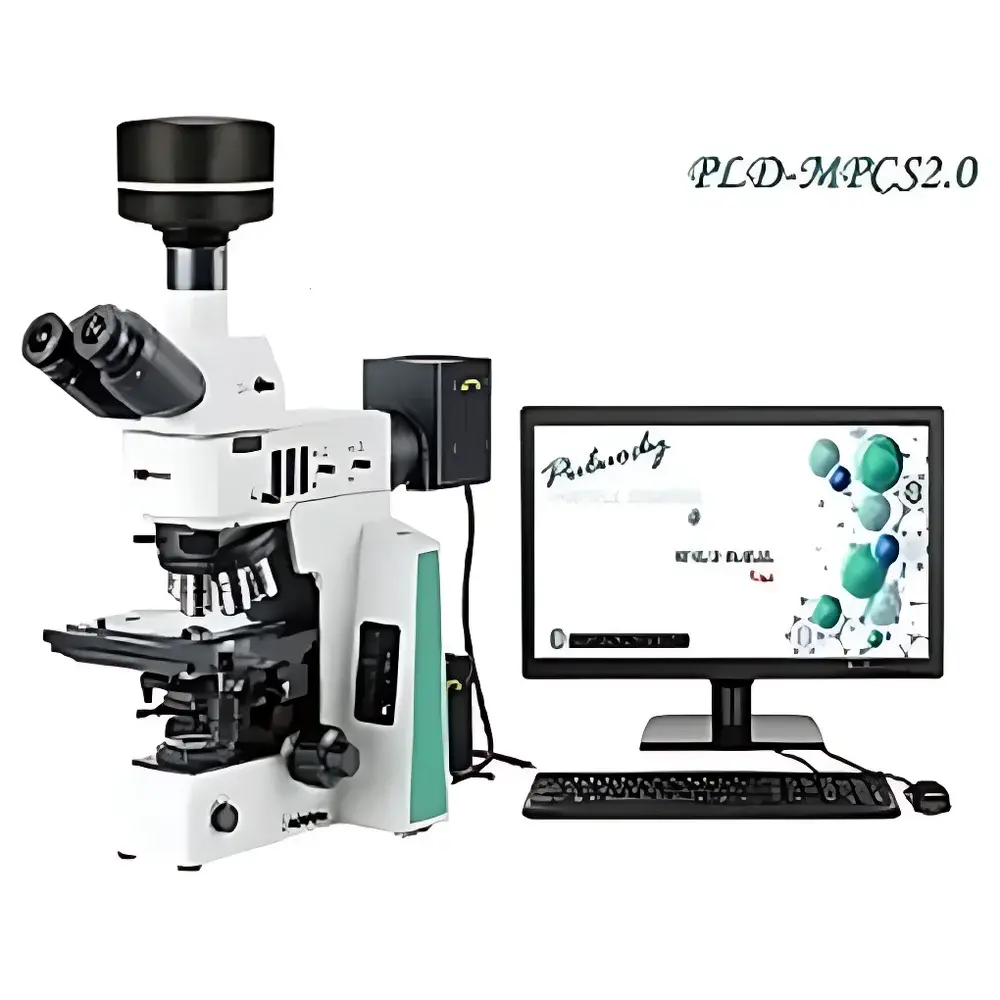
PULUODY PMT-2 Organic Solvent Liquid Particle Counter
| Brand | PULUODY |
|---|---|
| Origin | Shaanxi, China |
| Manufacturer Type | Authorized Distributor |
| Product Category | Domestic |
| Model | PMT-2 |
| Instrument Type | Optical Particle Counter |
| Detection Principle | Dual-Laser Narrow-Beam Light Scattering |
| Sensor Generation | 8th-Generation Dual-Laser Sensor |
| Detection Range | 0.1–1.0 µm (standard) |
| Sampling Method | Precision Metering Piston Pump |
| Flow Control | Dual-Stage Electromagnetic + Precision Piston Pump |
| Accuracy | ±3% typical |
| Volume Accuracy | <±1% |
| Coincidence Limit | 1000 particles/mL (2.5% coincidence error) |
| Calibration Standards | ISO 21501, JJG 1061, NIST-Traceable Latex Spheres |
| Compliance | ChP 2015/2020, USP <788>, EP 2.9.19, BP, GB 8368 |
| Output Interface | 4–20 mA analog output |
| Alarm Function | Configurable particle concentration threshold alarm |
| Data Acquisition | iPad-integrated wireless acquisition |
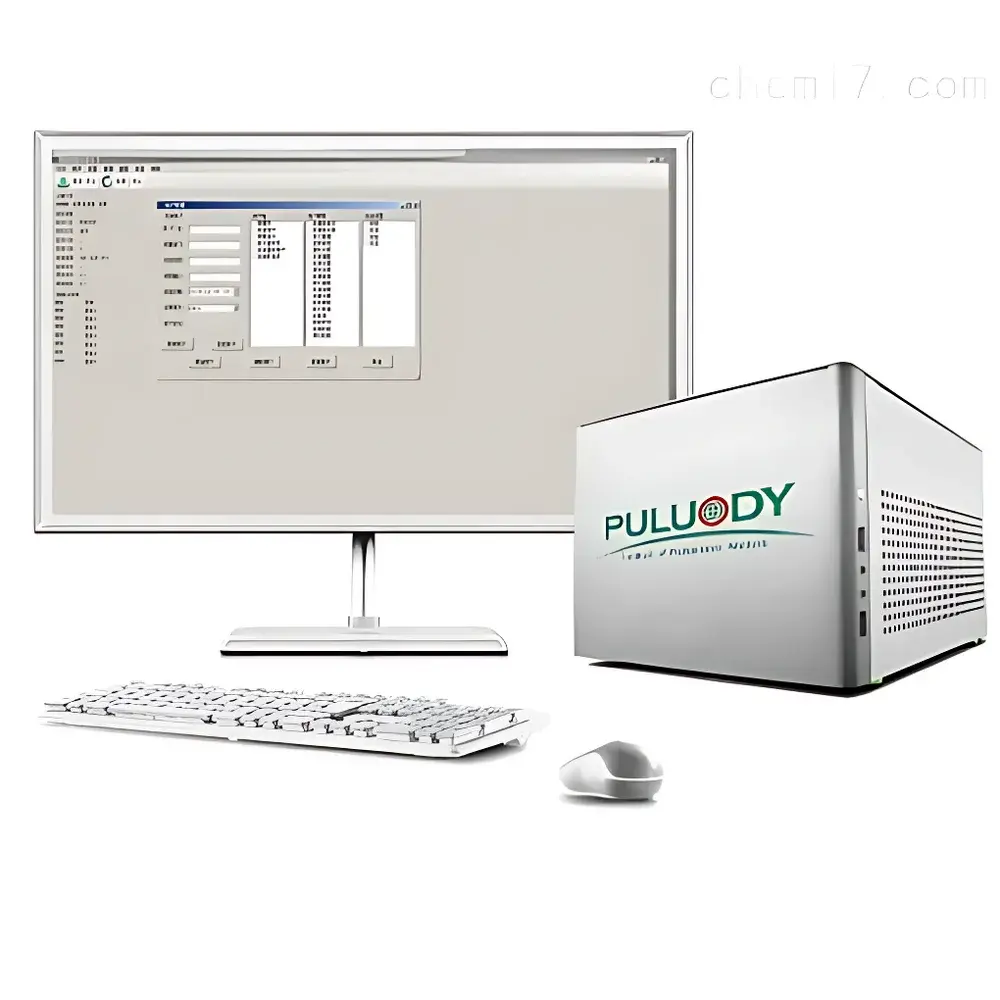
| Software | PULUODY V8.3 Integrated Analysis & Calibration Software (PC + Embedded) |
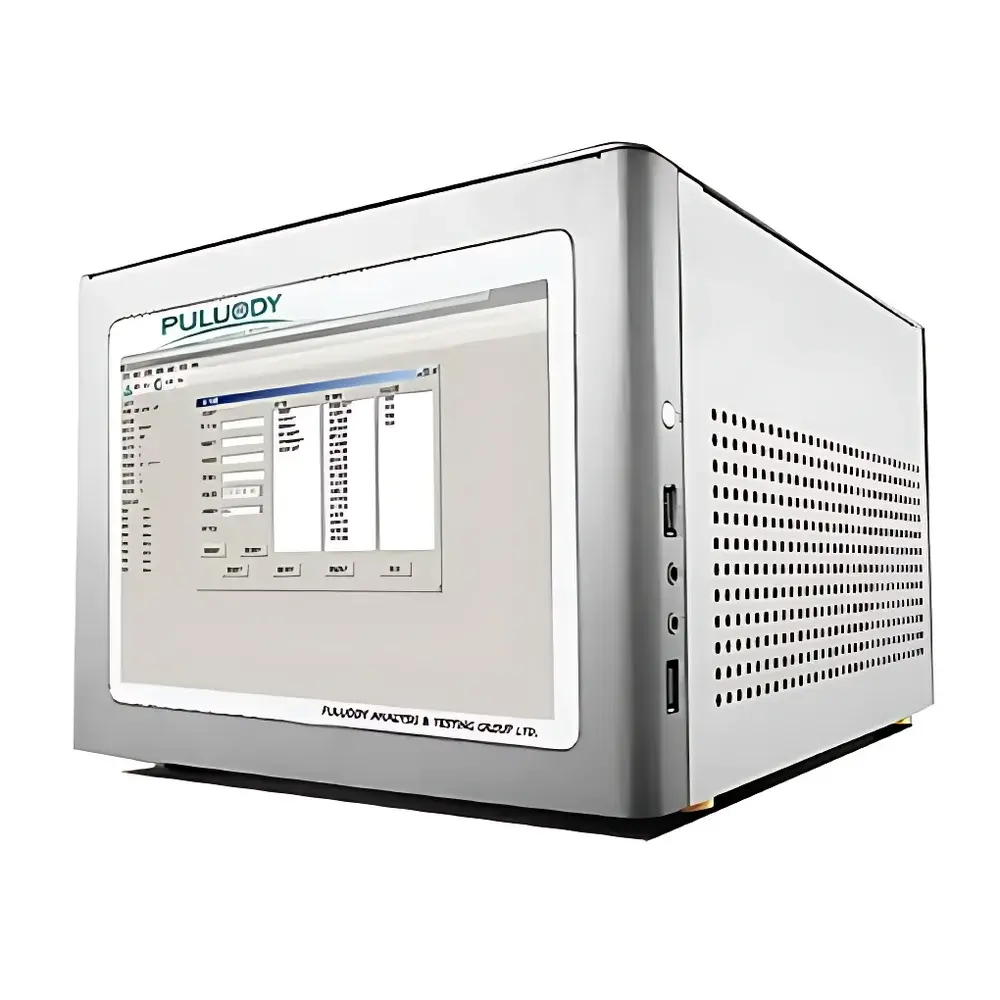
| Display & Control | Color LCD touchscreen + optional wireless keyboard/mouse |
| Power Input | 100–265 VAC, 50–60 Hz |
| Reporting | Particles per mL + ISO 4406 / NAS 1638 contamination code |
Overview
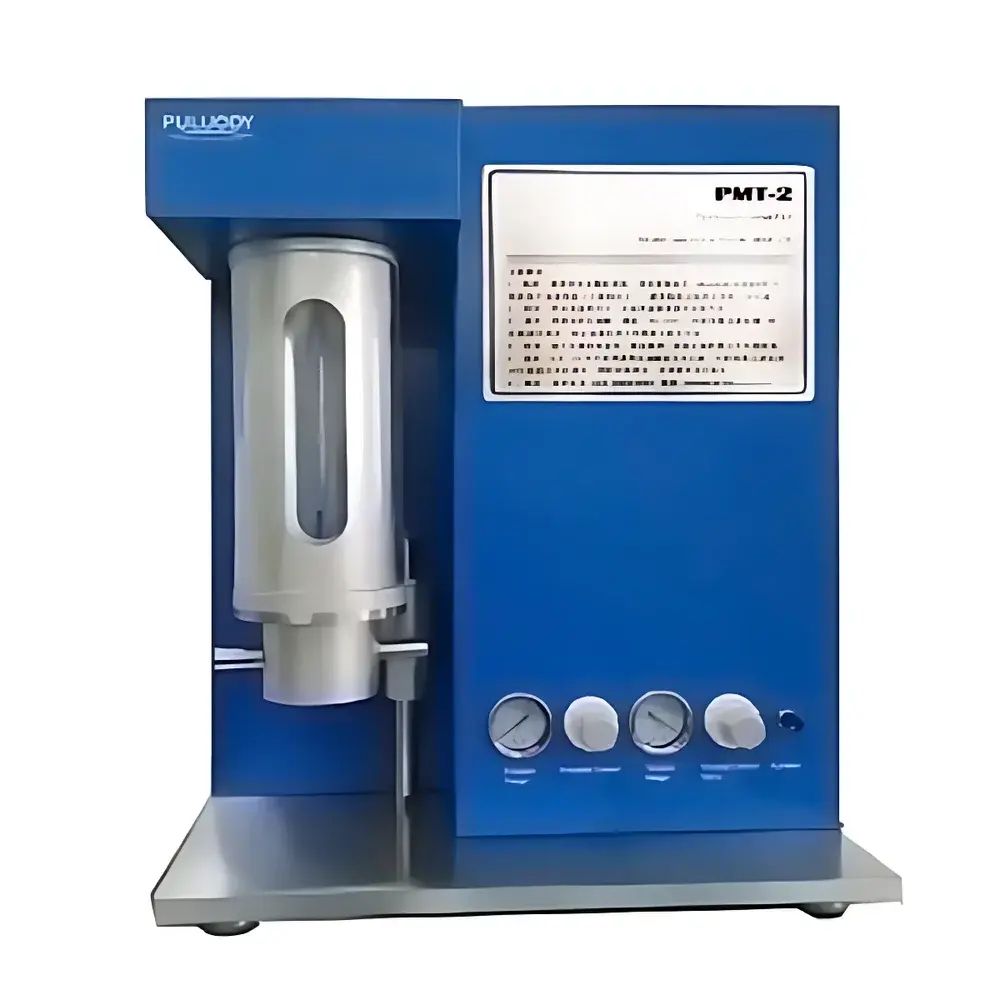
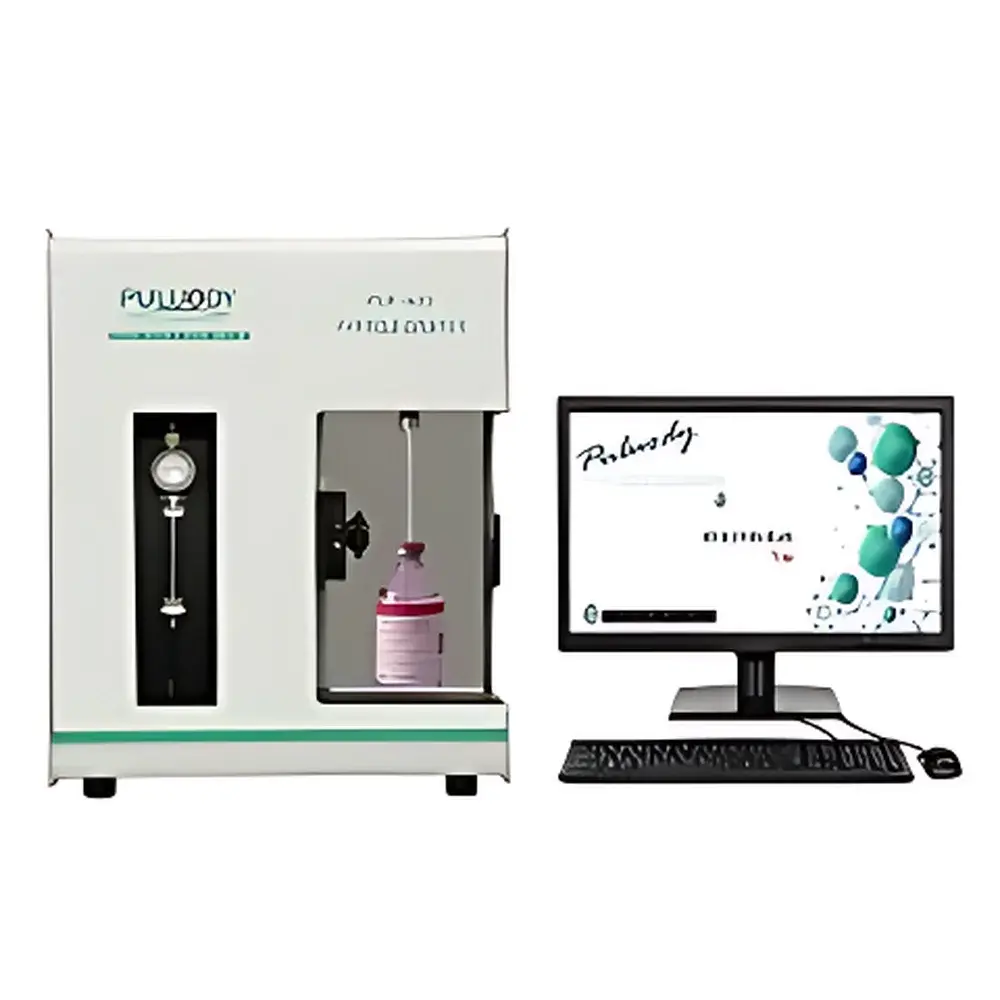
The PULUODY PMT-2 Organic Solvent Liquid Particle Counter is an advanced optical particle counter engineered for high-sensitivity, real-time monitoring and offline analysis of insoluble particulate contamination in low-conductivity, non-aqueous media. It operates on the principle of dual-laser narrow-beam light scattering—where two spatially separated laser sources illuminate a precisely defined flow path, enabling simultaneous detection of sub-micron particles with enhanced signal-to-noise ratio and minimized refractive index interference. This architecture is specifically optimized for challenging organic solvents (e.g., IPA, acetone, PGMEA, DMSO), polymer solutions, and ultra-pure process liquids used in semiconductor front-end manufacturing, flat-panel display fabrication, and advanced electronics cleaning. Unlike conventional single-wavelength counters, the PMT-2’s 8th-generation sensor mitigates Mie scattering artifacts common in high-refractive-index solvents, delivering stable baseline performance across dynamic viscosity ranges (0.3–5 cP) and dielectric constants (2–40). Its design adheres to the physical measurement paradigm of calibrated volumetric sampling and discrete pulse-height discrimination—ensuring traceable, repeatable quantification without reliance on empirical curve-fitting.
Key Features
- Dual-laser narrow-beam optical detection system with independent wavelength alignment and beam collimation for robust signal stability in organic solvents.
- Two-stage precision fluidic control: A micro-stepper-driven metering piston pump ensures volumetric accuracy <±1%, while a closed-loop electromagnetic flow regulator maintains constant velocity (<0.5% fluctuation) during continuous online sampling.
- Configurable detection thresholds: Standard 0.1–1.0 µm resolution; extended ranges include user-defined 1–100 µm or 4–70 µm(c) channels with cumulative counting mode (c) for compliance reporting.
- Embedded V8.3 software architecture separates calibration metrology from routine analysis workflows—eliminating cross-contamination of reference data and preserving audit trail integrity per FDA 21 CFR Part 11 requirements.
- Integrated 4–20 mA analog output with programmable alarm thresholds for PLC interfacing; supports automated shutdown or flush initiation upon exceedance of ISO 4406 Class limits.
- Touchscreen HMI with optional wireless keyboard/mouse enables glove-compatible operation in cleanroom environments (ISO Class 5 compatible enclosure).
Sample Compatibility & Compliance
The PMT-2 is validated for use with low-conductivity organic solvents (conductivity <5 µS/cm), polar aprotic solvents, fluorinated fluids, and viscous polymer solutions where traditional Coulter counters fail due to electrolyte dependency. It meets analytical requirements defined in pharmacopoeial standards including United States Pharmacopeia , European Pharmacopoeia 2.9.19, British Pharmacopoeia Appendix XVII, and Chinese Pharmacopoeia 2020 Edition Section 0903. For industrial applications, it satisfies ISO 11171 (calibration), ISO 4406:2017 (contamination coding), and NAS 1638 Class reporting. All factory calibrations are traceable to NIST-certified latex sphere suspensions (PSL) and certified per JJG 1061–2010 (China National Metrological Verification Regulation for Liquid Particle Counters). The instrument supports GLP-compliant operation through time-stamped, operator-locked data logs and electronic signature-enabled report generation.
Software & Data Management
PULUODY V8.3 software provides dual-mode operation: embedded firmware for standalone field use and PC-hosted version for laboratory integration. The platform implements role-based access control (RBAC), full audit trail logging (user actions, parameter changes, calibration events), and encrypted local database storage compliant with 21 CFR Part 11 Annex 11 expectations. Reports export in PDF/A-1b, CSV, and XML formats—with configurable templates aligned to ISO 4406, NAS 1638, or custom internal specifications. iPad integration enables remote data visualization via secure Wi-Fi pairing, supporting live trend plots, historical overlay comparisons, and automated email alerts on threshold breaches. All raw pulse data is retained for retrospective re-analysis—critical for root-cause investigation in contamination excursions.
Applications
The PMT-2 serves as a critical quality assurance tool across multiple high-precision industries. In semiconductor manufacturing, it monitors rinse tanks, photoresist developers, and CMP slurries for sub-100 nm defect generation risks. For flat-panel display production, it verifies cleanliness of ITO etchants and color filter solvents prior to coating. In pharmaceutical excipient processing, it detects undissolved microcrystalline cellulose or polymer aggregates in solvent-based formulations. Additional use cases include validation of nano-filtration membrane integrity in lithium-ion battery electrolyte purification, cleanliness verification of medical device cleaning agents (per ISO 15883), and qualification of reclaimed solvents in aerospace component rework lines. Its portability supports both fixed-installation online monitoring and mobile offline verification—enabling end-to-end contamination control from raw material receipt to final packaging.
FAQ
Does the PMT-2 require solvent-specific recalibration when switching between IPA and acetone?
No—its dual-laser optical design compensates for refractive index differences across common organics; only flow-rate verification and zero-check are required between solvents.
Can the instrument be integrated into a SCADA system?
Yes—via standard 4–20 mA analog output with configurable scaling, or Modbus TCP/IP (optional add-on module) for direct PLC communication.
Is particle sizing traceable to ISO 21501-4?
Yes—the sensor’s response function is characterized using ISO 21501-4 compliant PSL standards, and all calibration certificates include uncertainty budgets per GUM guidelines.
What maintenance intervals are recommended for continuous online operation?
Pump seals and flow cell optics require inspection every 500 operational hours; full metrological verification is recommended annually or after 2,000 sample cycles.
Does the system support multi-point sampling from different process lines?
Yes—when paired with the optional PULUODY MUX-4 multiplexer module, up to four independent fluid streams can be sequentially analyzed with automatic valve sequencing and line purge cycles.



