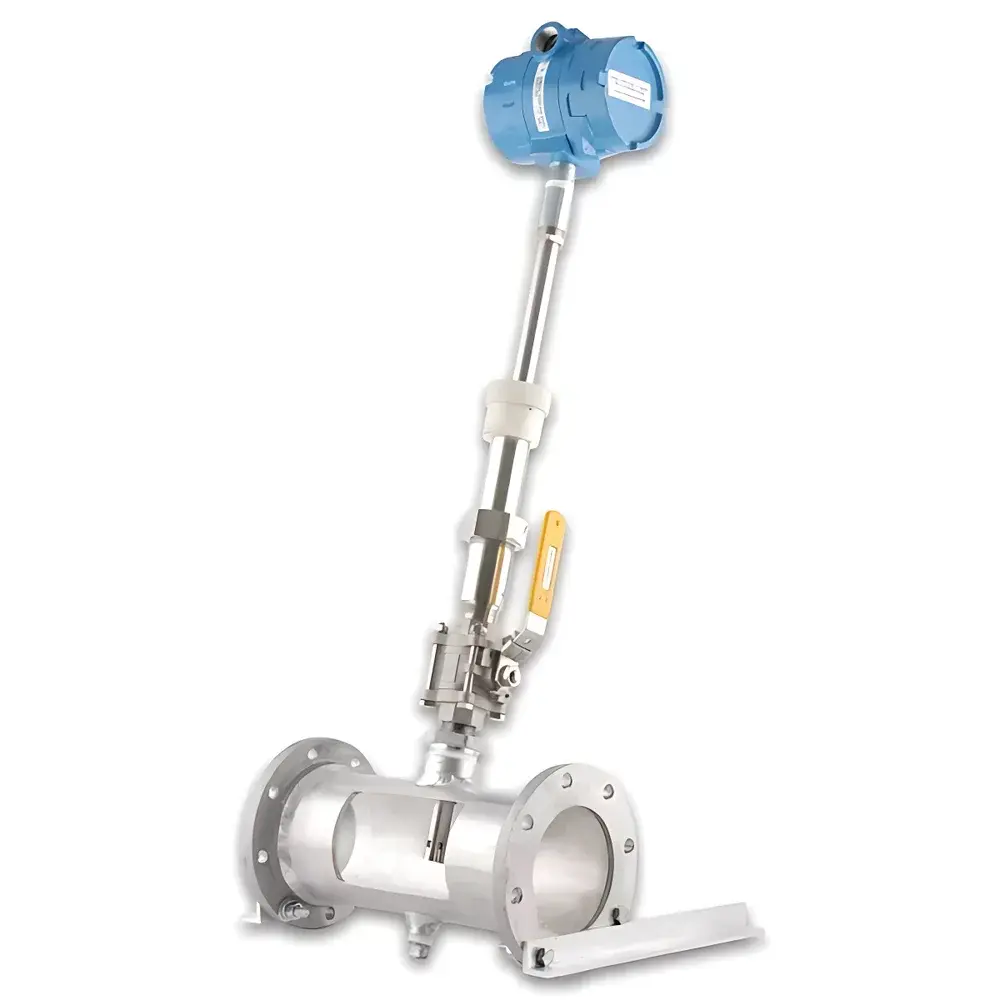
SETA 99500-0 Online Conductivity Analyzer
| Brand | SETA |
|---|---|
| Origin | UK |
| Manufacturer Type | Authorized Distributor |
| Origin Category | Imported |
| Model | 99500-0 |
| Price | USD-based quotation available upon request |
| Measurement Principle | AC Conductivity (4-electrode, frequency-modulated) |
| Conductivity Range | 0–1000 pS/m (optional 0–2000 pS/m) |
| Accuracy | ±2% of reading |
| Temperature Range | –20 °C to +60 °C (±0.5 °C) |
| Pressure Rating | 16 bar standard |
| Enclosure Certification | ATEX II 1G Ex d IIC T6 Ga, FM Class I Div 1 Groups B/C/D, FMc Class I Zone 1 |
| Output Signal | 4–20 mA (HART optional) |
| Housing Material | 316 stainless steel |
| Process Connection | Clamp, flange, or threaded (NPT, ISO 228, DIN 11851 configurable) |
| Software | Included PC-based data acquisition and calibration management suite |
Overview
The SETA 99500-0 Online Conductivity Analyzer is a rigorously engineered industrial process instrument designed for continuous, real-time measurement of electrical conductivity in hydrocarbon and non-aqueous fluid streams. Utilizing a four-electrode AC excitation method with frequency modulation, the analyzer eliminates polarization effects and electrode fouling—critical advantages over DC-based systems—ensuring long-term stability and repeatability in demanding refinery, petrochemical, and aviation fuel handling environments. Its primary application lies in monitoring static dissipater additive (SDA) concentration in jet fuels (e.g., Jet A-1, JP-8), where precise control of conductivity (typically 50–600 pS/m per ASTM D2624) is mandated to prevent electrostatic discharge hazards during transfer and storage. The device operates under full compliance with international standards for hazardous area instrumentation and integrates seamlessly into distributed control systems (DCS) and safety instrumented systems (SIS) via its isolated 4–20 mA analog output.
Key Features
- Four-electrode AC conductivity sensing architecture with automatic frequency optimization to suppress noise and minimize drift in low-conductivity media (≤1000 pS/m)
- Robust 316 stainless steel sensor body rated IP66/NEMA 4X, compatible with sanitary clamp, ANSI/ISO flange, and threaded process connections
- Hazardous area certification for Zone 1 (ATEX, IECEx) and Class I Division 1 (FM, FMc) — suitable for installation directly on fuel transfer manifolds and blending headers
- Standard pressure rating of 16 bar at 20 °C; optional high-pressure variant supports operation up to 100 bar with reinforced ceramic insulators and dual O-ring sealing
- Integrated Pt100 RTD temperature sensor with ±0.5 °C accuracy, enabling automatic temperature compensation referenced to IEC 60751
- Field-configurable 4–20 mA output with HART 7 protocol support for remote diagnostics, calibration verification, and parameter adjustment
Sample Compatibility & Compliance
The 99500-0 is validated for use with non-aqueous, low-polarity fluids including aviation turbine fuels (Jet A, Jet A-1, JP-5, JP-8), diesel blends, kerosene, and hydrocarbon solvents. It is not intended for aqueous, highly conductive, or corrosive electrolyte solutions (e.g., acids, caustics, seawater). All electrical and mechanical design elements comply with EN 60079-0/-1/-11 (explosive atmospheres), EN 61326-1 (EMC for industrial environments), and ASTM D2624–22 “Standard Test Method for Electrical Conductivity of Aviation Fuels”. The analyzer supports GLP/GMP-aligned operation through traceable calibration records, audit-ready configuration logs, and software-enforced calibration intervals.
Software & Data Management
The included Windows-based Data Acquisition & Configuration Software provides full local control of the analyzer without requiring PLC intervention. Functions include real-time trend plotting (conductivity, temperature, diagnostic status), automated calibration logging with user-defined metadata (operator ID, reference standard lot number), and export of time-stamped CSV files compliant with 21 CFR Part 11 requirements when used with system-level electronic signature and audit trail configurations. Firmware updates are performed via USB interface with cryptographic signature verification to ensure integrity.
Applications
- Continuous monitoring of static dissipater additive concentration in aviation fuel distribution terminals and military refueling facilities
- Quality assurance during pipeline batch transfer to verify conductivity remains within ASTM D2624 specification limits
- Feedback control input for automated SDA dosing pumps in inline blending skids
- Process validation in API RP 1174-compliant hazardous liquid pipeline operations
- Support for ISO 8503-2 surface cleanliness verification in hydrocarbon cleaning processes (indirect application via rinse water conductivity correlation)
FAQ
Does the 99500-0 require periodic recalibration in field service?
Yes—calibration verification is recommended every 3 months for critical applications; annual full calibration using NIST-traceable conductivity standards (e.g., SETA 99500-CAL-KIT) is required for regulatory compliance.
Can the analyzer be installed vertically or horizontally in the pipeline?
It is orientation-independent; flow direction must align with the arrow marking on the sensor body, but mounting angle does not affect measurement performance.
Is temperature compensation applied automatically?
Yes—the integrated Pt100 RTD feeds real-time temperature data to the microprocessor, which applies the ASTM D2624 linear temperature coefficient (0.02%/°C) to reported conductivity values.
What communication protocols beyond 4–20 mA are supported?
HART 7 is standard; Modbus RTU over RS-485 is available as a factory-configured option, but Foundation Fieldbus and Profibus PA are not supported.
How is sensor fouling mitigated during extended operation?
The AC excitation method inherently prevents electrochemical deposition; additionally, the sensor geometry enables turbulent flow scrubbing, and optional ultrasonic cleaning modules can be retrofitted for high-fouling installations.
Related Products