
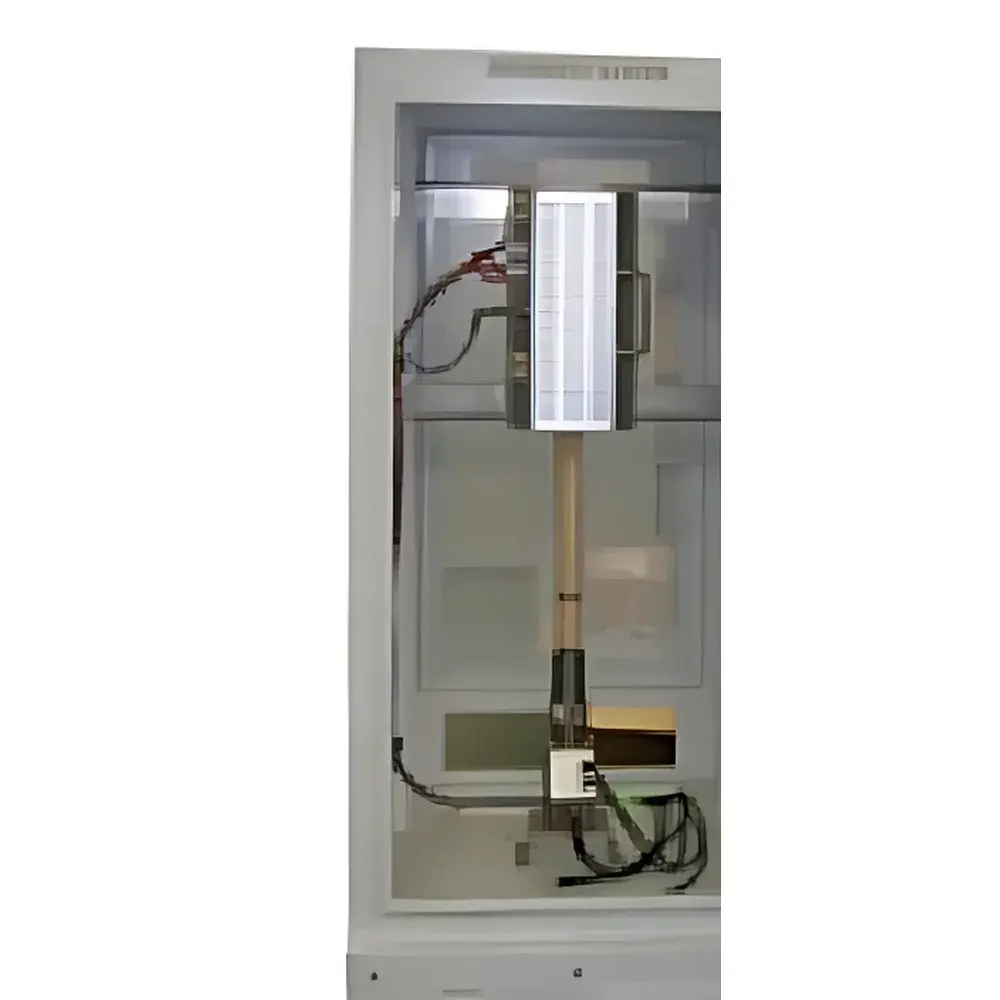
TOYO Corporation Probstat High-Temperature Electrochemical Test Fixture for SOFC Characterization
| Brand | TOYO Corporation (Japan) |
|---|---|
| Origin | Japan |
| Manufacturer Type | Authorized Distributor |
| Origin Category | Imported |
| Model | Probstat |
| Pricing | Upon Request |
Overview
The TOYO Corporation Probstat is a precision-engineered, high-temperature electrochemical test fixture designed specifically for the characterization of solid oxide fuel cell (SOFC) materials and single-cell components under controlled atmospheric and thermal conditions. Developed over two decades by the research group of Prof. Truls Norby and Prof. Per Kofstad at the University of Oslo—and commercialized by NorECs AS since 2001—the Probstat implements a robust ceramic-based cell holder architecture grounded in fundamental electrochemical principles. It operates on the principle of symmetrical or asymmetrical three-electrode configurations, enabling accurate separation of electrode, electrolyte, and interfacial contributions during impedance spectroscopy (EIS), current–voltage (I–V) polarization, and thermoelectric (Seebeck coefficient) measurements. Its design emphasizes thermal stability, gas-tight sealing integrity, and electrical isolation across extreme temperature gradients—critical for evaluating ionic conductivity, electrode kinetics, and degradation mechanisms in perovskite oxides, doped ceria, and other high-temperature electroceramics.
Key Features
- High-temperature operation: Rated for continuous use up to 1400 °C; short-term exposure up to 1600 °C with appropriate furnace integration and thermal shielding
- Controlled humidified gas environment: Compatible with optional humidification modules supporting dew point regulation from 40 °C to 80 °C—essential for studying proton-conducting oxides and steam-assisted reaction kinetics
- Low-noise DC-resistive heating compatibility: Designed for integration with programmable DC power supplies to minimize electromagnetic interference during sensitive AC impedance acquisition
- Modular sample mounting: Tool-free, repeatable ceramic-to-ceramic contact via spring-loaded platinum or gold current collectors; accommodates disk-shaped samples (typically Ø10–25 mm, thickness 0.5–2 mm)
- Multi-technique readiness: Equipped with dedicated feedthroughs for four-wire resistance measurement, dual voltage sensing, and thermocouple (Type S or R) integration for in situ temperature monitoring
- Ceramic construction: Fully alumina (Al2O3) or magnesia-stabilized zirconia (MSZ) housing ensures chemical inertness against reducing/oxidizing atmospheres and long-term dimensional stability
Sample Compatibility & Compliance
The Probstat supports a broad range of dense and porous ceramic, composite, and thin-film SOFC components—including YSZ, GDC, LSGM, BSCF, and LSF-based electrodes and electrolytes. Its geometry conforms to standard ASTM C1749–15 (Standard Practice for Measuring Electrical Conductivity of Solid Oxide Electrolytes) and ISO 17840:2016 (Fuel cell technologies — Test methods for solid oxide fuel cell (SOFC) stack components). All metallic contacts comply with IEC 62282-2 Annex D for high-temperature electrochemical test fixtures. The fixture’s leak-tight design (<1×10⁻⁸ mbar·L/s He) meets requirements for controlled-atmosphere testing under N2, O2, H2, CO, and synthetic reformate mixtures—validated per ISO 14644-1 Class 5 cleanroom handling protocols where applicable.
Software & Data Management
While the Probstat itself is a hardware platform without embedded firmware, it is fully compatible with industry-standard electrochemical workstations (e.g., BioLogic SP-300, Gamry Interface 5000E, Princeton Applied Research VersaSTAT 4) and data acquisition systems compliant with IEEE 1241 and ASTM E2586. When integrated into GLP/GMP-regulated laboratories, its use supports 21 CFR Part 11-compliant workflows through audit-trail-enabled software platforms that log instrument configuration, gas flow rates, temperature ramps, and raw impedance spectra with timestamped metadata. TOYO provides detailed mechanical drawings and electrical schematics to facilitate custom automation via LabVIEW or Python-based control scripts.
Applications
- High-temperature impedance spectroscopy (HT-EIS) of oxygen ion and proton conduction mechanisms
- In situ I–V curve analysis under varying pO2, pCO2, and humidity profiles
- Thermoelectric property mapping via Seebeck coefficient measurement across thermal gradients
- Electrode microstructure–performance correlation studies using symmetric cell configurations
- Long-term stability and degradation testing under thermal cycling (200–1400 °C) and redox cycling protocols
- Validation of novel electrolyte compositions and functional layer architectures prior to full-cell assembly
FAQ
Is the Probstat compatible with vacuum or high-pressure environments?
The standard Probstat is rated for ambient to 1 bar absolute pressure under inert or reactive gases. Custom variants with reinforced flange seals and thick-walled alumina bodies are available for pressures up to 5 bar upon engineering review.
Can I use platinum paste or sputtered electrodes directly on the sample surface?
Yes—both screen-printed Pt paste (fired at ≤900 °C) and sputtered Pt or Au current collectors are routinely employed. TOYO recommends pre-characterization of paste adhesion and interfacial reactivity at target operating temperatures.
Does TOYO provide calibration services or reference materials?
TOYO partners with accredited metrology labs to supply NIST-traceable Pt–Rh thermocouples and certified YSZ conductivity standards (e.g., 8YSZ disks with documented σbulk at 1000 °C), available separately upon request.
What furnace types are recommended for integration?
Horizontal tube furnaces with dual-zone PID control and MoSi2 or SiC heating elements are preferred. Vertical drop-tube or multi-zone box furnaces may be used with custom mounting brackets supplied by TOYO.
Is technical support available for experimental protocol development?
Yes—TOYO offers application engineering consultation, including test plan review, gas train configuration guidance, and interpretation frameworks for complex EIS data sets, particularly for multi-step relaxation modeling and distribution-of-relaxation-times (DRT) analysis.





