
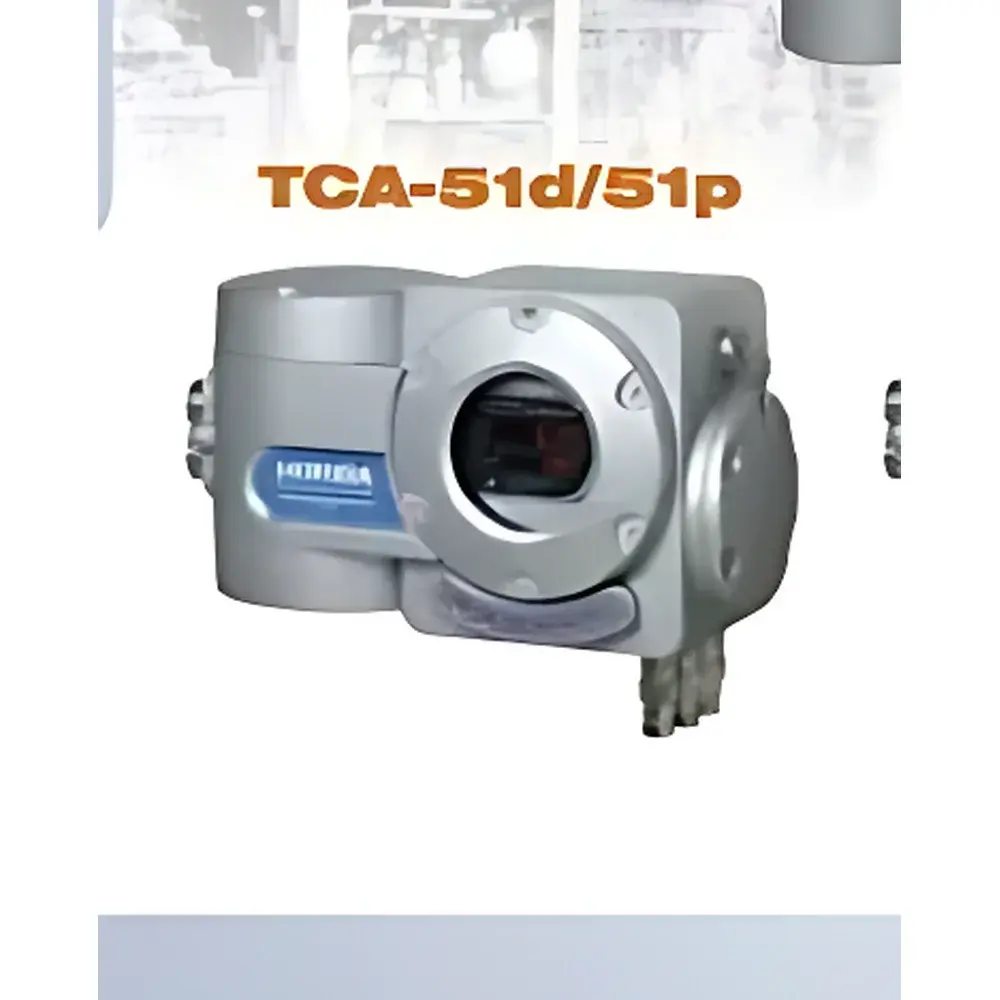
HORIBA TCA-51d/TCA-51p Intrinsically Safe Thermal Conductivity Gas Analyzer
| Brand | HORIBA |
|---|---|
| Origin | Japan |
| Model | TCA-51d / TCA-51p |
| Explosion Protection | Ex d IIB+H2 T4 / Ex px d IIC T4X |
| Detection Principle | Thermal Conductivity |
| Measurands | H₂, O₂ |
| Range | 0–10 to 0–100 vol% (H₂), 0–5 to 0–25 vol% (O₂) |
| Repeatability | ±0.5% F.S. (standard range) |
| Linearity | ±1.0% F.S. |
| Zero Drift | ±1.0% F.S./week (standard range) |
| Span Drift | ±2.0% F.S./week (standard range) |
| Response Time (T90) | ≤20 s |
| Sample Flow Rate | 300–1500 mL/min |
| Operating Pressure | ≥1.98 kPa (TCA-51d), ≥14.7 kPa (TCA-51p) |
| Wetted Materials | SUS304, SUS316, FKM, Pt, Au, SiO₂, Borosilicate Glass |
| Compliance | IEC 60079-0, IEC 60079-1 (Ex d), IEC 60079-2 (Ex p), ATEX Directive 2014/34/EU, UKCA |
Overview
The HORIBA TCA-51d and TCA-51p are certified intrinsically safe thermal conductivity gas analyzers engineered for continuous, reliable concentration measurement of hydrogen (H₂) and oxygen (O₂) in hazardous industrial environments. Based on the fundamental physical property of thermal conductivity—where gases exhibit distinct heat transfer coefficients depending on molecular mass and structure—the TCA series employs a dual-cell Wheatstone bridge configuration with platinum-filament sensing elements. One cell is exposed to the sample gas stream via diffusion; the other contains a sealed reference gas (typically nitrogen or synthetic air). As analyte concentration changes, differential thermal dissipation alters the resistance of the heated filament, generating a proportional imbalance voltage signal. This principle enables robust, drift-stable detection without consumables or optical components, making it ideal for long-term unattended operation in petrochemical, semiconductor, hydrogen production, and battery manufacturing facilities where explosive atmospheres (Group IIB+H₂ or IIC) and stringent safety compliance are non-negotiable.
Key Features
- Explosion-proof certification per international standards: TCA-51d complies with Ex d IIB+H₂ T4 (flameproof enclosure); TCA-51p meets Ex px d IIC T4X (pressurized + flameproof hybrid design), enabling deployment in Zone 1 and Zone 2 classified areas.
- Dual-channel thermal conductivity detection optimized for H₂ (0–10 to 0–100 vol%) and O₂ (0–5 to 0–25 vol%), with up to four programmable ranges and maximum range ratio of 1:25 for H₂.
- High-stability platinum sensing filaments housed in corrosion-resistant wetted materials including SUS316 stainless steel, gold-plated contacts, FKM elastomers, fused silica, and borosilicate glass—ensuring compatibility with aggressive process streams.
- Fast response time (T90 ≤ 20 s from analyzer inlet), low zero and span drift (±1.0% F.S./week zero, ±2.0% F.S./week span under standard conditions), and linearity within ±1.0% F.S.
- Modular front-panel interface with intuitive navigation, real-time diagnostics, and configurable alarm thresholds—designed for operator clarity and minimal training requirements in high-risk operational settings.
Sample Compatibility & Compliance
The TCA-51d and TCA-51p accept dry, particle-free sample gases with oxygen content below 21 vol% and no condensable vapors. Minimum sample pressure is 1.98 kPa (gauge) for TCA-51d and 14.7 kPa for TCA-51p; flow rates range from 300 mL/min (MPA-51d) to 1.5 L/min (TCA-51p). All wetted surfaces are constructed to resist chemical attack from H₂-rich or oxidizing atmospheres. The analyzers conform to IEC 60079-0 (general requirements), IEC 60079-1 (flameproof “d”), and IEC 60079-2 (pressurized “p”) standards, and are certified for use in accordance with ATEX 2014/34/EU and UKCA regulations. They support integration into SIL2-capable safety instrumented systems (SIS) when deployed with appropriate logic solvers and redundant architecture.
Software & Data Management
The TCA platform supports analog 4–20 mA output with HART protocol (optional) for field communication and remote configuration. Digital interfaces include RS-485 Modbus RTU for integration into DCS, SCADA, or MES platforms. Firmware enables data logging of measured values, diagnostic flags, and calibration timestamps with user-defined intervals. Audit trail functionality records all parameter changes and calibration events, supporting GLP/GMP-aligned quality management systems. Optional software tools provide trend visualization, alarm history export (CSV), and automated report generation compliant with ISO/IEC 17025 documentation requirements.
Applications
- Hydrogen purity monitoring in electrolyzer outlets, fuel cell feed lines, and ammonia synthesis loops.
- Oxygen concentration control in inert gas blanketing systems for reactors, storage tanks, and gloveboxes.
- Leak detection and atmosphere verification in semiconductor fabrication cleanrooms and vacuum chamber purge cycles.
- Process safety interlocks in lithium-ion battery drying ovens and electrode coating lines.
- Continuous emission monitoring (CEM) support for combustion optimization and flue gas recirculation (FGR) control in industrial boilers.
FAQ
What explosion protection categories does the TCA-51d support?
The TCA-51d is certified Ex d IIB+H₂ T4, suitable for environments containing propane, ethylene, or hydrogen-air mixtures with maximum surface temperature limited to 135°C.
Can the TCA-51p measure hydrogen in Group IIC atmospheres?
Yes—the TCA-51p carries Ex px d IIC T4X certification, permitting installation in locations with acetylene or hydrogen-rich atmospheres where ignition energy thresholds are lowest.
Is zero calibration required before each measurement cycle?
No—factory-calibrated sensors maintain stability over extended periods; however, periodic verification using certified span gas (e.g., 10% H₂ in N₂) is recommended per ISO 14644-3 and internal QA protocols.
What sample conditioning is necessary for optimal performance?
A particulate filter (≤1 µm) and coalescing moisture trap are strongly advised upstream of the analyzer inlet to prevent sensor fouling and thermal drift.
Does the TCA series comply with FDA 21 CFR Part 11 requirements?
While the base hardware does not include electronic signature or audit trail enforcement, optional firmware upgrades and third-party validation packages enable Part 11-compliant data integrity when integrated with validated enterprise systems.







