
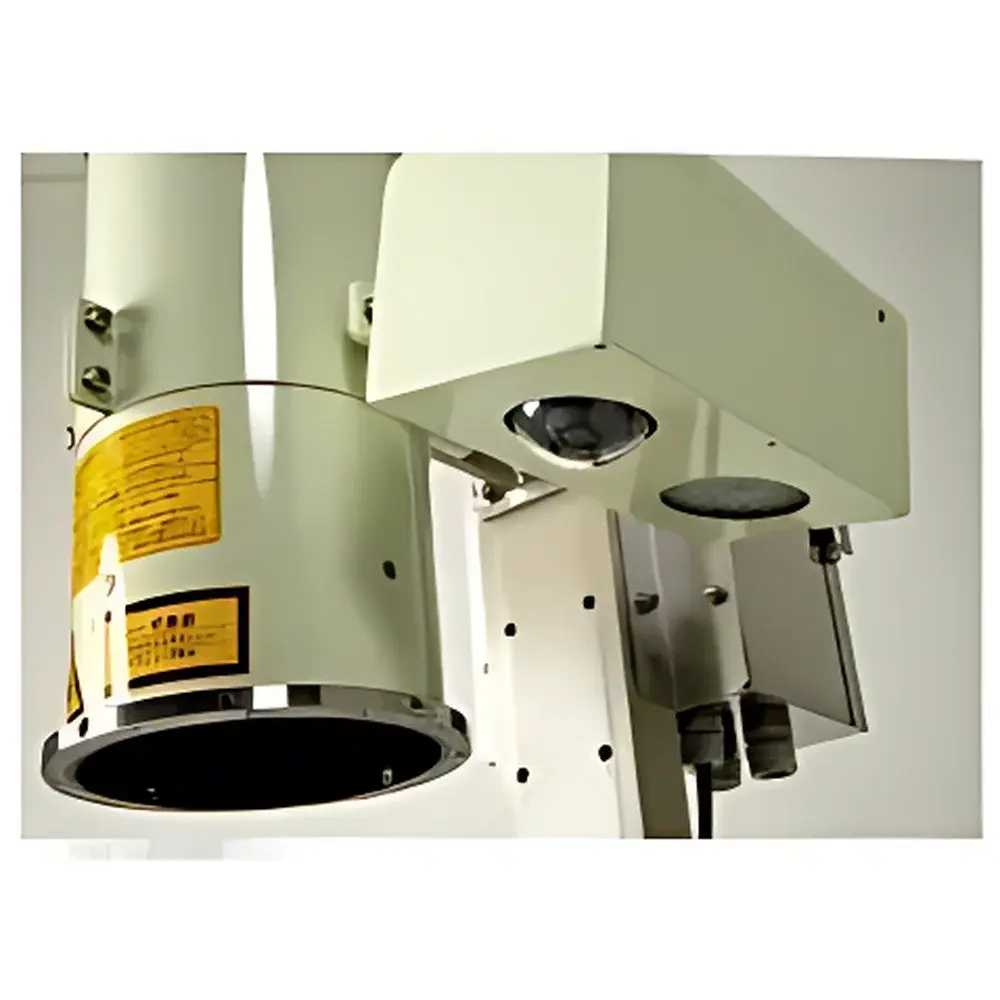
HORIBA LO-300 Online Oil Film Monitor
| Brand | HORIBA |
|---|---|
| Origin | Japan |
| Model | LO-300 |
| Detection Principle | Laser Circular Area Scanning Reflectometry |
| Detection Range | 0.3–4.0 m (up to 6.0 m on still water) |
| Oil Detection Target | Floating/Adherent hydrocarbon films (gasoline, kerosene, diesel, heavy fuel oil, insulating oil, lubricating oil) |
| Output | 4–20 mA analog signal (reflected light intensity), 2 dry contact alarms (oil film alarm, system fault) |
| Display | Touchscreen GUI showing oil coverage (%), threshold level, real-time received light intensity, status indicators |
| Power Supply | AC 100 V ±10%, 50/60 Hz, ≤100 VA |
| Enclosure Rating | IP66 |
| Operating Temperature | −10 to +50 °C |
| Dimensions | Ø185 × 547 mm (H) |
| Weight | ~11 kg |
| Optional | Surveillance camera module (MP4 video recording at 1 or 3 fps, pre-/post-alarm buffer, LED illumination for night operation, timestamp overlay) |
Overview
The HORIBA LO-300 Online Oil Film Monitor is an industrial-grade, non-contact optical sensor engineered for continuous, real-time detection of hydrocarbon oil films on water surfaces in environmental monitoring, wastewater treatment, industrial effluent discharge points, and stormwater retention basins. It employs laser circular area scanning reflectometry—a robust, physics-based method that projects a low-power Class 2 semiconductor laser (≤1 mW) onto the water surface and analyzes spatially resolved backscattered intensity patterns across a defined scan zone. Unlike point-sensor or fluorescence-based analyzers, the LO-300’s wide-area scanning geometry (0.3–4.0 m standard range; up to 6.0 m on calm water) mitigates false positives induced by wave motion, ripples, or floating debris. Its core function is quantitative assessment of oil coverage percentage within the field of view—not concentration—enabling reliable threshold-triggered alarms based on spatial extent and temporal persistence (configurable dwell time). Designed for unattended outdoor deployment, the unit operates without consumables, immersion, or sample extraction, ensuring long-term stability and minimal lifecycle maintenance.
Key Features
- Non-intrusive laser scanning: No contact with water, zero reagents, no fouling-prone optics, and no calibration drift from fluid chemistry.
- Self-aligning transmitter/receiver optics: Motorized vertical auto-leveling simplifies installation on uneven structures (tilt tolerance ±3°).
- Intelligent oil coverage quantification: Alarm logic configurable by oil area (%) and minimum duration (e.g., “alarm if ≥15% coverage sustained for ≥30 seconds”).
- Ruggedized outdoor enclosure: IP66-rated aluminum housing with thermal management, rated for −10 to +50 °C ambient operation.
- Integrated color touchscreen HMI: Local configuration, real-time visualization of reflected light intensity (4–20 mA equivalent), oil coverage %, alarm thresholds, and system status.
- Standard 4–20 mA analog output and two programmable dry-contact relays for integration into PLCs, SCADA, or DCS systems.
Sample Compatibility & Compliance
The LO-300 detects floating and adherent petroleum-based hydrocarbons—including gasoline, jet fuel (kerosene), diesel, marine fuel oil (IFO/MGO), transformer insulating oil, and industrial lubricants—on freshwater, seawater, and wastewater surfaces. It does not respond to water-miscible oils (e.g., synthetic ester-based coolants) or surfactant-laden emulsions, ensuring specificity where regulatory compliance hinges on free-phase hydrocarbon presence. While not certified to a single harmonized standard, its operational methodology aligns with principles referenced in ASTM D3921 (Standard Practice for Sampling and Analysis of Oil on Water Surfaces) and ISO 9377-2 (Water quality — Determination of hydrocarbon oil index — Part 2: Infrared spectrometry). Its analog output and relay signaling support integration into facilities operating under EPA NPDES permit conditions or ISO 14001 environmental management systems. The device meets IEC 61000-6-2 (immunity) and IEC 61000-6-4 (emissions) for industrial environments.
Software & Data Management
The LO-300 operates autonomously via embedded firmware; no external PC is required for basic operation. Configuration, real-time monitoring, and event review are accessible via the built-in 7-inch resistive touchscreen interface. When equipped with the optional surveillance camera module, the system records MP4 video clips (H.264 encoded) at user-selectable frame rates (1 or 3 fps), capturing 30 seconds pre-alarm and 30 seconds post-alarm (6 MB per clip at 3 fps). Each frame includes an overlaid timestamp (YYYY-MM-DD HH:MM:SS), enabling forensic correlation with SCADA logs or regulatory reporting timelines. Video files are stored internally on a replaceable microSD card (not included) and can be retrieved via USB or remotely accessed over LAN using standard HTTP/FTP protocols—supporting audit-ready documentation for GLP-aligned incident investigations. Remote diagnostics and firmware updates are supported via secure Ethernet connection.
Applications
- Effluent monitoring at refinery, petrochemical, and power plant outfalls to verify compliance with hydrocarbon discharge limits.
- Stormwater detention basin surveillance in industrial parks and transportation corridors to detect accidental spills before runoff release.
- Oil-water separator performance verification in mechanical workshops, shipyards, and vehicle maintenance facilities.
- Environmental protection agency (EPA) or local authority remote monitoring nodes for sensitive waterways and harbor entrances.
- Early warning systems integrated with automated valve control or sump pump activation upon confirmed oil film detection.
FAQ
Does the LO-300 measure oil concentration in ppm?
No. It quantifies the percentage of surface area covered by visible hydrocarbon film within its optical scan zone. It is not a quantitative chemical analyzer.
Can it distinguish between oil types (e.g., diesel vs. lubricating oil)?
No. It detects presence and spatial extent of non-water-soluble hydrocarbon films but does not perform spectral identification.
Is sunlight interference mitigated?
Direct solar exposure must be avoided; the unit requires shading (optional sunshade available) and should be installed under eaves or with physical遮光罩 to prevent saturation of the photodetector.
What maintenance is required?
Annual visual inspection of lens cleanliness and housing integrity; no routine optical recalibration or consumable replacement is needed due to sealed, non-contact design.
Is the camera module compatible with existing network video management systems (VMS)?
It outputs standalone MP4 files via FTP/USB; RTSP streaming is not supported. Integration with third-party VMS requires middleware or custom file ingestion scripting.
Related Products







