
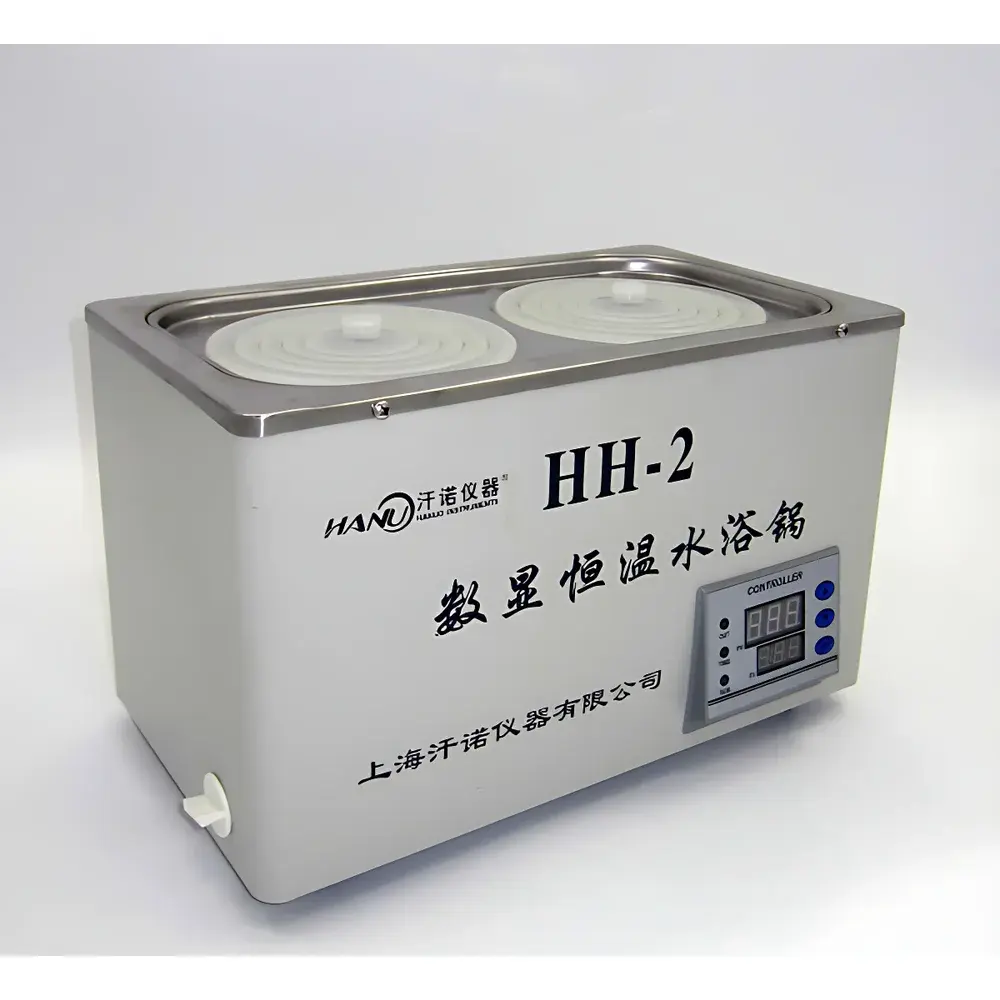
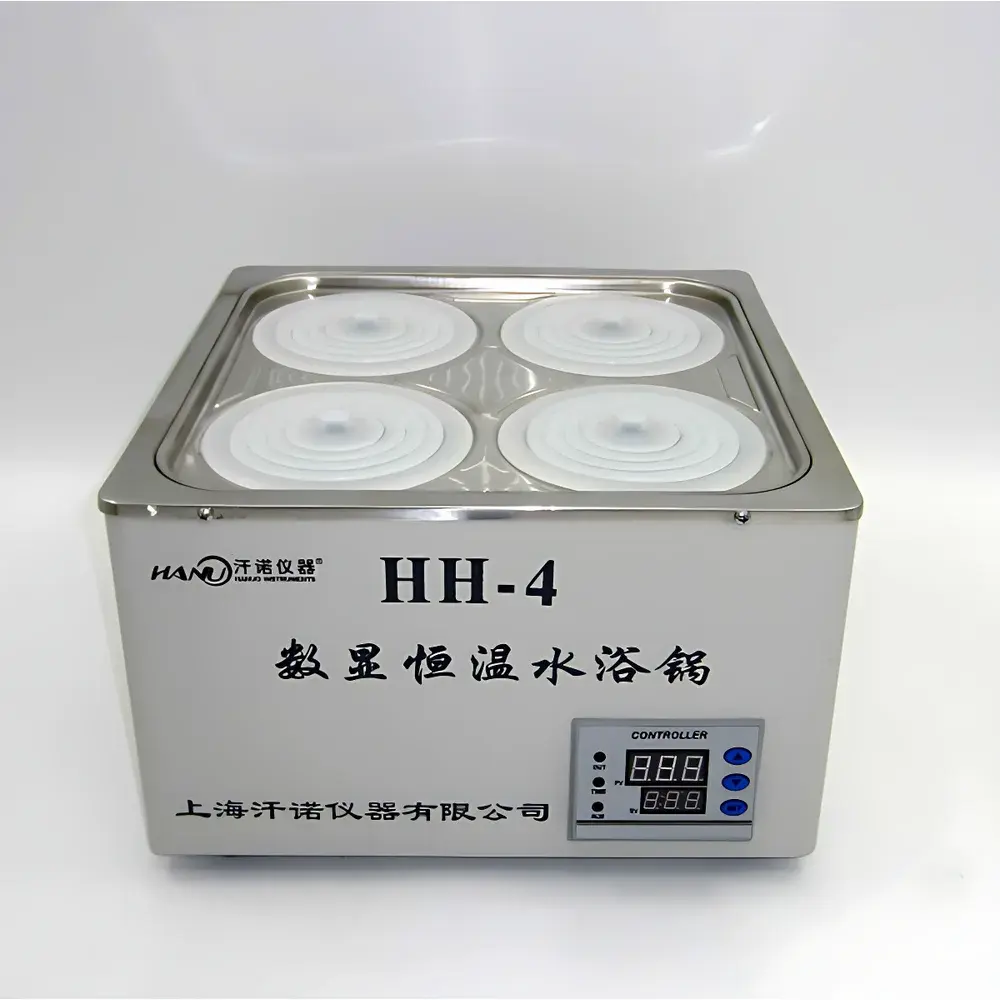
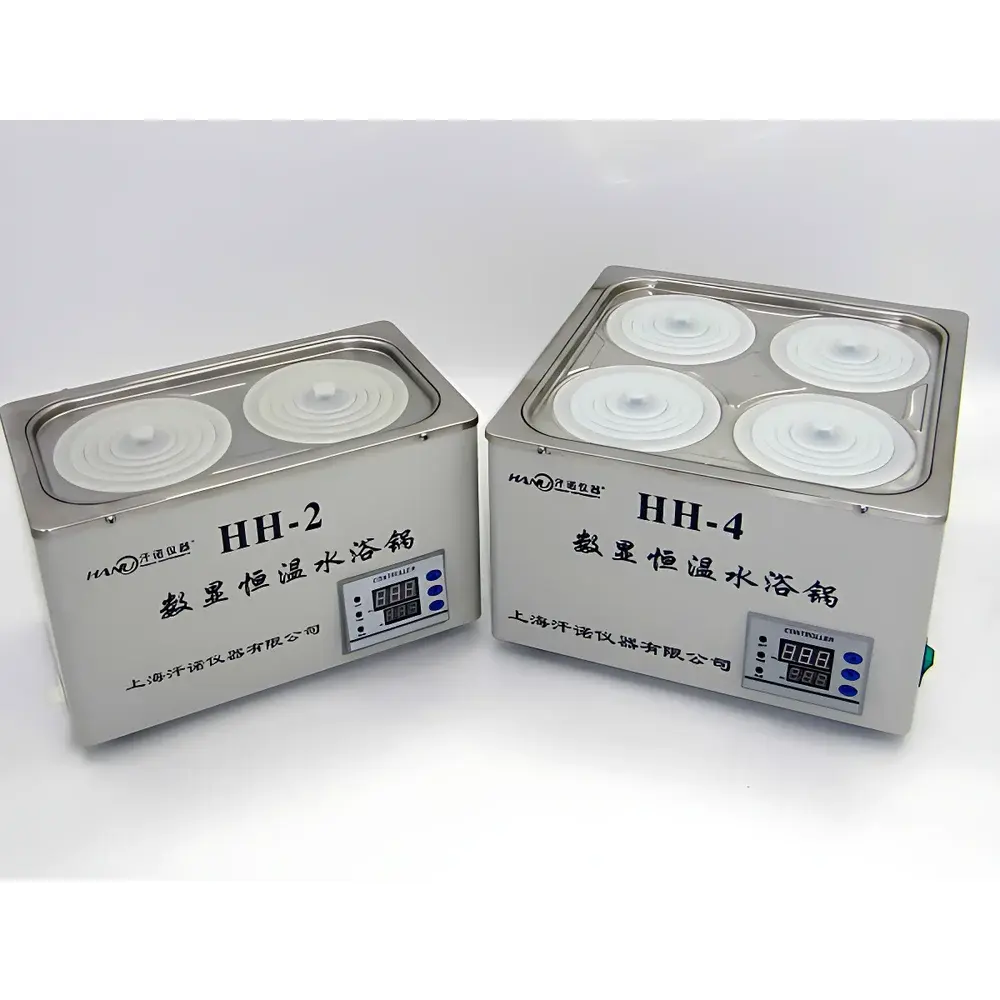
Hanuo HH-6A Digital Display Constant-Temperature Magnetic Stirring Water Bath
| Brand | Hanuo |
|---|---|
| Model | HH-6A |
| Temperature Range | Room Temp to 100 °C |
| Control Accuracy | ±0.5 °C |
| Heating Power | 1500 W |
| Working Chamber Dimensions | 470 mm × 300 mm × 130 mm |
| External Dimensions | 690 mm × 390 mm × 190 mm |
| Stirring | Integrated Magnetic Stirrer |
| Chamber Material | Stainless Steel (304) |
| Display | LED Digital |
| Compliance | CE-marked design principles, compatible with GLP-aligned lab workflows |
Overview
The Hanuo HH-6A Digital Display Constant-Temperature Magnetic Stirring Water Bath is a precision-engineered laboratory thermal platform designed for simultaneous temperature stabilization and homogeneous sample agitation in aqueous or low-viscosity media. It operates on the principle of resistive heating via embedded high-stability alloy heating elements, coupled with PID-based feedback control to maintain setpoint accuracy within ±0.5 °C across its full 0–100 °C operating range. The unit integrates a built-in magnetic stirrer with adjustable rotation speed (typically 0–1200 rpm, depending on load and vessel geometry), enabling uniform heat distribution and enhanced mass transfer—critical for applications requiring reproducible reaction kinetics, dissolution testing, enzyme incubation, or calibration standard preparation. Its dual-function architecture eliminates the need for separate water baths and stir plates, reducing benchtop footprint and inter-device variability.
Key Features
- LED digital display with real-time temperature readout and intuitive push-button interface for setpoint adjustment and stirring speed control
- Stainless steel 304 working chamber (470 × 300 × 130 mm) offering corrosion resistance, mechanical rigidity, and ease of cleaning—validated for repeated exposure to aqueous buffers, saline solutions, and mild organic solvents
- 1500 W high-efficiency heating system with rapid thermal response and minimal overshoot, supported by over-temperature protection circuitry compliant with IEC 61000-4-2 immunity standards
- Integrated magnetic stirring mechanism with ceramic-coated stir bar compatibility; motor drive engineered for continuous operation under load without thermal drift
- Robust chassis construction with non-slip rubber feet, reinforced insulation layer, and front-panel splash guard to meet basic IP20 environmental protection requirements
- Calibration-ready design: temperature sensor (PT100-grade thermistor) accessible for periodic verification using NIST-traceable reference probes
Sample Compatibility & Compliance
The HH-6A accommodates standard laboratory glassware including beakers (up to 1000 mL), Erlenmeyer flasks, and test tube racks—optimized for vessels with flat, ferromagnetic-compatible bases. Its chamber depth of 130 mm supports immersion of up to six 50–250 mL containers simultaneously in dual-row configuration. While not certified to ISO/IEC 17025 or FDA 21 CFR Part 11 out-of-the-box, the device’s stable thermal performance and repeatable stirring output support method validation under ASTM D1557 (soil compaction), USP (dissolution apparatus qualification), and ISO 8573-1 (compressed air purity testing where water bath conditioning is required). Users may document operational parameters manually or via external data loggers to satisfy GLP/GMP audit traceability requirements.
Software & Data Management
The HH-6A operates as a standalone analog-digital hybrid instrument with no embedded firmware or network connectivity. All control logic resides in discrete hardware circuitry, ensuring electromagnetic compatibility and immunity to software failure modes. Temperature and stirring status are displayed locally only; no USB, RS-232, or Ethernet ports are provided. For labs requiring electronic recordkeeping, integration is achieved via third-party USB temperature loggers (e.g., Omega OM-EL-USB-TC) placed directly in the bath medium, synchronized with time-stamped stirring activation logs. This architecture aligns with risk-based validation approaches where deterministic, low-complexity instrumentation reduces qualification burden.
Applications
- Controlled-temperature enzymatic assays in molecular biology workflows, including restriction digests and ligase reactions
- Dissolution profile development and QC testing per USP general chapter , particularly for immediate-release solid oral dosage forms
- Preparation of calibration standards for spectrophotometry, ICP-OES, and HPLC mobile phase conditioning
- Cell culture reagent warming and buffer equilibration prior to sterile filtration
- Accelerated stability studies (ICH Q1A) at defined storage temperatures below boiling point
- Supporting ASTM E2912 (standard practice for calibration of thermal analyzers) through precise thermal ramping and soak verification
FAQ
What is the maximum recommended liquid volume for stable temperature control in the HH-6A chamber?
For optimal thermal uniformity and PID responsiveness, fill level should be maintained between 3.5 L and 5.0 L (approximately 70–90% of chamber capacity). Overfilling beyond 5.5 L may impair circulation and increase settling time.
Can the HH-6A be used with silicone oil or other non-aqueous heat transfer fluids?
No. The stainless steel chamber and heating element are rated exclusively for water and aqueous salt solutions. Use of oils, glycols, or organic solvents voids safety certification and risks thermal runaway or material degradation.
Is the magnetic stirrer speed digitally controllable or fixed?
Speed is manually adjustable via rotary potentiometer on the front panel; no digital speed setting or RPM feedback is provided. Typical operational range is 0–1200 rpm under standard 500 mL beaker load.
Does the unit include a lid or cover option?
No factory-supplied lid is included. Optional acrylic or polycarbonate covers may be sourced externally to reduce evaporation during extended incubations—but must be vented to prevent pressure buildup.
How frequently should temperature calibration be performed?
Per ISO/IEC 17025 guidance, initial verification is required upon installation; subsequent checks are recommended every 3 months or before critical assay runs, using a calibrated reference thermometer traceable to national standards.



