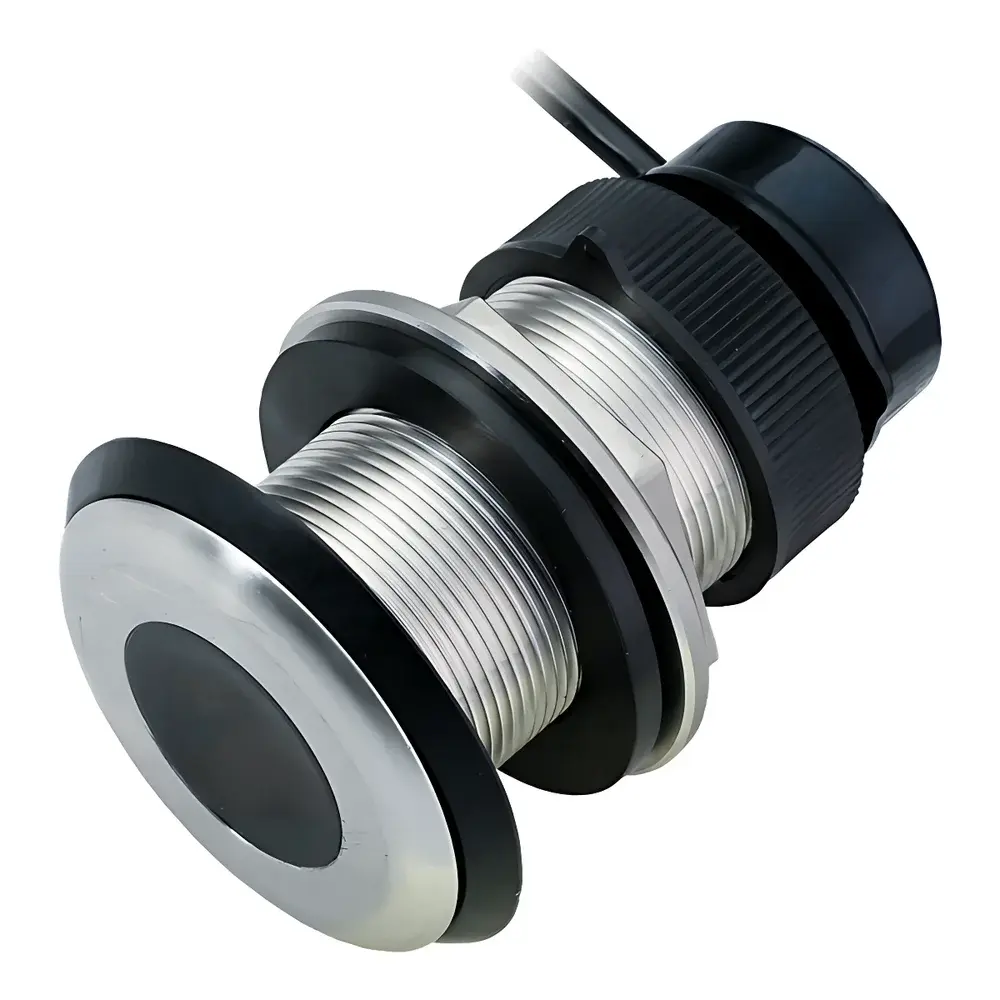
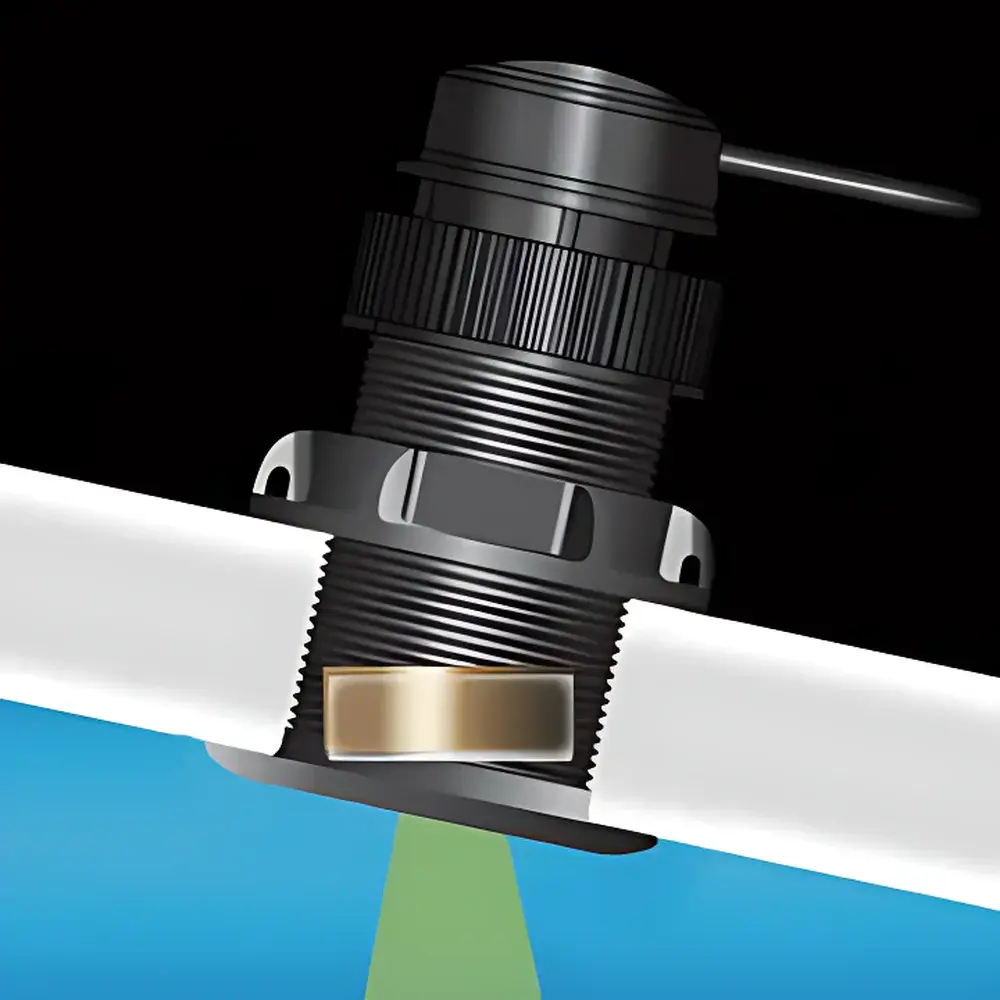
Airmar DT800 Smart Depth and Temperature Transducer
| Brand | Airmar |
|---|---|
| Origin | USA |
| Model | DT800 |
| Frequency | 235 kHz |
| Output Protocols | NMEA 0183 & NMEA 2000® |
| Depth Range (NMEA 0183) | 0.5–100 m |
| Depth Range (NMEA 2000) | 0.5–180 m |
| Temperature Range | −10 to +40 °C |
| Temp Accuracy | ±0.5 °C |
| Power Supply | 10–25 VDC (NMEA 0183), 9–16 VDC (NMEA 2000) |
| Max Cable Length | 100 m (NMEA 0183), 6 m Devicenet drop (NMEA 2000) |
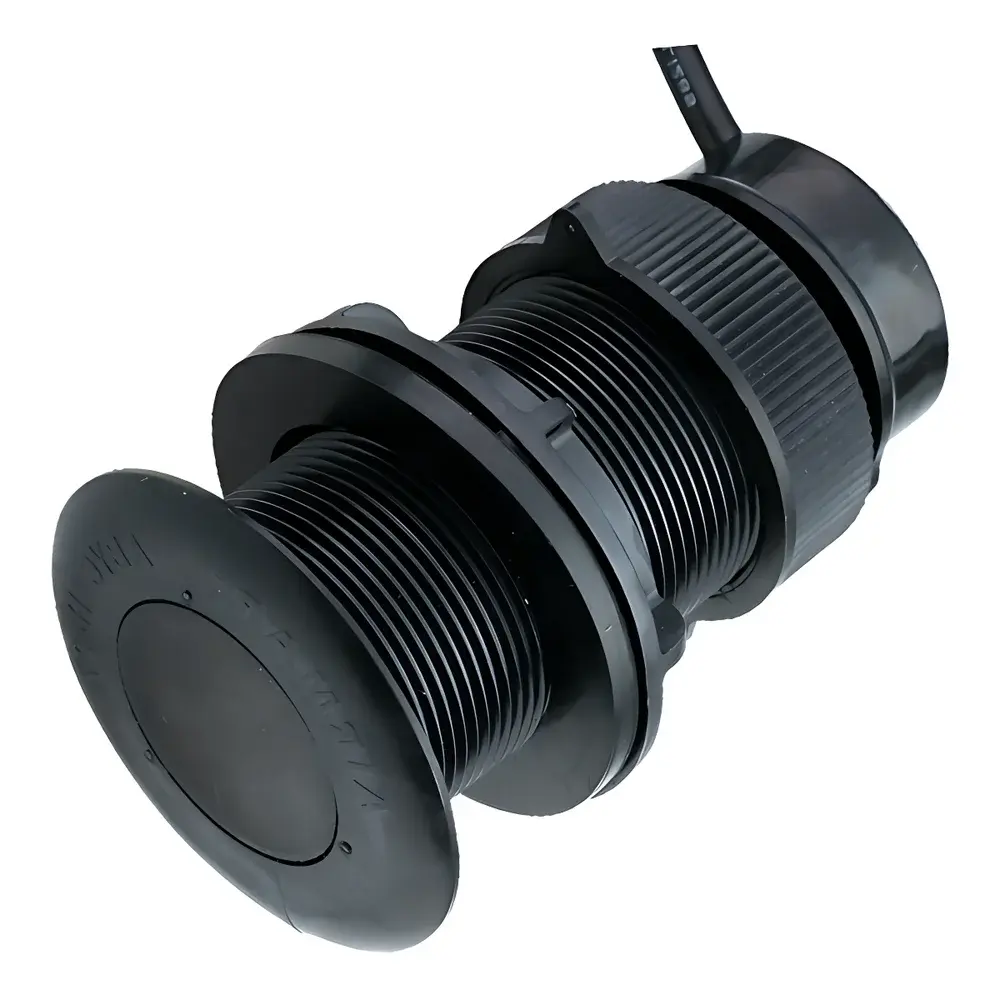
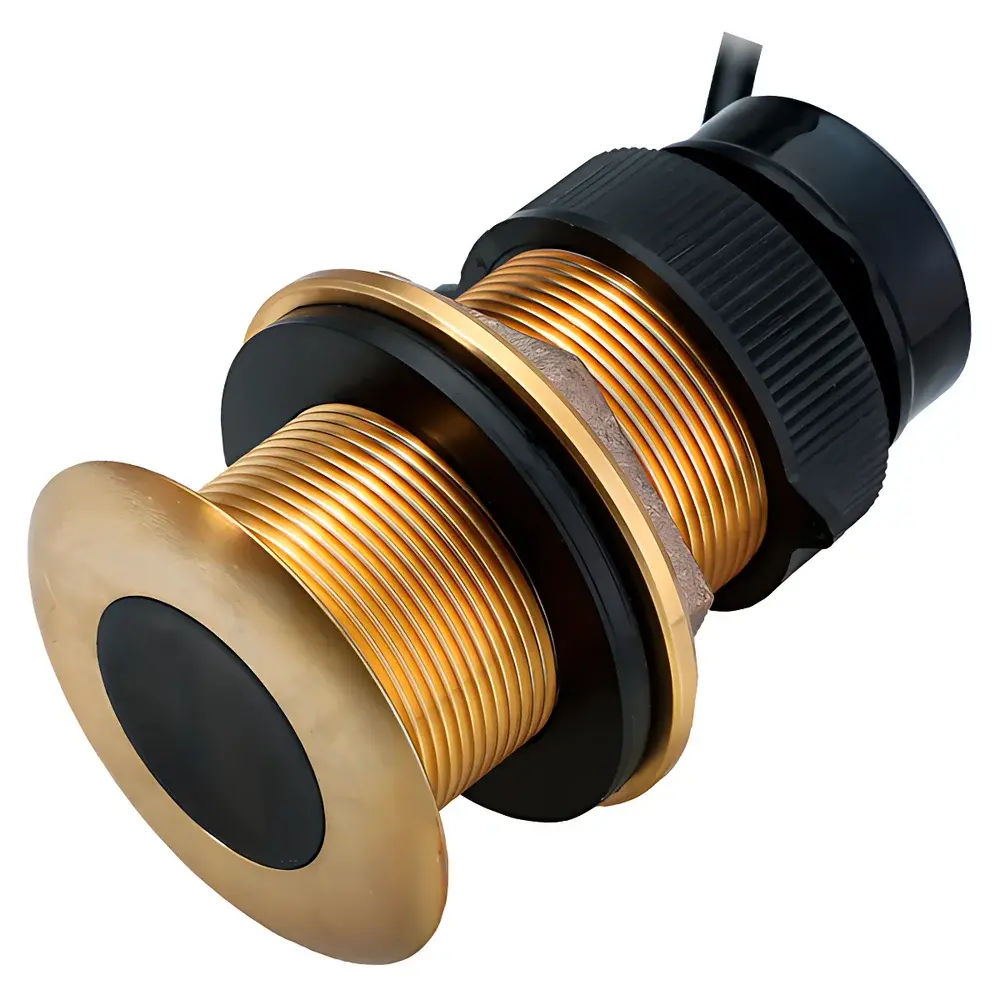
| Housing Options | Plastic, Bronze, Stainless Steel |
| Tilt Compensation | Integrated MEMS inclinometer (±24° max hull tilt) |
| Transducer Element | Broadband ceramic |
| Rated Power | 100 W |
| Pressure Rating | 3 m (10 ft) |
| CE Compliance | IEC 60945 |
| NMEA 2000 LEN | 4 |
Overview
The Airmar DT800 is a high-integrity smart depth and temperature transducer engineered for marine navigation, hydrographic survey support, and onboard vessel monitoring systems. Operating on the principle of pulse-echo ultrasonic time-of-flight measurement at a fixed 235 kHz center frequency, the DT800 delivers stable bottom detection and water column profiling across a wide operational depth envelope. Its embedded microprocessor performs real-time signal conditioning—including depth calculation, temperature compensation, and tilt-angle correction—directly within the transducer housing. This eliminates analog signal degradation over long cable runs and ensures digital-ready outputs compliant with both legacy NMEA 0183 (RS-422) and modern NMEA 2000® (CAN bus) networks. The device is not a standalone display unit but a sensor-level component designed for integration into chartplotters, radar displays, ECDIS, or custom vessel management systems requiring certified depth and thermal data.
Key Features
- Integrated dual-sensor architecture: piezoelectric broadband ceramic element for depth measurement + precision thermistor for water temperature sensing
- Onboard MEMS-based inclinometer enabling automatic pitch-and-roll compensation up to ±24° hull tilt — critical for accurate depth registration on planing hulls or in beam seas
- Low-profile, flush-mount housing design with tapered edge and recessed face; available in plastic (for fiberglass/wood), bronze (for fiberglass/wood), and stainless steel (universal mounting) variants
- 235 kHz operating frequency optimized for resolution-to-penetration balance — minimizes cross-talk interference with adjacent echosounders while maintaining sensitivity in turbid or thermocline-affected water columns
- 100 W acoustic output power supports reliable detection from 0.5 m minimum depth up to 180 m maximum (NMEA 2000 mode), with sub-meter repeatability under stable conditions
- Full NMEA protocol support: simultaneous dual-output capability (NMEA 0183 and NMEA 2000) enables redundancy and system flexibility without external gateways
Sample Compatibility & Compliance
The DT800 is compatible with all NMEA 0183-compliant receivers (e.g., Raymarine Axiom, Garmin GPSMAP, Furuno TZtouch) and NMEA 2000-certified devices meeting ISO 11898-2 physical layer requirements. Its stainless steel housing variant meets ASTM A276 Type 316 specifications and is approved for direct installation on aluminum, steel, and composite hulls. The polyurethane acoustic window complies with ISO 10816-3 for underwater transducer face materials and exhibits minimal attenuation at 235 kHz. Electromagnetic compatibility and environmental robustness are validated per IEC 60945:2020 — covering vibration, shock, salt mist, and thermal cycling performance required for Class A maritime electronics. The device carries CE marking under the Marine Equipment Directive (MED) 2014/90/EU when installed per Airmar’s mounting instructions and used within specified pressure and temperature limits.
Software & Data Management
Depth and temperature data are transmitted as standardized NMEA sentences: $SDDBT (depth below transducer), $SDMTW (water temperature), and $SDVHW (water speed through water, if configured with optional paddlewheel interface). When connected via NMEA 2000, PGNs 128259 (Water Depth), 130311 (Environmental Parameters), and 127250 (Attitude) provide timestamped, multiplexed data with built-in checksum validation. No proprietary software is required for basic operation; however, Airmar’s free Transducer Configuration Utility (TCU) allows firmware updates, tilt calibration verification, and diagnostic logging via USB-to-NMEA adapter. All data streams are inherently audit-ready for GLP/GMP-aligned vessel log systems, supporting traceable timestamping and no-loss transmission when integrated with NMEA 2000 backbone networks compliant with ISO 11898-2 error framing.
Applications
- Commercial fishing vessels requiring precise shallow-water depth awareness during trawling or pot setting
- Coastal survey launches performing bathymetric mapping where tilt-compensated single-beam depth is used as ground-truth reference for multibeam systems
- Research vessels deploying CTD rosettes — synchronized temperature-depth correlation improves water mass classification accuracy
- Autonomous surface vehicles (ASVs) integrating navigational safety layers using low-latency, digitally conditioned depth telemetry
- Marina infrastructure monitoring systems tracking sedimentation rates in dredged channels using long-term DT800 deployments with solar-powered NMEA 2000 gateways
FAQ
Does the DT800 require external calibration for depth accuracy?
No — factory calibration is performed using traceable hydrostatic pressure and temperature standards. Field recalibration is not supported; however, tilt offset verification can be conducted using Airmar’s TCU utility.
Can the DT800 be installed on a metal hull without a fairing block?
Yes — the stainless steel housing variant is specifically engineered for direct mounting on aluminum or steel hulls. Its acoustic impedance matching and internal damping minimize signal reflection artifacts.
What is the maximum allowable cable length for NMEA 2000 installations?
Per NMEA 2000 specification, the total backbone length must not exceed 200 m, with individual device drops limited to 6 m. For longer distances, an NMEA 2000 repeater or gateway is required.
Is the temperature sensor suitable for scientific-grade water column profiling?
The ±0.5 °C accuracy meets ISO 7827:1985 requirements for routine navigational temperature monitoring. For high-resolution vertical profiling, it serves as a reference anchor point rather than a primary CTD sensor.
Does the DT800 support automatic gain control or variable pulse width?
No — it operates with fixed pulse width and gain settings optimized for general-purpose marine use. Advanced signal processing is handled externally by the host display or data logger.