
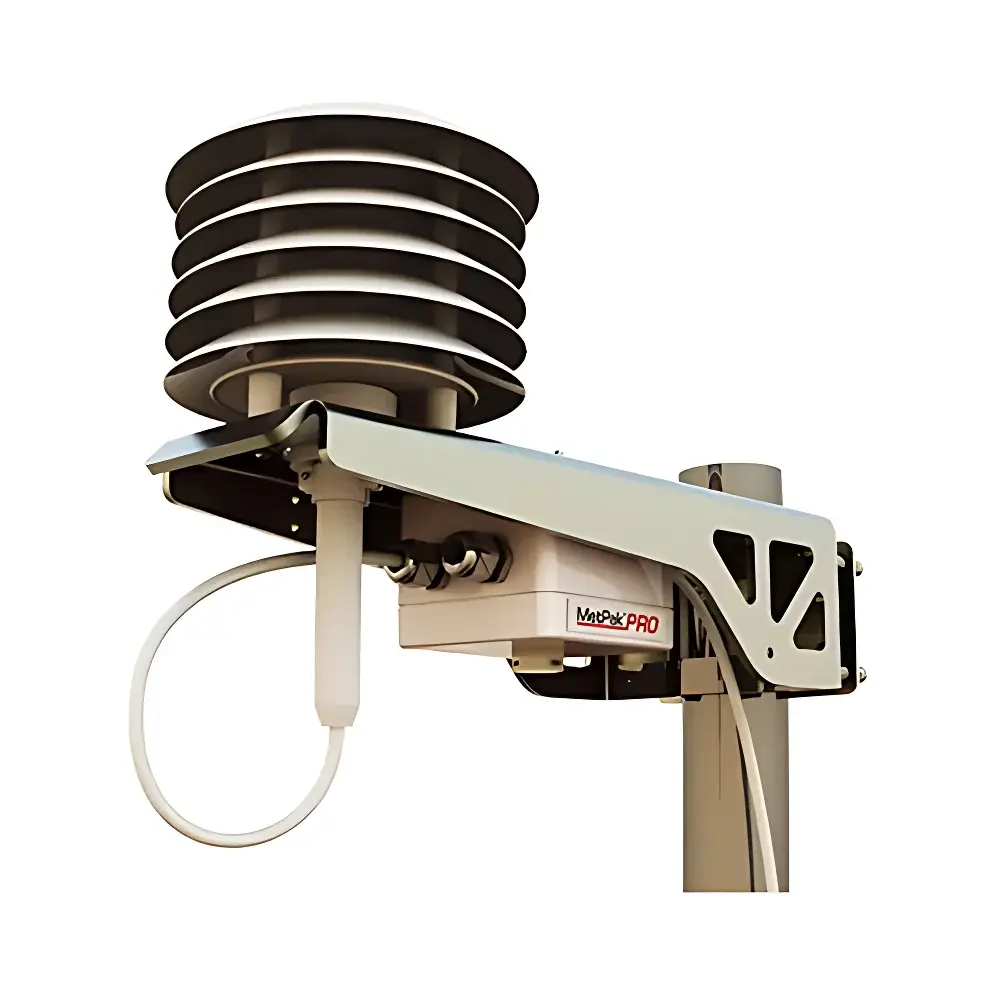
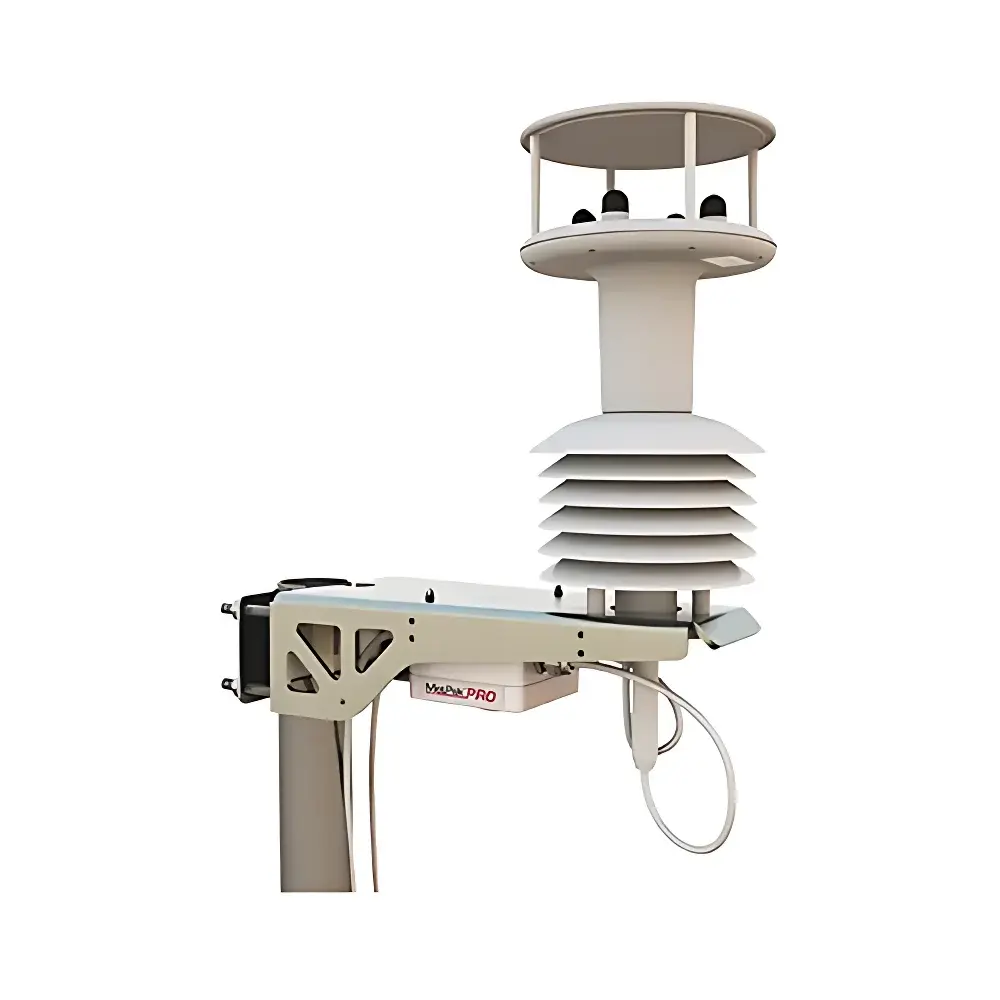
Gill MetPak Pro Base Portable Weather Station
| Brand | Gill |
|---|---|
| Origin | United Kingdom |
| Model | MetPak Pro Base |
| Instrument Type | Portable Weather Station |
| Output Interfaces | SDI-12, RS-232, RS-422 |
| Power Consumption | Low-power design for remote deployment |
| Enclosure | Ventilated radiation shield with triple-layer double-louvered housing |
| Sensor Mounting | Integrated PCB for modular expansion |
| Optional Accessories | Heated wind sensor interface kit, Pt100 input, tipping-bucket rain gauge support, dual analog inputs (0–5 V or 4–20 mA) for water level, pyranometer, soil temperature, or pressure sensors |
Overview
The Gill MetPak Pro Base is a compact, low-power, multi-parameter environmental monitoring station engineered for long-term, unattended operation in remote and infrastructure-constrained locations. Designed around the principles of meteorological best practice—namely passive aspiration, thermal equilibrium, and electromagnetic isolation—the system delivers high-reproducibility measurements of ambient air temperature, relative humidity, barometric pressure, and dew point temperature. Its core sensing architecture integrates industrial-grade capacitive humidity and platinum resistance (Pt100-compatible) temperature elements housed within a naturally ventilated, triple-layer double-louvered radiation shield. This geometry minimizes solar loading and convective interference while maintaining ISO 7726-compliant airflow characteristics. Barometric pressure is measured inside a thermally stabilized, vented enclosure to reduce diurnal drift and thermal hysteresis. As a base unit, the MetPak Pro Base does not include an integrated anemometer or wind vane; it serves as a scalable environmental hub—designed for seamless integration with third-party wind sensors (e.g., Gill WindSonic, WindObserver 70, WindMaster Pro) via optional heated interface modules.
Key Features
- Passive-aspiration triple-louvered radiation shield compliant with WMO guidance for temperature/humidity measurement accuracy
- Integrated PCB platform supporting modular expansion: one Pt100 input, two configurable analog inputs (0–5 V or 4–20 mA), and digital SDI-12 interface
- Low-power electronics architecture enabling battery- or solar-powered operation in off-grid environments
- RS-232 and RS-422 serial outputs for direct connection to data loggers (e.g., SpaceLogger), telemetry gateways, or display units (e.g., WS-15A)
- Optional heated wind sensor interface kit for frost- and ice-prone deployments
- IP65-rated enclosure with integrated terminal block junction box for field-wiring simplicity and EMC resilience
- Firmware-upgradable architecture supporting future protocol enhancements and calibration traceability
Sample Compatibility & Compliance
The MetPak Pro Base is designed for continuous outdoor exposure across temperate, arid, and coastal climates. Its sensor configuration meets fundamental requirements outlined in ISO 16486 (environmental monitoring instrumentation), ASTM D5197 (ambient air quality monitoring), and CEN/TS 16451-2 (meteorological station performance criteria). While not certified for regulatory compliance under EN 12354 or IEC 61000-4 series without site-specific validation, its construction adheres to CE marking directives for electromagnetic compatibility (EMC) and low-voltage equipment. All analog inputs are galvanically isolated to prevent ground-loop errors in distributed sensor networks. The system supports NIST-traceable calibration documentation upon request and is compatible with GLP-aligned data acquisition workflows when paired with compliant logging hardware.
Software & Data Management
Data output follows open, documented protocols: ASCII-formatted serial frames (configurable baud rates up to 115.2 kbps), SDI-12 command sets (version 1.3), and standard Modbus RTU over RS-422 (optional firmware). No proprietary software is required for integration; raw data streams are parseable using Python, LabVIEW, or SCADA systems via standard serial drivers. Gill provides publicly available communication protocol manuals and ASCII frame structure definitions to facilitate custom middleware development. When deployed with SpaceLogger or other Part 11-compliant recorders, full audit trails—including timestamped sensor readings, power status, and internal diagnostics—can be maintained per FDA 21 CFR Part 11 Annex 11 guidelines where applicable.
Applications
- Remote ecological monitoring stations requiring autonomous, low-maintenance climate baselines
- Agricultural microclimate networks assessing evapotranspiration, frost risk, and irrigation scheduling
- Construction site environmental compliance reporting (dust, temperature, humidity thresholds)
- Renewable energy asset monitoring (solar irradiance correlation, wind farm pre-feasibility screening)
- Educational field laboratories emphasizing sensor interoperability and open-data protocols
- Urban heat island studies leveraging dense, low-cost node deployment strategies
FAQ
Is the MetPak Pro Base still in active production?
No—the MetPak Pro Base has been officially discontinued by Gill Instruments. Units in circulation are legacy inventory; technical support and firmware updates remain available through authorized distributors.
Can I integrate a third-party anemometer with this base station?
Yes—via the optional heated wind sensor interface kit, the MetPak Pro Base supports Gill WindSonic, WindObserver 70, WindMaster, and WindMaster Pro sensors. Wiring and power delivery follow Gill’s published interface specifications.
What calibration options are available?
Factory calibration certificates (NIST-traceable) are available at time of purchase. Field recalibration requires external reference standards; Gill recommends annual verification against a calibrated portable reference hygrometer and barometer.
Does the system support wireless transmission?
Not natively—the MetPak Pro Base provides only wired serial interfaces. Wireless capability requires external integration with cellular, LoRaWAN, or NB-IoT telemetry modems connected to its RS-232/422 port.
Is the analog input compatible with 4–20 mA industrial sensors?
Yes—both analog inputs accept either 0–5 V or 4–20 mA signals via jumper-selectable configuration, with 16-bit ADC resolution and programmable scaling in host software.
Related Products







