
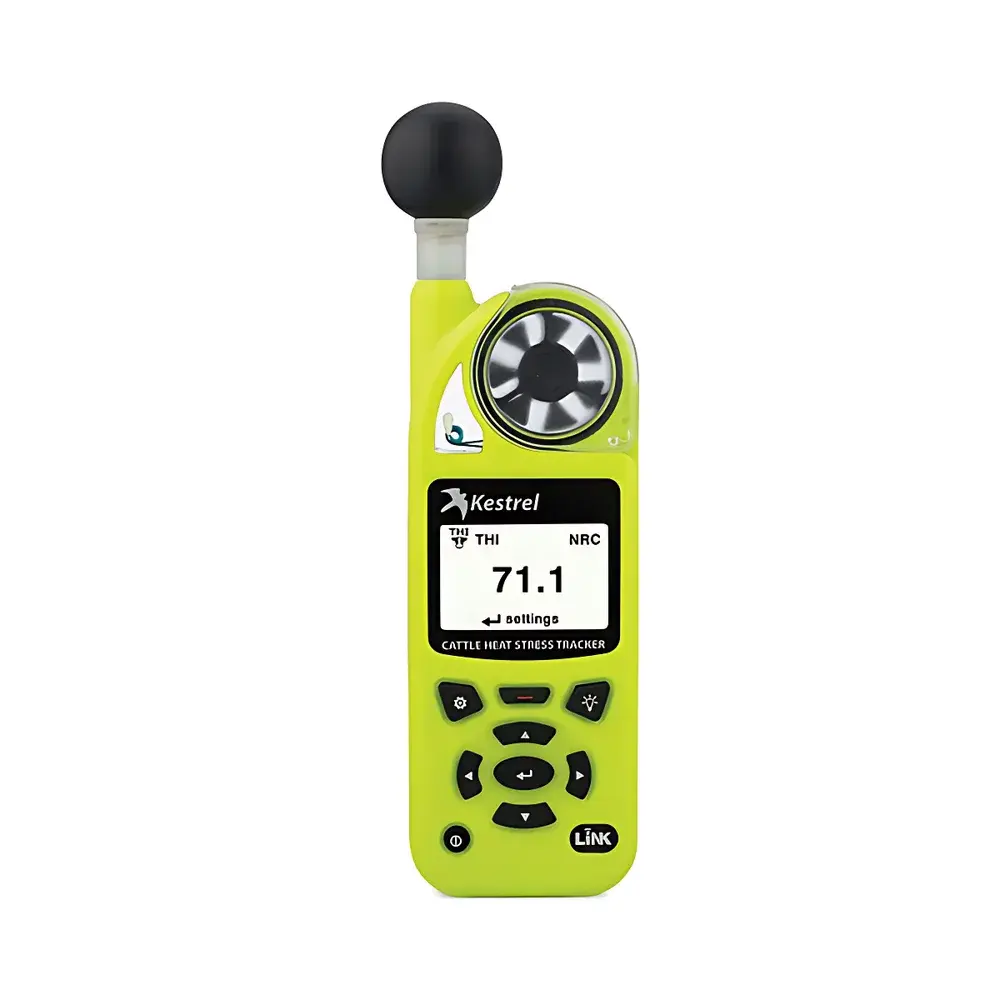
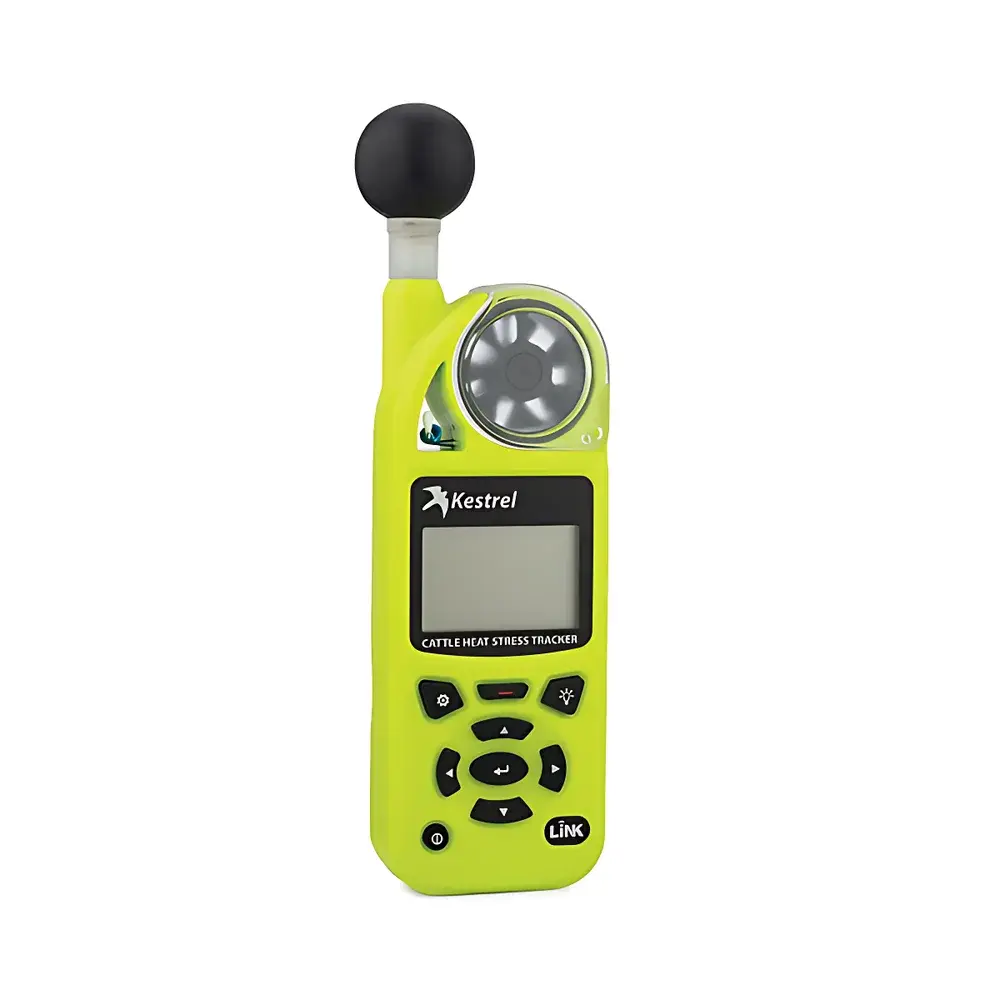
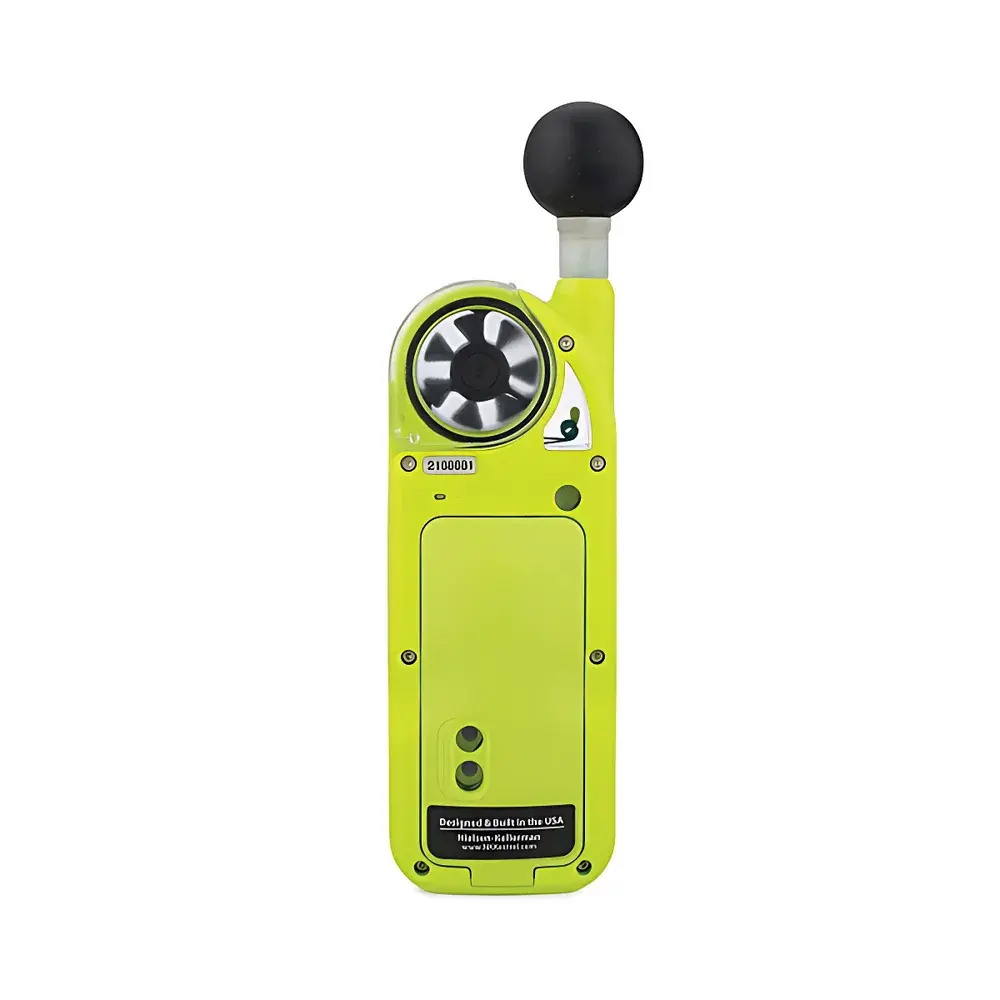
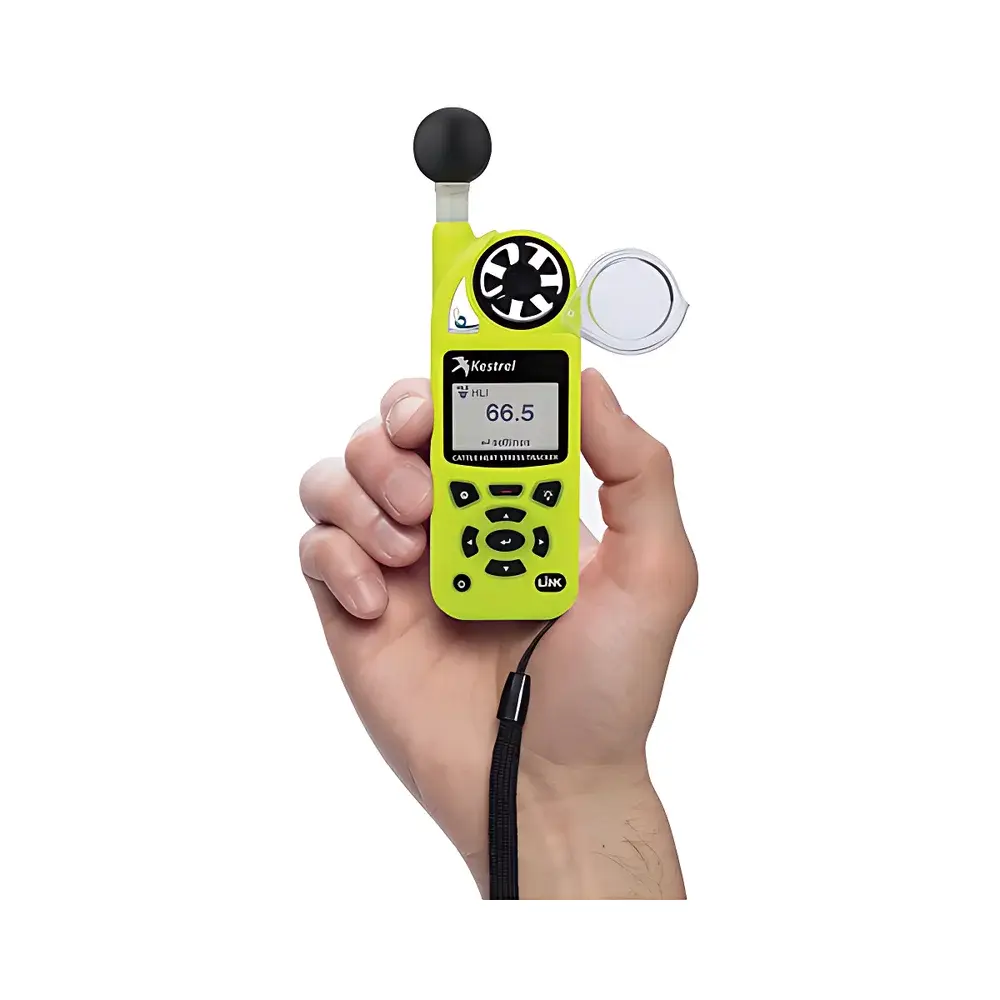
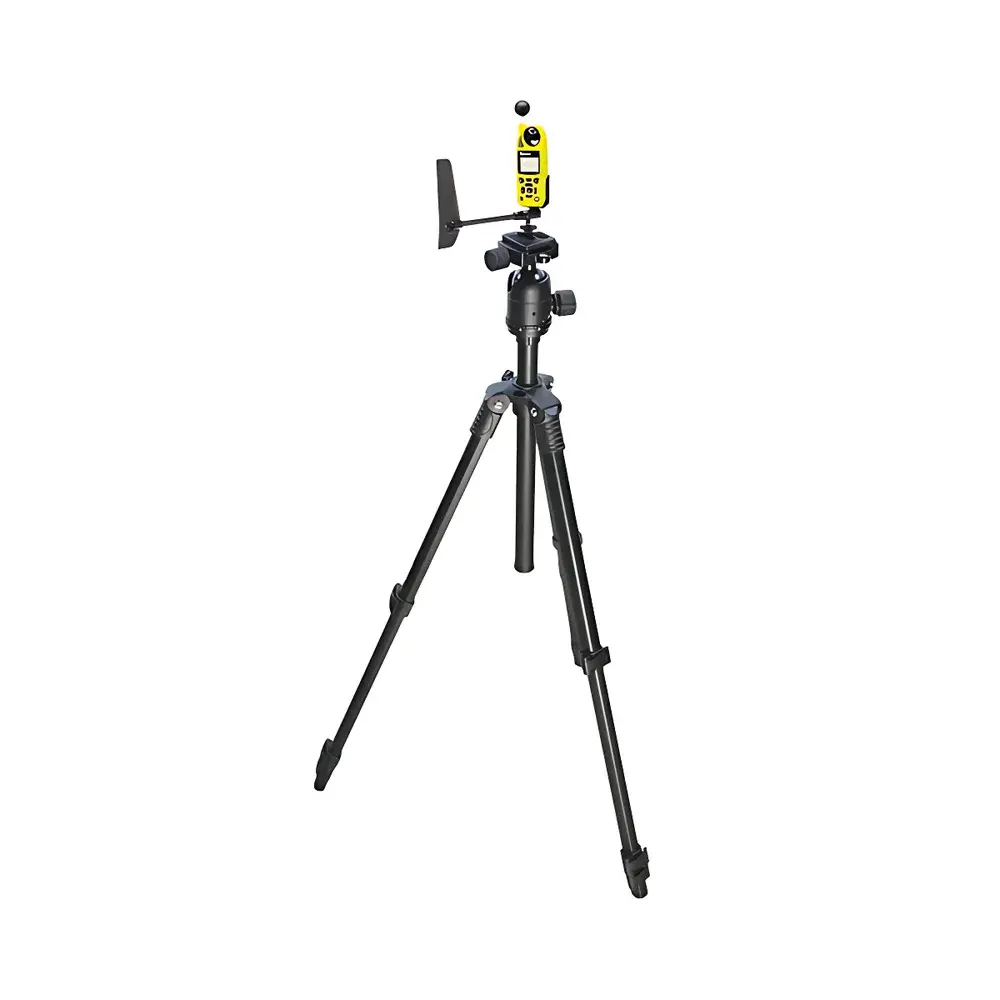
Kestrel 5400AG Livestock Heat Stress Tracker
| Brand | NK |
|---|---|
| Origin | USA |
| Model | Kestrel 5400AG |
| Instrument Type | Handheld Weather Station |
| IP Rating | IP67 (Dust-tight & Waterproof to 1m for 30 min) |
| Power | Single AA battery (alkaline or lithium) |
| Display | High-resolution, dual-color backlight LCD |
| Data Logging Capacity | >10,000 timestamped records |
| Wireless Connectivity | Bluetooth Low Energy (BLE) via Kestrel LiNK iOS/Android app |
| PC Connectivity | USB cable or optional Kestrel LiNK Dongle (Windows/macOS) |
| Compliance | Meets ASTM E1982-22 (Standard Guide for Assessing Heat Stress in Livestock), ISO 7243 (Hot Environments — Estimation of the Heat Stress on Working Man), and ASABE EP470.4 (Environmental Stress Indices for Cattle) |
Overview
The Kestrel 5400AG Livestock Heat Stress Tracker is a purpose-engineered handheld environmental monitoring instrument designed specifically for precision assessment of thermal stress in cattle under field conditions. Unlike generic weather stations, the 5400AG integrates a calibrated black globe thermometer with proprietary algorithms developed in collaboration with veterinary thermophysiology researchers and livestock extension specialists. It applies established bioclimatic models—including the Temperature-Humidity Index (THI), Heat Load Index (HLI), and Accumulated Heat Load Units (AHLU)—to quantify heat stress exposure across spatially distributed pens, pastures, or transport vehicles. Its measurement architecture conforms to the physical principles outlined in ISO 7243 and ASTM E1982-22, where radiant heat load is derived from globe temperature (Tg), air temperature (Ta), relative humidity (RH), and wind speed (v), enabling physiologically relevant interpretation of microclimate data.
Key Features
- Integrated 150-mm black globe sensor with NIST-traceable calibration for accurate mean radiant temperature (MRT) derivation
- Real-time calculation of THI, HLI, and AHLU—each aligned with peer-reviewed cattle thermoregulatory thresholds (e.g., THI ≥ 72 indicates moderate stress; HLI > 75 signals high risk)
- Dual-color backlit display optimized for outdoor readability under direct sunlight or low-light barn conditions
- IP67-rated rugged housing constructed from high-impact polycarbonate with chemical-resistant lens coating
- Onboard logging of >10,000 timestamped records, including wind vector components (headwind, tailwind, crosswind), Delta-T (Tg − Ta), WBGT, and natural wet-bulb temperature
- Bluetooth 5.0 LE connectivity supporting remote monitoring, configurable alerts, and over-the-air firmware updates via Kestrel LiNK mobile application
- Optional LiNK Dongle enables secure, audit-ready data export to Windows/macOS systems compliant with GLP documentation requirements
Sample Compatibility & Compliance
The Kestrel 5400AG is validated for use across diverse livestock management settings—including open-lot feedyards, freestall dairies, pasture-based beef operations, veterinary clinical trials, and livestock transport logistics. Its sensor suite meets the metrological requirements specified in ASABE EP470.4 for cattle heat stress evaluation and supports traceable reporting for USDA Animal Care inspections and FDA Good Manufacturing Practice (GMP)-aligned dairy processing facilities. All thermal indices are computed using peer-reviewed equations published in the Journal of Dairy Science and International Journal of Biometeorology. The device’s data structure includes embedded UTC timestamps, sensor serial identifiers, and environmental metadata—enabling full chain-of-custody documentation required under ISO/IEC 17025-accredited laboratory workflows.
Software & Data Management
Kestrel LiNK software provides role-based access control, automated report generation (PDF/CSV), and time-series visualization of AHLU accumulation curves. The iOS/Android application supports geotagged measurements, custom alert thresholds (e.g., AHLU > 250 triggers SMS/email notification), and offline data caching. When paired with the optional LiNK Dongle, raw sensor logs are exported in .csv format with ISO 8601 timestamps and SI-unit annotations—fully compatible with statistical analysis platforms (R, Python/Pandas, JMP) and enterprise farm management systems (e.g., DairyComp, FarmWizard). Audit trails include user login history, parameter modification logs, and firmware version stamps—meeting 21 CFR Part 11 electronic record integrity standards for regulated research environments.
Applications
- Pen-level microclimate mapping to optimize shade placement, sprinkler scheduling, and ventilation retrofitting
- Pre-transport risk assessment and post-movement recovery monitoring per National Cattlemen’s Beef Association (NCBA) guidelines
- Longitudinal thermal stress profiling during lactation cycles to correlate THI exposure with milk yield decline and somatic cell count elevation
- Validation of evaporative cooling system efficacy in drylot dairies under varying ambient RH conditions
- Field validation of predictive heat stress models used in USDA Climate Hubs and regional extension bulletins
- Supporting GLP-compliant studies on pharmacological interventions for heat-induced immunosuppression in calves
FAQ
How does the Kestrel 5400AG differ from standard handheld weather meters?
It incorporates a calibrated black globe sensor and livestock-specific algorithms—not found in general-purpose anemometers—enabling physiologically grounded heat stress quantification per ASTM E1982-22.
Is the AHLU calculation validated against cattle physiological responses?
Yes. AHLU uses the empirically derived integration method described by Gaughan et al. (2010, JDS) and has been field-validated across 12 US feedyard sites using core body temperature telemetry.
Can data be integrated into existing farm ERP or LIMS platforms?
Raw CSV exports include standardized column headers and SI units, enabling direct ingestion into SQL databases or API-driven farm management platforms via middleware scripts.
What is the recommended recalibration interval for the black globe sensor?
NK recommends annual verification against a NIST-traceable reference globe thermometer; field drift remains within ±0.3°C over 18 months under typical ranch conditions.
Does the device meet regulatory requirements for USDA or FDA audits?
Its data provenance features—timestamped logs, user authentication, and immutable firmware signatures—support compliance with USDA APHIS animal welfare audits and FDA 21 CFR Part 11 for electronic records in GMP dairy operations.
Related Products







