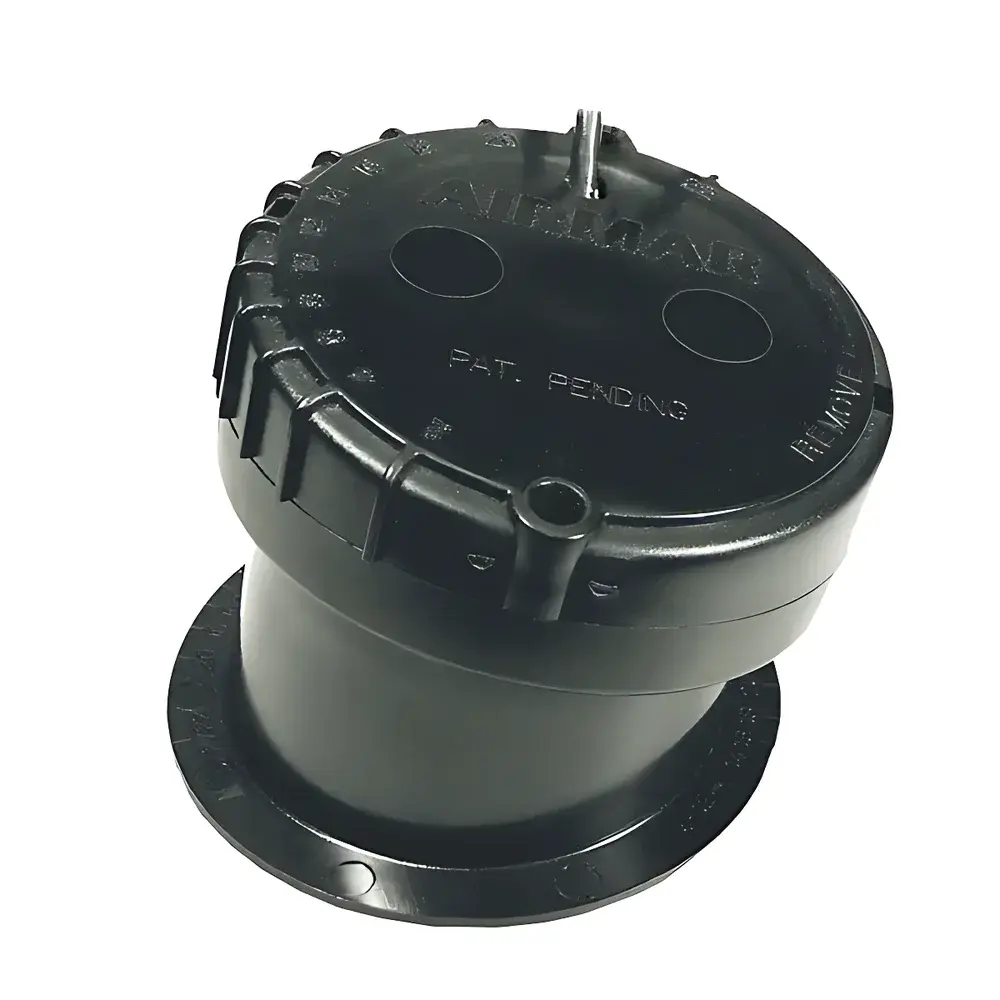
AirMar P75M Chirp Through-Hull Depth Sounder
| Brand | AIRMAR |
|---|---|
| Origin | USA |
| Model | P75M |
| Output Power | 600 W |
| Operating Frequency | 80–130 kHz (Chirp) |
| Beam Width | 24°–16° (adjustable) |
| Max Depth Range | 213 m (700 ft) |
| Depth Accuracy | ±0.54% of reading |
| Depth Resolution | 0.01 m |
| Housing Material | Polyurethane (liquid-filled) |
| Weight | 0.45 kg (1.1 lb) |
| Hull Angle Compensation | 2°–20° adjustable |
| Compatible Hull Type | Solid fiberglass only |
| Transducer Mounting | Internal through-hull installation with Xducer ID® technology |
| Environmental Fill Fluid | Non-toxic, freeze-resistant coupling medium |
Overview
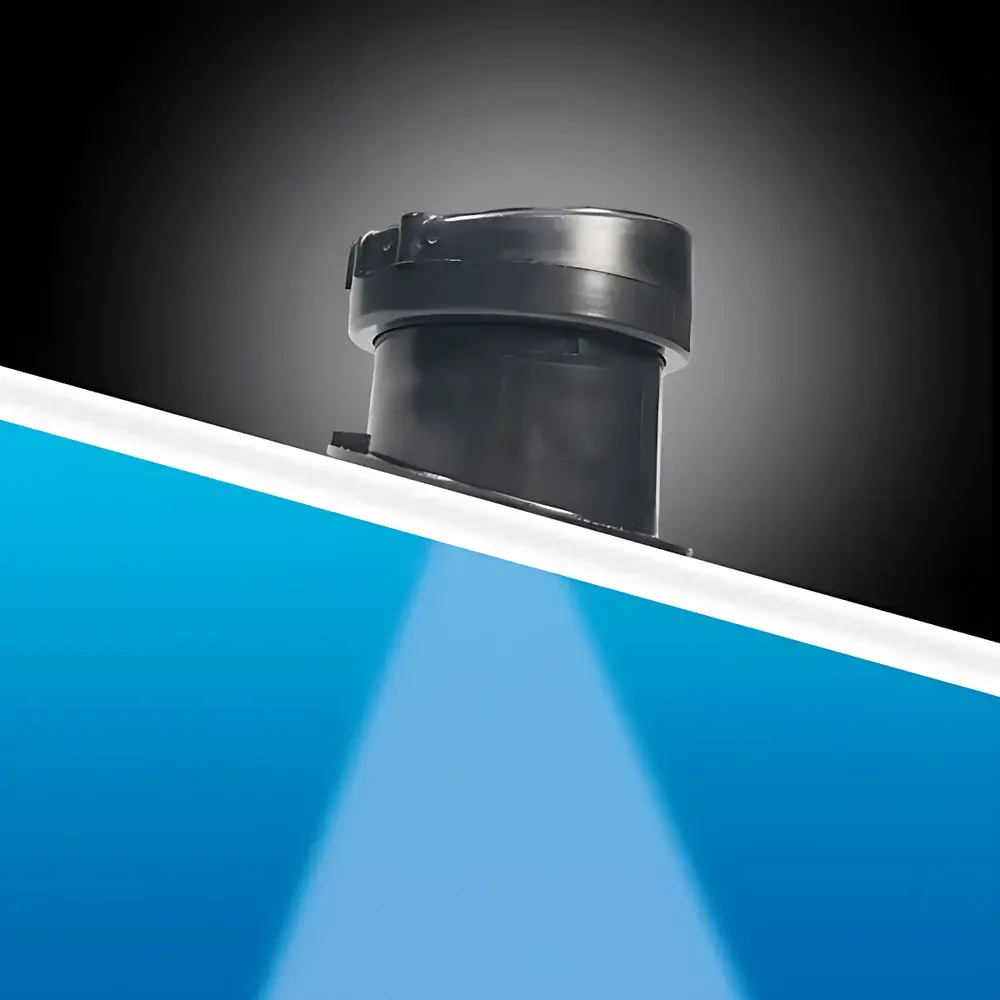
The AirMar P75M is a high-performance, internally mounted Chirp broadband depth sounder engineered for precision bathymetric measurement in shallow to mid-depth inland and coastal marine environments. Utilizing swept-frequency (Chirp) pulse compression technology within the 80–130 kHz band, the P75M delivers superior target resolution and signal-to-noise ratio compared to conventional fixed-frequency echosounders. Its physics-based design leverages time-domain correlation processing to extract depth information from returned acoustic echoes with enhanced discrimination against reverberation and multi-path interference—critical for operation in turbid freshwater lakes or dynamic nearshore saltwater zones. The transducer is specifically optimized for solid fiberglass hulls up to 7.6 m (25 ft) in length, where external protrusions are undesirable or impractical. Unlike traditional thru-hull transducers requiring hull penetration and external mounting, the P75M installs entirely within the vessel’s interior cavity, eliminating hydrodynamic drag and reducing vulnerability to impact or biofouling.
Key Features
- 600 W peak acoustic output power enables reliable bottom detection at depths up to 213 m (700 ft) in typical salinity and temperature profiles.
- Adjustable beam width (24°–16°) allows optimization between coverage area and vertical resolution depending on operational requirements.
- Polyurethane encapsulated housing filled with environmentally safe, non-freezing coupling fluid ensures consistent acoustic impedance matching across seasonal temperature variations.
- Patented Xducer ID® technology provides automatic transducer recognition and calibration parameter recall when connected to compatible chartplotters or multifunction displays (MFDs), minimizing setup time and configuration errors.
- Integrated hull-angle compensation (2°–20°) permits accurate depth reporting even when installed on non-level hull surfaces—essential for retrofit applications on production-built vessels.
- Compact form factor (0.45 kg / 1.1 lb) and low-profile internal mounting reduce structural modification requirements and preserve vessel integrity.
Sample Compatibility & Compliance
The P75M is validated exclusively for use with solid, non-cored fiberglass hulls having uniform thickness and no air gaps between laminate layers. It is not suitable for aluminum, steel, wood, cored composites, or hulls with internal stringers directly beneath the installation zone. Installation requires a smooth, flat interior surface with minimum curvature radius ≥ 150 mm. While the device itself does not carry formal regulatory certification (e.g., IMO, IEC 62288), its electrical interface complies with NMEA 2000 Class B specifications and meets CE emission limits per EN 55022:2010 and immunity requirements per EN 61000-6-2:2016. Depth data output adheres to NMEA 0183 v4.10 and NMEA 2000 PGN 128259 (Water Depth), supporting traceability in logging systems compliant with GLP-aligned field data acquisition protocols.
Software & Data Management
The P75M operates as a sensor node within NMEA 2000 networks and interfaces natively with industry-standard marine electronics platforms including Garmin, Raymarine, Furuno, and Simrad MFDs. Raw echo envelope data is not exposed externally; however, processed depth values—including temperature-compensated depth, water column height, and confidence indicators—are transmitted with timestamped metadata at configurable update rates (1–10 Hz). When integrated into vessel management systems supporting NMEA OneNet or third-party middleware (e.g., Actisense NGT-1, Maretron USB100), depth logs can be synchronized with GPS position, heading, and engine telemetry for post-mission bathymetric profiling. Audit trails for firmware updates and configuration changes are maintained locally on host displays per manufacturer implementation—not embedded in the P75M unit itself.
Applications
- Commercial and recreational small-craft navigation in rivers, reservoirs, and sheltered coastal waters.
- Hydrographic survey support for shoreline mapping, dredging pre-assessment, and habitat monitoring in littoral zones.
- Scientific limnology deployments requiring repeatable depth measurements under variable thermal stratification.
- Fisheries research involving bottom-type classification via echo signature analysis (when paired with compatible sonar processors).
- Autonomous surface vehicle (ASV) integration where low-drag, internally shielded sensing is required for endurance missions.
FAQ
Can the P75M be installed on a cored fiberglass hull?
No. Core materials (e.g., balsa, foam) introduce acoustic impedance mismatches and internal reflections that severely degrade signal fidelity. Installation is restricted to solid-laminate fiberglass hulls only.
Is the fill fluid serviceable or replaceable by the end user?
No. The polyurethane housing is permanently sealed during manufacturing. Field refilling is neither supported nor recommended due to risk of air entrapment and acoustic decoupling.
Does the P75M support bottom discrimination or fish detection?
It outputs only calibrated depth data. Target identification or bottom hardness analysis requires integration with a separate CHIRP-capable imaging sonar or a multifunction display with built-in interpretation algorithms.
What is the minimum hull thickness required for optimal performance?
A minimum of 6 mm (0.25 in) solid fiberglass is required. Thinner laminates may attenuate the acoustic signal or exhibit resonance artifacts below 100 kHz.
Can the P75M operate continuously at maximum depth range?
Yes, provided ambient water temperature remains within –10°C to +40°C and salinity falls between 0–35 ppt. Performance degrades gradually outside these bounds due to sound speed variation and absorption effects.