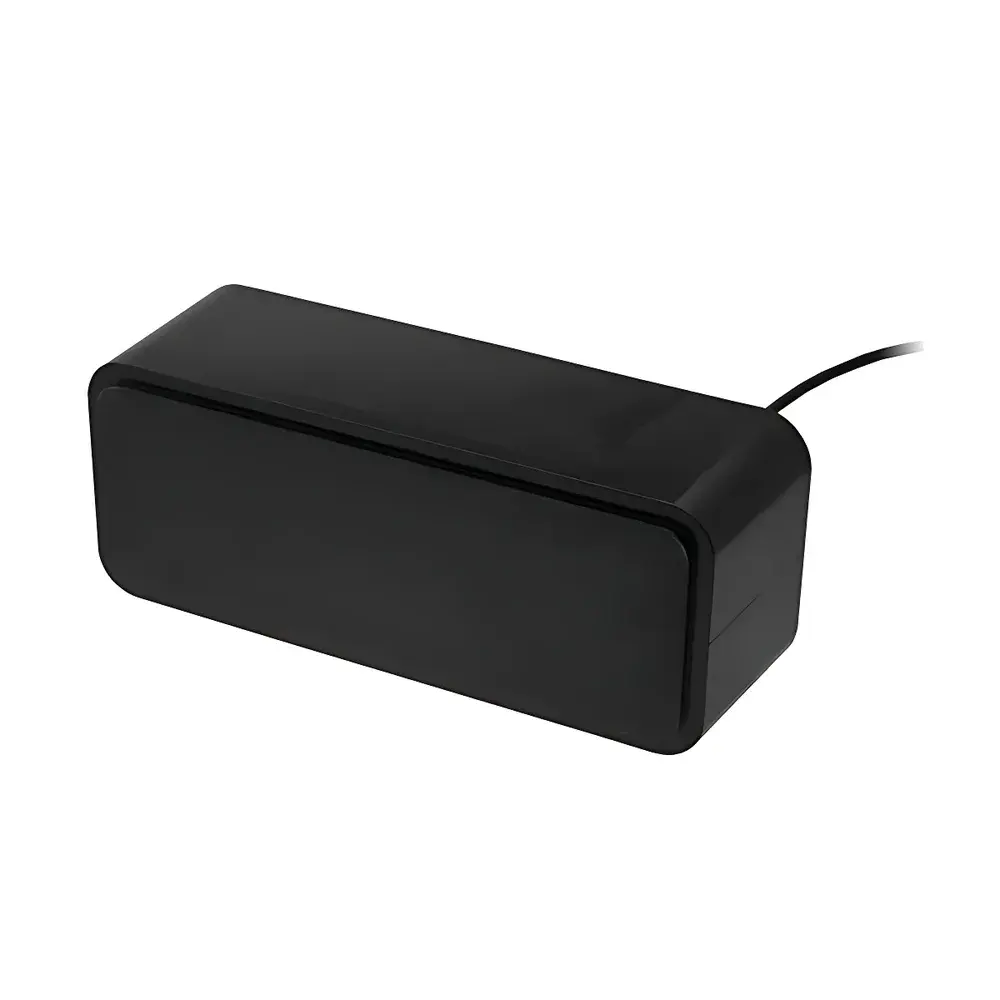
AIRMAR CM599LH Dual-Band Chirp Depth Sounder
| Brand | AIRMAR |
|---|---|
| Origin | USA |
| Model | CM599LH |
| Frequency Bands | Low Band 28–60 kHz (Beamwidth 23°–9°), High Band 130–210 kHz (Beamwidth 8°–4°) |
| Total Bandwidth | 112 kHz |
| Transmit Power | 2000–3000 W |
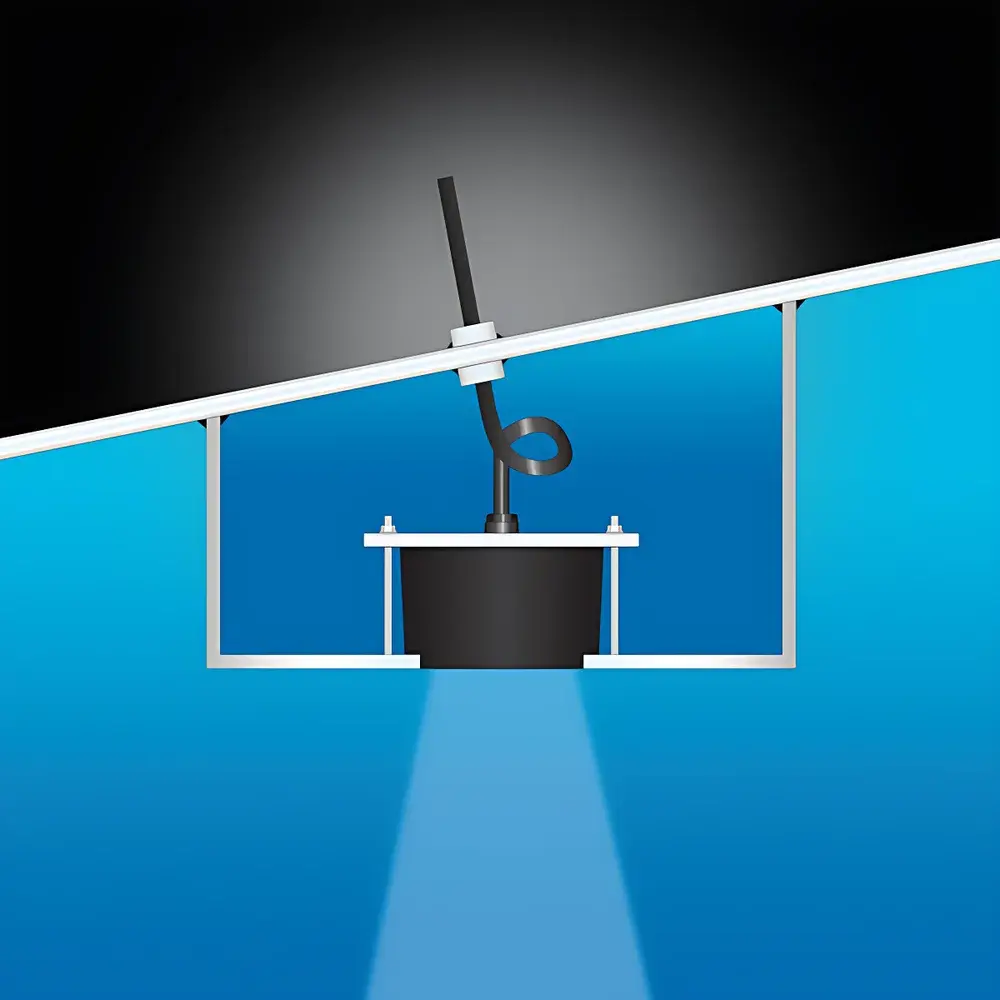
| Mounting Type | In-Tank Installation |
| Hull Compatibility | Solid Fiberglass |
| Enclosure Material | Epoxy-Resin Housing |
| Weight | 13.73 kg |
| Cable Length | 10 m |
| Integrated Temperature Sensor | No |
Overview
The AIRMAR CM599LH Dual-Band Chirp Depth Sounder is an engineered hydroacoustic transducer system designed for high-fidelity bathymetric profiling and target discrimination in marine and inland water environments. Unlike conventional pulsed-echo sonars, the CM599LH employs broadband frequency-modulated (FM) “Chirp” transmission—where each ping sweeps across a continuous frequency band—enabling superior signal-to-noise ratio, enhanced range resolution, and improved target separation through matched filtering in the time-frequency domain. Its dual-band architecture simultaneously operates two independent acoustic channels: a low-band (28–60 kHz) optimized for deep-water penetration and bottom detection down to 3,000 meters (10,000 ft), and a high-band (130–210 kHz) delivering fine spatial resolution for near-surface target classification—including differentiation of baitfish schools, pelagic gamefish, and submerged structural features such as rock outcrops or wreck contours. The system is specifically configured for in-tank mounting on solid fiberglass hulls, ensuring mechanical stability and minimal acoustic coupling loss.
Key Features
- Dual-band Chirp architecture with independently configurable low-band (28–60 kHz) and high-band (130–210 kHz) channels
- Variable beamwidth design: low-band beam narrows from 23° to 9° across its frequency sweep; high-band compresses from 8° to 4°, supporting adaptive vertical resolution
- High-power transmit capability (2000–3000 W peak envelope power) enabling long-range operation without sacrificing signal fidelity
- Epoxy-resin encapsulated transducer housing rated for permanent submersion and resistant to osmotic blistering, galvanic corrosion, and UV degradation
- Patented Xducer ID® technology for automatic transducer recognition and configuration validation by compatible sounder displays and networked NMEA 2000 systems
- Optimized for integration with industry-standard marine electronics via NMEA 0183 and NMEA 2000 protocols, supporting real-time depth, temperature (via external sensor), and raw echo data streaming
Sample Compatibility & Compliance
The CM599LH is certified for installation on monolithic fiberglass hulls with no core voids or air gaps between transducer mounting surface and seawater interface. It is not suitable for cored composites, aluminum, steel, or wood-hulled vessels without custom isolation mounts. While the transducer itself does not include an integrated temperature sensor, it is fully compatible with external PT100 or NMEA 2000–compliant water temperature probes for simultaneous thermal profiling. The device conforms to IEC 60945 maritime equipment standards for electromagnetic compatibility (EMC), environmental protection (IP68), and mechanical shock/vibration resistance. It supports GLP-aligned data logging when paired with compliant chartplotters or third-party acquisition software that implements audit-trail metadata tagging per ISO/IEC 17025 requirements.
Software & Data Management
Raw echo data from both bands is output in standard NMEA 2000 PGNs (e.g., 128267 Water Depth, 128275 Depth Offset, 128277 Water Temperature) and proprietary AIRMAR binary formats for post-processing. Compatible with leading hydrographic analysis platforms including MaxSea TimeZero Hydro, QPS Qimera, and SonarWiz, the CM599LH enables export of calibrated echograms, point-cloud bathymetry, and classified target layers. Firmware updates are delivered via USB-connected AIRMAR configuration utilities, with version history and calibration checksums retained for traceability. All configuration parameters—including gain profiles, pulse length, and band-specific threshold settings—are stored in non-volatile memory and survive power cycles.
Applications
- Commercial and research hydrographic surveying in coastal zones, fjords, and continental shelf environments
- Scientific fisheries acoustics for biomass estimation, species identification, and diel vertical migration studies
- Marine infrastructure inspection—including pipeline route surveys, cable burial verification, and offshore wind farm site characterization
- Recreational and professional sportfishing vessel integration for real-time bottom contour mapping and fish school discrimination
- Environmental monitoring programs requiring repeatable, high-resolution bathymetric change detection over multi-year intervals
FAQ
Is the CM599LH suitable for installation on aluminum or steel hulls?
No—the transducer requires direct acoustic coupling to a solid fiberglass substrate. Aluminum and steel hulls introduce impedance mismatches and require specialized fairing blocks or through-hull mounts not supported by the CM599LH’s in-tank design.
Does the CM599LH include a built-in water temperature sensor?
No—temperature measurement requires an external NMEA 2000–compatible probe connected via the host display or gateway device.
What is the maximum operational depth rating?
The transducer is rated for continuous operation at depths up to 3,000 meters (10,000 feet) in terms of acoustic performance; however, mechanical pressure rating is limited by epoxy housing integrity and should be verified against specific installation depth and hydrostatic load conditions.
Can both frequency bands operate simultaneously?
Yes—low-band and high-band transmissions are time-multiplexed within a single ping cycle, enabling synchronous data acquisition without cross-band interference.
Is firmware update capability available in the field?
Yes—firmware updates are performed using AIRMAR’s Windows-based Configuration Utility and a USB-to-NMEA adapter, with full revision history and cryptographic signature validation.