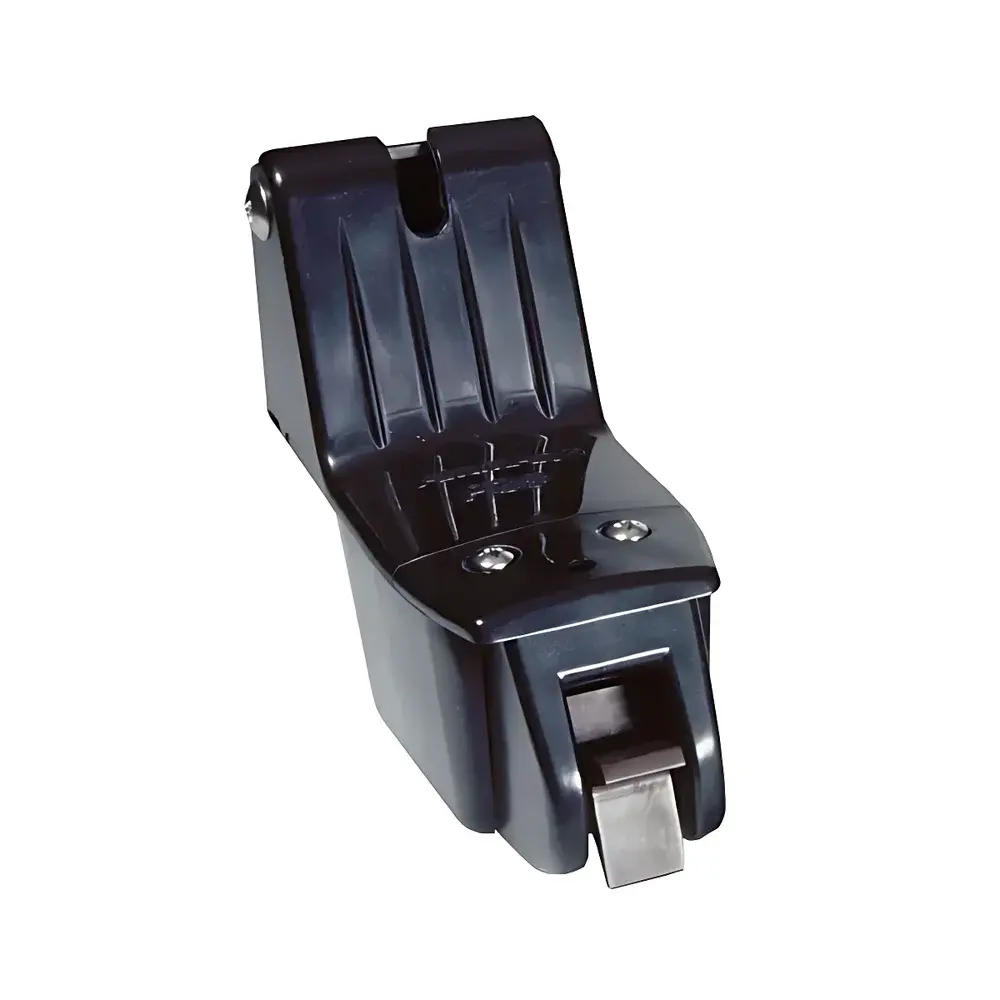
AirMar P39 Smart Depth, Speed & Temperature Transducer
| Brand | Airmar |
|---|---|
| Origin | USA |
| Model | P39 |
| Operating Frequency | 235 kHz |
| Mounting Type | Through-Hull Beam-Mount |
| Depth Range | 0.5–100 m (NMEA 0183), 0.5–150 m (NMEA 2000) |
| Speed Sensing | Paddlewheel with Grooved Flow Channel |
| Temperature Range | −10 to +40 °C |
| Temp Accuracy | ±0.5 °C |
| Beam Angle Adjustment | 0°–22° |
| Weight | 0.5 kg |
| Pressure Rating | 3 m |
| Pulse Resolution | 20,000 pulses per nautical mile |
| Power Supply | 10–28 VDC (NMEA 0183), 9–16 VDC (NMEA 2000) |
| Current Draw | <40 mA (NMEA 0183), <200 mA (NMEA 2000) |
| NMEA 2000 LEN | 4 |
| Compliance | IEC 60945 |
Overview
The AirMar P39 is a fully integrated, through-hull smart transducer engineered for simultaneous measurement of water depth, vessel speed-through-water (STW), and hull-mounted seawater temperature. Unlike legacy analog transducers requiring external signal conditioning, the P39 embeds a dedicated microprocessor directly within the sensor housing—enabling real-time digitization, filtering, and calibration of all three parameters at the point of acquisition. Its 235 kHz high-frequency acoustic beam delivers superior shallow-water resolution and significantly reduces cross-talk interference with other onboard echosounders operating at standard 50/200 kHz frequencies. The transducer employs pulse-echo time-of-flight for depth determination, calibrated paddlewheel rotation (with precision-machined grooved flow channel) for speed sensing, and a factory-traceable thermistor for temperature measurement—all outputting standardized NMEA 0183 or NMEA 2000® data streams. Designed for marine environments up to 3 m static pressure (IEC 60945 compliant), it supports both recreational and light-commercial vessels where compact footprint, installation flexibility, and protocol interoperability are critical.
Key Features
- Embedded digital signal processing: All depth, speed, and temperature computations occur internally—eliminating external converter boxes and reducing noise susceptibility.
- 235 kHz dual-beam transducer architecture: Optimized for high-resolution bathymetric profiling in depths from 0.5 m to 150 m (NMEA 2000), with minimal acoustic crosstalk in multi-echosounder installations.
- Grooved-flow paddlewheel design: Precision-machined channels stabilize laminar flow across the impeller, improving low-speed accuracy (<1 kn) and long-term repeatability under variable hull appendage conditions.
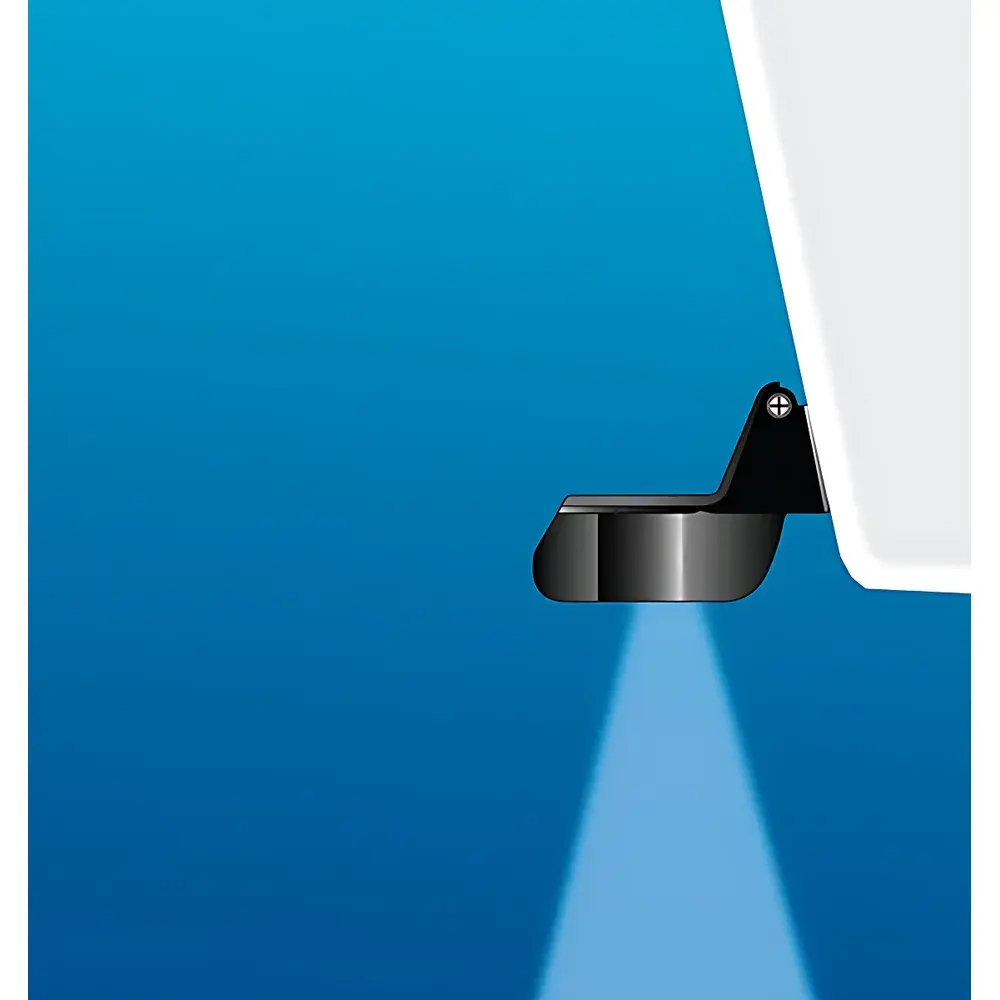
- Adjustable beam-mount interface: Locking ring mechanism enables precise alignment across 0°–22° deadrise angles—ensuring optimal acoustic coupling without custom hull modifications.
- Modular, two-part installation: Base flange mounts permanently; sensor body inserts and locks into pre-filled glycol-filled cavity—no wet-bonding or potting required.
- NMEA 2000® certified (LEN = 4): Fully compliant with ISO 11898-2 and NMEA 2000 v3.000 standards; supports plug-and-play integration with chartplotters, autopilots, and VMS systems.
Sample Compatibility & Compliance
The P39 is compatible with fiberglass, aluminum, and wood hulls having flat or moderately curved surfaces within its 22° beam-angle tolerance. It is not rated for metal hulls with conductive coatings or carbon-fiber structures due to RF attenuation and acoustic impedance mismatch. The transducer’s polyurethane acoustic window provides broadband transmission efficiency and resistance to biofouling-induced signal degradation. All electrical interfaces meet IEC 60945 maritime equipment safety and EMC requirements. Temperature sensing adheres to ASTM E230/E230M reference tolerances for marine thermistors. Depth and speed outputs are traceable to NIST-calibrated hydrostatic and dynamic flow standards used in OEM validation protocols.
Software & Data Management
No proprietary software is required. Raw NMEA 0183 (RS-422) and NMEA 2000® PGNs—including 127250 (Depth), 128259 (Speed Water Referenced), and 130310 (Environmental Parameters)—are natively parsed by any standards-compliant display or logging system. For audit-ready applications, the device supports full timestamped PGN logging when connected to NMEA 2000 networks equipped with certified data recorders (e.g., Maretron DSM250, Actisense NGT-1). While the P39 itself does not implement FDA 21 CFR Part 11 or GLP audit trails, its deterministic output format and stable firmware revisioning (v2.1+) enable integration into validated marine data acquisition workflows meeting ISO/IEC 17025 documentation requirements.
Applications
- Recreational powerboat and sailboat navigation: Real-time depth and STW inputs for route optimization, shallow-water alerting, and fuel consumption modeling.
- Commercial fishing vessel monitoring: Integration with VMS (Vessel Monitoring Systems) for regulatory reporting of position, speed, and environmental context.
- Hydrographic survey support: As a secondary depth reference during side-scan or multibeam operations where primary transducers are deployed externally.
- Autopilot and trim tab control systems: Providing closed-loop feedback for pitch/yaw stabilization based on speed-through-water and depth-derived draft compensation.
- Marine research platforms: Deployed on small ROVs or autonomous surface vehicles (ASVs) where size, weight, and low-power operation are constrained.
FAQ
Can the P39 be installed on a metal hull?
No. The P39 requires non-conductive hull materials (fiberglass, wood, or coated aluminum) to maintain acoustic coupling integrity. Direct mounting on bare steel or aluminum hulls will attenuate the 235 kHz signal and compromise depth accuracy.
What is the purpose of the propylene glycol fill in the base cavity?
The glycol serves as an acoustic coupling medium between the transducer housing and hull material while preventing internal condensation and freezing at sub-zero ambient temperatures. It is non-toxic and environmentally inert per US EPA Safer Choice criteria.
Does the P39 support automatic temperature compensation for depth readings?
No. Depth calculation is based solely on time-of-flight and assumes standard seawater sound velocity (1500 m/s). Temperature data is provided separately for post-processing correction in advanced navigation software.
Is firmware update capability available?
Firmware updates are performed exclusively via NMEA 2000 using AirMar’s authorized service tools. End users cannot modify firmware; revision history and validation reports are available under NDA for commercial integrators.
How does the grooved flow channel improve paddlewheel accuracy?
The machined grooves reduce turbulent boundary layer separation at low Reynolds numbers, ensuring consistent rotational torque across speeds from 0.2 to 30 knots—verified against ISO 10545-11 flow calibration benchmarks.