
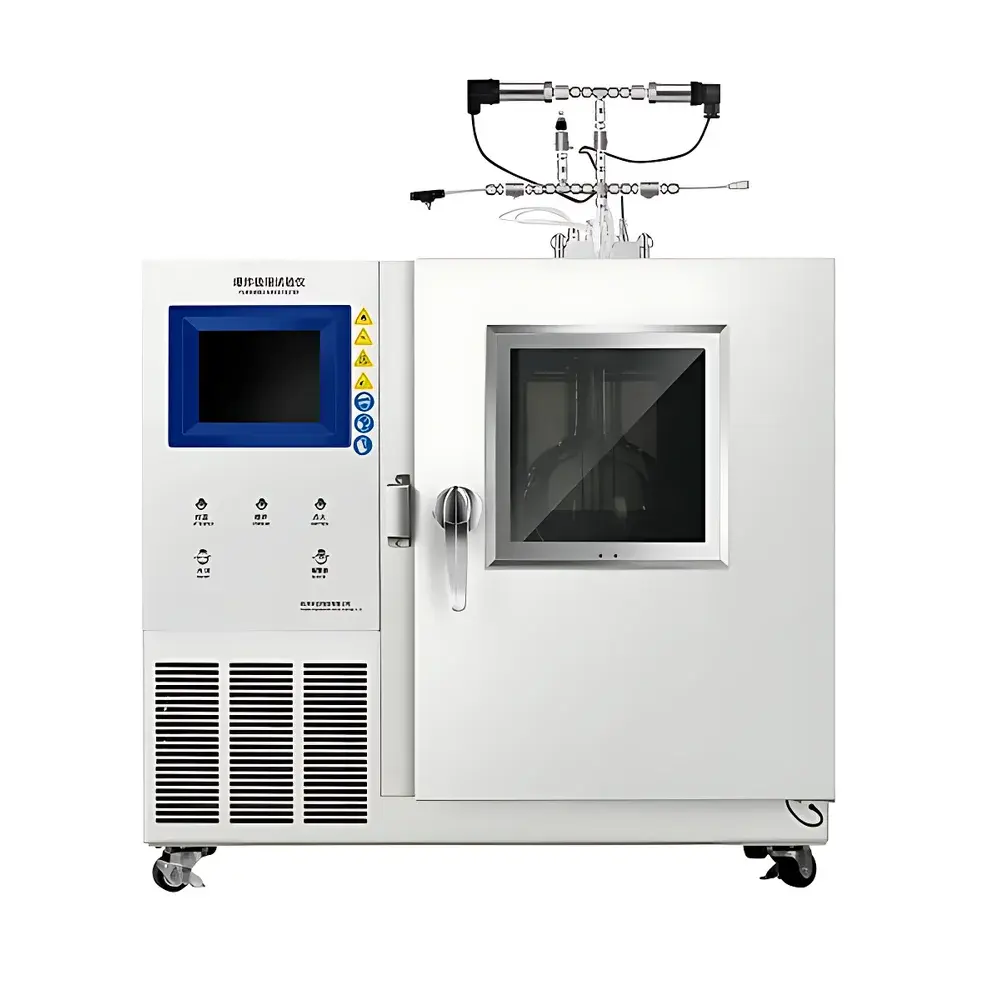
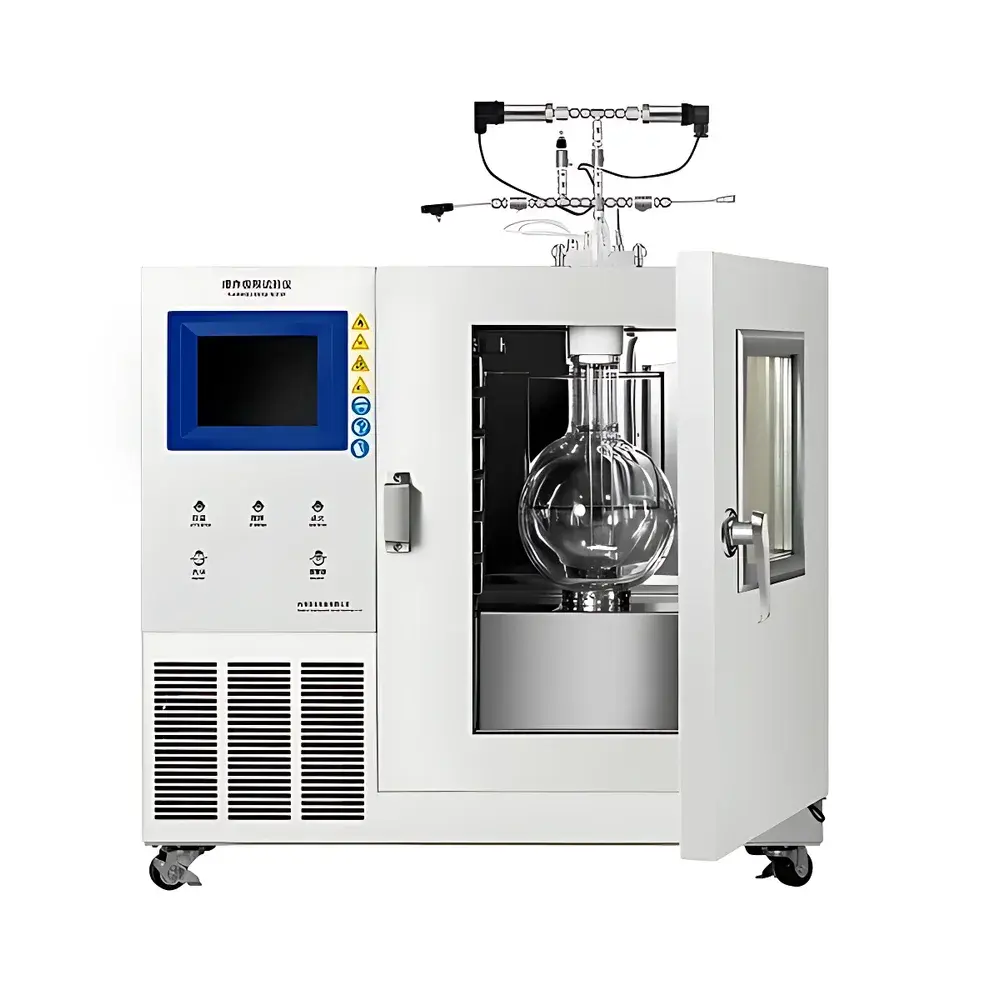
Young Instruments HWP21-30S Explosive Limits Tester
| Brand | Young Instruments |
|---|---|
| Origin | Zhejiang, China |
| Manufacturer Type | Direct Manufacturer |
| Model | HWP21-30S |
| Temperature Control Range | −10 °C to 210 °C |
| Temperature Accuracy | ±1 °C |
| Sample Temperature Measurement Range | −50 °C to 350 °C |
| Sample Temperature Resolution | 0.1 °C |
| Sample Temperature Accuracy | ≤ ±(0.15 + 0.002 |
| Gas Mixing Pressure Range | 0–110 kPa |
| Pressure Accuracy | ±0.1% FS |
| Vacuum Capability | ≤1.33 kPa |
| Leak Rate | ≤0.03 kPa/min |
| Ignition Spark Gap | 6.4 mm |
| Ignition Voltage/Current | 15 kV / 30 mA |
| Ignition Duration | 0–1 s |
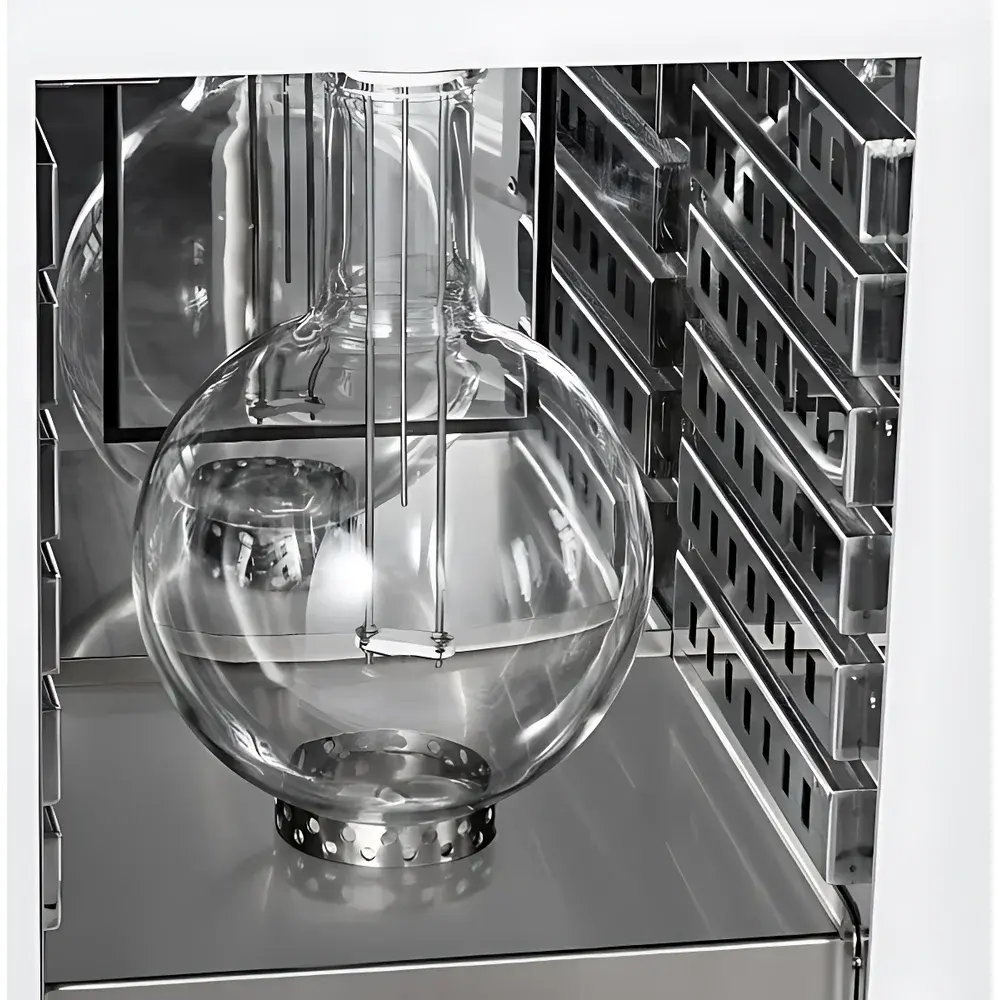
| Test Vessel Options | 5 L (Ø222 mm × H345 mm) or 12 L (Ø295 mm × H378 mm) borosilicate glass |
| Stirring Speed | ≥300 rpm |
| Environmental Monitoring | Ambient Temp (−10–60 °C, ±0.5 °C), RH (5–95% RH, ±5.0% RH), Atmospheric Pressure (60–110 kPa, ±0.5 kPa) |
| Timing Range | 0–24 h |
| Timing Accuracy | ±0.01 s |
| IP Rating | IP65 |
Overview
The Young Instruments HWP21-30S Explosive Limits Tester is a fully automated, CE-compliant laboratory instrument engineered for the precise determination of flammability limits—specifically the Lower Flammability Limit (LFL) and Upper Flammability Limit (UFL)—of vapors and gases in air under standard atmospheric pressure and controlled temperature conditions. It operates on the principle of controlled spark ignition within a sealed, thermostatically regulated test vessel, where stoichiometric mixtures of sample vapor and oxidant (air or inert-diluted air) are prepared via high-accuracy pressure-based gas dosing. The system detects combustion onset through optical and pressure transient analysis, enabling unambiguous identification of the concentration boundaries at which self-sustaining flame propagation ceases. Designed for compliance with internationally harmonized test protocols, the HWP21-30S supports methodologically rigorous hazard classification required by chemical safety data sheets (SDS), process safety management (PSM), and regulatory submissions to authorities including OSHA, REACH, and the UN GHS.
Key Features
- Integrated dual-mode thermal control system enabling precise chamber temperature regulation from −10 °C to 210 °C with ≤±1 °C stability, critical for evaluating temperature-dependent flammability behavior per ASTM E681 Annex A3.
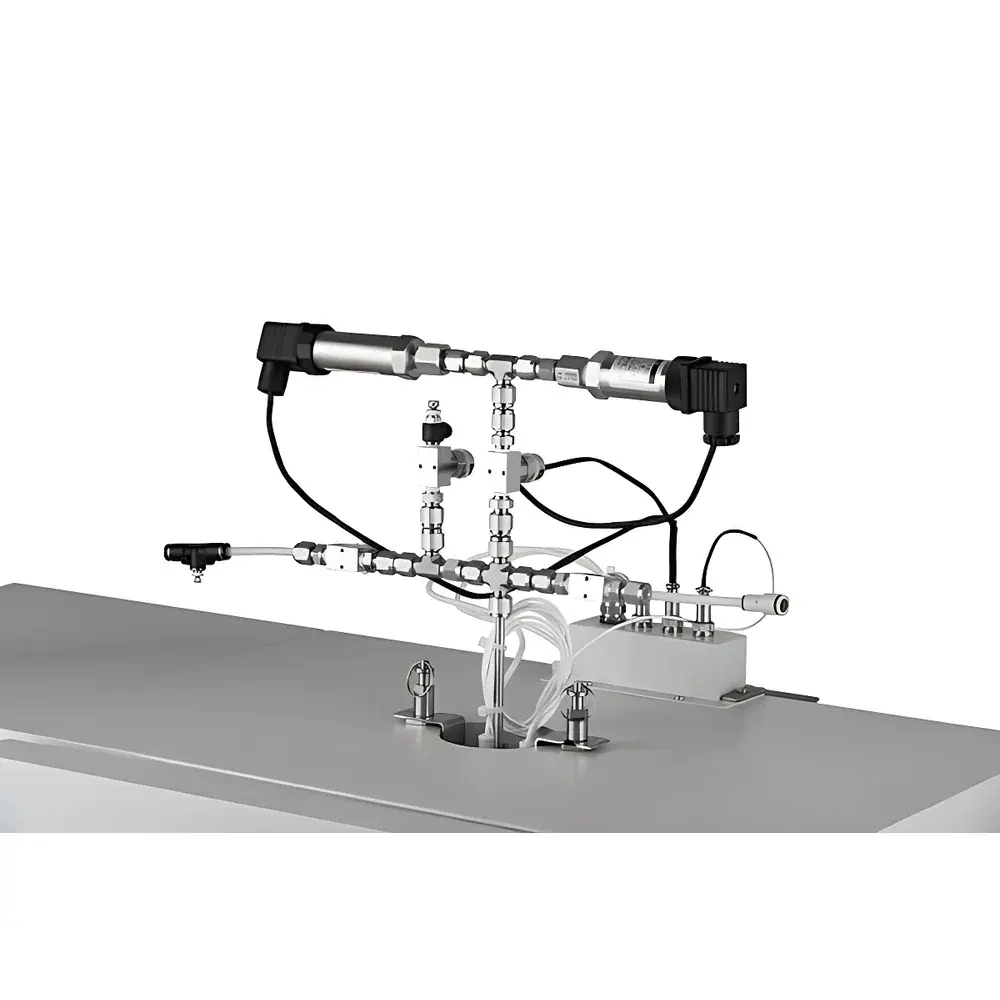
- High-fidelity gas mixing architecture featuring fast-response (≤2.5 ms) pressure transducers, temperature-compensated electromagnetic valves, and real-time stoichiometric algorithm control—ensuring reproducible partial pressure delivery across full LFL–UFL ranges.
- Two interchangeable borosilicate glass test vessels (5 L and 12 L) conforming to ASTM E681 dimensional requirements, optimized for homogeneous gas-phase mixing via ≥300 rpm magnetic stirring and laminar internal airflow.
- Dual redundant safety interlocks: mechanical door position sensing and real-time temperature validation prevent ignition unless both vessel integrity and thermal equilibrium are confirmed—fully aligned with IEC 61000-4-5 surge immunity and EN 61010-1 safety standards.
- Explosion-resistant enclosure with IP65-rated electronics, double-glazed anti-fog observation window, rear-mounted spring-actuated pressure relief door, and integrated video recording (1080p, timestamped) for post-test forensic analysis.
- Embedded Windows CE platform with 8-inch capacitive touchscreen interface supporting full experimental workflow automation—including parameter configuration, vacuum purge cycles, multi-step gas introduction, timed ignition sequencing, and automatic post-combustion purging using internal vacuum extraction.
Sample Compatibility & Compliance
The HWP21-30S accommodates gaseous substances, volatile liquids, and thermally labile solids capable of vaporization below 210 °C without decomposition. It supports testing with nitrogen or argon as inert diluents but explicitly excludes oxidizers stronger than air (e.g., oxygen-enriched atmospheres), maintaining strict adherence to GB/T 21844–2008, ASTM E681–2009, GAT 536, and NY/T 1860.25. All measurement subsystems—including thermocouples (calibrated to ITS-90 traceability), pressure sensors (NIST-traceable 0.1% FS), and timing circuits (±10 ms total system jitter)—are validated per ISO/IEC 17025 calibration protocols. Instrument firmware logs all environmental metadata (ambient T/RH/Patm) alongside test data, satisfying GLP audit requirements for raw data integrity and electronic record retention.
Software & Data Management
The embedded control software provides role-based access (operator, supervisor, administrator), configurable test templates, and export-ready reports compliant with 21 CFR Part 11 requirements—including electronic signatures, audit trails, and immutable data archiving. All experimental parameters, sensor readings, ignition events, and video timestamps are stored in encrypted SQLite databases with SHA-256 checksum verification. Data exports support CSV, PDF, and XML formats compatible with LIMS integration. Remote diagnostics and firmware updates are supported via secure TLS 1.2 Ethernet connection; no cloud dependency or external telemetry is enabled by default.
Applications
- Flammability hazard assessment of new chemical entities during R&D and regulatory dossier preparation (e.g., OECD SIDS, EPA TSCA).
- Process safety studies for solvent recovery systems, distillation columns, and reactor vent streams in fine chemical and pharmaceutical manufacturing.
- Validation of explosion protection measures (e.g., inerting setpoints, purge gas flow rates) per NFPA 497 and IEC 60079-20-1.
- Supporting UN Manual of Tests and Criteria, Part I, Section 10.3 (flammability classification of gases and vapors) for transport hazard labeling.
- Academic research in combustion kinetics, including laminar flame speed correlation with equivalence ratio and initial temperature.
FAQ
What standards does the HWP21-30S explicitly support?
The instrument implements test methodologies defined in GB/T 21844–2008, ASTM E681–2009, GAT 536, and NY/T 1860.25, with hardware and software architecture validated against their procedural, metrological, and safety requirements.
Can the system test oxygen-enriched mixtures?
No. Per ASTM E681 Section 6.2 and GB/T 21844 Clause 5.1, only air or inert diluents (e.g., N₂, Ar) may be used; oxidizers with higher O₂ partial pressure than ambient air are prohibited.
How is measurement traceability ensured?
All primary sensors are calibrated against NIST-traceable references; thermocouples meet ASTM E230 Class B tolerances; pressure transducers are certified to ISO 9001 calibration records with annual verification intervals documented in the instrument’s Quality Assurance File.
Is remote operation supported?
Yes—via secure Ethernet connection using industry-standard Modbus TCP for supervisory control and data acquisition (SCADA); however, ignition initiation requires local confirmation or authenticated IR remote activation per functional safety Level SIL1.
What maintenance is required for long-term accuracy?
Annual recalibration of pressure and temperature subsystems is recommended; glass vessels require visual inspection for microfractures prior to each use; spark electrodes should be cleaned and gap verified every 50 tests using certified gauge blocks.






