
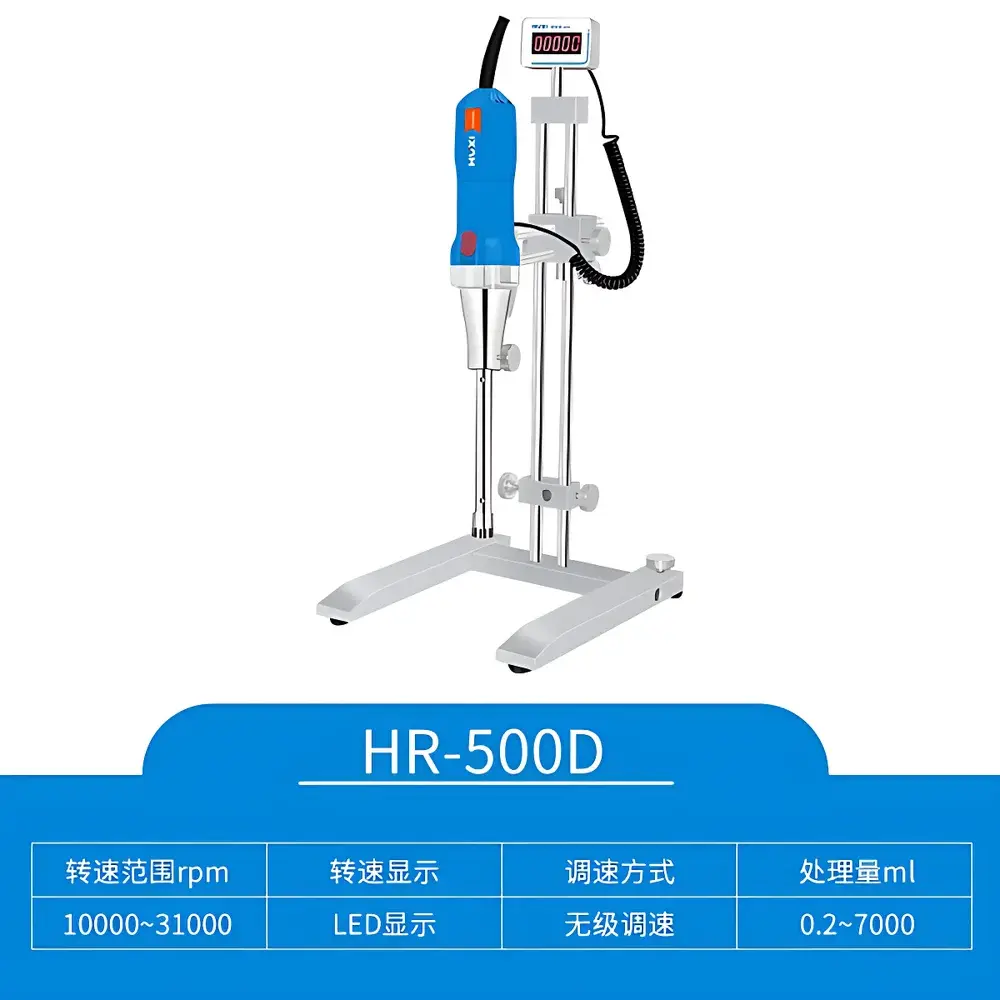
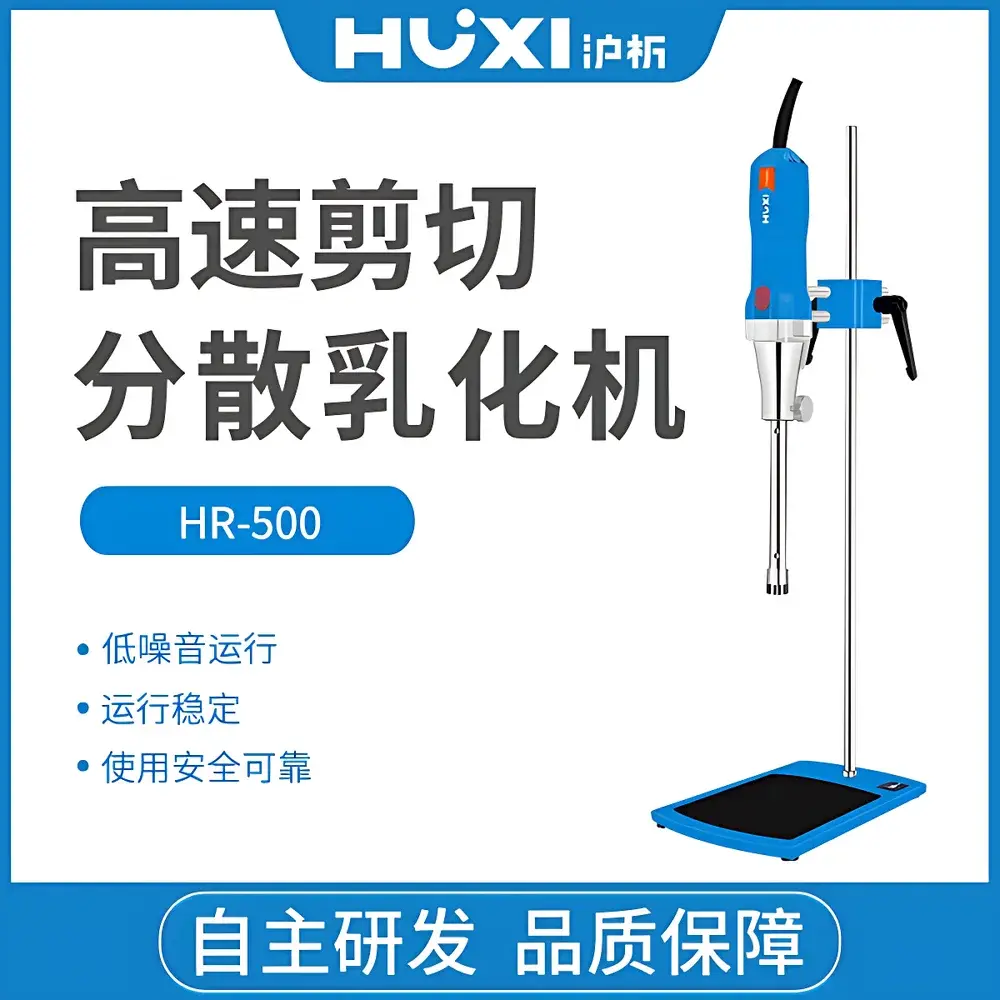
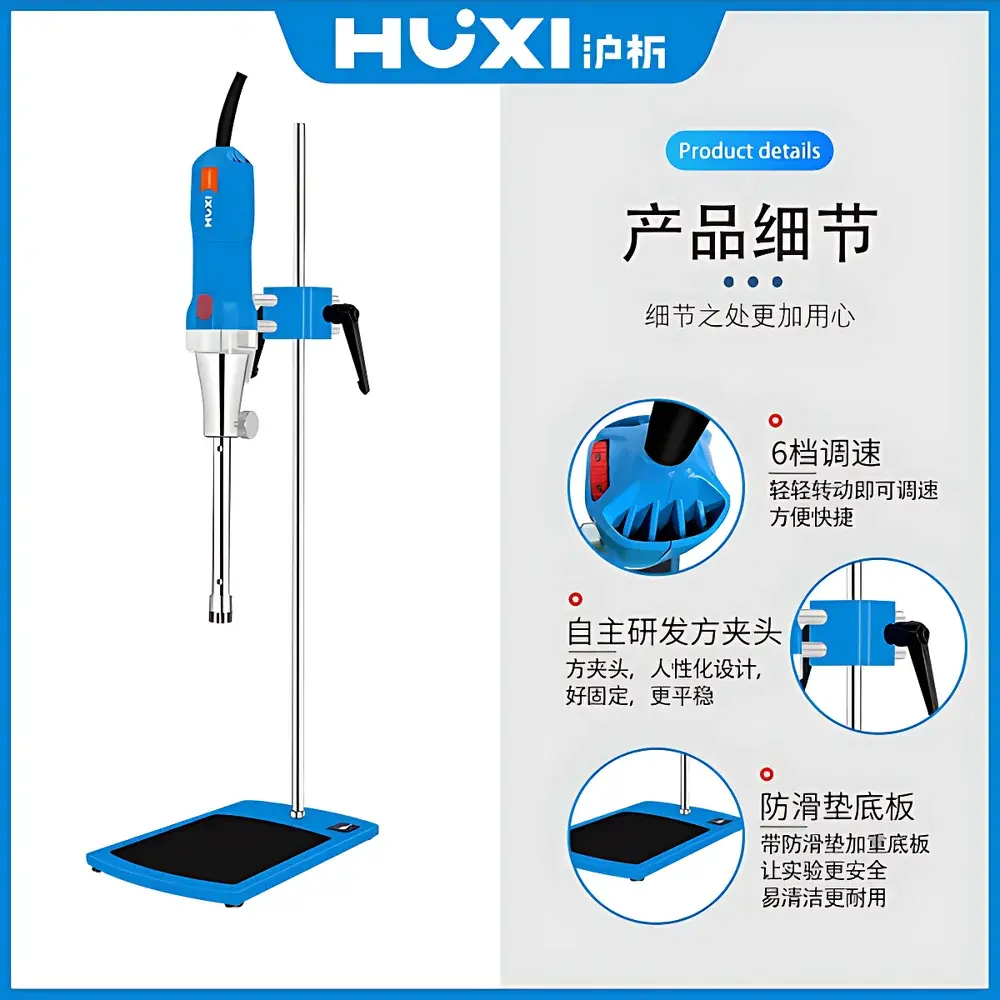
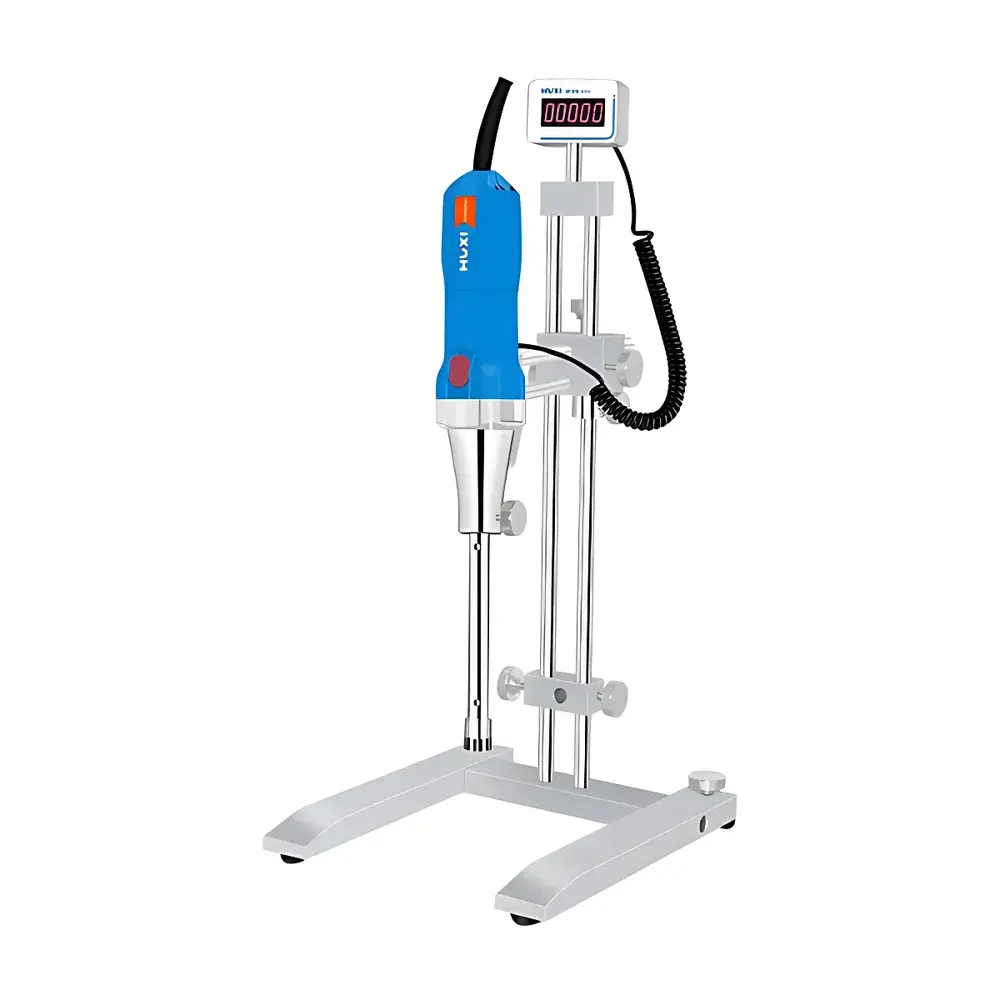
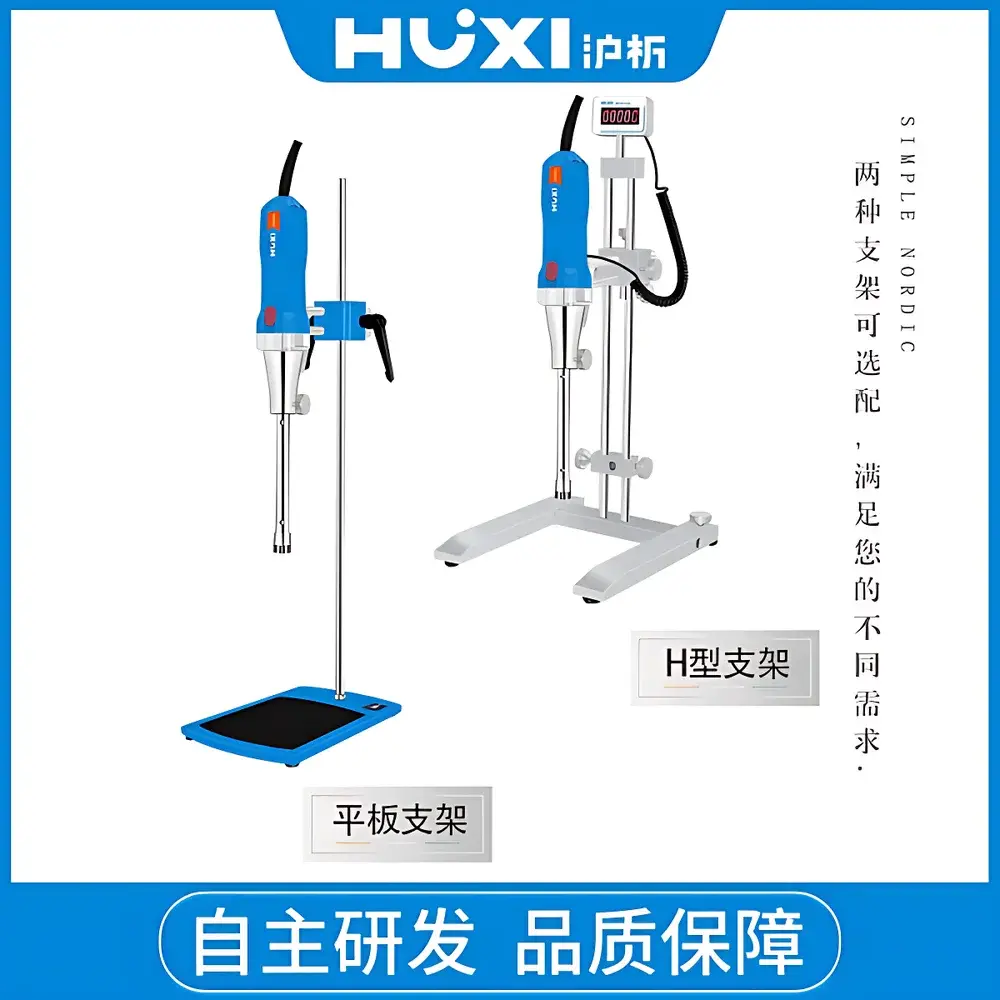
HUXI HR-500D High-Shear Homogenizer
| Brand | HUXI |
|---|---|
| Origin | Shanghai, China |
| Manufacturer Type | Direct Manufacturer |
| Product Category | Domestic |
| Model | HR-500D |
| Instrument Type | Probe-Type Rotor-Stator Homogenizer |
| Dimensions (W×D×H) | 470 × 330 × 200 mm |
| Processing Volume | 0.2–7000 mL (in water) |
| Speed Range | 12,000–30,000 rpm |
| Input Power | 500 W |
| Max. Viscosity | 5000 cP |
| Display | Digital RPM Readout |
| Speed Control | Continuous (Stepless) Electronic Regulation |
| Wetted Materials | AISI 316 Stainless Steel |
| Shaft Seal Material | PTFE |
| Max. Operating Temperature (Sample) | ≤120 °C |
| Ambient Operating Conditions | 5–40 °C, ≤80% RH |
| Weight | 9 kg |
| Power Supply | 220 V, 50/60 Hz |
| Process Mode | Batch |
Overview
The HUXI HR-500D is a high-performance, probe-type rotor-stator homogenizer engineered for laboratory-scale high-shear processing of heterogeneous liquid and semi-liquid systems. It operates on the principle of hydrodynamic cavitation and intense mechanical shear generated by the relative motion between a rapidly rotating rotor and a precisely machined concentric stator. At rotational speeds up to 30,000 rpm, the device delivers linear tip velocities exceeding 40 m/s—sufficient to induce turbulent flow, micro-cavitation, and rapid interfacial disruption in complex dispersions. This enables efficient particle size reduction, droplet breakup, cell lysis, emulsification, and colloidal stabilization across diverse sample matrices. Designed for batch-mode operation, the HR-500D supports reproducible scale-up from early-stage formulation development to pre-clinical and pilot-batch preparation in regulated environments.
Key Features
- Robust 500 W brushless motor with thermal overload protection, delivering stable torque output across the full 12,000–30,000 rpm speed range
- Digital RPM display with real-time feedback and ±1% speed accuracy under load
- Stepless electronic speed control via integrated potentiometer—enabling precise, repeatable adjustment without mechanical gear shifts
- Interchangeable rotor-stator probes (25G standard; over 20 optional geometries available), all fabricated from electropolished AISI 316 stainless steel for corrosion resistance and cleanability
- PTFE-sealed immersion shaft assembly rated for continuous operation at sample temperatures up to 120 °C
- Ergonomic handheld probe design compatible with vacuum-rated vessels and jacketed reactors; optional stand-mounting kit available for hands-free operation
- Low-noise enclosure and vibration-damped base structure ensure stable benchtop performance in shared lab environments
Sample Compatibility & Compliance
The HR-500D accommodates aqueous, organic, and viscous non-Newtonian fluids—including polymer solutions, suspensions, crude emulsions, and biological lysates—with processing volumes ranging from 0.2 mL (micro-volume probes) to 7 L (large-capacity horns). Its wetted materials comply with USP Class VI and FDA 21 CFR Part 11 material eligibility guidelines for pharmaceutical contact surfaces. While not certified as GMP-compliant equipment per se, its design supports GLP/GMP-aligned workflows: traceable speed logging (via optional RS-232/USB interface), documented probe calibration records, and compatibility with autoclaving (disassembled probes only). The system meets IEC 61000-6-3 (EMC emission) and IEC 61010-1 (electrical safety) standards for laboratory instruments.
Software & Data Management
The HR-500D operates as a standalone instrument with local digital control; no proprietary software is required for basic operation. For integration into automated or auditable workflows, an optional communication module provides ASCII-based serial protocol support (RS-232 or USB-to-serial), enabling bidirectional command exchange and timestamped RPM logging into LIMS or ELN platforms. All parameter changes—including speed setpoints and runtime—are retained in non-volatile memory. Audit trail functionality requires external data capture; however, the device’s deterministic speed response and absence of internal data storage align with 21 CFR Part 11 “system validation” prerequisites when deployed within validated SOPs.
Applications
- Pharmaceutical: Liposome and nanoemulsion formulation, API micronization, vaccine adjuvant dispersion, sterile filtration pre-treatment
- Biotechnology: Mammalian and microbial cell lysis, nucleic acid extraction buffer homogenization, protein aggregate dispersion
- Food & Beverage: Mayonnaise and dressing emulsification, functional ingredient dispersion (e.g., curcumin, resveratrol), dairy protein restructuring
- Materials Science: Carbon nanotube and graphene dispersion in solvents/polymers, ceramic slurry deagglomeration, pigment grinding in coatings
- Chemical Processing: Polymer latex stabilization, pesticide suspension homogenization, asphalt emulsifier activation, wastewater flocculant dispersion
FAQ
What is the maximum recommended viscosity for continuous operation?
The HR-500D is rated for fluids up to 5000 cP at 20 °C; operation above this limit may reduce probe lifespan and require reduced speed or intermittent duty cycles.
Can the HR-500D be used under vacuum or inert atmosphere?
Yes—the probe assembly is compatible with standard vacuum-rated glass vessels (e.g., round-bottom flasks with septum ports) and sealed reactor systems; ensure proper shaft sealing and cooling for extended vacuum operation.
Is the 316 stainless steel probe suitable for sodium hypochlorite or strong acid solutions?
AISI 316 offers good resistance to oxidizing agents and mild acids but is not recommended for prolonged exposure to >5% hypochlorite or hydrochloric acid below pH 2; alternative Hastelloy or ceramic-coated probes are advised for aggressive chemistries.
How often should the rotor-stator probe be calibrated?
No routine calibration is required for speed accuracy; however, users should verify mechanical integrity (e.g., rotor runout, stator gap consistency) every 200 operational hours or after impact events.
Does the HR-500D support IQ/OQ documentation packages?
HUXI provides factory test reports and mechanical drawings; full IQ/OQ protocols must be developed in-house or by qualified third parties per ISO/IEC 17025 or ASTM E2500 guidance.



