
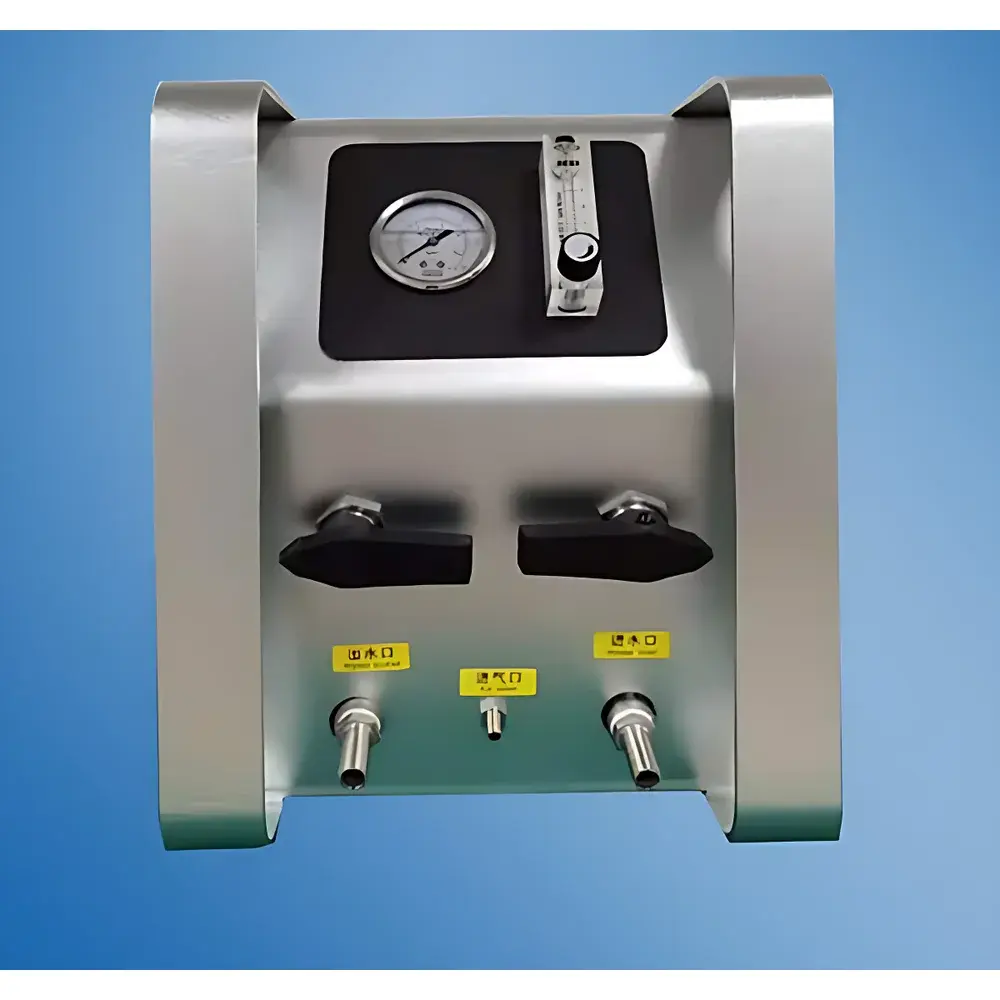
ZYKX ZYWNP Series Ultrafine & Microbubble Generator
| Brand | ZYKX |
|---|---|
| Origin | Shanghai, China |
| Manufacturer Type | Authorized Distributor |
| Regional Classification | Domestic (China) |
| Model | ZYWNP-L-S01M / ZYWNP-2-0.75 / ZYWNP-3-0.75 / ZYWNP-3-1.5 / ZYWNP-3-2.2 |
| Voltage | 220 V or 380 V |
| Power | 0.25–2.2 kW |
| Flow Rate | 0.2–5.7 m³/h |
| Bubble Size Distribution Peak | 150 ± 30 nm |
| Bubble Concentration | 1×10⁷–1×10⁹ particles/mL |
| Zeta Potential | −30 to −40 mV |
| Dissolved Oxygen Increase | ≥30% vs. feed water |
Overview
The ZYKX ZYWNP Series Ultrafine & Microbubble Generator is an engineered fluidic system designed to produce stable, high-density dispersions of ultrafine bubbles (UFBs) and microbubbles (MBs) in aqueous media through a hybrid physical mechanism—combining controlled mechanical dispersion with pressurized gas dissolution (pressure-saturation followed by rapid depressurization). Unlike conventional bubble generation methods relying on porous membranes, electrolysis, or simple venturi aspiration, the ZYWNP platform leverages nanoscale interfacial engineering to achieve sub-100 nm modal bubble diameters with narrow polydispersity. According to ISO 20480-1:2019, ultrafine bubbles are defined as gaseous cavities in liquid with hydrodynamic diameters hours in quiescent water), high specific surface area (> 10⁶ m²/m³), and strong negative zeta potential (−30 to −40 mV), all critical for electrostatic stabilization and interfacial reactivity.
Key Features
- Hybrid generation principle: Integrated mechanical shear and pressure-saturation-depressurization ensures reproducible UFB formation without chemical additives or electrodes.
- No consumables or sacrificial components: Fully physical operation eliminates membrane fouling, electrode degradation, or electrolyte contamination risks.
- Scalable modular design: Five standard configurations (ZYWNP-L-S01M to ZYWNP-3-2.2) cover flow rates from 0.2 to 5.7 m³/h, supporting lab-scale validation through pilot- and industrial-scale deployment.
- Stable colloidal output: Achieves bubble number concentrations of 1×10⁷–1×10⁹ particles per mL under steady-state operation, verified via nanoparticle tracking analysis (NTA) and dynamic light scattering (DLS).
- Enhanced mass transfer: Delivers ≥30% increase in total dissolved oxygen (TDO) relative to inlet water—measured per ASTM D888-22—due to simultaneous molecular dissolution and persistent nano-dispersed gas phase.
Sample Compatibility & Compliance
The ZYWNP generator operates exclusively in aqueous systems—including freshwater, brackish water, nutrient solutions, and low-viscosity process streams (≤ 5 mPa·s). It is compatible with air, oxygen, ozone, nitrogen, and carbon dioxide as process gases. All wetted components are constructed from 316L stainless steel and food-grade EPDM seals, compliant with FDA 21 CFR §177.2600 for indirect food contact. System architecture supports integration into GLP- and GMP-aligned workflows: full operational logs (timestamped pressure, flow, power) are exportable for audit trails. While not certified to IEC 61000-6-2/4 or ATEX, the unit meets CE marking requirements for electromagnetic compatibility (EMC) and low-voltage directive (LVD) when installed per manufacturer’s grounding and enclosure specifications.
Software & Data Management
The ZYWNP series includes analog I/O interfaces (4–20 mA pressure/flow feedback) and optional RS-485 Modbus RTU connectivity for integration into SCADA or PLC-based process control environments. No proprietary software is required; configuration and monitoring can be performed via industry-standard HMI panels or third-party data acquisition platforms. All operational parameters—including real-time power draw, inlet/outlet pressure differentials, and cumulative runtime—are stored onboard for ≥30 days. Data export is supported in CSV format for traceability and statistical process control (SPC) analysis. The system supports 21 CFR Part 11–compliant electronic signatures when deployed with validated external LIMS or MES infrastructure.
Applications
- Environmental remediation: In situ delivery of oxygen or ozone UFBs for aerobic biodegradation of chlorinated solvents and petroleum hydrocarbons in saturated soils and sediment—validated per ASTM D6730-21 protocols.
- Aquaculture & hydroponics: Enhanced DO saturation without foam or turbulence stress; demonstrated improvement in shrimp survival rates (Litopenaeus vannamei) and lettuce root zone O₂ availability (ASAE S572.1).
- Industrial wastewater treatment: UFB-assisted flotation of fine suspended solids (<10 µm) and emulsified oils, reducing coagulant demand by up to 40% versus conventional DAF systems.
- Oilfield applications: Low-interfacial-tension UFB flooding for improved sweep efficiency in mature reservoirs; compatible with polymer-thickened drive fluids per API RP 40.
- Nanomaterial synthesis: Template-mediated nucleation of metal oxide nanoparticles (e.g., TiO₂, ZnO) via UFB-induced localized supersaturation and radical generation (•OH, H•).
FAQ
What bubble size distribution does the ZYWNP system deliver, and how is it verified?
The system produces a modal diameter of 150 ± 30 nm, with >85% of bubbles below 600 nm. Size distribution is confirmed using NTA (Malvern Panalytical NanoSight NS300) calibrated per ISO 22412:2017.
Can the ZYWNP operate continuously for 24/7 industrial duty cycles?
Yes—rated IP55 enclosure, dual-bearing rotor assembly, and thermal overload protection enable unattended operation up to 8,760 hours/year when maintained per Section 7.2 of the Technical Manual.
Is ozone-compatible operation supported?
Ozone service requires optional Hastelloy C-276 wetted parts upgrade and strict adherence to OSHA PEL limits (0.1 ppm); consult ZYKX Application Engineering prior to ozone commissioning.
Does the system meet ISO 20480 compliance for ultrafine bubble characterization?
The ZYWNP itself is a generation device—not a measurement instrument—but its output meets ISO 20480-1 definitions for UFBs; users must employ ISO-compliant instrumentation (e.g., resonant mass measurement or NTA) for verification.
What maintenance intervals are recommended?
Primary maintenance: every 500 operating hours—includes inspection of seal integrity, bearing preload, and calibration of pressure transducers per ISO 9001:2015 Clause 7.1.5.



