
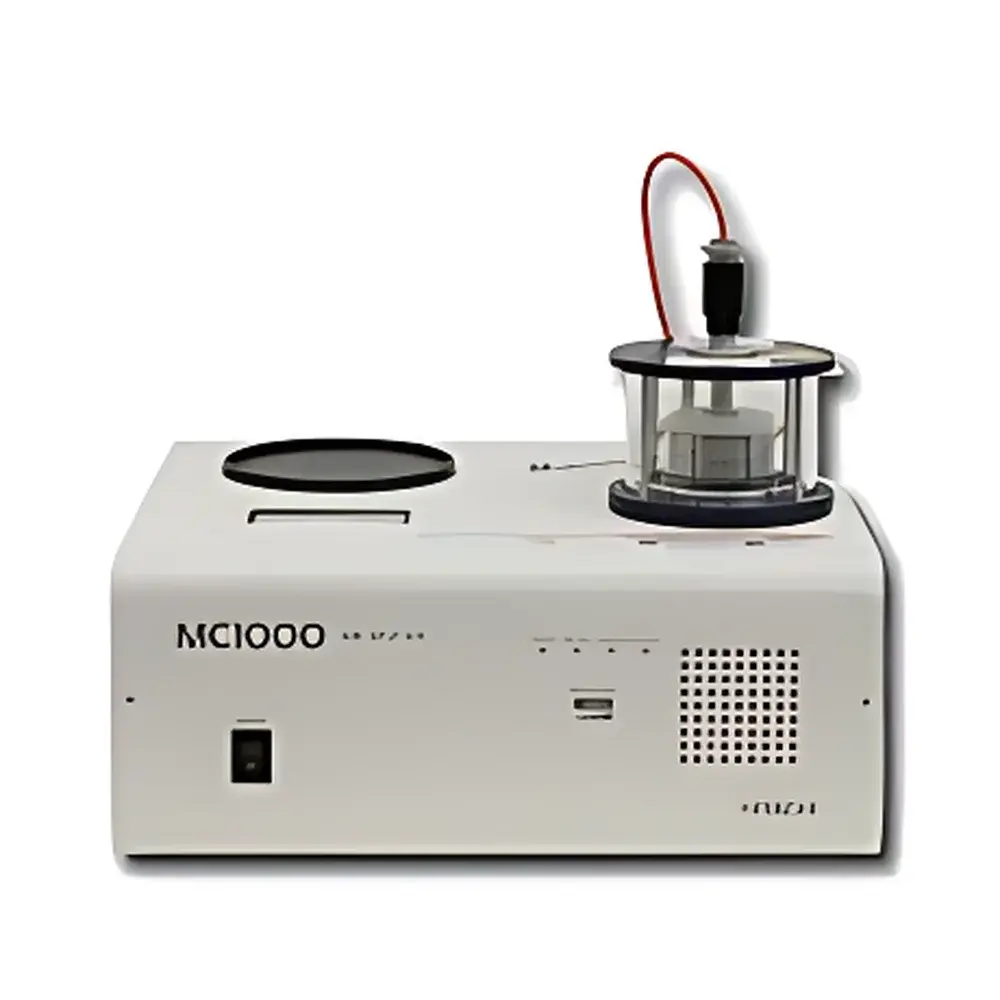
Hitachi High-Technologies MC1000 Magnetron Sputter Coater
| Brand | Hitachi High-Technologies |
|---|---|
| Origin | Japan |
| Manufacturer | Hitachi High-Technologies Corporation |
| Type | Imported |
| Model | MC1000 |
| Pricing | Upon Request |
| Max Sample Diameter | 60 mm |
| Max Sample Height | 20 mm |
| Control Interface | LCD Touchscreen |
| Memory Function | Yes |
| Optional Accessories | Thick/Large Sample Holder Kit |
Overview
The Hitachi High-Technologies MC1000 Magnetron Sputter Coater is a precision-engineered thin-film deposition system designed specifically for electron microscopy sample preparation. It employs direct-current (DC) magnetron sputtering—a physically vapor deposition (PVD) technique that utilizes a magnetic field to confine plasma near the target surface, thereby enhancing ionization efficiency and enabling low-energy, high-uniformity metal coating. This principle minimizes thermal and energetic damage to beam-sensitive specimens such as biological tissues, polymers, and nanomaterials—critical for preserving ultrastructural integrity prior to high-resolution scanning electron microscopy (SEM) imaging. The MC1000 is optimized for routine laboratory use in academic research, materials science labs, and industrial quality control facilities where reproducible, sub-nanometer-thick conductive coatings (e.g., Au, Pt, Au/Pd, Cr, Ir) are required to mitigate charging effects during SEM analysis.
Key Features
- Electromagnetic tube electrode configuration: Generates a stable, focused plasma zone that reduces substrate heating and ion bombardment energy—essential for delicate, non-conductive, or hydrated samples.
- Intuitive LCD touchscreen interface: Enables rapid parameter selection—including sputtering time (0.1–300 s), current (5–40 mA), and vacuum level monitoring—with real-time feedback and one-touch operation.
- Memory function with up to 10 programmable protocols: Stores frequently used deposition conditions (e.g., “Au 60 s @ 25 mA” or “Pt 90 s @ 30 mA”) to ensure inter-user and inter-session consistency across multi-operator environments.
- Compact chamber design with 60 mm maximum sample diameter and 20 mm maximum sample height: Accommodates standard SEM stubs (e.g., 12.7 mm, 25 mm, 32 mm), TEM grids, and custom substrates while maintaining uniform film thickness distribution (±5% across full area, verified by quartz crystal microbalance calibration).
- Integrated vacuum system: Equipped with a two-stage rotary vane pump achieving base pressure ≤5 × 10⁻² Pa, compatible with optional turbo-molecular pump upgrades for ultra-high-purity coatings or reactive sputtering applications.
Sample Compatibility & Compliance
The MC1000 supports a broad range of specimen types—including biological sections (resin-embedded or cryo-prepared), semiconductor wafers, ceramic powders mounted on carbon tape, and soft organic thin films—without requiring pre-drying or critical-point drying in many cases. Its low-power sputtering mode ensures minimal topographical alteration and no observable redeposition artifacts under 5 kV SEM imaging. The system complies with ISO 14644-1 Class 5 cleanroom handling recommendations for chamber access and meets electrical safety standards IEC 61010-1 for laboratory equipment. All operational logs—including sputtering duration, current, pressure, and date/time stamps—are retained locally and exportable via USB for GLP/GMP documentation and audit readiness.
Software & Data Management
While the MC1000 operates via embedded firmware without external PC dependency, its touchscreen interface supports CSV-formatted session log export (via USB flash drive) containing timestamped process parameters and operator ID fields. These records align with FDA 21 CFR Part 11 requirements when paired with institutional electronic signature policies and controlled access protocols. No proprietary software installation is required; data files are human-readable and compatible with common LIMS platforms and Excel-based QC dashboards. Firmware updates are delivered via Hitachi’s secure technical support portal and validated per ISO/IEC 17025 traceability guidelines.
Applications
- Routine SEM sample preparation for life sciences: Coating of freeze-fractured membranes, immunogold-labeled ultrathin sections, and bacterial biofilms.
- Materials characterization: Conductive layer deposition on battery cathode particles, MOF crystals, and graphene oxide flakes prior to EDS mapping.
- Failure analysis in microelectronics: Low-damage Pt coating of cross-sectioned IC devices to prevent edge charging during voltage contrast imaging.
- Geological and paleontological imaging: Uniform Au/Pd coating of fossilized diatoms or clay mineral aggregates without obscuring nanoscale surface textures.
- Quality assurance workflows: Integration into ISO/IEC 17025-accredited testing laboratories performing ASTM E1558 (Standard Guide for Sputter Coating Nonconductive Specimens for SEM) procedures.
FAQ
What metals can be deposited using the MC1000?
The system is configured for DC magnetron sputtering of conductive targets including Au, Pt, Au/Pd (80/20), Cr, Ir, and C (with optional RF upgrade). Reactive sputtering (e.g., TiO₂, SiO₂) requires additional gas inlet control and is not supported in standard configuration.
Is the MC1000 compatible with automated SEM workflows?
Yes—its repeatable coating performance and memory protocol function enable seamless integration with robotic sample loaders and SEM auto-acquisition sequences, provided chamber access timing is synchronized via external TTL trigger (available on optional I/O module).
Does the MC1000 require liquid nitrogen or water cooling?
No. The electromagnet design and low-power operation eliminate the need for active cooling; ambient air convection suffices for continuous duty cycles of up to 50 runs per day.
Can the MC1000 be validated for regulated environments?
Yes. Hitachi provides IQ/OQ documentation templates aligned with ISO/IEC 17025 and GxP expectations, including vacuum integrity tests, thickness uniformity verification (using certified step-height standards), and touchscreen input response validation.
What maintenance intervals are recommended?
Chamber cleaning every 200 sputtering hours; target replacement every 500–1,000 runs depending on material and current setting; vacuum pump oil change every 6 months or 1,000 operating hours—per manufacturer’s Technical Service Bulletin TS-MC1000-Rev.4.





