
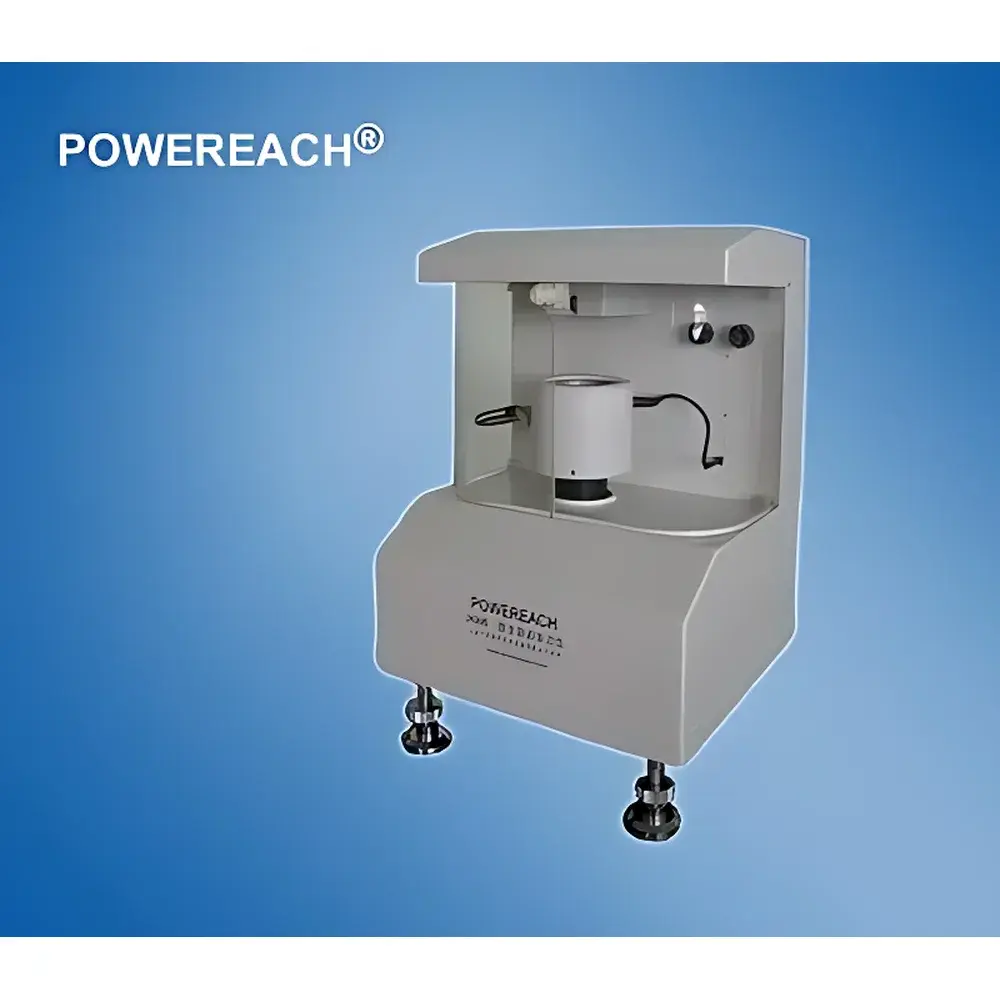
JK99BM Automatic Surface and Interfacial Tensiometer
| Origin | Beijing, China |
|---|---|
| Manufacturer Type | Authorized Distributor |
| Origin Category | Domestic (China) |
| Model | JK99BM |
| Price Range | USD 1,400–7,000 |
| Measurement Range | 0–500 mN/m |
| Resolution | 0.01 mN/m |
| Accuracy | ±0.01 mN/m |
| Temperature Display Range | Ambient to 100 °C |
| Temperature Display Accuracy | ±0.1 °C |
| Measurement Methods | Du Noüy Ring Method & Wilhelmy Plate Method |
Overview
The JK99BM Automatic Surface and Interfacial Tensiometer is a precision laboratory instrument engineered for the quantitative determination of surface tension (liquid–air) and interfacial tension (liquid–liquid) using two standardized physical measurement principles: the Du Noüy ring method and the Wilhelmy plate method. Based on the force-balance principle—where surface or interfacial tension is derived from the vertical force exerted on a calibrated platinum probe immersed at the interface—the JK99BM delivers high reproducibility and traceable results compliant with internationally recognized test protocols. Its fully automated operation eliminates manual intervention in zeroing, immersion, detachment, and data capture, reducing operator-induced variability and enabling unattended sequential measurements. Designed for integration into QC laboratories, R&D facilities, and academic teaching environments, the system requires connection to a Windows-based host PC for real-time data acquisition, curve visualization, and long-term stability monitoring. The instrument’s mechanical architecture features low-noise linear motion control, thermal-stable sensor mounting, and vibration-damped platform design—critical for achieving sub-mN/m resolution under ambient lab conditions.
Key Features
- Fully automated measurement cycle with one-touch zeroing (hardware and software), including automatic probe immersion, dwell, and withdrawal—eliminating subjective timing and positioning errors.
- Dual-method compatibility: Supports both ASTM D971 (ring method) and ISO 6295 / ASTM D1331 (plate method) with dedicated platinum ring (40–50 mL sample volume) and platinum plate (20–30 mL sample volume) accessories.
- High-precision force transduction system utilizing a Japan-sourced load cell with 0.01 mN/m resolution and ±0.01 mN/m accuracy across the full 0–500 mN/m range.
- Integrated temperature monitoring with ±0.1 °C accuracy (0–100 °C range), supporting either optional built-in Peltier-controlled heating stage or external thermostatic bath coupling via insulated circulation platform.
- Real-time tension vs. time curve recording with adjustable sampling intervals; plate method completes in 1–5 s, ring method in 150–200 s—enabling kinetic surface activity studies.
- Onboard calibration verification using certified stainless-steel calibration weights; rapid field recalibration without third-party service.
- Robust mechanical design with anti-vibration base, smooth Z-axis translation, and self-aligning probe holder ensuring consistent meniscus contact geometry.
- Software-integrated correction algorithms for buoyancy, wetting angle (assumed 0° for platinum), and dynamic effects—no manual post-processing required.
Sample Compatibility & Compliance
The JK99BM accommodates a broad spectrum of liquid systems, including low- to medium-viscosity aqueous solutions, surfactant formulations, hydrocarbon oils, polymer melts (within operational temperature limits), coatings, inks, and emulsions. It is routinely deployed in petroleum refining (interfacial tension between crude oil and alkaline solutions), pharmaceutical formulation (surfactant critical micelle concentration profiling), paint & coating R&D (wetting behavior on substrates), and food science (protein adsorption kinetics). The instrument complies with Chinese national standards GB/T 22237–2008 (surface tension of surfactant solutions), GB/T 5549–2010 (determination by ring method), and GB/T 6541–1986 (interfacial tension of oil–water systems). While not pre-certified to ISO/IEC 17025, its metrological traceability path—including documented calibration procedures, audit-ready raw data export (.csv, .txt), and timestamped measurement logs—supports GLP and GMP-aligned workflows. Optional configuration with electronic signature and audit trail modules enables alignment with FDA 21 CFR Part 11 requirements when paired with validated software deployment.
Software & Data Management
The included Windows-native application provides intuitive instrument control, real-time graphical display of force–time and tension–time curves, and automated calculation of equilibrium and dynamic tension values. All raw sensor output (mV vs. time), processed tension values, metadata (temperature, method, operator ID, sample ID), and user annotations are stored in structured ASCII format for interoperability with LIMS, MATLAB, Python pandas, or Excel. Data export supports batch printing, trend analysis, comparative overlay of multiple runs, and customizable report generation (PDF/HTML) with embedded calibration certificates. The software permits stepwise manual control (e.g., forced Z-stage movement) for method development and troubleshooting—particularly valuable in teaching labs where pedagogical transparency is prioritized over full automation. Firmware updates are delivered via secure HTTPS portal; version history and change logs are maintained per ICH Q9 principles.
Applications
- Surfactant screening and CMC determination in detergent, personal care, and agrochemical formulations.
- Interfacial tension mapping for enhanced oil recovery (EOR) surfactant selection and formulation optimization.
- Quality control of inkjet inks, UV-curable resins, and electrodeposition bath stability assessment.
- Kinetic analysis of protein adsorption at air–water and oil–water interfaces in biopharmaceutical process development.
- Evaluation of surface activity degradation under thermal or oxidative stress (e.g., aging studies).
- Teaching core concepts in colloid & interface science, physical chemistry, and materials engineering laboratories.
FAQ
Is the JK99BM compatible with modern Windows operating systems?
Yes—it supports Windows 7, 8.1, and 10 (32-bit only); a USB-to-serial adapter is required for newer PCs lacking native RS-232 ports.
Can the instrument measure interfacial tension between two immiscible liquids?
Yes—both platinum ring and platinum plate methods are validated for liquid–liquid systems (e.g., oil–water, polymer–solvent) per ASTM D1331 and ISO 6295.
What is the minimum sample volume required for each method?
20–30 mL for Wilhelmy plate method; 40–50 mL for Du Noüy ring method—optimized to ensure stable meniscus formation and minimize evaporation artifacts.
Does the system support temperature-controlled measurements?
Yes—either via optional integrated Peltier heating stage (ambient to 100 °C) or external thermostatic bath coupling using the supplied circulation platform with embedded Pt100 sensor.
How is measurement accuracy verified during routine use?
Using the included certified calibration weights and reference liquids (e.g., ultra-pure water at 20 °C = 72.75 mN/m); software-guided calibration routines document all adjustments and deviations.



