
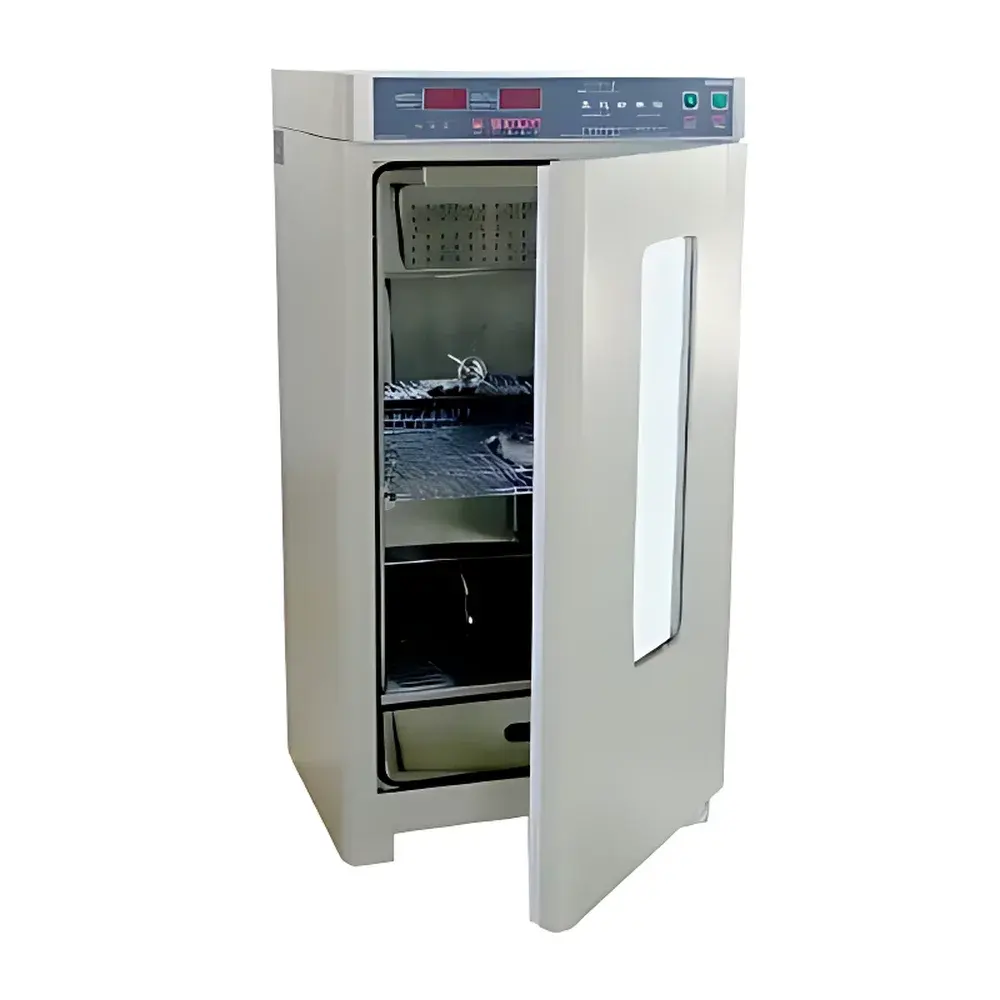
Brookfield SPX-250B-Z Biochemical Incubator
| Origin | Shanghai, China |
|---|---|
| Manufacturer Type | Authorized Distributor |
| Origin Category | Domestic (China) |
| Model | SPX-250B-Z |
| Quotation | Available Upon Request |
| Temperature Range | 5–50 °C |
| Temperature Resolution | 0.1 °C |
| Temperature Fluctuation | ±1.5 °C |
| Temperature Uniformity | ±2 °C |
| Input Power | 360 W |
| Timer Range | 0–999 h |
| Interior Dimensions (W×D×H) | 505 × 450 × 1100 mm |
| Exterior Dimensions (W×D×H) | 615 × 560 × 1597 mm |
| Shelf Capacity | 4 adjustable stainless-steel shelves |
Overview
The Brookfield SPX-250B-Z Biochemical Incubator is a microprocessor-controlled, forced-air convection incubation system engineered for stable, repeatable thermal environments in life science laboratories. Designed specifically for biochemical and microbiological applications—including BOD analysis, bacterial and fungal culture, microbial preservation, plant tissue culture, and seed germination studies—the unit operates on the principle of precise air circulation and PID-regulated heating/cooling to maintain setpoint temperature integrity across the entire working chamber. Its dual-mode thermal management system—integrating high-efficiency refrigeration with optimized airflow distribution—eliminates thermal stratification and supports uninterrupted long-term operation, addressing a known limitation in legacy dual-system incubators. The use of R134a refrigerant complies with international environmental directives (e.g., Montreal Protocol Annexes, EU F-Gas Regulation No. 517/2014), ensuring zero ozone depletion potential (ODP = 0) and low global warming potential (GWP ≈ 1430).
Key Features
- Microprocessor-based PID temperature control with 0.1 °C resolution and ±1.5 °C fluctuation tolerance over 5–50 °C operating range
- Forced-air convection via low-noise, high-reliability centrifugal circulation fan for uniform heat distribution (±2 °C uniformity across chamber volume)
- Energy-efficient refrigeration system featuring internationally certified hermetic compressor and eco-friendly R134a refrigerant
- Dual-display LED interface: separate numeric readouts for set temperature and real-time chamber temperature
- Programmable timer with 0–999-hour range; supports both countdown and elapsed time modes
- Four-tier adjustable mirror-finish stainless-steel shelving system with load capacity up to 15 kg per shelf
- Power-loss recovery function with non-volatile memory retention—automatically resumes prior settings after outage or system reset
- Ergonomic curved front profile and electrostatically applied epoxy-polyester powder coating on cold-rolled steel exterior
Sample Compatibility & Compliance
The SPX-250B-Z accommodates standard Petri dishes (up to 150 mm), multi-well plates (6–96-well), culture flasks (T25–T225), Erlenmeyer shakers (with optional bracket integration), and botanical growth containers. Its interior chamber—constructed entirely from electropolished 304 stainless steel—resists corrosion from routine disinfectants (e.g., 70% ethanol, 0.5% sodium hypochlorite) and meets ISO 14644-1 Class 8 cleanroom compatibility requirements for ambient particulate control. While not certified for GMP manufacturing environments, the unit supports GLP-compliant documentation workflows through its traceable parameter logging and audit-ready operational history. It conforms to IEC 61010-1:2010 safety standards for laboratory electrical equipment and carries CE marking under the Low Voltage Directive (2014/35/EU) and EMC Directive (2014/30/EU).
Software & Data Management
The SPX-250B-Z operates as a standalone instrument without proprietary software dependency. All configuration and monitoring are performed locally via tactile membrane keypad and dual-digit LED display. Parameter changes—including temperature setpoint, timer duration, and shelf position—are stored in EEPROM with write-protection logic to prevent accidental overwrite. Though it does not feature USB/RS-232 connectivity or cloud telemetry, its deterministic control architecture ensures full reproducibility across user sessions and facilitates manual logbook compliance with FDA 21 CFR Part 11 Annex A (electronic records) when paired with validated procedural SOPs. Optional external data loggers (e.g., Omega OM-DAQPRO-5300) may be integrated via analog voltage output (0–5 V) for continuous temperature trending.
Applications
This incubator serves core functions across academic, clinical, and industrial life science settings: aerobic and anaerobic bacterial cultivation (e.g., Escherichia coli, Bacillus subtilis); yeast and mold propagation per ISO 21527-1; biochemical oxygen demand (BOD5) testing per APHA Standard Methods 5210B; phytohormone response assays in Arabidopsis thaliana; antibiotic susceptibility testing using Mueller-Hinton agar; and short-term storage of hybridoma cell lines prior to cryopreservation. Its stable thermal envelope also supports enzyme activity profiling at defined physiological temperatures (e.g., 37 °C for mammalian systems, 25–30 °C for plant enzymes) and supports ASTM D5524-19 protocols for biodegradability screening.
FAQ
Is the SPX-250B-Z suitable for CO₂-dependent cell culture?
No—this is a standard biochemical incubator without CO₂ regulation or humidity control. It is not appropriate for mammalian monolayer culture requiring 5% CO₂ and >95% RH.
Can the lighting system be upgraded to UV-C germicidal irradiation?
Yes—standard white-light LED illumination can be factory-replaced with 254 nm UV-C lamps (IEC 62471 Risk Group 3 compliant) upon order specification; installation requires recalibration of internal light sensor thresholds.
What maintenance intervals are recommended for optimal performance?
Compressor oil level and condenser coil cleaning should be performed every 12 months; door gasket integrity and temperature calibration verification are advised quarterly per ISO/IEC 17025:2017 Clause 7.7.
Does the unit support validation documentation packages (IQ/OQ/PQ)?
Brookfield provides generic OQ test templates aligned with ISO 13485 and USP guidelines; site-specific PQ execution must be conducted by qualified third-party metrology providers.
Is remote monitoring possible via Ethernet or Wi-Fi?
Not natively—no network interface is embedded. Integration with building management systems (BMS) requires external analog-to-digital gateway hardware and custom SCADA configuration.
Related Products



