
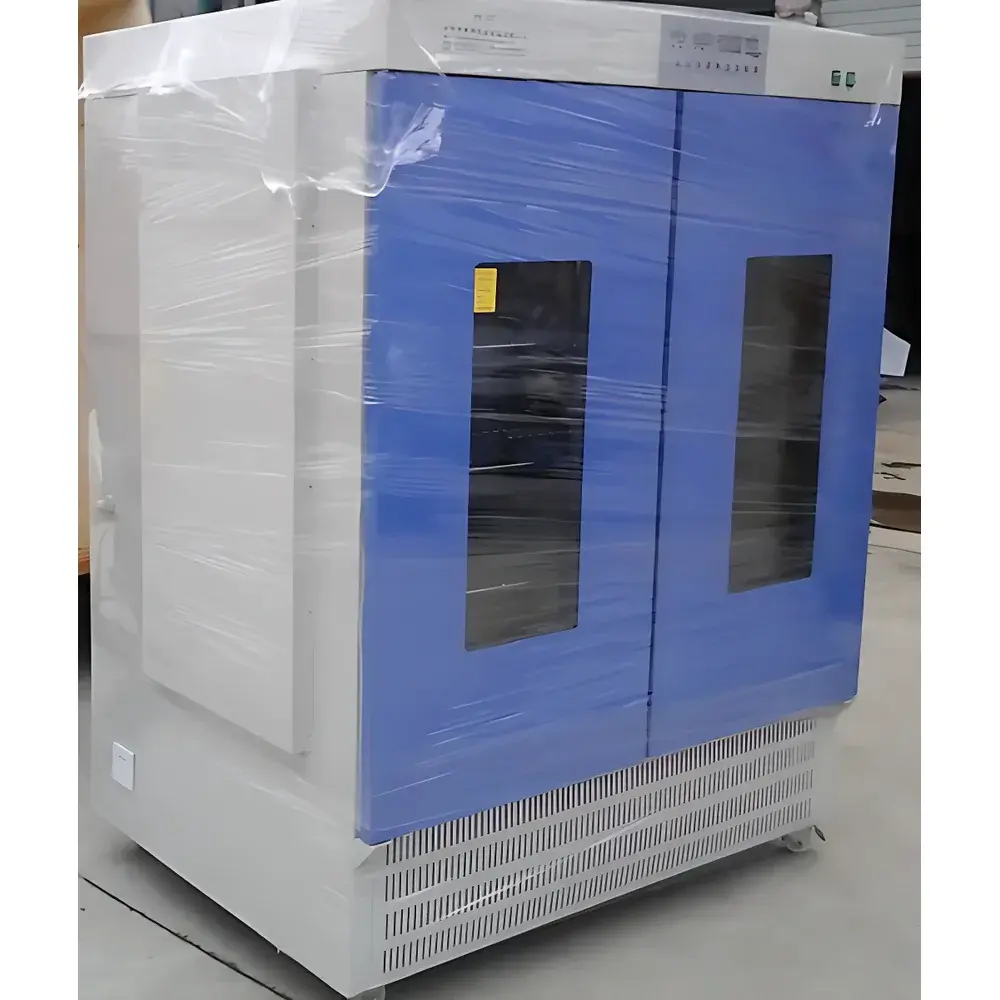
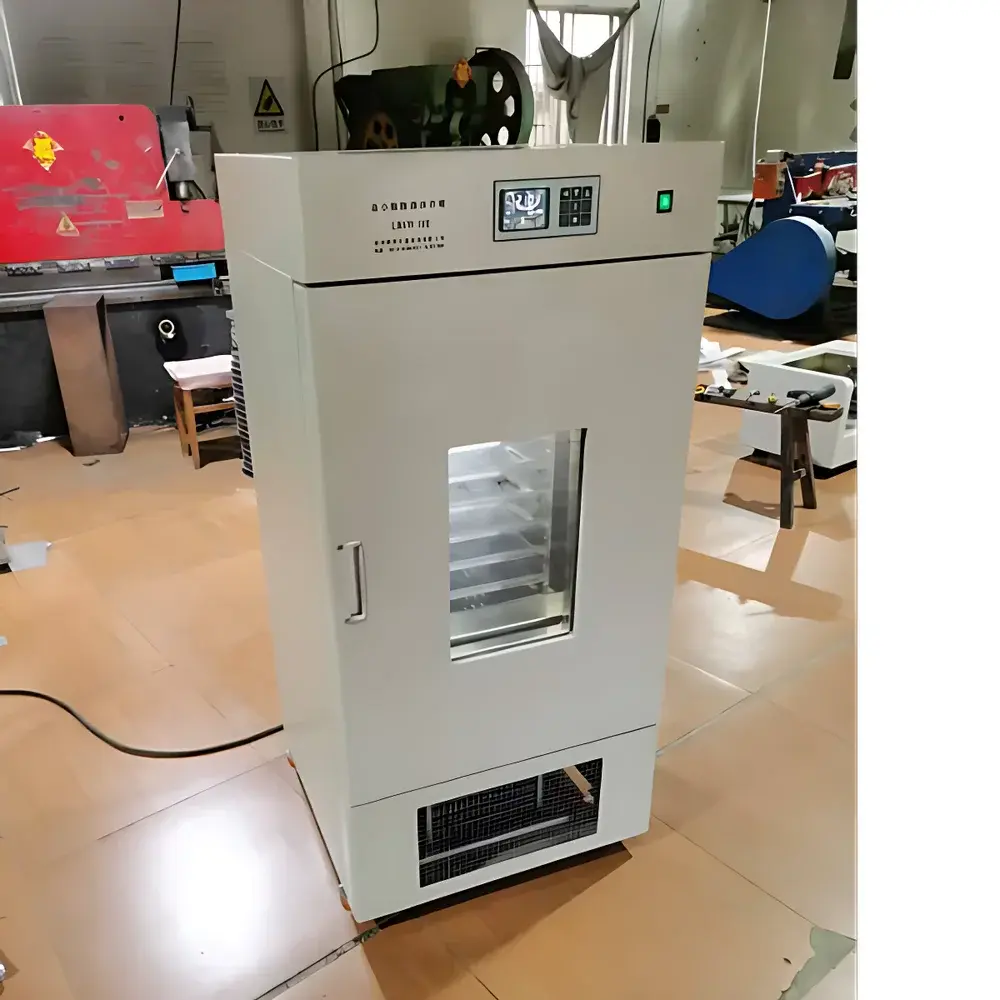
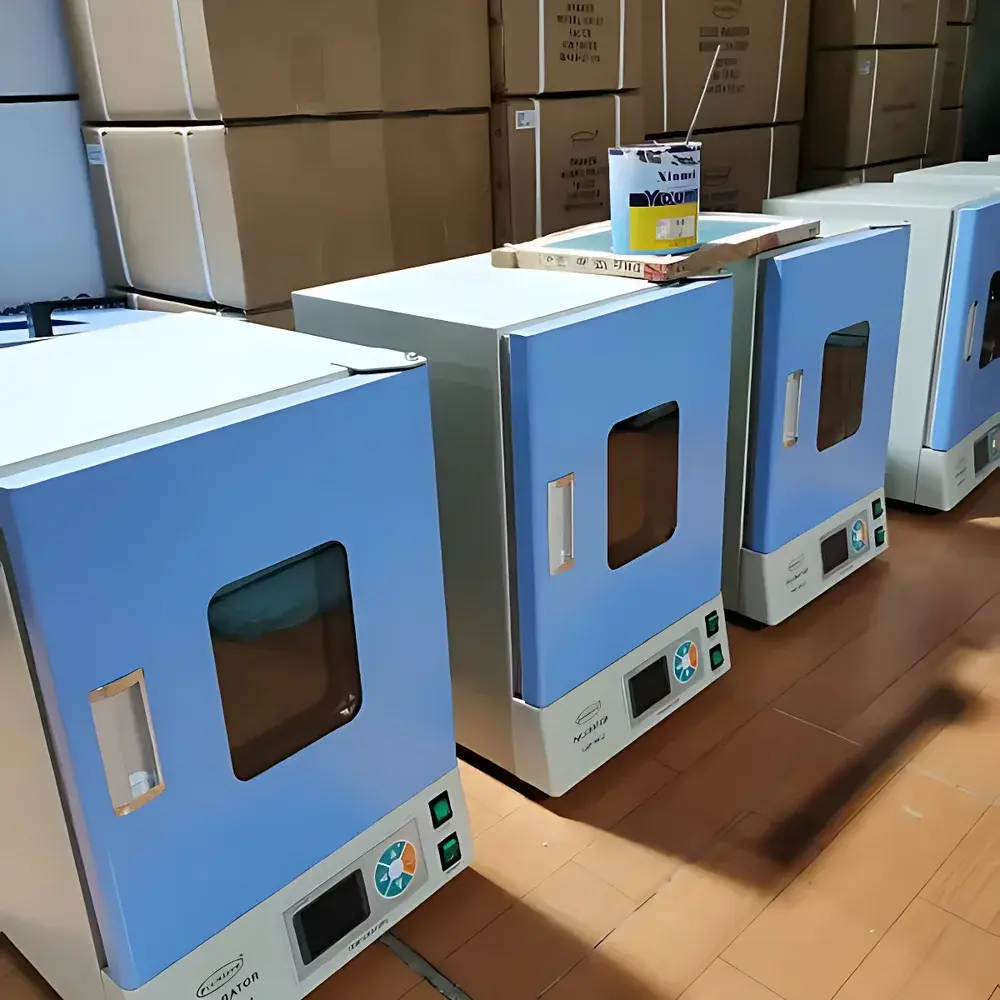
Langbo LB-5E Platelet Agitation and Storage Incubator
| Brand | Langbo |
|---|---|
| Origin | Jiangsu, China |
| Manufacturer Type | Authorized Distributor |
| Country of Origin | China |
| Model | LB-5E |
| Pricing | Available Upon Request |
| Temperature Control Range | 22.0 °C ± 2.0 °C |
| Alarm Thresholds | <20 °C or >24 °C |
| Oscillation Amplitude | 50 mm |
| Oscillation Frequency | 60 cycles/min |
| Oscillation Mode | Continuous horizontal reciprocating motion |
| Refrigeration System | Fan-cooled, R134a refrigerant |
| Compressor | Danfoss (Denmark) |
| Defrosting | Automatic |
| UV Sterilization | Integrated |
| Temperature Monitoring | Digital sensor with microprocessor control |
| Data Logging | Real-time LCD display with thermal printer interface |
| Ambient Operating Temperature | 5–35 °C |
| Input Voltage | 220–240 V AC, 50/60 Hz |
| Rated Current | 3.5 A |
| Cooling/Heating Power | 100 W each (IA-type) |
| External Dimensions (W×D×H) | 540 × 605 × 960 mm |
| Internal Chamber Dimensions (W×D×H) | 300 × 300 × 230 mm |
| Capacity | 5–10 platelet storage bags |
| Shelving | 5-tier adjustable rack |
Overview
The Langbo LB-5E Platelet Agitation and Storage Incubator is a Class II medical device engineered for the compliant, temperature-stable, and agitation-controlled storage of platelet concentrates during the critical post-thaw holding period prior to transfusion. Designed in accordance with international blood bank standards—including AABB (American Association of Blood Banks) guidelines and ISO 22870:2016 for point-of-care testing laboratories—the LB-5E maintains platelets within the clinically mandated temperature range of 20–24 °C while delivering continuous horizontal oscillation at 60 cycles per minute (cpm) and 50 mm amplitude. This motion prevents platelet sedimentation and aggregation, preserving metabolic activity, pH stability, and functional integrity over extended holding intervals up to 4 hours (per CLSI GP44-A6 and FDA 21 CFR Part 606). The unit employs a dual-mode thermoregulation system (cooling and heating), precision digital PID control, and a high-efficiency Danfoss compressor to ensure thermal uniformity across the entire chamber volume—critical for maintaining platelet viability and minimizing activation markers such as P-selectin expression.
Key Features
- Microprocessor-based temperature control with real-time digital monitoring and ±0.3 °C stability over time
- Dual-stage alarm system: independent high/low temperature alerts (24 °C) plus power failure and abnormal shutdown detection
- Integrated thermal printer for continuous, timestamped temperature logging—supports audit-ready documentation for GLP/GMP environments
- UV-C germicidal lamp (254 nm) with timed auto-cycle operation to decontaminate interior surfaces between usage cycles
- Fan-assisted air circulation with R134a refrigerant (non-ozone-depleting) and automatic defrost management
- Five-tier stainless-steel shelving system optimized for standard platelet storage bags (up to 10 units per cycle)
- Low-vibration oscillation drive mechanism ensuring consistent 50 mm horizontal displacement without mechanical resonance or sample disturbance
Sample Compatibility & Compliance
The LB-5E accommodates standard platelet units stored in FDA-cleared, leukoreduced, additive solution–compatible plastic bags (e.g., CLX, Intersol, SSP+). Its internal chamber dimensions (300 × 300 × 230 mm) allow unobstructed placement of stacked or side-by-side units without contact-induced shear stress. The device complies with IEC 61010-1:2010 for laboratory equipment safety and meets electromagnetic compatibility requirements per IEC 61326-1. It supports traceability protocols aligned with ISO 15189:2022 and is suitable for use in accredited transfusion services operating under CAP, COLA, or JCI inspection frameworks. All temperature and agitation parameters are verifiable via external calibrated thermistors and motion analyzers per ASTM E2876-22.
Software & Data Management
While the LB-5E operates as a standalone hardware platform without embedded network connectivity, its thermal printer output generates hard-copy records compliant with FDA 21 CFR Part 11 Annex A (electronic record retention) when paired with institutional logbook procedures. The LCD interface displays live temperature, setpoint deviation, elapsed agitation time, and system status codes. Optional integration with hospital LIS systems is achievable via RS-232 serial output (available on LB-5E-SC variant), enabling automated ingestion of temperature event logs into centralized quality management databases. Audit trails include operator ID entry (via optional keypad module), session start/stop timestamps, and alarm acknowledgment history.
Applications
- Intermediate-term storage of thawed platelet concentrates in blood bank processing labs
- Transport staging for intra-facility delivery to hematology/oncology units
- Quality assurance validation of platelet metabolic stability during extended hold periods
- Support for platelet pooling workflows requiring synchronized agitation across multiple units
- Research applications involving platelet function assays (e.g., aggregometry, flow cytometry) where pre-analytical agitation consistency is essential
FAQ
What is the recommended maximum holding time for platelets in the LB-5E?
Per AABB Standards and CLSI GP44-A6, platelets may be held for up to 4 hours post-thaw when maintained at 20–24 °C with continuous agitation—conditions precisely delivered by the LB-5E.
Does the LB-5E meet FDA requirements for platelet storage devices?
Yes—the device satisfies performance criteria outlined in FDA Guidance for Industry: “Storage and Transportation Conditions for Human Platelets” (2021), including temperature accuracy, agitation uniformity, and alarm responsiveness.
Can the oscillation frequency be adjusted?
No—the LB-5E is factory-configured to operate exclusively at 60 cpm, which aligns with clinical evidence demonstrating optimal platelet suspension and minimal activation.
Is calibration certification included with shipment?
Each unit ships with a NIST-traceable temperature calibration certificate (valid at 22 °C); field recalibration is supported using external PT100 probes per ISO/IEC 17025-accredited service providers.
How often should the UV lamp be replaced?
The UV-C lamp has a rated service life of 8,000 hours; replacement is recommended annually or after 1,000 sterilization cycles, whichever occurs first.



