
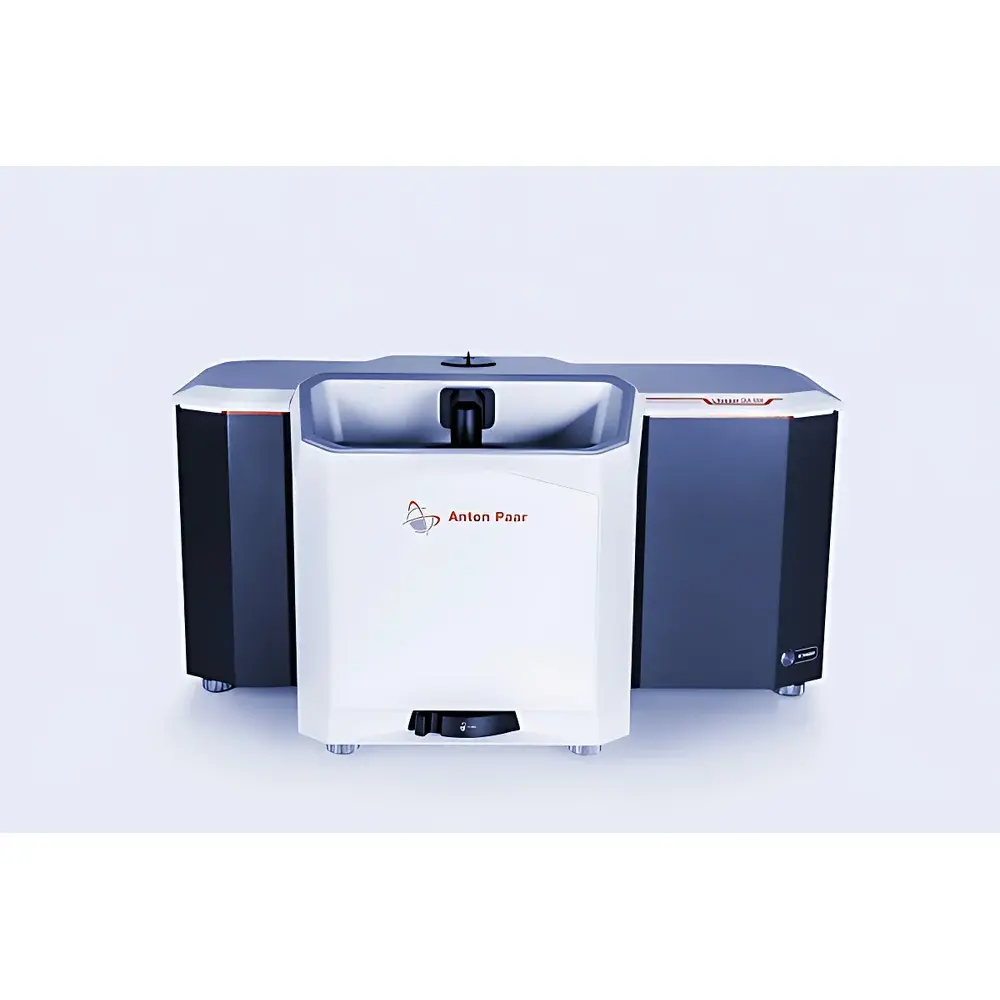
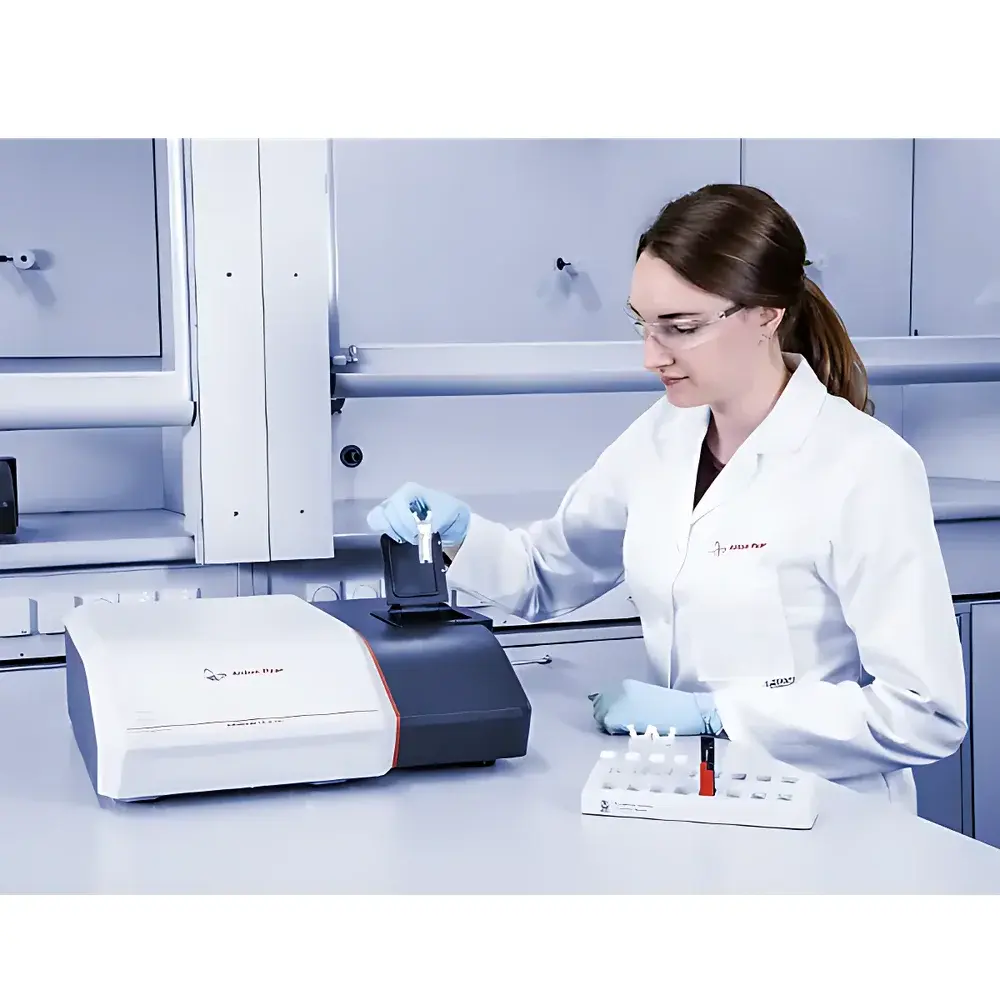
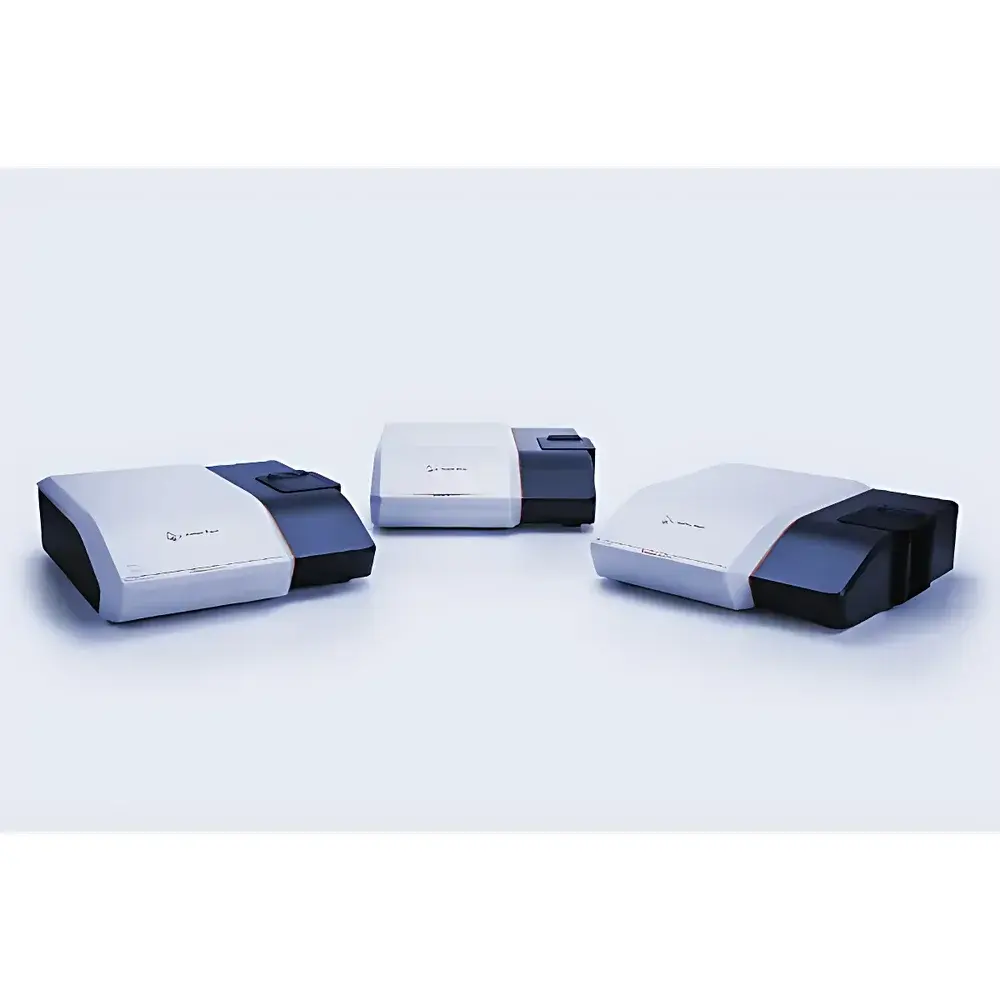
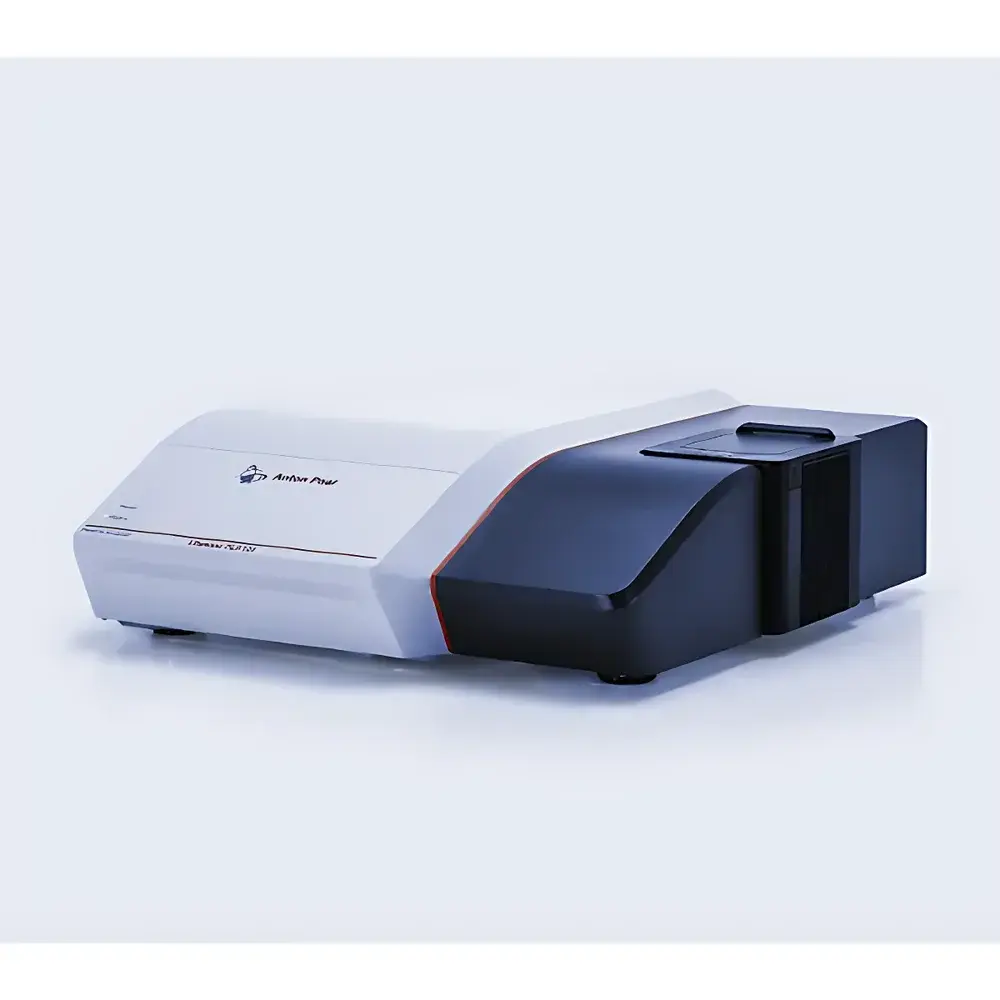
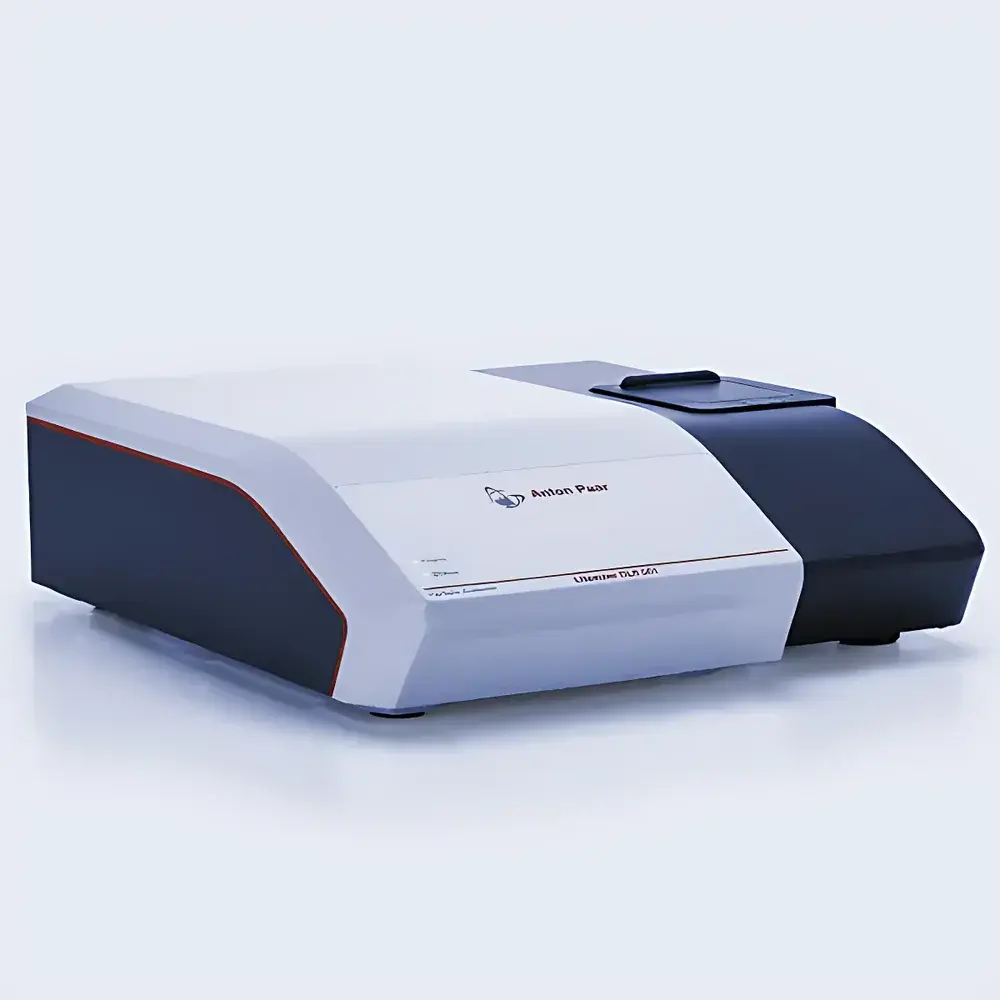
Anton Paar Litesizer DLS Nanoparticle Size and Zeta Potential Analyzer
| Brand | Anton Paar |
|---|---|
| Origin | Austria |
| Manufacturer | Anton Paar GmbH |
| Product Type | Imported Instrument |
| Model | Litesizer DLS |
| Particle Size Range | 0.3 nm – 15 µm (diameter) / 0.3 nm – 10 µm (diameter) |
| Size Reproducibility | ±2% |
| Temperature Control Range | 0–120 °C |
| Temperature Stability | ±0.1 °C |
| Laser Frequency | 455 THz |
| Size Measurement Principle | Dynamic Light Scattering (DLS) and Static Light Scattering (SLS) |
| Zeta Potential Range | ±1000 mV |
| Zeta Potential Reproducibility | ±3% |
| Molecular Weight Range | 300 Da – 20 MDa |
| Sample Volume | 1.5 µL – 1 mL |
| Concentration Range | up to 50% w/v |
| Measurement Time | <1 min |
| Transmission Monitoring | Real-time, 0–100% |
| Refractive Index Measurement Accuracy | ±0.5% (range: 1.28–1.50) |
| Optical Configurations | Fluorescence & polarization filters (15°, 90°, 175°) |
Overview
The Anton Paar Litesizer DLS is a high-precision, benchtop nanoparticle characterization system engineered for simultaneous determination of hydrodynamic diameter, zeta potential, molecular weight, and particle concentration in colloidal and macromolecular dispersions. It integrates three complementary optical scattering techniques—Dynamic Light Scattering (DLS), Electrophoretic Light Scattering (ELS) with patented cmPALS (combined Phase Analysis Light Scattering), and Static Light Scattering (SLS)—within a single, modular platform. The instrument employs a temperature-stabilized 658 nm semiconductor laser (40 mW output, 455 THz frequency) and supports multi-angle detection at 15°, 90°, and 175°, enabling robust size analysis across broad dynamic ranges—from sub-nanometer biomolecules (0.3 nm) to micrometer-scale aggregates (up to 15 µm). Its core architecture is designed for regulatory-compliant laboratories, supporting GLP/GMP workflows through hardware-level traceability, real-time transmission monitoring, and full 21 CFR Part 11 compliance in software.
Key Features
- Multi-Angle Particle Sizing (MAPS): Automated angle selection (15°, 90°, 175°) minimizes angular bias and enhances resolution for polydisperse systems; MAPS mode delivers superior peak deconvolution without user intervention.
- cmPALS Technology: Patented electrophoretic measurement method mitigates electrode aging effects and reduces field gradient artifacts via Omega Cuvette geometry—achieving zeta potential reproducibility of ±3% and extended dynamic range (1.3 nm – 100 µm).
- Real-Time Transmission Monitoring: Continuous optical density tracking during acquisition detects sedimentation, aggregation, or precipitation events in situ—enabling automatic data quality flagging and adaptive measurement termination.
- Integrated Refractive Index Calibration: On-instrument solvent RI measurement (1.28–1.50, ±0.5%) eliminates external calibration dependencies and ensures first-principles accuracy for both DLS and ELS calculations.
- Modular Optical Filtering: Interchangeable fluorescence and orthogonal polarization filters support advanced applications—including quantum dot concentration quantification, anisotropic particle analysis, and background-suppressed scattering in turbid media.
- Ultra-Low Sample Consumption: As little as 1.5 µL required for standard DLS sizing; compatible with microvolume cuvettes and capillary cells for precious or low-yield samples.
Sample Compatibility & Compliance
The Litesizer DLS accommodates aqueous and organic dispersions, proteins, liposomes, polymers, nanocellulose, metallic nanoparticles, and vaccine formulations. It accepts samples with conductivity up to 200 mS/cm and concentrations spanning 0.00001% w/v (e.g., 100 nm latex standards) to 70% w/v (zeta potential) or 50% w/v (size), depending on optical path and dispersant refractive index. All measurements adhere to ISO 22412:2017 (DLS), ISO 13099-2:2012 (zeta potential), and ASTM E2490-15 (nanoparticle sizing). The system’s hardware design and Kalliope software fully satisfy FDA 21 CFR Part 11 requirements—including electronic signatures, audit trails, role-based access control, and immutable raw data archiving—making it suitable for regulated QC environments in pharmaceuticals, biologics, and medical device development.
Software & Data Management
Kalliope software provides a unified, single-page interface optimized for both novice and expert users: parameter input, real-time correlation function display, and result visualization occur simultaneously. Preconfigured SOP templates, customizable report generators, and native Excel export ensure rapid turnaround for routine testing. Advanced features include batch processing, multi-sample comparison overlays, Mie theory-based concentration modeling (10⁸–10¹³ particles/mL), and SLS-derived molecular weight calculation (300 Da–20 MDa) using 90° scattering intensity. All raw intensity autocorrelation functions, phase spectra, and transmission logs are stored in vendor-neutral HDF5 format. Audit trail records capture operator ID, timestamp, instrument configuration, environmental parameters (temperature, humidity), and any manual overrides—fully traceable for internal audits or regulatory inspections.
Applications
The Litesizer DLS serves critical roles across R&D and quality control: formulation stability screening of lipid nanoparticles (LNPs) and mRNA delivery systems; aggregation kinetics assessment under thermal stress (0–120 °C); zeta potential mapping for surface charge optimization in drug carriers; concentration profiling of monoclonal antibodies without calibration standards; and molecular weight validation of synthetic polymers and recombinant proteins. Its ability to resolve multimodal distributions—such as protein–polymer conjugates or hybrid inorganic–organic nanoparticles—makes it indispensable for nanomedicine, catalysis, battery slurry development, and cosmetic emulsion design. The inclusion of fluorescence filtering extends utility to labeled probes and quantum dot dosimetry where spectral interference must be excluded.
FAQ
What scattering principles does the Litesizer DLS employ?
It utilizes Dynamic Light Scattering (DLS) for hydrodynamic size, Electrophoretic Light Scattering (ELS) with cmPALS for zeta potential, and Static Light Scattering (SLS) for molecular weight and concentration estimation.
Can the system measure samples with high ionic strength?
Yes—zeta potential measurements are supported up to 200 mS/cm conductivity, enabled by the Omega Cuvette’s low-field-gradient design and cmPALS signal processing.
Is refractive index measurement performed in situ?
Yes—the instrument directly measures solvent refractive index (1.28–1.50) using a dedicated optical path, eliminating reliance on literature values and improving absolute size accuracy.
How is data integrity ensured for regulated environments?
Kalliope enforces 21 CFR Part 11 compliance via electronic signatures, time-stamped audit trails, locked raw data containers, and configurable user permissions—all validated per IQ/OQ protocols.
Does the system support unattended operation?
Yes—automated sample loading (with optional autosampler), temperature ramping, and sequence-based measurement protocols enable overnight stability studies with minimal supervision.



