
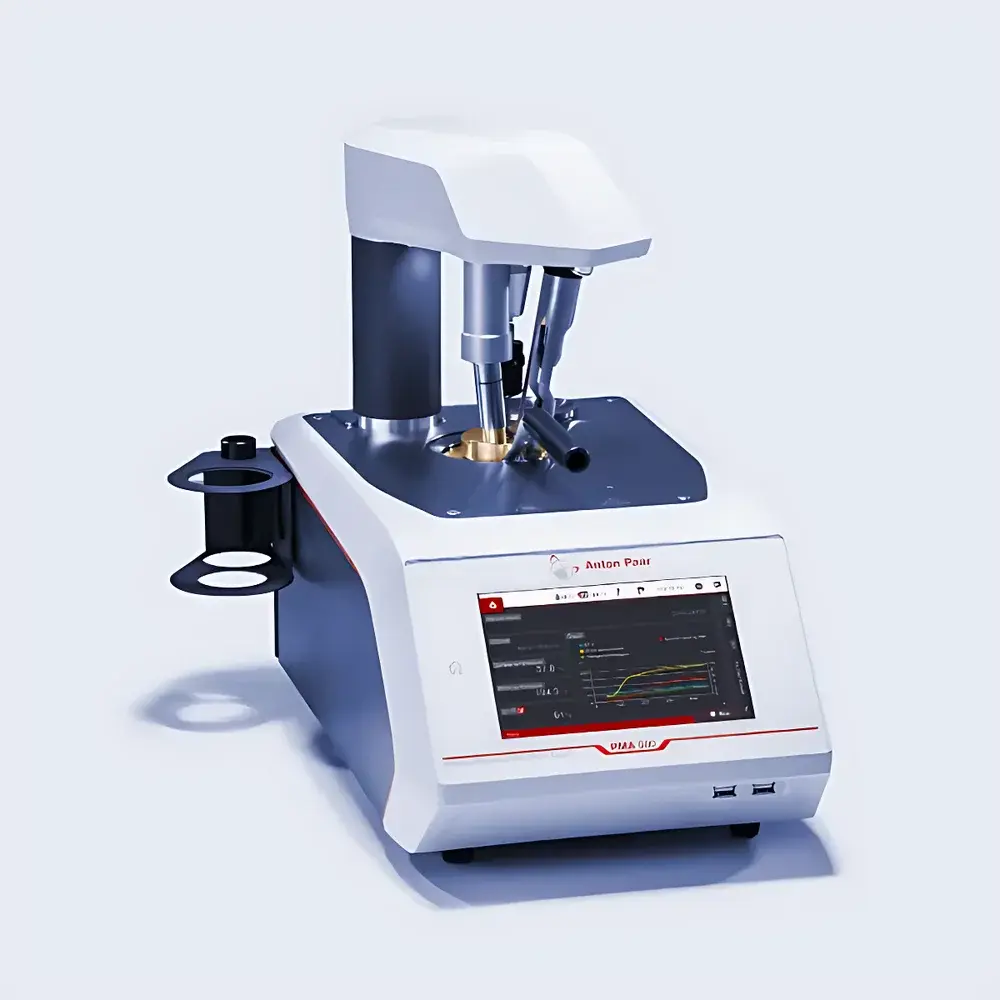
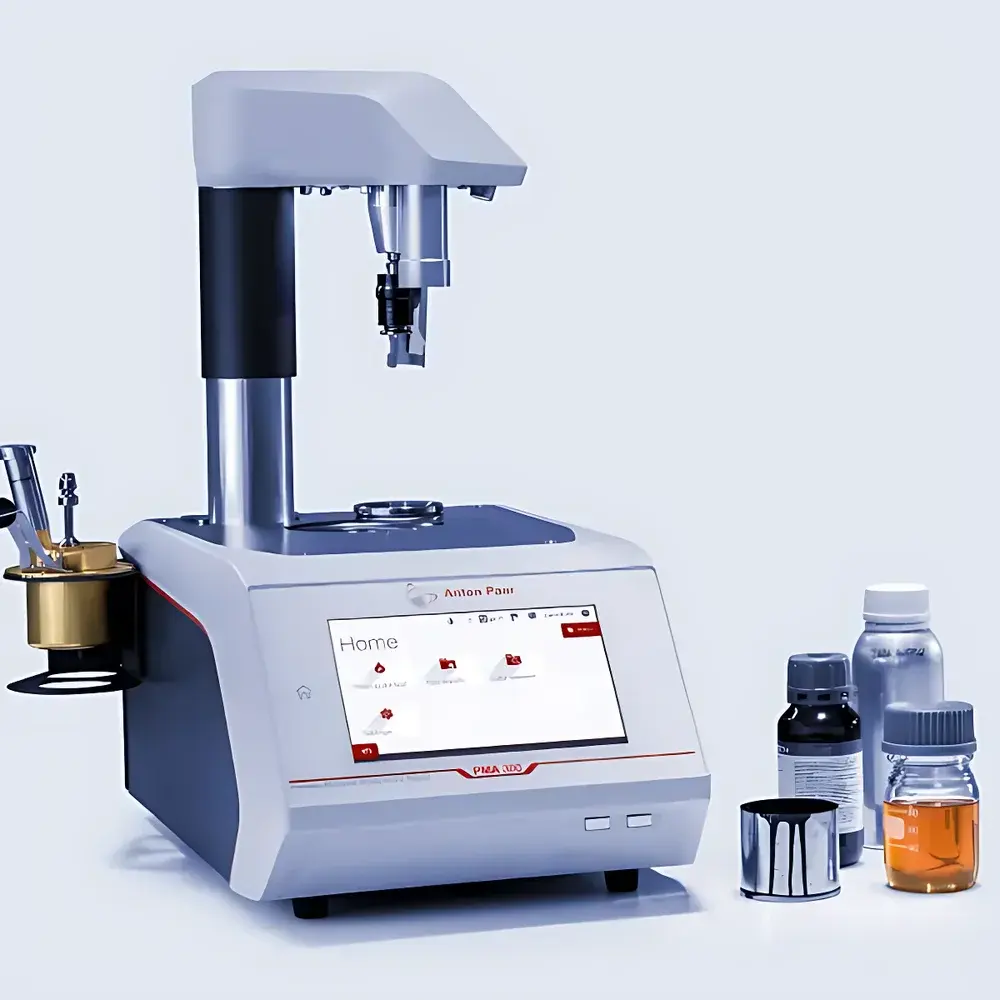
Anton Paar Pensky-Martens Closed Cup Flash Point Tester PMA 500
| Brand | Anton Paar |
|---|---|
| Origin | Germany |
| Manufacturer Type | Manufacturer |
| Product Category | Imported Instrument |
| Model | PMA 500 |
| Detection Method | Closed Cup Method |
| Operation Mode | Fully Automatic |
| Temperature Range | Ambient + X °C to 410 °C |
| Ignition Method | Electric Spark Ignition |
| Compliant Standards | ASTM D93, EN ISO 2719, IP 34, JIS K2265-3, GB/T 261 |
Overview
The Anton Paar Pensky-Martens Closed Cup Flash Point Tester PMA 500 is a fully automated, standards-compliant analytical instrument engineered for precise and reproducible flash point determination of flammable liquids in accordance with the internationally recognized Pensky-Martens closed cup test principle. Based on controlled heating, mechanical stirring, and timed electric spark ignition within a sealed test cup, the PMA 500 measures the lowest temperature at which vapors above a sample ignite momentarily when exposed to an ignition source under specified test conditions. Designed for routine operation in petroleum refineries, chemical manufacturing QA/QC laboratories, biodiesel production facilities, and independent testing labs, the PMA 500 delivers high-throughput performance without compromising measurement integrity or operator safety. Its robust architecture integrates thermally optimized heating control, real-time cavity and sample temperature monitoring, and fail-safe thermal management — all essential for reliable execution of ASTM D93, EN ISO 2719, IP 34, JIS K2265-3, and GB/T 261 procedures.
Key Features
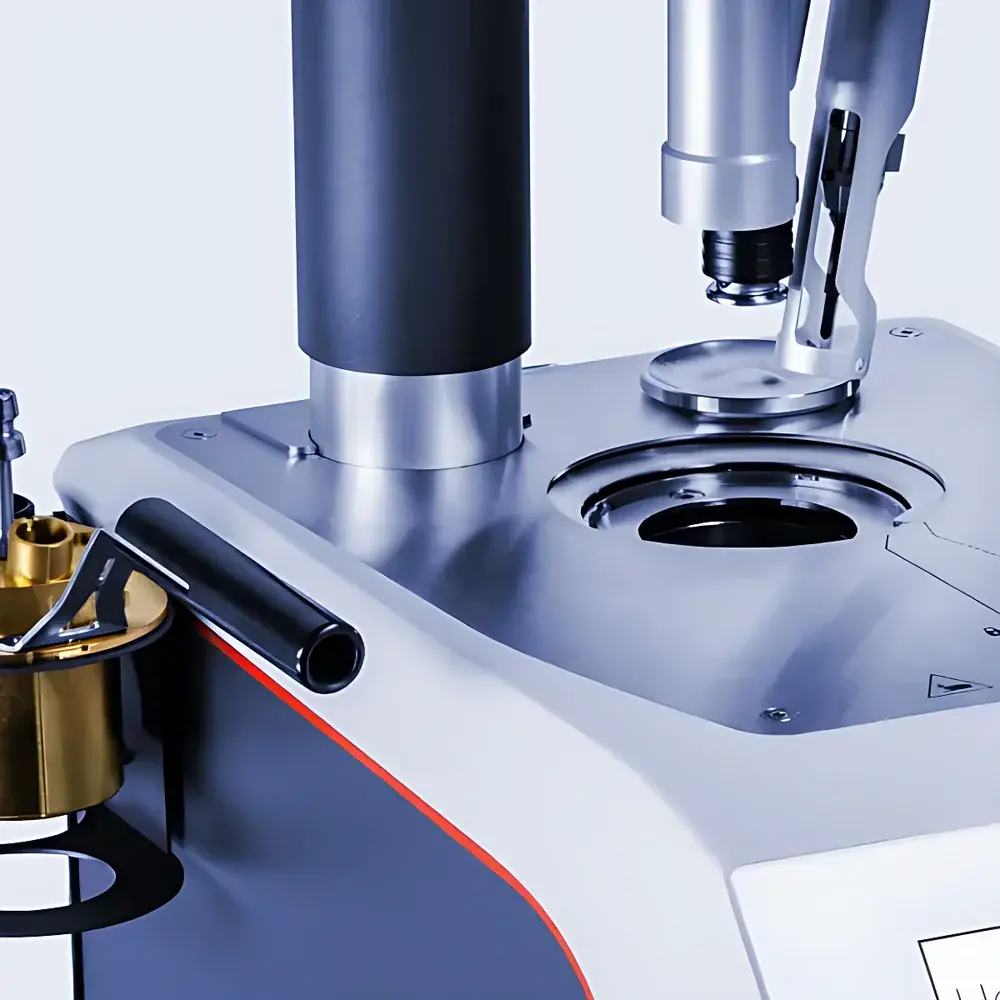
- Fully automatic operation with motorized lifting arm and integrated detection head — eliminates manual cup handling and cable connections before/after tests
- Encapsulated hot-wire spark igniter with 10× extended service life and zero-maintenance operation over extended duty cycles
- Optimized cooling system enabling rapid thermal reset between samples — reduces turnaround time by up to 10% per test compared to conventional closed-cup instruments
- 7-inch customizable touchscreen interface with smartphone-like navigation, supporting method shortcuts, user-defined workflows, and real-time visualization of temperature curves, ignition events, and status alerts
- Integrated fire detection sensor and built-in CO₂ extinguisher module — active safety layer compliant with IEC 61010-1 and laboratory risk mitigation protocols
- Onboard data storage for up to 50,000 test records with timestamp, operator ID, method parameters, raw temperature profiles, and pass/fail flags
Sample Compatibility & Compliance
The PMA 500 is validated for flash point analysis across a broad spectrum of volatile organic materials, including but not limited to: petroleum distillates (gasoline, kerosene, diesel), lubricating oils, biofuels (FAME, HVO), industrial solvents (acetone, toluene, xylene), fragrance compounds, and soft bituminous binders. All measurements are traceable to NIST-traceable reference standards and fully aligned with regulatory requirements for method validation under GLP and GMP frameworks. The instrument supports audit-ready documentation per FDA 21 CFR Part 11 through optional software modules, ensuring electronic signatures, change history, and secure user access control. Calibration verification is facilitated via certified flash point standards and optional mini-test cups for low-volume screening.
Software & Data Management
The embedded firmware provides full compliance with ASTM D93 Annex A1 (manual mode simulation) and Annex A2 (automated mode), allowing seamless switching between procedural variants. Data export supports CSV, PDF, and XML formats with embedded metadata (test ID, standard reference, environmental conditions). Statistical post-processing tools include mean, standard deviation, RSD%, outlier detection (Dixon’s Q-test), and linear regression for purity estimation from flash point depression trends. Optional PC-based software enables centralized fleet management, remote diagnostics, LIMS integration via ASTM E1384 or HL7 interfaces, and automated report generation compliant with ISO/IEC 17025 accreditation criteria.
Applications
- Quality assurance of crude oil fractions and refined products in upstream and downstream petroleum operations
- Flash point verification of biodiesel blends prior to distribution (EN 14214, ASTM D6751)
- Regulatory compliance testing for solvent shipments under UN TDG, ADR, and IMDG Class 3 hazard classification
- Stability assessment of fragrance formulations and pharmaceutical excipients during formulation development
- Batch release testing of industrial cleaning agents, paint thinners, and adhesive carriers
- Research-grade flash point mapping for novel bio-based fuels and synthetic lubricants
FAQ
Does the PMA 500 support both manual and automated test modes?
Yes — firmware-configurable operation modes allow users to select between full automation (per ASTM D93 Annex A2) or step-by-step guided manual execution (Annex A1), facilitating method training and troubleshooting.
Is external calibration required before first use?
No — the instrument ships with factory calibration verified against certified reference materials; however, periodic verification using traceable standards (e.g., n-decane, n-dodecane) is recommended per ISO/IEC 17025 internal quality procedures.
Can the PMA 500 be integrated into a laboratory information management system (LIMS)?
Yes — via optional Ethernet or RS-232 connectivity, the PMA 500 supports ASTM E1384-compliant data transfer and configurable field mapping for direct LIMS ingestion.
What safety certifications does the PMA 500 hold?
It complies with IEC 61010-1 (Safety Requirements for Electrical Equipment for Measurement, Control, and Laboratory Use) and carries CE marking for the European Economic Area; explosion-proof variants are available upon request for Zone 1/2 hazardous locations.
How is temperature uniformity maintained across the test cup during ramping?
Through a dual-zone PID-controlled heating block with embedded Pt100 sensors and adaptive thermal compensation algorithms — ensuring ±0.1 °C stability at target setpoints throughout the 20–410 °C operating range.







