
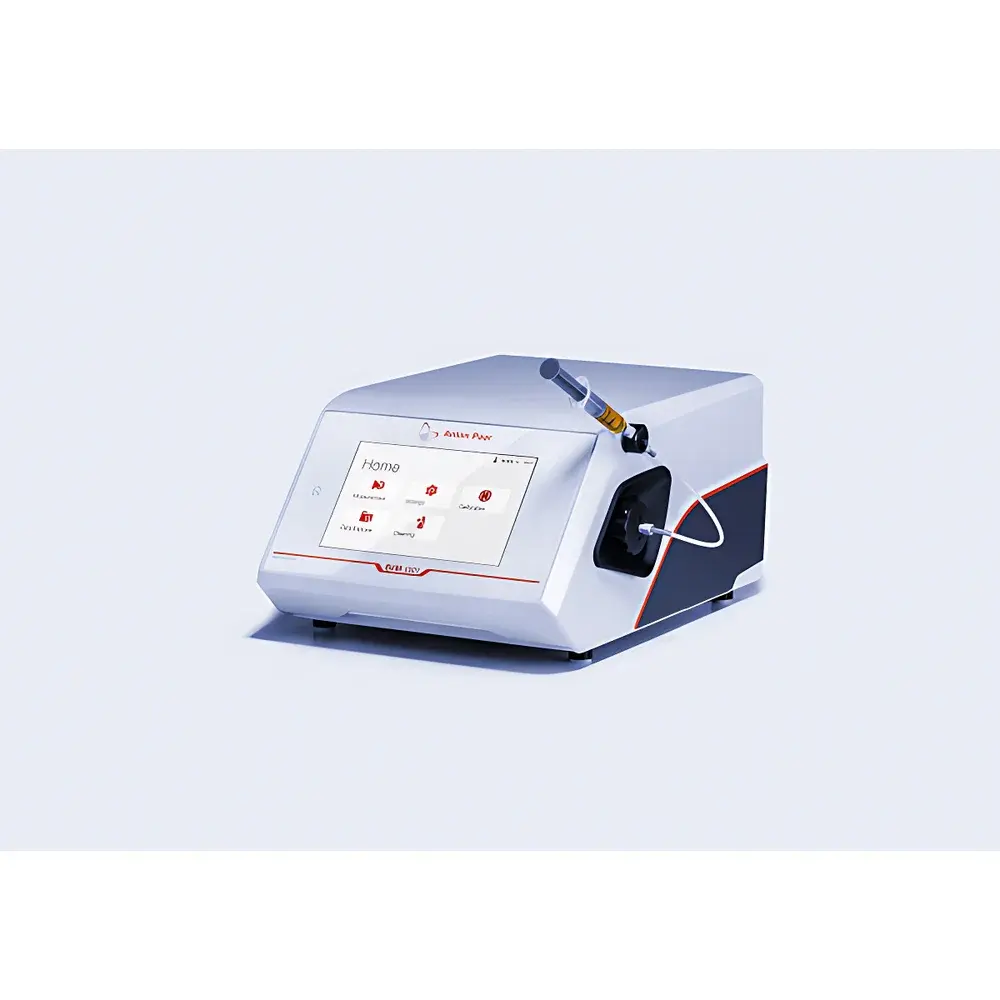
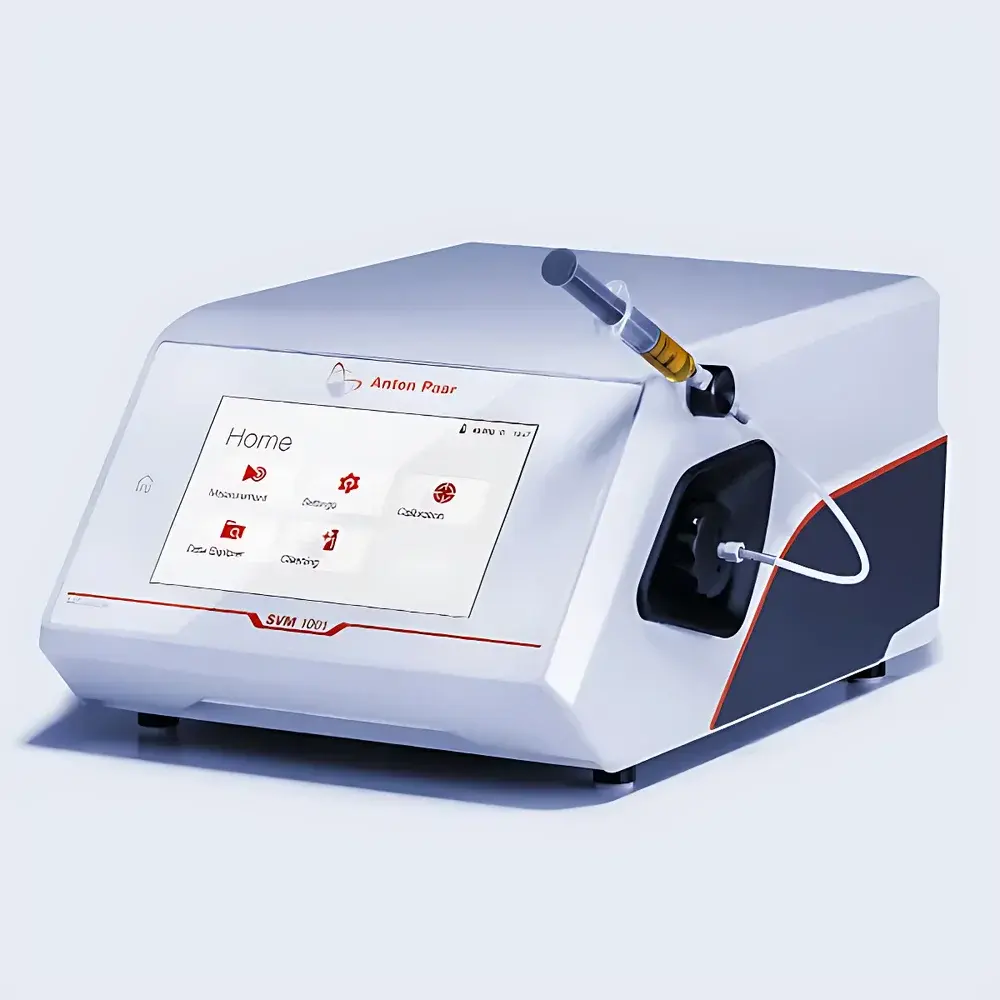
Anton Paar SVM 1001 Automated Kinematic Viscometer
| Brand | Anton Paar |
|---|---|
| Origin | Austria |
| Manufacturer Type | Original Equipment Manufacturer (OEM) |
| Origin Category | Imported |
| Model | SVM 1001 |
| Instrument Type | Portable Rotational Kinematic Viscometer |
| Operating Environment | Ambient Temperature |
| Kinematic Viscosity Range | 0.3 mm²/s to 5000 mm²/s |
| Temperature Range | +15°C to +100°C (+59°F to +212°F), dual-temperature capability (one primary + one optional) |
| Temperature Resolution | 0.1°C |
| Temperature Accuracy | ±1°C |
| Viscosity Repeatability | 0.1% |
| Viscosity Reproducibility | 0.35% |
| Temperature Repeatability | 0.005°C |
| Temperature Reproducibility | 0.03°C across full range |
| Sample Volume | 1.5 mL (minimum), 5 mL (standard) |
| Solvent Volume | 1.5 mL (minimum), 6 mL (standard) |
| Throughput | up to 37 samples/hour (Ultra-Fast Mode) |
| Compliance | ASTM D445, ASTM D7042, ISO 23581, EN 16896 |
| Data Storage | 1,000 measurements |
| Display | 7″ capacitive touchscreen |
| Interface | 4 × USB (3 × Type-A, 1 × Type-B) |
| Power Supply | DC 24 V / 3 A |
| Environmental Conditions | +15°C to +35°C, ≤80% RH (non-condensing) |
| Certifications | CE, EMC EN 61326-1, Safety EN 61010-1, RoHS |
Overview
The Anton Paar SVM 1001 is a fully automated, benchtop kinematic viscometer engineered for precision, reliability, and operational efficiency in routine quality control and R&D laboratories. Unlike traditional glass capillary viscometers governed by ASTM D445—where manual timing, bath temperature stabilization, and multi-tube calibration introduce significant operator-dependent variability—the SVM 1001 implements a patented oscillating U-tube principle combined with precise Peltier-based temperature control to deliver traceable, high-reproducibility kinematic viscosity measurements. It operates on the physical principle of measuring the resonant frequency shift of a vibrating U-shaped glass capillary filled with sample fluid, from which kinematic viscosity is derived via calibrated density-viscosity correlation algorithms. Designed specifically for laboratories requiring rapid, standardized compliance with ASTM D445 and ISO 23581 (the modern digital counterpart to D445), the SVM 1001 eliminates dependence on external constant-temperature baths, stopwatch timing, and manual calculation—reducing measurement cycle time to under 5 minutes per sample and enabling temperature equilibration in ≤60 seconds, versus the conventional 30-minute bath soak required for capillary methods.
Key Features
- Patented oscillating U-tube technology with integrated density and kinematic viscosity measurement—no separate densitometer required.
- Dual-temperature capability: user-selectable primary measurement temperature (between +15°C and +100°C), plus an optional secondary temperature module for rapid switching without recalibration.
- Ultra-fast throughput mode supports up to 37 samples per hour—150% faster than manual ASTM D445 workflows.
- Automatic solvent rinse and drying sequence between measurements ensures cross-contamination prevention and long-term measurement stability.
- Single measurement cell replaces up to 12 calibrated glass capillaries—eliminating storage, handling, breakage, and individual calibration overhead.
- Onboard ASTM D445 deviation correction algorithm applied in real time, ensuring results are directly comparable to legacy capillary data without post-processing.
- Compact footprint (W × D × H: 290 × 360 × 330 mm) and self-contained thermal management—no external chiller, coolant, or bath fluid required.
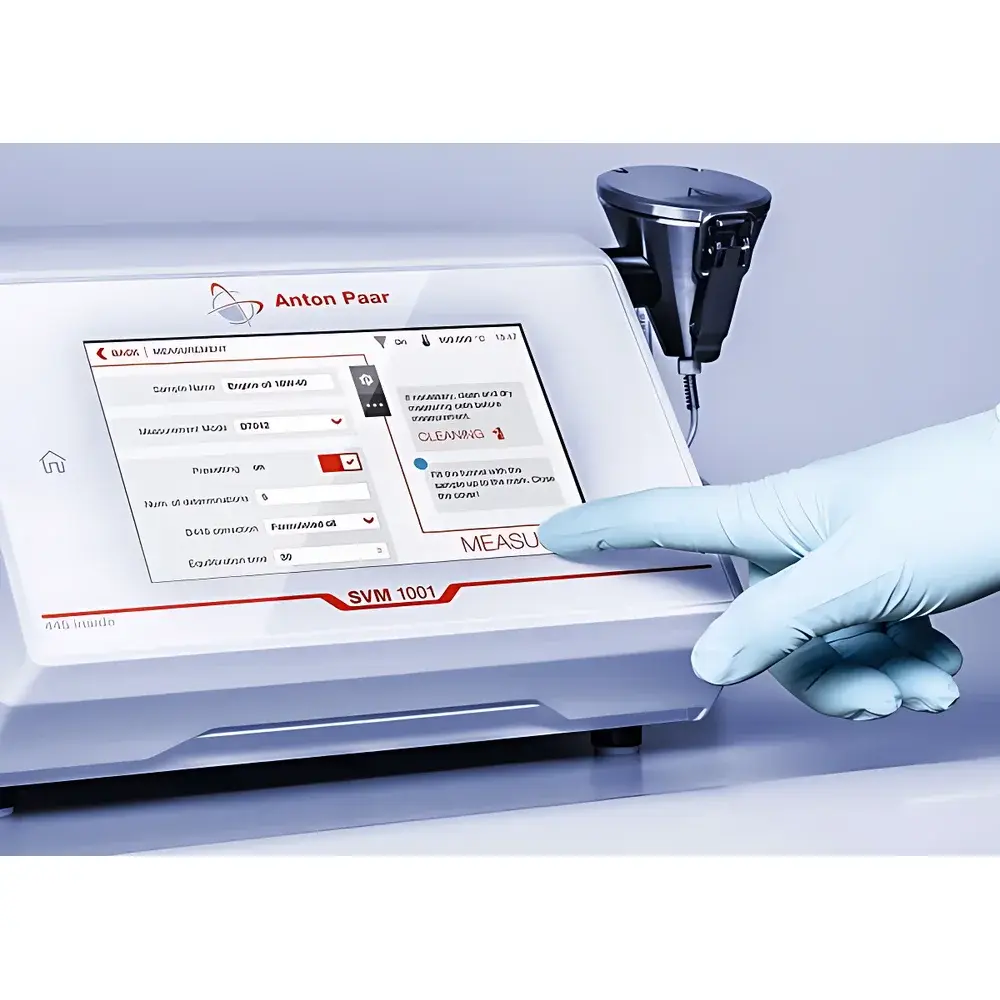
- 7-inch industrial-grade capacitive touchscreen interface with intuitive workflow navigation and multilingual support (English, German, French, Spanish, Chinese, Japanese).
Sample Compatibility & Compliance
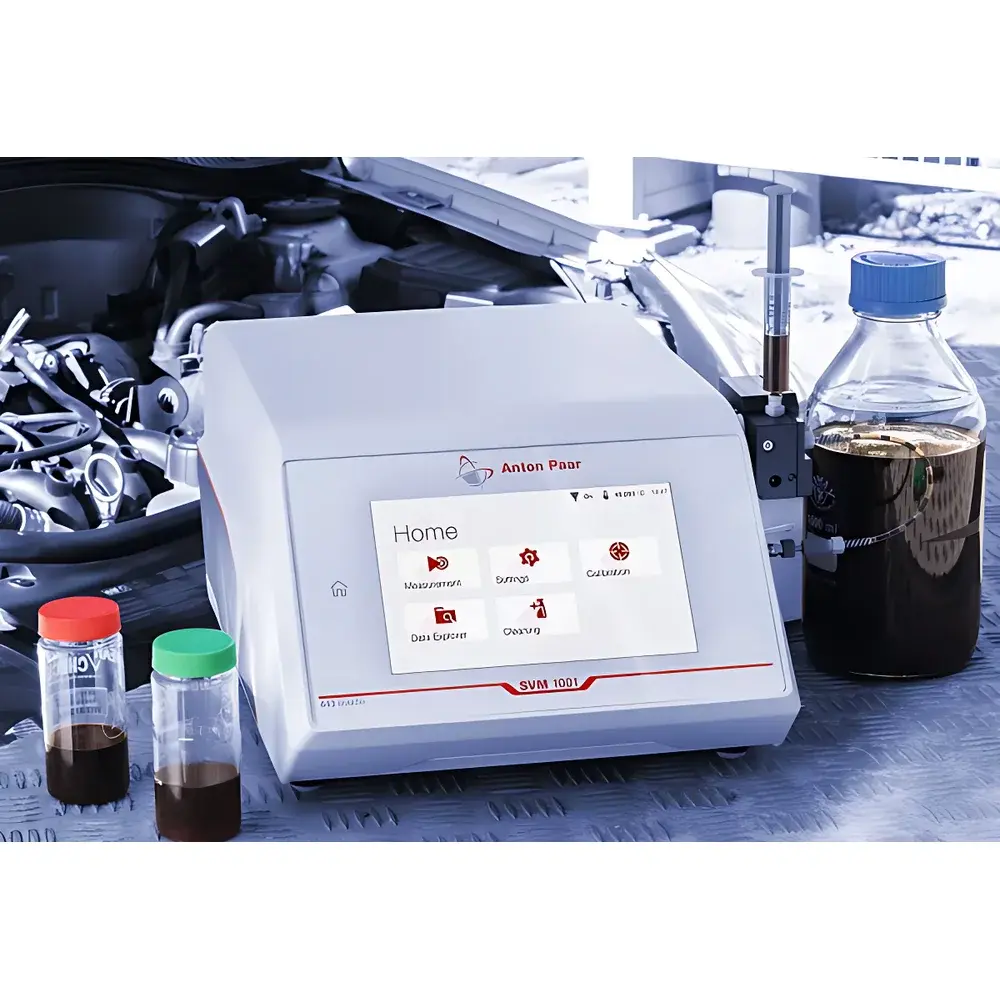
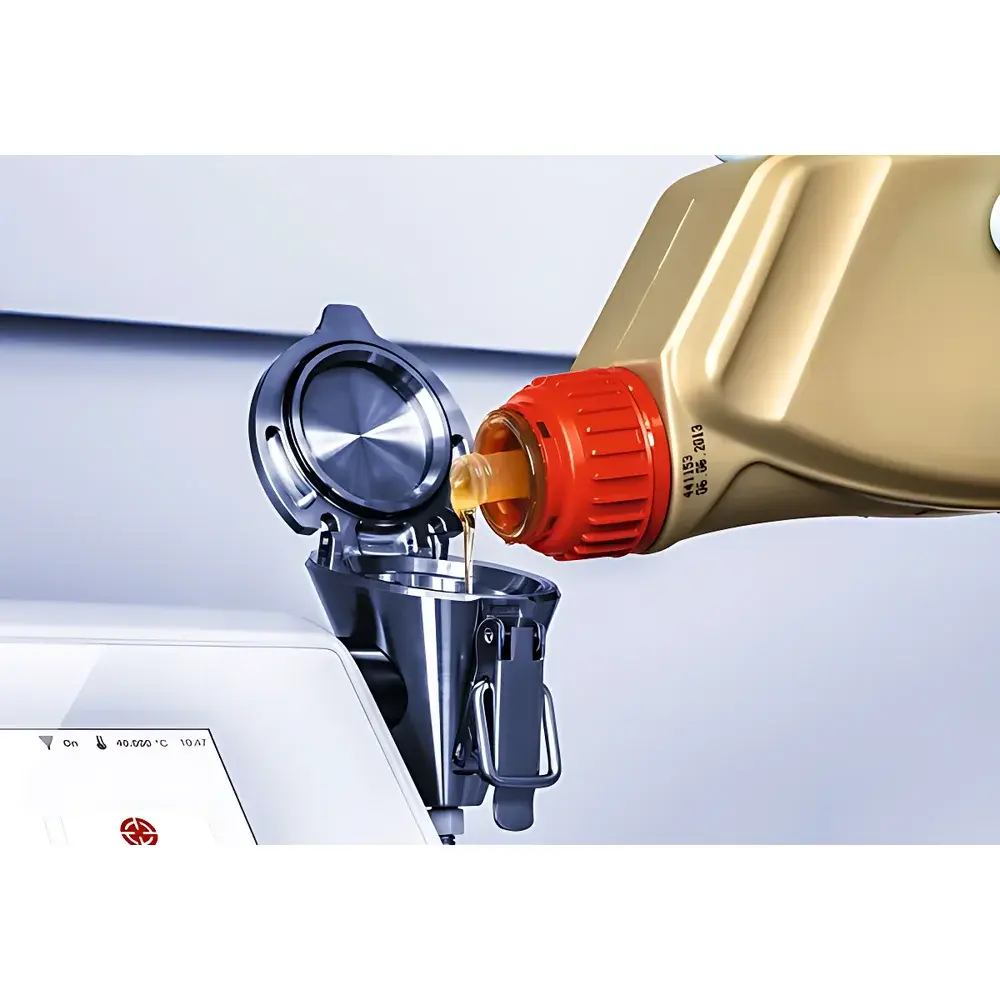
The SVM 1001 accommodates a broad range of Newtonian and mildly non-Newtonian liquids including petroleum distillates, base oils, lubricants, biodiesel, transformer oils, hydraulic fluids, and synthetic esters. Its 1.5 mL minimum sample volume minimizes material consumption—critical for high-value or hazardous samples—and supports both neat and diluted formulations. All measurements comply with ASTM D7042 (Standard Test Method for Dynamic Viscosity and Density of Liquids by Stabinger Viscometer) and incorporate embedded ASTM D445 bias correction to ensure regulatory alignment with legacy reporting frameworks. The instrument meets CE marking requirements under the EU Electromagnetic Compatibility (EN 61326-1) and Low Voltage (EN 61010-1) Directives, and conforms to RoHS 2011/65/EU. While not inherently 21 CFR Part 11 compliant out-of-the-box, audit trails, user access logs, and electronic signature readiness can be enabled via optional software modules for GLP/GMP environments.
Software & Data Management
Data acquisition, processing, and export are managed through the instrument’s embedded firmware and optional PC-based RheoCompass™ software suite. Each measurement stores raw oscillation data, temperature history, density-derived kinematic viscosity, and ASTM-corrected values with timestamp, operator ID, and method parameters. Up to 1,000 results are retained onboard with automatic overwrite protection. Export formats include CSV, PDF reports (with customizable templates), and XML for LIMS integration. USB-A ports support keyboard/mouse input and flash drive data transfer; the USB-B port enables direct connection to laboratory networks or PCs for remote monitoring and batch report generation. Firmware updates are delivered via secure HTTPS download and validated checksum verification—ensuring continued metrological integrity and regulatory readiness.
Applications
The SVM 1001 serves as a validated replacement for manual capillary viscometry across multiple sectors: petroleum refining (crude assay, distillate specification), lubricant manufacturing (ISO VG grading, oxidation stability screening), biofuel production (biodiesel viscosity certification per EN 14214), electrical insulation testing (transformer oil QC per IEC 60296), and academic research (polymer solution rheology, ionic liquid characterization). Its portability and low power draw make it suitable for field-deployable QC labs, mobile refinery units, and teaching laboratories where space, infrastructure, and training resources are constrained. In educational settings, its real-time visualization of resonance frequency, temperature ramping, and viscosity convergence provides pedagogical insight into fluid mechanical behavior beyond static tabular outputs.
FAQ
Does the SVM 1001 require external temperature baths or chillers?
No—it integrates solid-state Peltier elements and active air cooling, enabling full temperature control from +15°C to +100°C without auxiliary equipment.
Can it measure samples with suspended particles or high volatility?
It is optimized for clear, low-particulate Newtonian fluids. For particulate-laden samples, optional Magnetic Particle Trap (MPT) accessory prevents clogging; highly volatile solvents require sealed vial handling and pre-chilled injection protocols.
How is calibration maintained over time?
Factory calibration uses NIST-traceable viscosity standards; users perform periodic verification with certified reference oils (e.g., Cannon-Manning SRM series) and generate calibration certificates compliant with ISO/IEC 17025 documentation practices.
Is method validation support available for regulated industries?
Yes—Anton Paar provides IQ/OQ documentation packages, ASTM-compliant validation protocols, and technical assistance for FDA, EMA, or ISO 17025 audit preparation.
What maintenance is required beyond routine cleaning?
Annual performance verification and sensor diagnostics are recommended; no consumable parts other than standard lab solvents and lint-free wipes are needed for daily operation.



