
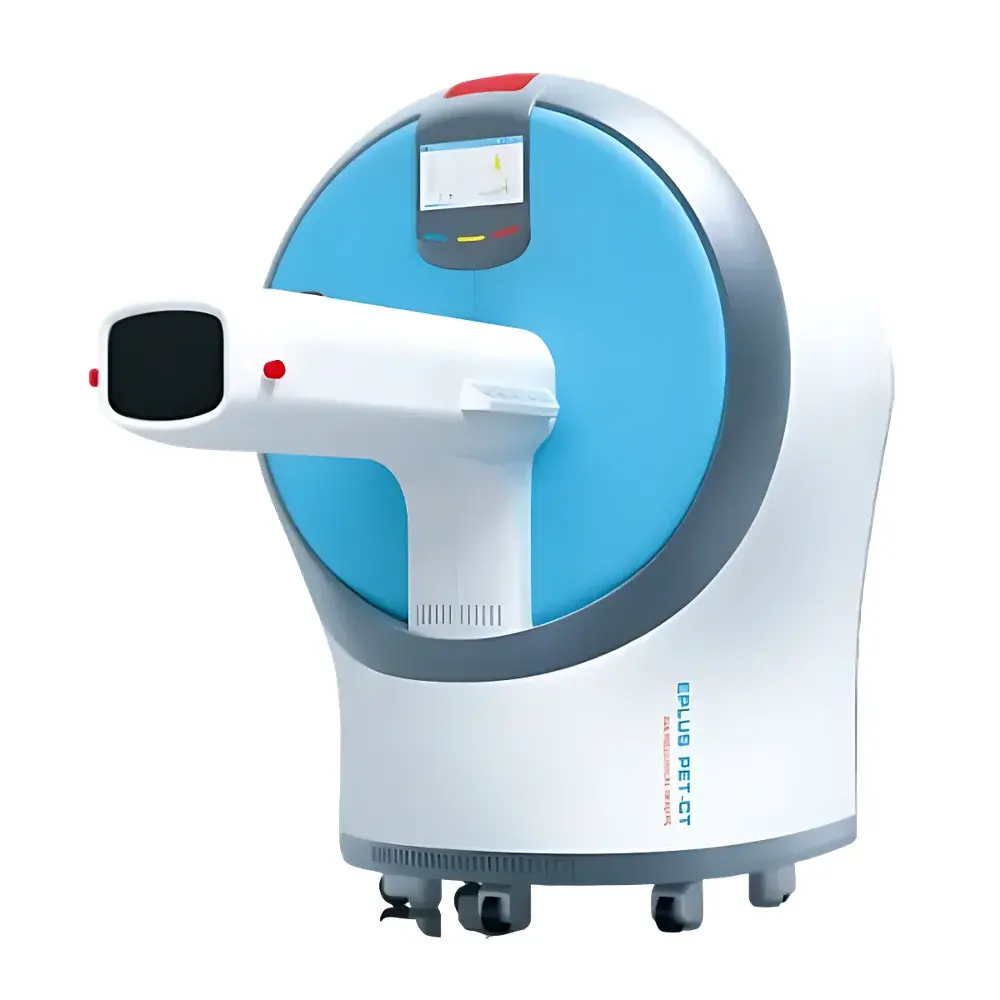
Aolong InVivo PET-CT System for Small Animal Imaging
| Brand | Aolong |
|---|---|
| Origin | Liaoning, China |
| Manufacturer Type | OEM Producer |
| Origin Category | Domestic |
| Model | InVivo PET-CT |
| Quotation | Upon Request |
| PET Axial Field of View (FOV) | 200 mm |
| PET Spatial Resolution | <1.5 mm (NEMA NU-4) |
| CT Spatial Resolution | ≤8 µm (isotropic voxel) |
| CT Spectral Capability | Photon-counting detector with material decomposition and K-edge imaging |
| Integrated Physiological Monitoring | Temperature-controlled animal bed, respiratory gating, ECG synchronization, integrated isoflurane anesthesia port |
| Software Workflow Modes | Static, dynamic, kinetic modeling, multi-bed stitching, 3D-PSF iterative reconstruction |
Overview
The Aolong InVivo PET-CT System is a preclinical multimodal imaging platform engineered for high-fidelity, quantitative in vivo positron emission tomography (PET) and X-ray computed tomography (CT) acquisition in small laboratory animals. It operates on the principle of coincidence detection of 511 keV annihilation photons following radiotracer decay (e.g., 18F-FDG, 64Cu-labeled peptides), combined with high-resolution absorption-based X-ray tomography. The system is designed to support longitudinal studies requiring anatomical–functional correlation at sub-millimeter spatial scales—critical for oncology, neurology, cardiology, and pharmacokinetic/pharmacodynamic (PK/PD) evaluation in murine, rat, rabbit, and non-human primate models. Its 200 mm axial PET FOV enables full-body dynamic scanning of rats in a single bed position, eliminating motion-induced registration artifacts associated with multi-bed acquisitions and enabling robust kinetic modeling across organ systems.
Key Features
- 200 mm axial PET field-of-view—the longest in its class—supports whole-body dynamic PET imaging of rats without table translation or image stitching.
- Sub-millimeter PET resolution achieved via 1.5 mm pitch silicon photomultiplier (SiPM) detectors with time-of-flight (TOF) capability and depth-of-interaction (DOI) correction.
- Proprietary 3D point-spread-function (PSF)-based iterative reconstruction algorithm ensures uniform spatial resolution and quantitative accuracy across the entire FOV.
- Micro-CT subsystem equipped with a photon-counting detector offering isotropic resolution down to 8 µm, supporting ex vivo tissue imaging and high-contrast in vivo soft-tissue visualization.
- Material decomposition and K-edge spectral CT imaging enable quantitative differentiation of iodine, gadolinium, gold, or bismuth-based contrast agents—facilitating targeted molecular imaging and vascular permeability assessment.
- Fully integrated physiological monitoring suite includes temperature-regulated animal bed (28–42 °C range), pressure-based respiratory gating, surface ECG electrodes, and built-in vaporized isoflurane delivery with real-time concentration feedback.
Sample Compatibility & Compliance
The system accommodates live rodents (mouse, rat), lagomorphs (rabbit), and non-human primates (cynomolgus macaque) using modular, size-adjustable animal beds and restraint systems. All hardware and software components comply with IEC 62304 (medical device software lifecycle), ISO 13485 (quality management), and meet essential requirements for GLP-compliant preclinical imaging laboratories. Data acquisition protocols align with MIAME/MINR guidelines for imaging metadata reporting. CT dose output is calibrated per AAPM Report No. 204 and adheres to ALARA principles for radiation safety in animal research facilities.
Software & Data Management
The proprietary InVivo Suite provides DICOM-compliant acquisition, reconstruction, co-registration, and quantitative analysis workflows. It supports static SUV quantification, dynamic Patlak/Gaussian-extended kinetic modeling, time–activity curve (TAC) extraction, and ROI-based statistical parametric mapping. Audit trails, user access control, and electronic signatures satisfy FDA 21 CFR Part 11 requirements for regulated studies. Raw data export is supported in NIfTI and HDF5 formats for third-party analysis (e.g., PMOD, MATLAB, Python-based PyRadiomics). Reconstruction pipelines are validated against NEMA NU-4 standards for sensitivity, scatter fraction, count rate performance, and spatial resolution.
Applications
- Oncology: Longitudinal tracking of tumor metabolism (e.g., 18F-FDG), angiogenesis (64Cu-DOTA-RGD), and receptor expression (e.g., 64Cu-CB-TE2A-anti-HER2) in orthotopic lung (A549), breast (4T1), and glioblastoma (U87) models.
- Neuroscience: Quantitative mapping of dopamine transporter density (18F-FE-PE2I), amyloid plaque burden (18F-florbetapir), and neuroinflammation (11C-PK11195) in transgenic Alzheimer’s and Parkinson’s disease models.
- Cardiovascular Research: Assessment of myocardial perfusion (82Rb), viability (18F-FDG), and macrophage infiltration post-MI using dual-isotope protocols.
- Molecular Probe Development: In vivo validation of novel radiolabeled tracers—including peptide, antibody fragment, and nanoparticle conjugates—with simultaneous anatomical anchoring via spectral CT.
- Drug Development: Dose–response evaluation of therapeutic antibodies, kinase inhibitors, and nanocarriers through serial imaging endpoints aligned with histopathological correlation.
FAQ
What animal species and sizes are supported?
The system supports mice (15–30 g), rats (200–500 g), rabbits (2–5 kg), and cynomolgus macaques (2–4 kg) using interchangeable animal beds and positioning fixtures.
Is the system compatible with common radiotracers used in preclinical research?
Yes—it is optimized for 18F, 64Cu, 89Zr, 11C, 124I, and 82Rb, with adjustable energy windows and scatter correction tuned for each isotope.
Does the software support kinetic modeling for quantitative tracer kinetics?
Yes—full compartmental modeling (1T, 2T, 3T), Patlak analysis, and graphical Logan plot implementation are embedded, with arterial input function derivation from image-derived or catheter-based sampling.
Can PET and CT data be acquired simultaneously?
No—acquisition is sequential but fully synchronized via shared timing triggers and motion-compensated co-registration; total scan time per session is typically 45–90 minutes depending on protocol.
Is remote operation and data transfer supported?
Yes—secure SSH-enabled remote desktop access, DICOM routing to PACS, and encrypted cloud backup options are available under enterprise deployment configurations.



