
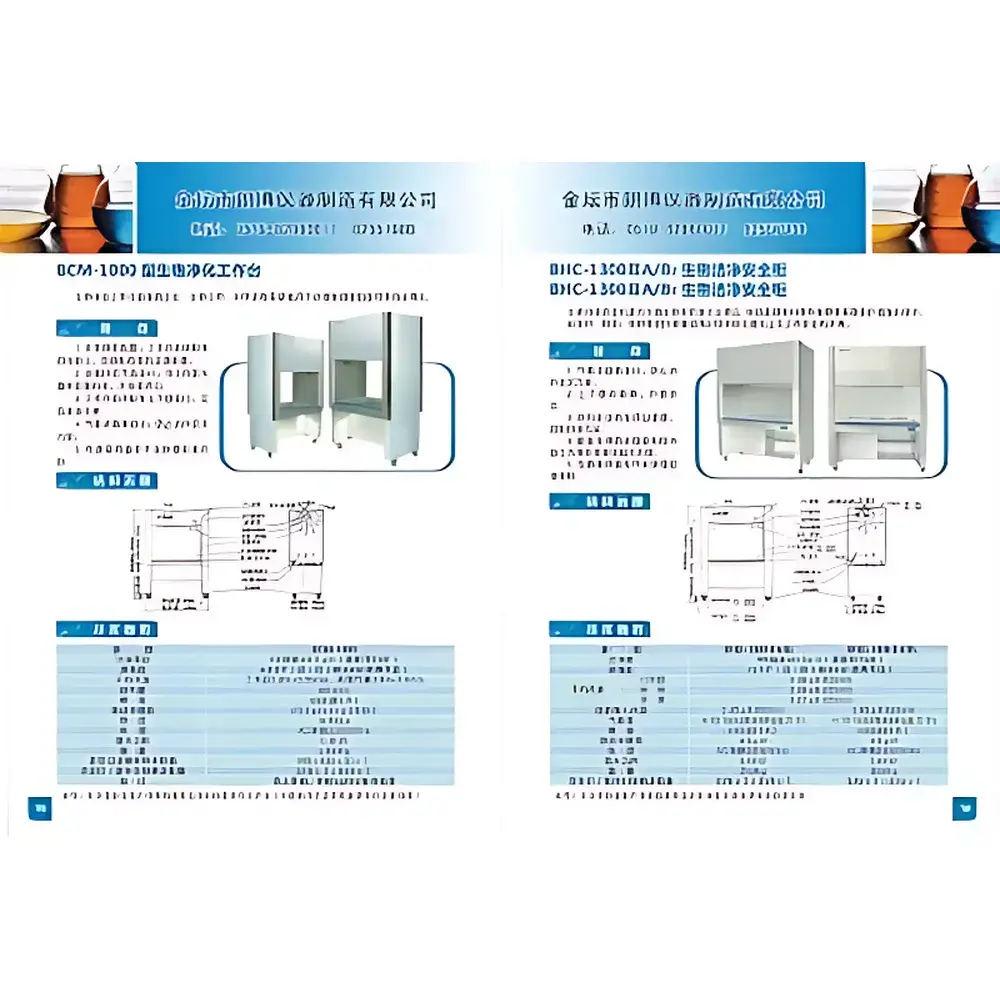
Biological Safety Cabinet BHC-1300 II A/B2
| Origin | Jiangsu, China |
|---|---|
| Manufacturer Type | Authorized Distributor |
| Origin Category | Domestic (China) |
| Model | BHC-1300 II A/B2 |
| Price | USD 6,050 (FOB Jiangsu) |
| Certification | EN 12469:2000, ISO 14644-1 Class 5 (ISO Class 5), NSF/ANSI 49-2022 Compliant |
| Airflow Velocity (Inflow) | 0.35 ± 0.025 m/s |
| Downflow Velocity (Work Area) | 0.26–0.38 ± 0.025 m/s |
| Filtration Efficiency | ≥99.99% @ 0.3 µm (HEPA H14 per EN 1822) |
| Noise Level | ≤62 dB(A) |
| Illumination | ≥300 lx |
| Vibration | ≤5 µm (peak-to-peak) |
| Power Supply | AC 220 V / 50 Hz |
| Max. Power Consumption | 600 W |
| Net Weight | <250 kg |
| Work Area Dimensions | 1000 × 650 × 580 mm |
| External Dimensions | 1300 × 800 × 1950 mm |
| HEPA Filter Size | 995 × 640 × 50 mm (1 unit) |
| UV Lamp | 20 W × 1 |
| Fluorescent Lamp | 20 W × 1 |
Overview
The BHC-1300 II A/B2 Biological Safety Cabinet is a Class II, Type A2 (formerly “A/B2”) cabinet engineered for personnel, product, and environmental protection in biosafety level 1–2 (BSL-1/BSL-2) laboratories. It operates on the principle of laminar airflow combined with recirculation and exhaust filtration—air is drawn through the front work opening at a controlled inflow velocity (0.35 ± 0.025 m/s), passes over the work surface, and is split: ~70% is recirculated after passing through a certified HEPA H14 filter (≥99.99% efficiency at 0.3 µm per EN 1822), while ~30% is exhausted externally via a dedicated ducted system or thimble connection. This dual-path airflow architecture ensures continuous decontamination of both operator breathing zone and sample environment, meeting the stringent containment requirements defined in EN 12469:2000 and NSF/ANSI 49-2022. The cabinet is validated for use with low-to-moderate risk biological agents—including bacteria, yeasts, and non-infectious viral vectors—and supports aseptic technique in cell culture, microbiological assay preparation, pharmaceutical QC, and molecular diagnostics workflows.
Key Features
- Robust structural integrity: Enclosure fabricated from high-density medium-density fiberboard (MDF) with electrostatic powder-coated finish—resistant to corrosion, static accumulation, and routine disinfectant exposure.
- Stainless steel work surface (304 grade) for seamless cleanability, chemical resistance, and compliance with GLP/GMP surface hygiene standards.
- Precision-engineered airflow control: Electronically stabilized centrifugal blower with stepless voltage regulation via rotary potentiometer—enables real-time adjustment of inflow and downflow velocities to maintain ISO Class 5 (100-grade) cleanliness in the work area per ISO 14644-1.
- Dual lighting system: 20 W fluorescent lamp (color temperature 4000 K) for task illumination ≥300 lx across the full work surface; independently switchable 20 W UV-C germicidal lamp (253.7 nm) with safety interlock to prevent accidental exposure.
- Acoustic optimization: Low-noise fan assembly and vibration-damped mounting ensure operational noise ≤62 dB(A), supporting extended user comfort in shared lab environments.
- Integrated safety monitoring: Visual status indicators for UV lamp operation, airflow fault, and filter saturation—aligned with risk-based maintenance protocols under ISO 55001 asset management frameworks.
Sample Compatibility & Compliance
The BHC-1300 II A/B2 is validated for handling non-volatile, low-to-moderate toxicity biological materials—including primary cells, immortalized lines, plasmid transfection reagents, and diagnostic reagent kits. It is not intended for use with volatile radioactive compounds, flammable solvents exceeding 5% v/v, or high-risk pathogens requiring BSL-3 containment. All performance validations—including inflow velocity mapping, smoke pattern visualization, particle challenge testing (via sodium chloride aerosol), and microbial recovery assays using Bacillus atrophaeus spores—are conducted per EN 12469:2000 Annex C and documented in the factory acceptance test (FAT) report. The unit bears CE marking for medical device directive (MDD 93/42/EEC) equivalence and complies with IEC 61010-1 safety requirements for laboratory equipment. Optional validation support packages include IQ/OQ documentation templates aligned with FDA 21 CFR Part 11 electronic record integrity guidelines.
Software & Data Management
This cabinet operates as a standalone mechanical-aerodynamic system with no embedded microprocessor or digital interface—ensuring deterministic airflow behavior and eliminating firmware-related failure modes. All operational parameters (e.g., voltage setpoint, lamp status, audible alerts) are managed via tactile push-button controls and analog indicators. For regulated environments, optional external data loggers (e.g., Vaisala viewLinc or DeltaTrak BlueView) may be integrated to continuously monitor and archive inflow velocity, ambient temperature/humidity, and UV exposure duration—supporting audit readiness for ISO 17025 accredited labs or pharmaceutical manufacturing sites operating under EU GMP Annex 1 (2022). Calibration certificates for anemometers and lux meters used during commissioning are traceable to NIM (National Institute of Metrology, China) or UKAS-accredited reference standards.
Applications
- Aseptic preparation of mammalian and insect cell cultures under BSL-2 conditions
- Handling of clinical specimens for PCR setup and ELISA plate coating
- Compounding of sterile pharmaceutical intermediates in R&D settings
- Mycological isolation and fungal subculturing with minimized cross-contamination risk
- Quality control testing of bioburden in medical device packaging validation studies
- Supporting ISO 11737-1 compliant microbial enumeration protocols
FAQ
What is the difference between Type A2 and Type B2 cabinets?
Type A2 cabinets recirculate ~70% of filtered air internally and exhaust ~30% externally; Type B2 (total exhaust) cabinets recirculate zero air and exhaust 100%—requiring dedicated hard-ducted infrastructure. The BHC-1300 II A/B2 is configurable as either, but standard delivery is Type A2 with optional thimble adapter for flexible installation.
Is this cabinet suitable for use with volatile organic solvents?
Only at concentrations ≤5% v/v and with appropriate exhaust ducting rated for solvent compatibility. Continuous solvent exposure above this threshold risks HEPA filter degradation and requires consultation with the distributor for explosion-proof modifications.
How often must the HEPA filter be replaced?
Under typical BSL-2 usage (8 hrs/day, 5 days/week), the HEPA filter service life is approximately 18 months. Replacement timing must be confirmed by in-situ airflow verification and particle challenge testing—not solely by calendar interval.
Does the unit include certification documentation for regulatory submission?
Yes: Factory test reports (including airflow uniformity, containment integrity, and light intensity), EN 12469 conformance statement, and material declarations (RoHS/REACH) are supplied digitally upon shipment. Custom IQ/OQ protocol drafting support is available upon request.





