
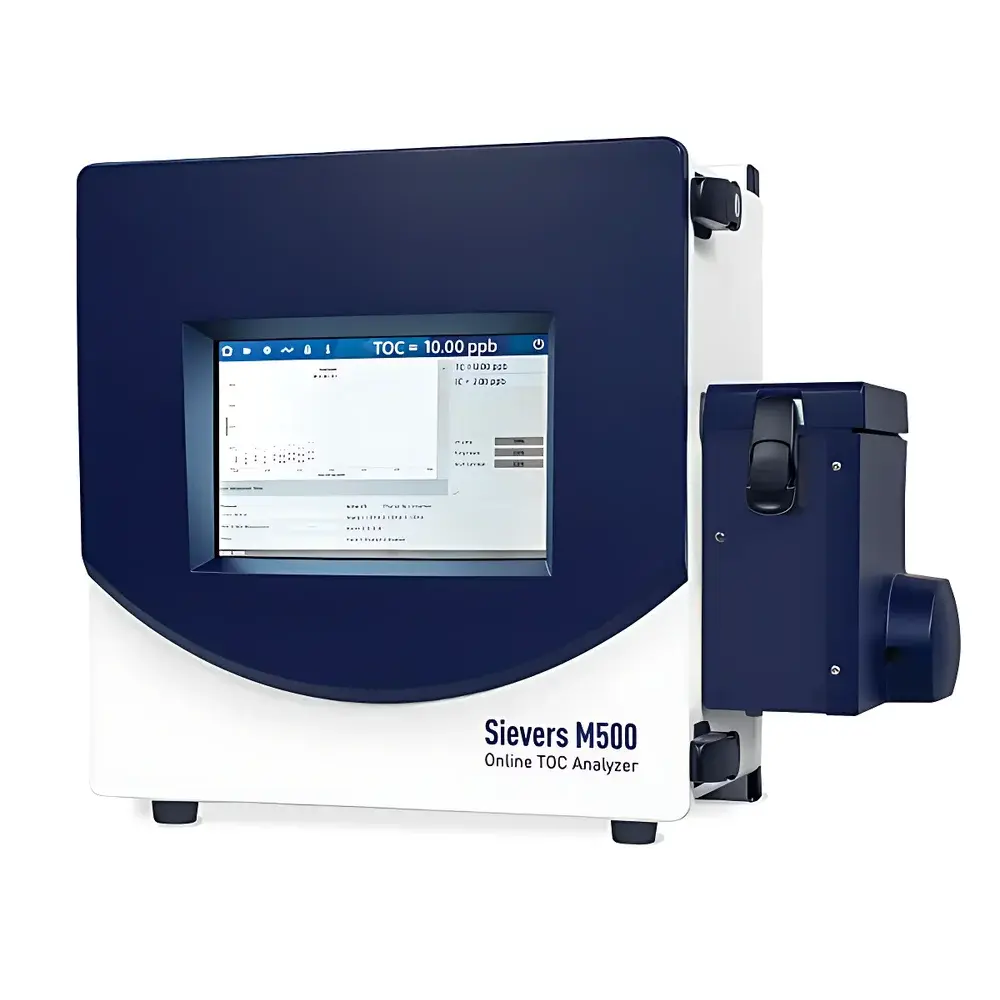
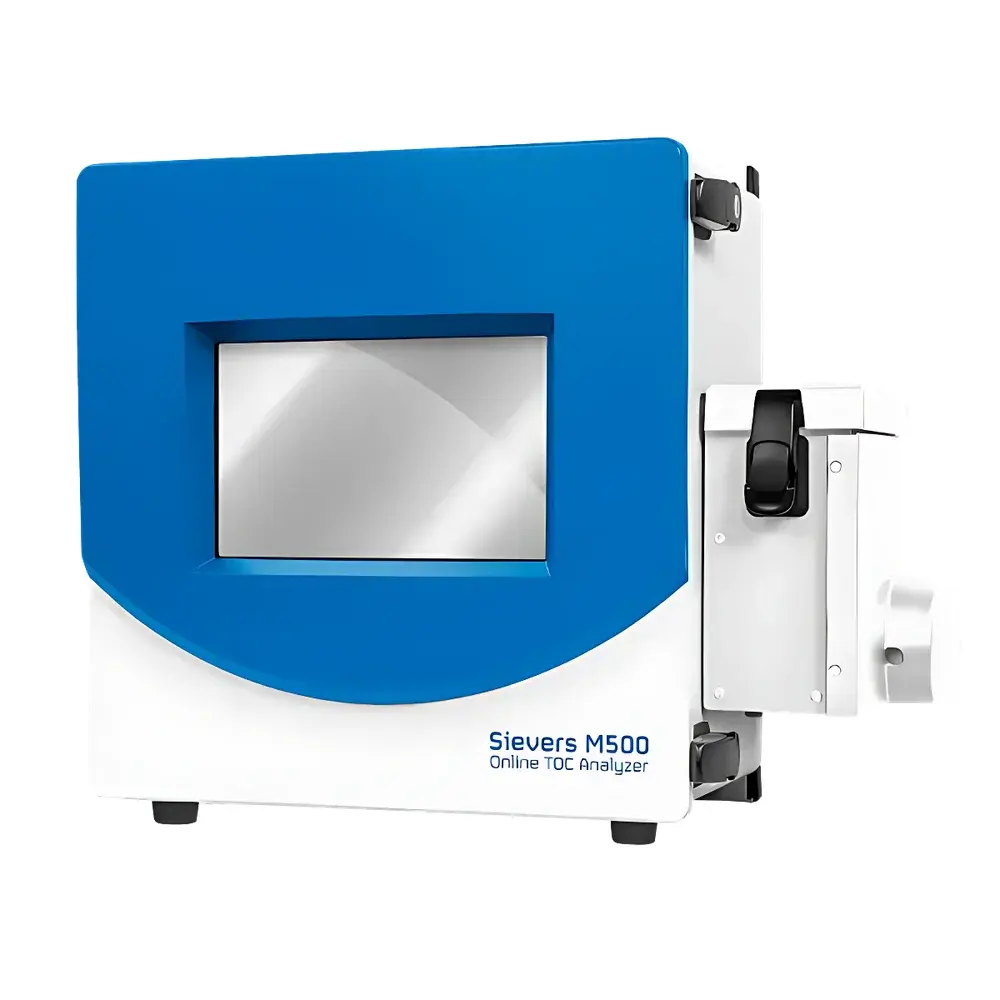
Sievers M500 Online Total Organic Carbon (TOC) Analyzer
| Brand | Sievers (Veolia) |
|---|---|
| Origin | USA |
| Manufacturer Type | Original Equipment Manufacturer (OEM) |
| Product Category | Imported Instrument |
| Model | M500 |
| Instrument Type | Online TOC Analyzer |
| Detection Principle | Membrane Conductivity Detection |
| Oxidation Method | UV Photolysis (185/254 nm) |
| Measurement Range | 0.03–2500 ppb as TOC |
| Accuracy | ±5% of reading or ±0.1 ppb, whichever is greater |
| Resolution | 0.01 ppb |
| Detection Limit | 0.03 ppb |
| Repeatability | RSD <1% or ±0.03 ppb, whichever is greater |
| Linear Range | 0.03–2500 ppb as TOC |
| Conductivity Range | 0.01–800 µS/cm |
| Conductivity Accuracy | ±0.005 µS/cm or ±1%, whichever is greater |
| Sample Flow Rate | ≥50 mL/min |
| Sample Temperature | 1–95 °C |
| Sample Pressure | ≤100 psig |
| pH Range for Specified Accuracy | 5.5–8.0 |
| Ozone Tolerance | Continuous exposure to ≤50 ppb O₃ |
| Analysis Time (Continuous Mode) | 3 min |
| Power Supply | 100–240 VAC, 50/60 Hz, 70 W |
| IP Rating | IP55 |
| Safety Certifications | CE, ETL Listed (UL 61010-1), CSA C22.2 No. 61010-1 |
| Environmental Class | Indoor use only |
Overview
The Sievers M500 Online Total Organic Carbon (TOC) Analyzer is a third-generation, pharmaceutical-grade continuous monitoring instrument engineered for ultra-trace organic carbon quantification in high-purity water systems. It employs a robust, two-stage UV photolysis oxidation process (185 nm + 254 nm) to fully mineralize non-purgeable organic compounds into CO₂, followed by highly selective membrane conductivity detection—eliminating interferences from inorganic ions, particulates, and dissolved gases. Designed specifically for compliance-critical applications—including Purified Water (PW), Water for Injection (WFI), and Clean Steam condensate—the M500 delivers trace-level sensitivity (LOD: 0.03 ppb), exceptional long-term stability, and metrologically traceable performance aligned with USP , EP 2.2.44, JP 2.59, and ASTM D5905. Its architecture meets the foundational requirements of FDA 21 CFR Part 11, EU Annex 11, and ICH Q5C for electronic records and signatures, supporting full auditability and data integrity throughout the instrument lifecycle.
Key Features
- Real-time, continuous TOC measurement with analysis cycle as short as 3 minutes—enabling rapid process deviation detection and closed-loop control integration.
- Simultaneous dual-parameter measurement: TOC and specific conductivity (0.01–800 µS/cm) on a single sample stream, reducing infrastructure complexity and cross-validation burden.
- Super IOS 4-port automated sampler with programmable sampling sequences, priority queuing, and integrated leak detection—supporting multi-point distribution system monitoring without manual intervention.
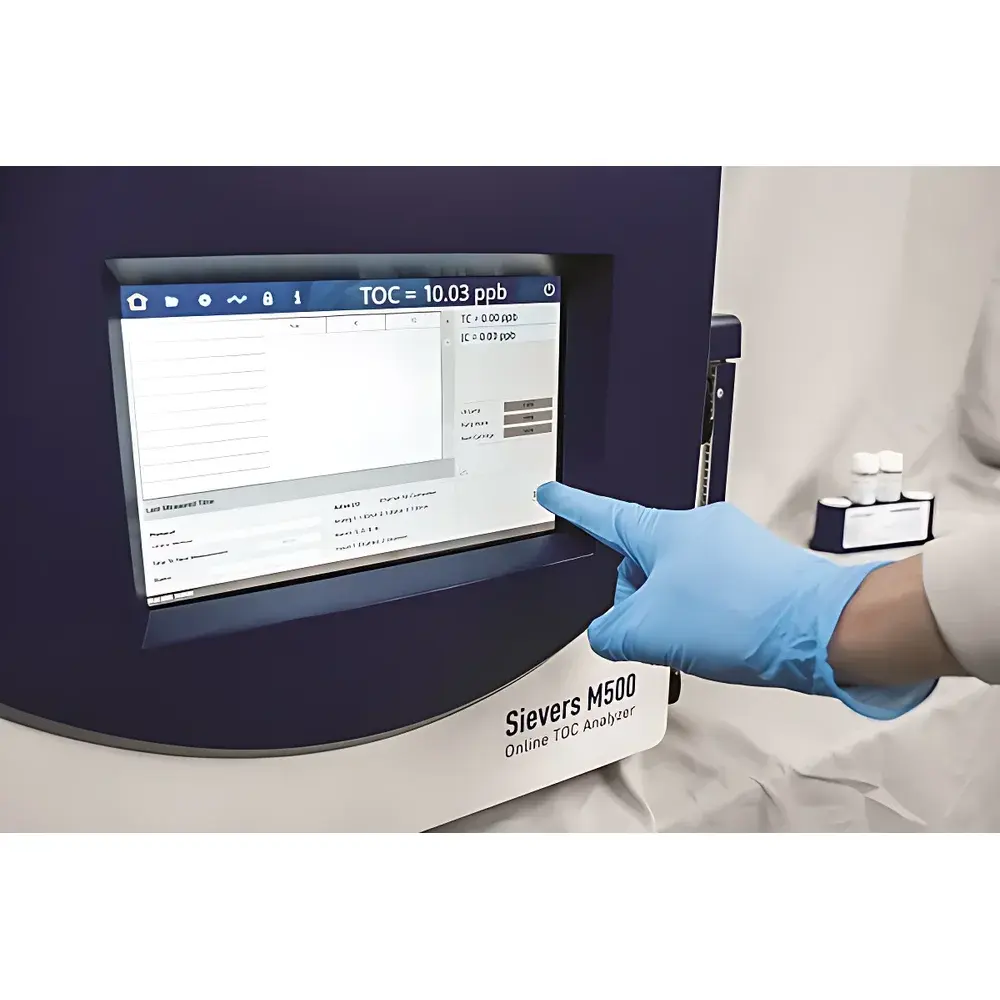
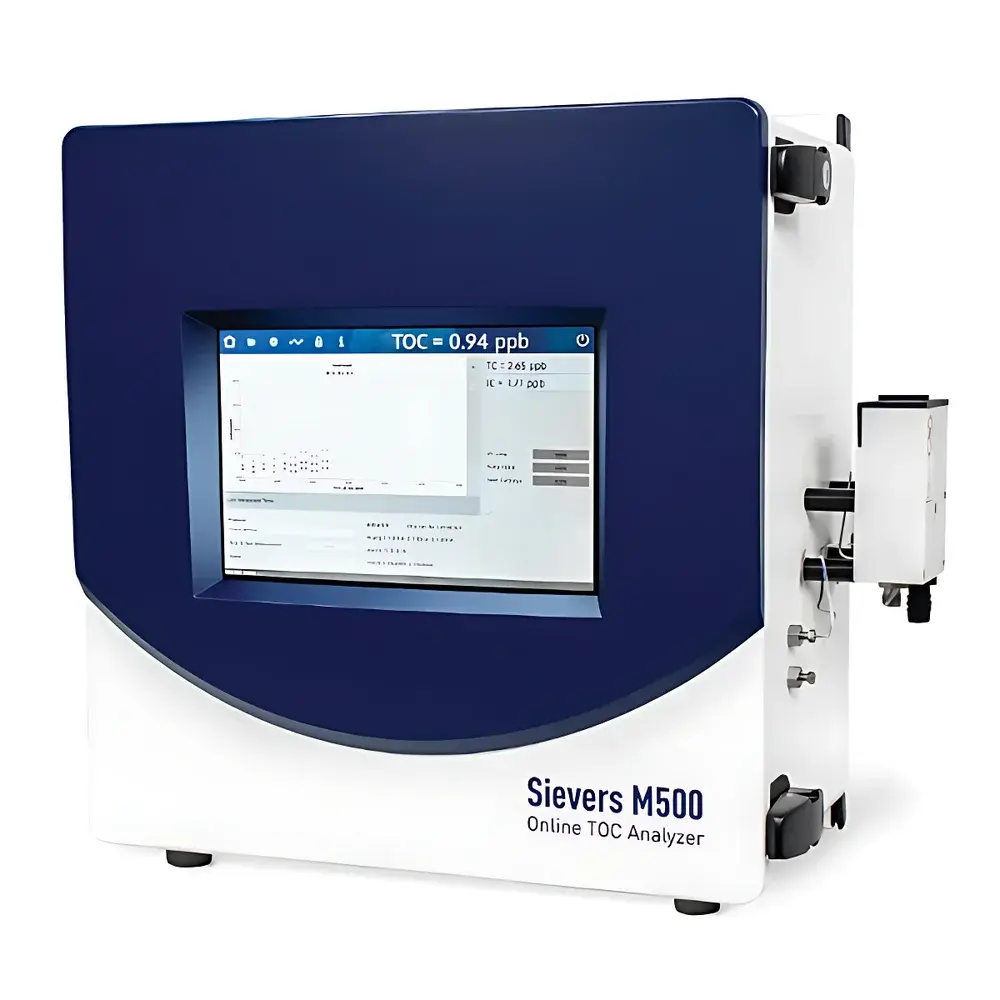
- 10.1-inch capacitive touchscreen (1280×800 resolution) with intuitive web-based UI, configurable dashboards, and context-sensitive help—minimizing operator training time and procedural errors.
- Automated system suitability testing (SST), calibration verification, and performance qualification protocols—reducing validation effort by up to 50% versus legacy platforms.
- Industrial-grade communication suite: native Ethernet, Wi-Fi (802.11ac dual-band), Modbus TCP/IP, PROFINET, 4–20 mA analog outputs, discrete alarms, and RS-232/USB—ensuring seamless integration into DCS, MES, and SCADA environments.
- IP55-rated enclosure with corrosion-resistant housing—certified for deployment in controlled manufacturing environments (Grade A–D cleanrooms per ISO 14644-1) and utility corridors.
Sample Compatibility & Compliance
The M500 is validated for direct online analysis of ultrapure water streams meeting pharmacopeial specifications (USP, EP, JP). It accommodates inlet pressures up to 100 psig and temperatures from 1°C to 95°C, with transient exposure tolerance beyond nominal limits. The system is ozone-compatible for integration with ozone-sanitized distribution loops (continuous ≤50 ppb O₃; intermittent ≤200 ppb O₃ for ≤2 h/day). Interference testing confirms insensitivity to common anions (Cl⁻, SO₄²⁻, NO₃⁻), cations (Na⁺, Ca²⁺), and organic heteroatoms (N, S, P), ensuring specificity across diverse feedwater chemistries. All firmware, calibration routines, and data handling modules are designed to satisfy ALCOA+ principles (Attributable, Legible, Contemporaneous, Original, Accurate, Complete, Consistent, Enduring, Available) and support GMP/GLP-regulated operations under FDA, EMA, and PMDA oversight.
Software & Data Management
Sievers M500 operates on a secure, embedded Linux platform with role-based access control (RBAC), cryptographic data encryption (AES-256), and immutable audit trails for all user actions, method edits, calibration events, and result exports. Data storage includes local SSD retention (≥12 months of raw data at 1-min intervals) and optional cloud synchronization via HTTPS/TLS. The instrument supports configurable electronic signatures compliant with 21 CFR Part 11 Subpart B, including biometric or token-based authentication. Export formats include CSV, PDF reports, and XML-compliant files for LIMS/EQMS ingestion. Remote diagnostics, firmware updates, and configuration backups are performed over encrypted channels—no open ports or legacy protocols exposed to the network perimeter. System logs record timestamped entries for every data point, alarm condition, and hardware status change, enabling full forensic reconstruction during regulatory inspections.
Applications
- Continuous monitoring of PW and WFI generation loops and distribution networks in pharmaceutical and biotechnology manufacturing facilities.
- Validation and routine surveillance of pretreatment and polishing stages in ultrapure water systems (e.g., RO, EDI, UV, degasification).
- Leak detection and contamination event triage in clean steam condensate lines and jacket water circuits.
- Supporting Process Analytical Technology (PAT) initiatives through real-time TOC trending, multivariate correlation with conductivity/pH, and SPC charting.
- Environmental release monitoring where regulatory thresholds require sub-ppb detection capability and full data traceability (e.g., semiconductor fab effluent, microelectronics rinse water).
FAQ
What is the minimum detectable TOC concentration, and how is it verified?
The instrument’s method detection limit (MDL) is 0.03 ppb, established per EPA Method 415.3 using replicate low-level standard injections and confirmed during factory acceptance testing (FAT) and site acceptance testing (SAT) with NIST-traceable sucrose standards.
Does the M500 require daily calibration or frequent maintenance?
No. The system employs drift-compensated calibration with 12-month stability verification; scheduled maintenance is limited to annual sensor replacement and quarterly system suitability checks per internal SOPs.
Can the M500 be integrated into a DeltaV or Siemens PCS7 DCS environment?
Yes. Native PROFINET and Modbus TCP/IP drivers are included; certified device descriptions (GSDML, EDD) and OPC UA connectivity are available via optional software modules.
How does the M500 handle high-conductivity samples without compromising TOC accuracy?
The proprietary hydrophobic gas-permeable membrane isolates CO₂ from the bulk liquid phase prior to conductivity measurement—effectively decoupling TOC quantification from background ionic strength fluctuations.
Is remote firmware update supported, and what cybersecurity safeguards apply?
Firmware updates are delivered via signed, encrypted packages requiring administrative approval and dual-factor authentication; no unattended auto-updates are permitted, and rollback capability is retained for all prior three versions.







