
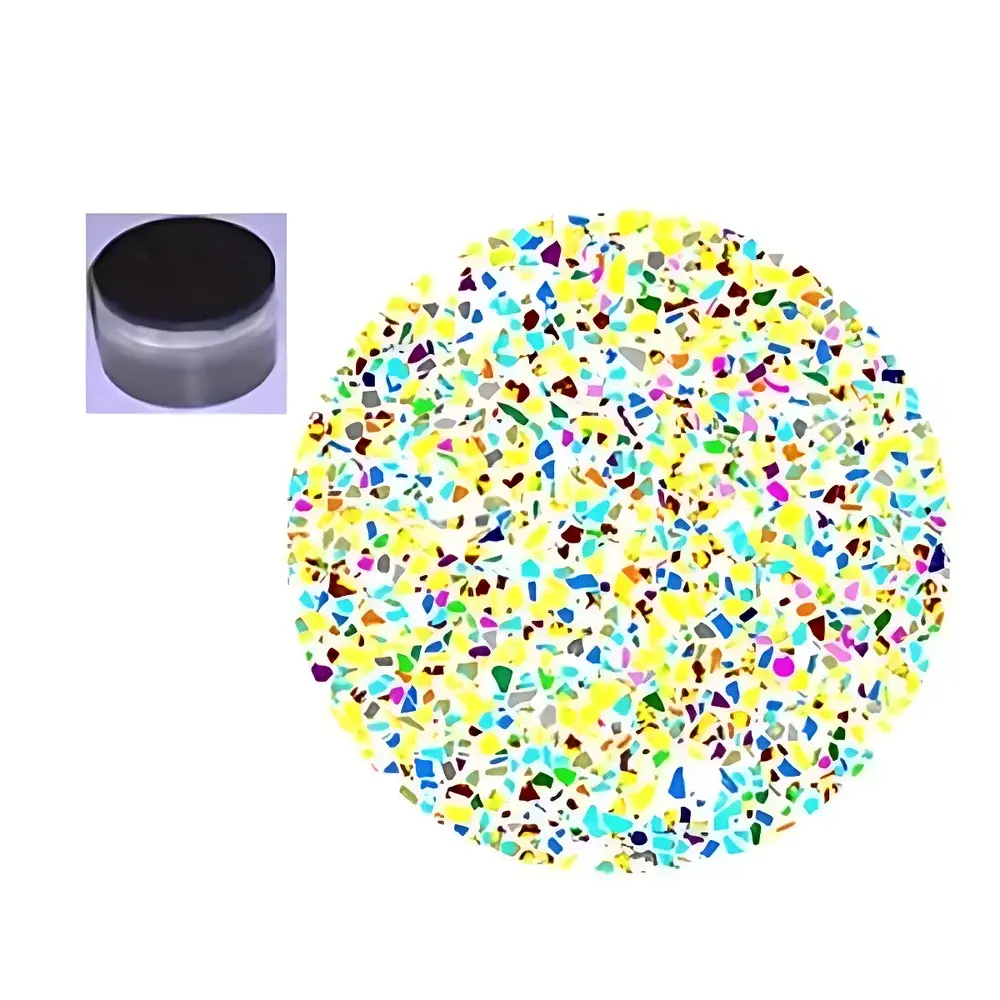
Bruker AMICS Automated Mineralogy System (MLA)
| Brand | Bruker |
|---|---|
| Origin | Germany |
| Manufacturer Type | Authorized Distributor |
| Origin Category | Imported |
| Model | AMICS Automated Mineralogy System (MLA) |
| Price | USD 210,000 (FOB Hamburg) |
Overview
The Bruker AMICS Automated Mineralogy System (MLA) is a fully integrated, SEM-based quantitative mineralogical analysis platform engineered for high-throughput, sub-grain-resolution characterization of geological and metallurgical samples. Built upon the physical principles of scanning electron microscopy (SEM) coupled with energy-dispersive X-ray spectroscopy (EDS), AMICS acquires spatially registered BSE (backscattered electron) intensity maps and elemental spectra at each pixel within a defined scan area. Through real-time correlation of topographic contrast, atomic number contrast (Z-contrast), and stoichiometric EDS data, the system performs phase identification, grain boundary delineation, liberation analysis, and textural quantification—enabling rigorous petrographic and process mineralogy workflows in compliance with ISO 14687, ASTM D5763, and JIS M 8211 standards.
Key Features
- High-fidelity BSE imaging enabled by Hitachi SEM platforms (e.g., SU5000, SU7000), optimized for Z-contrast resolution and signal-to-noise ratio across heterogeneous mineral assemblages
- Integrated Bruker QUANTAX EDS detector with ultra-thin window technology, supporting detection of light elements (Be–U) and quantitative elemental mapping at ≤1 µm spatial resolution
- Proprietary AMICS software v6.x featuring adaptive thresholding, multi-scale morphological segmentation, and hierarchical phase classification based on empirical and thermodynamic mineral databases
- Automated stage control supporting unattended multi-sample analysis via programmable sample holders (up to 24 positions per carousel)
- Real-time spectrum processing with dead-time correction, peak deconvolution, and matrix correction (ZAF or φ(ρz)) applied per pixel during acquisition
- Modular architecture allowing seamless integration with third-party SEMs and compatibility with Bruker’s Esprit Live EDS suite for cross-platform data harmonization
Sample Compatibility & Compliance
AMICS supports polished thin sections (epoxy-mounted, carbon-coated), ore concentrates, tailings, slag, fly ash, and synthetic ceramics—provided surface roughness remains below Ra < 0.1 µm and conductivity is ensured via sputter coating. All analytical protocols adhere to GLP-compliant documentation requirements, including full audit trails for instrument parameters, calibration history (standardized using NIST SRM 2782, SRM 2783), and user-defined mineral classification schemes. Data export formats comply with ASTM E1357 (mineral reporting), ISO/IEC 17025 traceability frameworks, and FDA 21 CFR Part 11 for electronic records and signatures when deployed in regulated mining QA/QC labs.
Software & Data Management
The AMICS software suite provides a unified interface for acquisition, processing, visualization, and reporting. Core modules include: (1) Acquisition Manager for defining scan grids, dwell times, and EDS acquisition parameters; (2) Phase Identification Engine leveraging a curated mineral database containing >3,200 end-member and solid-solution phases with associated crystallographic and compositional constraints; (3) Texture Analyzer for grain size distribution (GSD), aspect ratio, convexity, and intergrowth quantification; (4) Liberation Analyzer calculating degree of liberation, association indices, and locked particle metrics per ASTM D7797; and (5) Report Generator exporting PDF, Excel, and XML outputs with embedded metadata compliant with MIAME and ISA-TAB conventions. All raw data (BSE images, spectrum cubes, phase masks) are stored in HDF5 format for long-term archival and interoperability with Python-based geoscience toolchains (e.g., GeoPandas, scikit-image).
Applications
- Process mineralogy for comminution circuit optimization and flotation feed characterization
- Liberation modeling and grade-recovery curve prediction in base metal and precious metal concentrators
- Geotechnical assessment of clay mineral content and swelling potential in coal seam strata
- Environmental geochemistry: quantification of acid-generating sulfide minerals (e.g., pyrite, arsenopyrite) and neutralizing carbonates
- Resource estimation support through modal mineralogy integration with drill core logging and hyperspectral datasets
- Metallurgical accounting of gangue mineral deportment in hydrometallurgical leach residues
FAQ
What SEM models are certified for AMICS integration?
Hitachi SU5000, SU7000, and Regulus series SEMs are fully supported; JEOL JSM-7900F and Thermo Fisher Apreo 2 require validation via Bruker Application Lab prior to deployment.
Can AMICS perform semi-quantitative analysis without standards?
Yes—using the standardless ZAF method with internal reference materials (e.g., quartz, albite) and automated background subtraction, though certified reference materials are recommended for regulatory reporting.
Is remote operation and monitoring supported?
AMICS supports secure remote access via TLS-encrypted VNC and browser-based dashboard (AMICS Web Console), enabling real-time supervision and queue management from off-site locations.
How is mineral database customization handled?
Users may extend the built-in library via the AMICS Mineral Editor, importing CIF files, defining new solid-solution models, and assigning custom optical properties—all validated against IMA-CNMNC nomenclature guidelines.
What is the typical throughput for a 1 cm² scan at 1 µm pixel resolution?
Approximately 45–60 minutes per field of view, depending on beam current, dwell time, and EDS live time settings; batch processing of 10–20 fields is fully automated with minimal operator intervention.





