
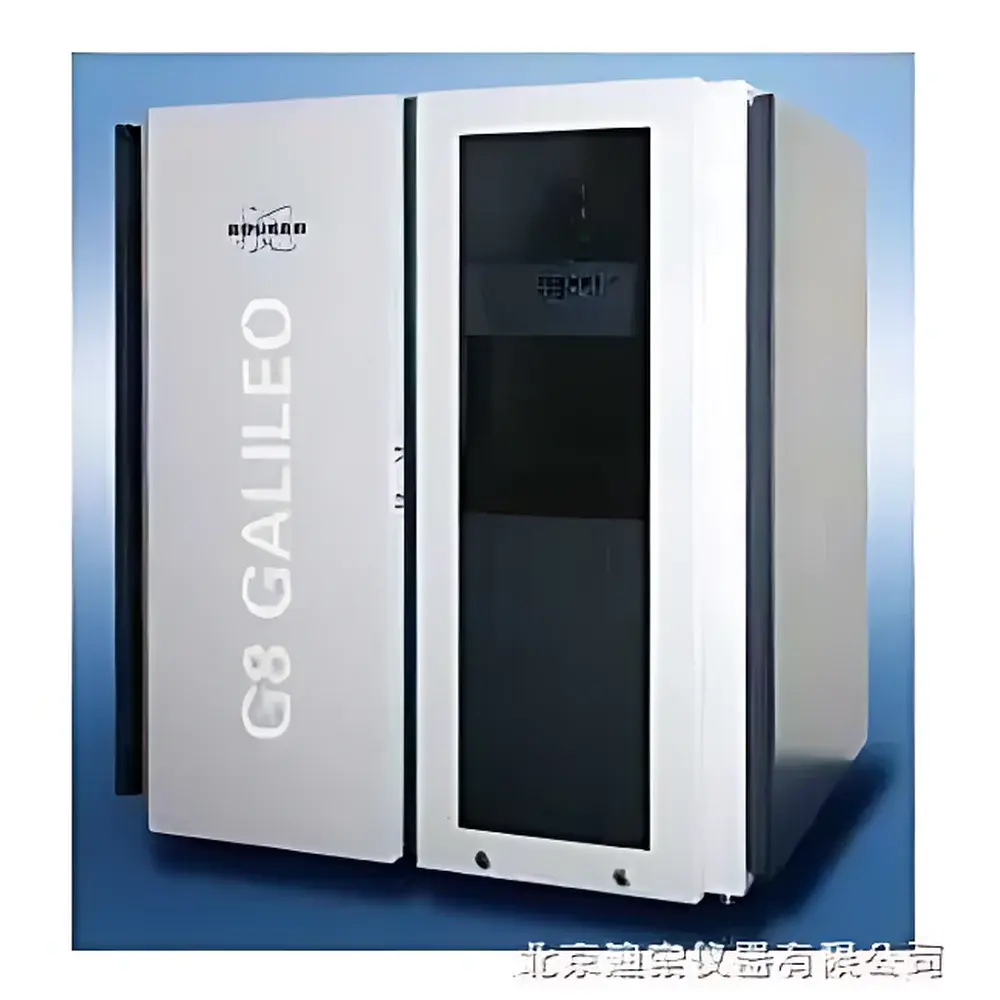
Bruker Elemental GALILEO ON Oxygen-Nitrogen-Hydrogen Analyzer
| Origin | Germany |
|---|---|
| Manufacturer Type | Authorized Distributor |
| Origin Category | Imported |
| Model | GALILEO ON |
| Price | Upon Request |
Overview
The Bruker Elemental GALILEO ON Oxygen-Nitrogen-Hydrogen Analyzer is a high-precision, dual-mode elemental combustion analyzer engineered for quantitative determination of interstitial and gaseous elements—oxygen (O), nitrogen (N), and hydrogen (H)—in solid inorganic and metallic materials. It operates on two complementary thermal extraction principles: high-temperature fusion (up to 2500 °C) for total oxygen and nitrogen release from oxides, nitrides, and carbides; and controlled vacuum or inert-gas thermal extraction (with programmable dwell time) for hydrogen quantification from hydrides, trapped gases, and surface adsorbates. Oxygen and nitrogen are converted to CO and N₂, respectively, and measured via dual-beam non-dispersive infrared (NDIR) detection for CO and high-stability thermal conductivity detection (TCD) for N₂. Hydrogen is quantified as H₂ by TCD with baseline auto-zeroing capability. The system integrates optical pyrometry for real-time, contactless temperature monitoring and closed-loop control during fusion, ensuring reproducible thermal profiles across diverse sample matrices.
Key Features
- Simultaneous O/N/H quantification in a single instrument platform using fused-silica crucibles and graphite or zirconia boats
- Programmable thermal extraction duration (up to 1800 seconds) for optimized hydrogen liberation from refractory alloys and ceramics
- Maximum operating temperature of 2500 °C, achieved via high-power induction heating with dynamic power regulation
- Optical pyrometric temperature measurement (wavelength: 1.6–1.8 µm) with ±1 °C stability at 2000 °C
- Automatic detector zeroing (ALC) for all TCD and NDIR channels prior to each analysis cycle
- Gas calibration routines with certified reference standards traceable to NIST SRMs
- No chemical flux or additive required for blank correction—reducing contamination risk and operational cost
- Dust-tight furnace design with integrated particulate filtration and gas scrubbing modules
Sample Compatibility & Compliance
The GALILEO ON accommodates a broad spectrum of conductive and non-conductive solids, including ferrous and non-ferrous metals (steels, cast irons, titanium, aluminum, zirconium, and their alloys), weld deposits, ores, technical ceramics (excluding hydrogen analysis in fully oxidized glasses), metal oxides, nitrides, carbides, and salt-based inorganic compounds. Sample mass ranges from 0.1 g to 1.0 g depending on expected concentration and matrix volatility. The analyzer complies with ASTM E1019 (Standard Test Methods for Determination of Carbon, Sulfur, Nitrogen, and Oxygen in Steel, Iron, Nickel, and Cobalt Alloys), ISO 14284 (Steel and Iron — Sampling and Preparation of Samples for Determination of Chemical Composition), and supports GLP/GMP data integrity requirements through audit-trail-enabled software. All gas supply interfaces meet ISO 8573-1 Class 2 purity specifications for compressed air and carrier gases (Ar, N₂ ≥ 99.999 %; He ≥ 99.996 %).
Software & Data Management
The GALILEO Control Suite runs on Windows-based workstations (integrated or external) and features a modular GUI divided into four functional panels: (1) Real-time Control Interface—displays live signal traces (CO, N₂, H₂), furnace temperature, gas flow rates, and status indicators; enables manual weight entry or automated balance integration (RS-232/USB); stores up to 1000 sample weights in internal memory; (2) Method Editor—allows storage of application-specific protocols (e.g., “Ti-6Al-4V_H_analysis” or “Stainless_Steel_O_N_fusion”) with user-defined ramp rates, hold times, and gas switching sequences; (3) Results Viewer—presents quantitative outputs in ppm or wt%, with statistical summaries (mean, SD, RSD%) across up to five consecutive analyses; supports export to CSV, PDF, or LIMS-compatible XML; (4) Calibration & Diagnostics—manages multi-point gas calibrations, detector diagnostics, and maintenance logs with timestamped entries. Full 21 CFR Part 11 compliance is available via optional electronic signature and audit trail modules.
Applications
This analyzer serves critical quality assurance and R&D functions across metallurgical production, aerospace component certification, nuclear fuel fabrication, and advanced ceramic development. Typical use cases include: verification of oxygen content in ultra-low-carbon stainless steels (<10 ppm O); hydrogen embrittlement screening in titanium alloy fasteners (0.1–50 ppm H); nitrogen specification control in high-strength microalloyed steels; oxygen impurity profiling in sintered tungsten carbide tooling; and nitrogen/hydrogen co-quantification in zirconium cladding tubes for pressurized water reactors. Its ability to decouple hydrogen from surface moisture via controlled thermal desorption makes it indispensable for failure analysis labs investigating delayed cracking mechanisms.
FAQ
What is the minimum detectable limit for hydrogen?
The system achieves a resolution of 0.01 ppm H, with typical repeatability of ±0.05 ppm or ±1% relative, whichever is greater, depending on sample homogeneity and mass.
Can the instrument analyze hydrogen in glass or fully oxidized ceramics?
Hydrogen analysis is not recommended for silica-rich or fully oxidized glasses due to negligible hydride formation and high background interference; however, oxygen and nitrogen quantification remains valid.
Is helium mandatory as a carrier gas?
Helium is optional and used only for specific hydrogen extraction protocols requiring high thermal conductivity; argon or nitrogen may be substituted for oxygen/nitrogen fusion modes.
How is furnace temperature calibrated and verified?
Optical pyrometer calibration is performed annually using NIST-traceable blackbody sources at three points (1000 °C, 1500 °C, 2000 °C); verification is documented in the instrument’s calibration log.
Does the software support LIMS integration?
Yes—via configurable ODBC drivers and structured XML output; full ASTM E1482-compliant data exchange is supported upon configuration.
Related Products




