
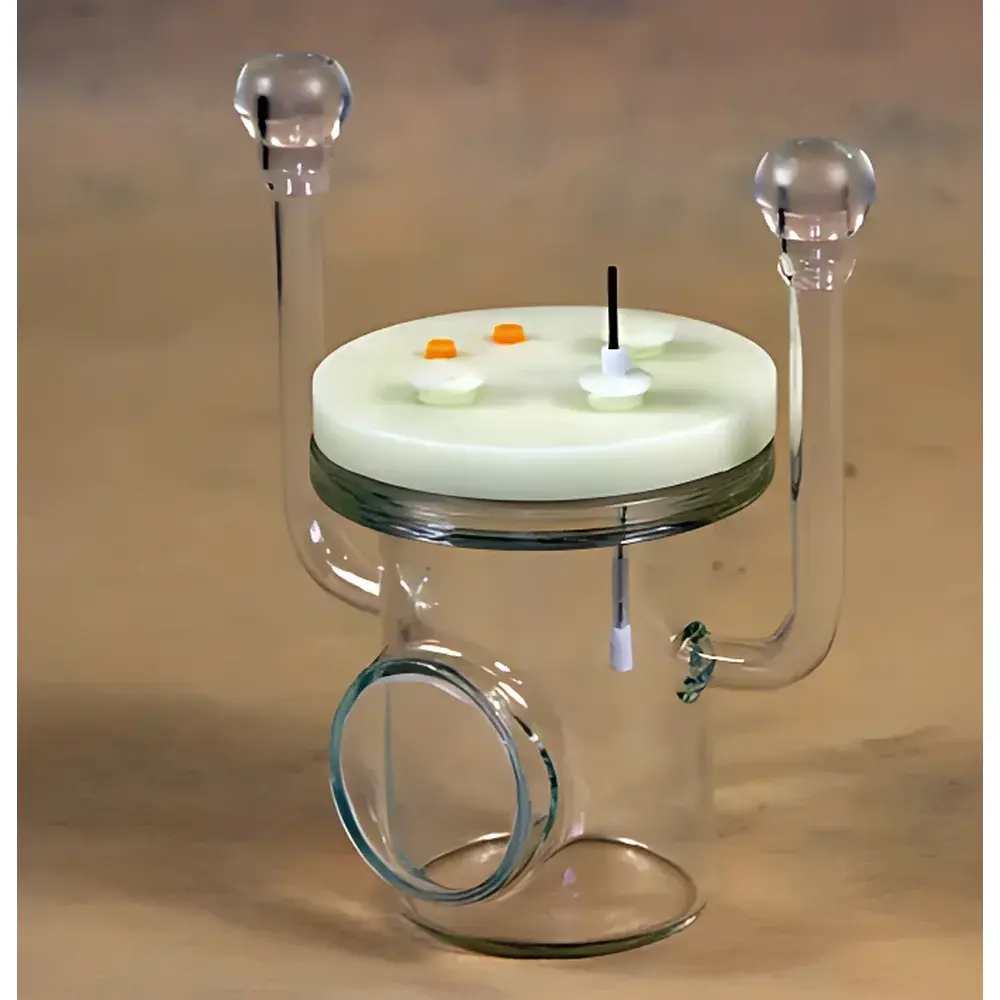
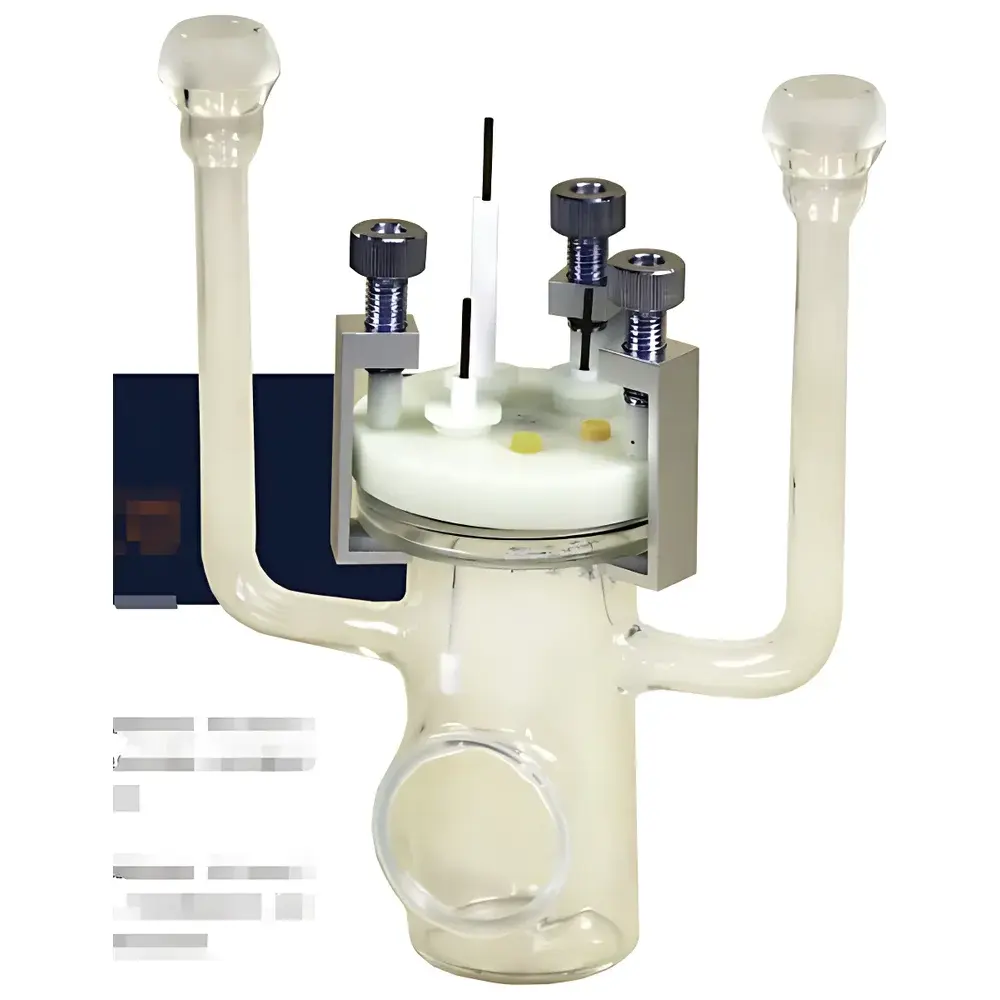
CEL-PEO40 & CEL-PEO60 Online Photoelectrochemical Reactor System
| Brand | CEA-Light (Zhongjiao Jinyuan) |
|---|---|
| Origin | Beijing, China |
| Manufacturer Type | OEM Manufacturer |
| Model Variants | CEL-PEO40 (100 mL), CEL-PEO60 (250 mL) |
| Quartz Window Diameter | 40 mm / 60 mm |
| Electrode Ports | 2–8 configurable |
| Sealing | DIN-flange vacuum-tight |
| Sample Port | Integrated liquid sampling valve |
| Gas Inlet/Outlet | Dual standard VCR or Swagelok-compatible ports |
| Compatibility | Designed for integration with CEL-SPH2N H₂-evolution photoreactor platforms |
| Interface Standard | Ground-glass joint (19/22) on offline variants (CEL-PEO40L/PEO60L) |
| Vacuum Rating | ≤5 × 10⁻³ mbar (with appropriate pump and gasket) |
Overview
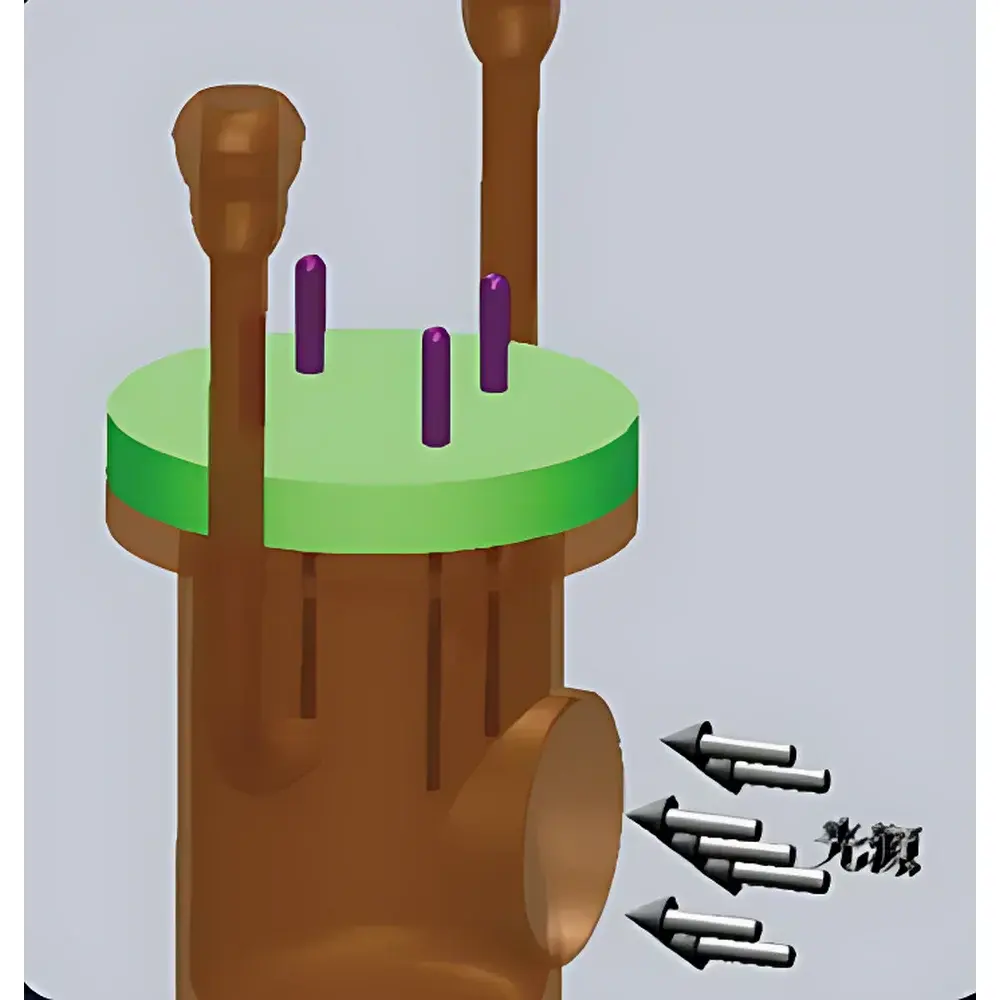
The CEL-PEO40 and CEL-PEO60 Online Photoelectrochemical Reactor Systems are engineered for precise, real-time monitoring of photoelectrocatalytic processes under controlled illumination and electrochemical bias. These reactors operate on the principle of three-electrode photoelectrochemistry—integrating working, counter, and reference electrodes within a sealed, optically accessible cell to enable simultaneous light irradiation (via high-transmittance quartz windows) and potentiostatic/galvanostatic control. Designed specifically for hydrogen evolution reaction (HER) studies in aqueous and non-aqueous electrolytes, they support quantitative analysis of photocurrent density, incident photon-to-current efficiency (IPCE), and long-term stability under solar-simulated or monochromatic illumination. Their modular flange-based architecture ensures compatibility with commercial potentiostats (e.g., BioLogic SP-300, CHI 760E), optical fiber couplers, and gas chromatography (GC) sampling lines—enabling fully integrated photoelectrochemical (PEC) testing workflows aligned with ASTM E2542 and ISO 15270 standards for photocatalytic performance evaluation.
Key Features
- Vacuum-tight DIN-flange sealing system with Viton or Kalrez O-rings, rated for continuous operation at ≤5 × 10⁻³ mbar
- Optically optimized quartz viewport: 40 mm diameter (CEL-PEO40) or 60 mm diameter (CEL-PEO60), transmitting >90% from 190–2500 nm
- Configurable electrode port array (2–8 ports), accommodating standard 6 mm OD glassy carbon, Pt wire, Ag/AgCl, or custom photoanode substrates
- Dual-function gas management: dedicated inlet/outlet ports with Swagelok 1/4″ compression fittings for inert gas purging or H₂/CH₄ collection
- Integrated liquid sampling valve with PTFE-sealed needle port, enabling in situ electrolyte extraction without breaking vacuum or interrupting illumination
- Modular design supports both online coupling (direct integration with CEL-SPH2N photoreactor platforms) and offline operation (via 19/22 ground-glass joints on PEO40L/PEO60L variants)
- Chemically resistant body construction: borosilicate glass main chamber with electropolished 316L stainless steel flange and hardware
Sample Compatibility & Compliance
The CEL-PEO reactors accommodate aqueous electrolytes (e.g., 0.5 M Na₂SO₄, 0.1 M H₂SO₄), organic solvents (acetonitrile, DMF), and viscous ionic liquids. Electrode compatibility includes FTO, ITO, TiO₂ nanotube arrays, BiVO₄ photoanodes, and perovskite-based heterostructures mounted on conductive substrates. All wetted materials comply with USP Class VI and FDA 21 CFR 177.2440 for laboratory-grade chemical contact. The reactor design facilitates full traceability in GLP-compliant environments: electrode positioning is reproducible via indexed port numbering, and vacuum integrity is verifiable using helium leak testing per ASTM E499. Documentation packages include material certifications, dimensional drawings, and flange torque specifications compliant with EN 1514-2.
Software & Data Management
While the CEL-PEO system itself is hardware-only, it interfaces seamlessly with industry-standard electrochemical workstations supporting EC-Lab (BioLogic), NOVA (Metrohm Autolab), or CHI software suites. When paired with CEL-SPH2N platforms, time-synchronized acquisition of photocurrent, gas evolution rate (via thermal conductivity detector), and irradiance (using calibrated Si or GaAs photodiodes) is achievable through TTL-triggered data logging. Audit trails—including timestamped electrode configuration changes, pressure decay logs, and sampling event markers—are retained in accordance with 21 CFR Part 11 requirements when used with validated software configurations. Raw current vs. time, chronoamperometry, and linear sweep voltammetry datasets export in .txt or .mpt formats for post-processing in OriginLab or Python-based analysis pipelines.
Applications
- Quantitative assessment of photoanode/cathode charge separation efficiency under AM 1.5G illumination
- In situ electrochemical impedance spectroscopy (EIS) during steady-state illumination to resolve interfacial recombination kinetics
- Long-duration stability testing (>100 h) of metal–organic frameworks (MOFs) and covalent organic frameworks (COFs) in PEC water splitting
- Screening of cocatalyst deposition methods (e.g., NiFeOx, CoPi) via controlled-potential electrolysis with periodic GC quantification
- Correlation of transient absorption spectroscopy (TAS) signals with concurrent photocurrent onset dynamics
- Development of tandem PEC cells integrating silicon bottom cells with BiVO₄ top absorbers
FAQ
Can the CEL-PEO reactor be used under positive pressure conditions?
Yes—rated for continuous operation up to 3 bar(g) with reinforced flange gaskets and pressure-relief venting options.
Is quartz window replacement possible in the field?
Yes—quartz disks are held by removable retaining rings; replacement requires only standard Torx drivers and cleanroom-grade handling protocols.
Does the system support reference electrode placement inside the electrolyte compartment?
Yes—dedicated Luggin capillary port (included in 8-port configuration) enables precise placement within 1 mm of the working electrode surface.
Are custom electrode geometries supported?
Yes—port threading conforms to M6 × 0.75 mm standard; adapters for 3 mm, 5 mm, and 8 mm OD electrodes are available as optional accessories.
How is light uniformity across the quartz window verified?
Each unit ships with a NIST-traceable irradiance map generated using a CCD-based imaging radiometer (spectral range 350–850 nm, ±2% uncertainty).



