
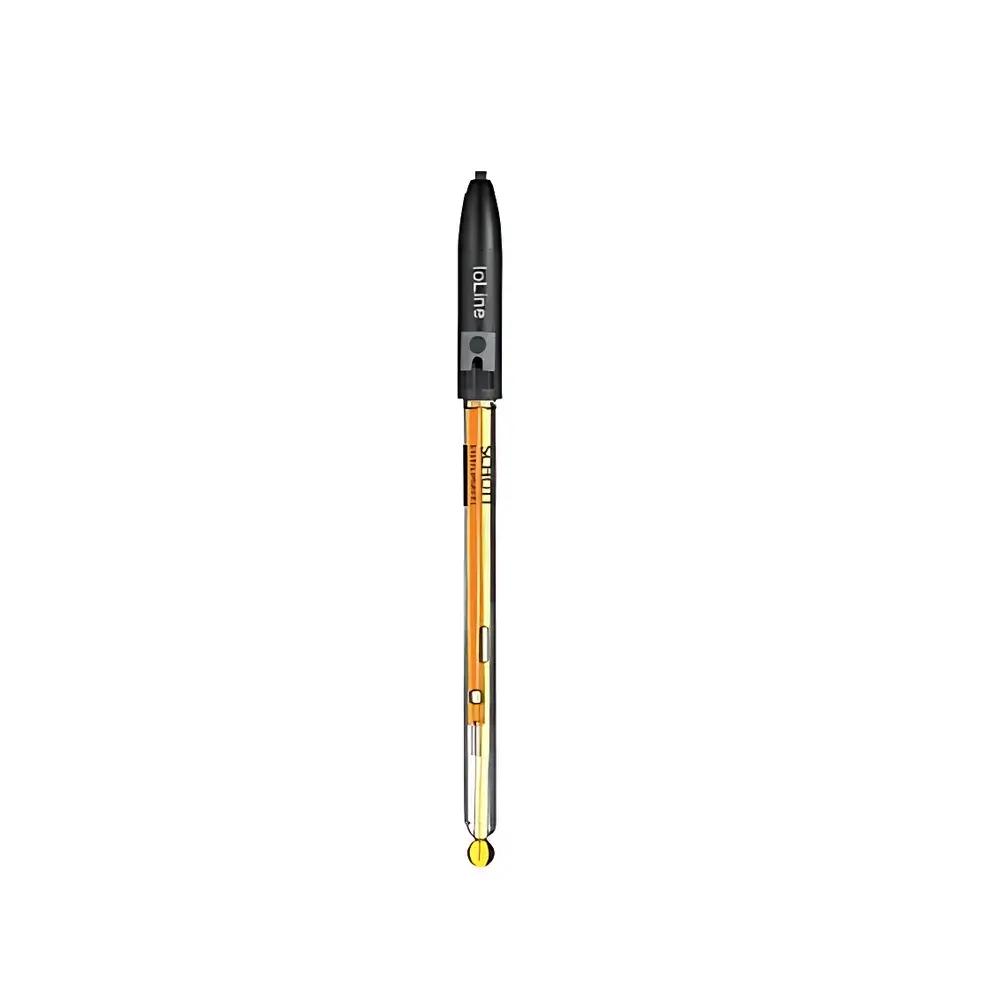
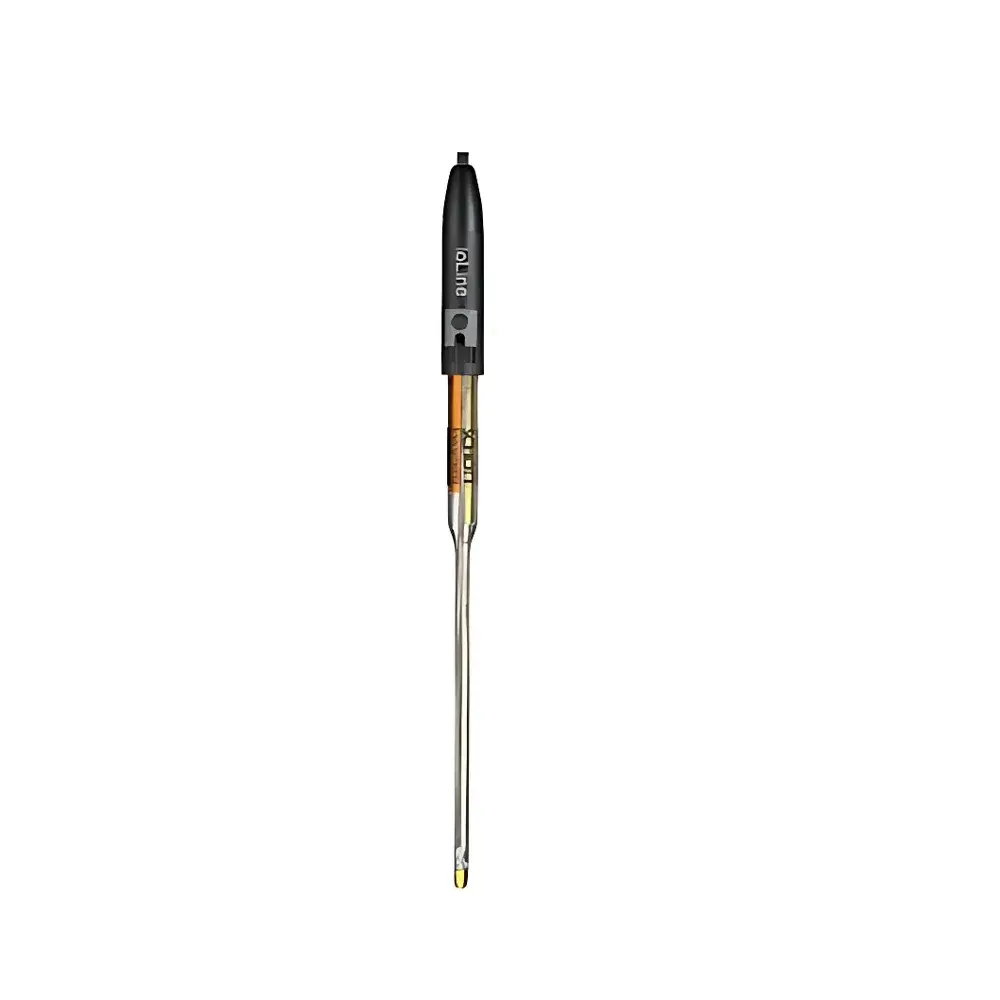
ChemTron IoLine Series pH Combination Electrodes
| Brand | ChemTron |
|---|---|
| Origin | Germany |
| Type | pH Combination Electrode |
| pH Range | 0–14 |
| Temperature Range | −5 to 100 °C |
| Reference System | Iodine/Iodide |
| Zero Point | pH 7.00 ± 0.25 |
| Shaft Material | Glass |
| Membrane Resistance | 200–400 MΩ |
| Junction Types | Platinum or Ceramic |
| Membrane Shape | Spherical, Cylindrical, or Spear-shaped |
| Connector Options | DIN, BNC, S7 Thread, Metrohm (R-type), BNC+Cinch, DIN+baa, BNC+baa, Metrohm+2baa |
| Integrated Temperature Sensor | Pt1000 (standard), NTC30 (select models) |
| Auto-ID Recognition | Yes (for compatible meters) |
| Compliance | Designed for GLP/GMP-compliant workflows |
Overview
The ChemTron IoLine Series pH Combination Electrodes are precision-engineered electrochemical sensors designed for high-accuracy, reproducible pH measurements across demanding laboratory, quality control, and industrial process environments. Built upon a robust iodine/iodide reference system—offering superior stability and reduced liquid junction potential drift compared to traditional Ag/AgCl systems—these electrodes deliver reliable performance in aggressive matrices, including low-ionic-strength solutions, non-aqueous media, and samples with high protein or sulfide content. The glass shaft construction ensures mechanical integrity and thermal stability over the full operating range of −5 to 100 °C. Each electrode integrates a chemically resistant pH-sensitive glass membrane with calibrated zero-point accuracy (pH 7.00 ± 0.25), enabling traceable calibration against standard buffer solutions per ISO 8655 and NIST-traceable references.
Key Features
- Stable iodine/iodide reference system with low junction potential drift and minimal clogging risk in viscous or particulate-laden samples
- Multiple membrane resistance options (200 MΩ, 300 MΩ, 400 MΩ) optimized for signal stability in low-conductivity or high-resistivity media
- Three distinct membrane geometries: spherical (standard), cylindrical (micro-volume), and spear-shaped (penetration into semi-solids or gels)
- Choice of junction materials: platinum (low-flow, high-precision applications) or ceramic (balanced flow rate and durability for routine use)
- Integrated Pt1000 temperature sensor (IEC 60751 Class A) with automatic temperature compensation (ATC) and real-time thermal profiling
- Auto-ID recognition via embedded EEPROM chip—enables seamless integration with ChemTron and third-party meters supporting digital electrode identification (e.g., Metrohm, Hanna, Thermo Orion)
- Interchangeable connector variants: DIN, BNC, S7-thread, Metrohm R-type, DIN+baa, BNC+baa, and Metrohm+2baa—ensuring compatibility with legacy and modern meter platforms
- 1-meter shielded cable with low-noise coaxial design, minimizing electromagnetic interference in electromagnetically noisy environments
Sample Compatibility & Compliance
The IoLine series is validated for use in aqueous, buffered, and mildly organic solvent-based samples—including ethanol/water mixtures up to 30% v/v. Its iodide-based reference electrolyte exhibits enhanced chemical inertness toward heavy metals, reducing contamination risk in metal ion analysis (e.g., Ni²⁺, Cu²⁺, Pb²⁺). Electrodes marked with “H” designation feature high-alkali-resistant glass membranes suitable for pH measurements above pH 12—critical for caustic cleaning validation, boiler water monitoring, and alkaline battery electrolyte testing. All models comply with international standards governing pH measurement practice: ASTM D1293 (water pH), ISO 10523 (water quality), USP (pharmaceutical water testing), and EN ISO 3696 (laboratory grade water specifications). For regulated environments, the Auto-ID and Pt1000 sensor support 21 CFR Part 11-compliant audit trails when paired with validated data acquisition software.
Software & Data Management
IoLine electrodes interface natively with ChemTron’s ElectroLab Suite and third-party platforms supporting ISM (Intelligent Sensor Management) or similar digital protocols. The embedded EEPROM stores unique serial number, calibration history, and sensor-specific parameters—including membrane type, zero point, slope tolerance, and last calibration date. This enables automated calibration verification, expiration alerts, and electronic record generation aligned with ALCOA+ principles (Attributable, Legible, Contemporaneous, Original, Accurate, Complete, Consistent, Enduring, Available). When used with GLP/GMP-certified meters, the electrodes contribute to full traceability: each measurement event logs electrode ID, temperature, mV/pH value, timestamp, operator ID, and environmental conditions—facilitating FDA inspection readiness and internal QA audits.
Applications
- Pharmaceutical QC: Water-for-injection (WFI) and purified water testing per USP and EU Ph. Eur. 2.2.3
- Food & Beverage: Fermentation monitoring (beer, wine, dairy), sauce viscosity-pH correlation, and shelf-life stability studies
- Environmental Labs: Surface water, wastewater, and leachate analysis per EPA Method 9040C and ISO 5667-3
- Chemical Manufacturing: Batch reaction endpoint detection, catalyst slurry pH profiling, and corrosion inhibitor evaluation
- Academic Research: Electrolyte characterization in battery R&D, enzyme kinetics under controlled pH, and microfluidic droplet pH sensing
- Biotechnology: Cell culture media monitoring, bioreactor pH feedback control, and downstream purification buffer verification
FAQ
What reference system does the IoLine electrode use, and why is it advantageous?
The IoLine series employs an iodine/iodide (I₂/I⁻) redox reference system instead of conventional Ag/AgCl. This eliminates silver ion leaching—a critical concern in chloride-sensitive applications (e.g., semiconductor rinse water, biological buffers)—and improves long-term stability in low-conductivity samples where liquid junction potentials dominate error sources.
Can IoLine electrodes be used for high-temperature sterilization or autoclaving?
No. While rated for continuous operation up to 100 °C, these electrodes are not autoclavable. Prolonged exposure to saturated steam (>121 °C) compromises the glass-to-metal seal and degrades the reference electrolyte. For sterile processes, use single-use variants or validate alternative sterilization methods (e.g., gamma irradiation—subject to prior qualification).
How does the Auto-ID function integrate with my existing pH meter?
Auto-ID requires both hardware (EEPROM-enabled electrode) and firmware support from the meter. Compatible instruments automatically read calibration metadata, apply correct temperature compensation coefficients, and flag deviations from stored slope/offset tolerances—reducing manual entry errors and streamlining SOP compliance.
Is the Pt1000 temperature sensor certified to an international standard?
Yes. All integrated Pt1000 elements conform to IEC 60751 Class A tolerance (±(0.15 + 0.002·|t|) °C), with individual calibration certificates available upon request for metrological traceability in accredited laboratories.
What maintenance protocol is recommended for extended service life?
Store upright in ChemTron KCl storage solution (3 mol/L); avoid distilled water or dry storage. Rinse with deionized water after each use; clean junctions weekly with dilute nitric acid (1% v/v) for protein fouling or ammonium hydroxide (5% v/v) for silver sulfide deposits. Recalibrate before each analytical session using two-point (pH 4.01/7.00 or 7.00/10.01) or three-point (pH 4.01/7.00/10.01) methodology per ISO 17025 requirements.
Related Products






