
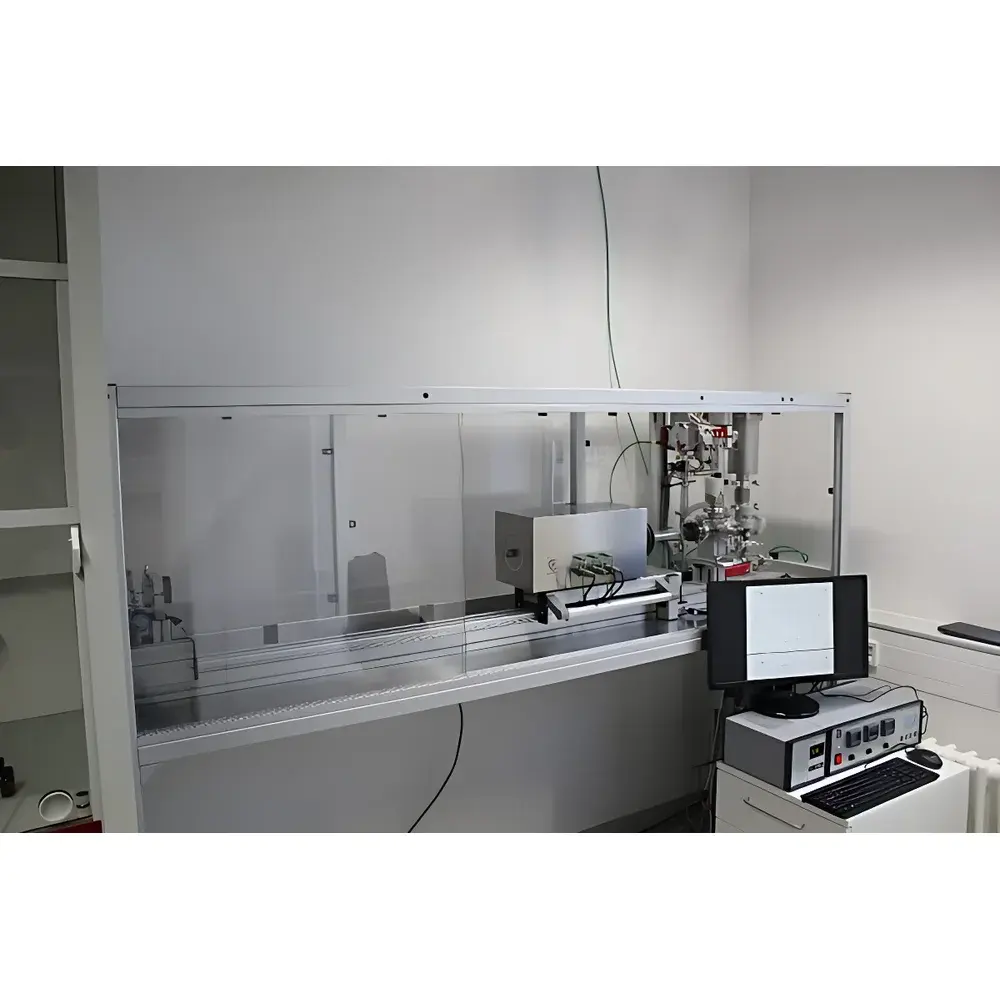
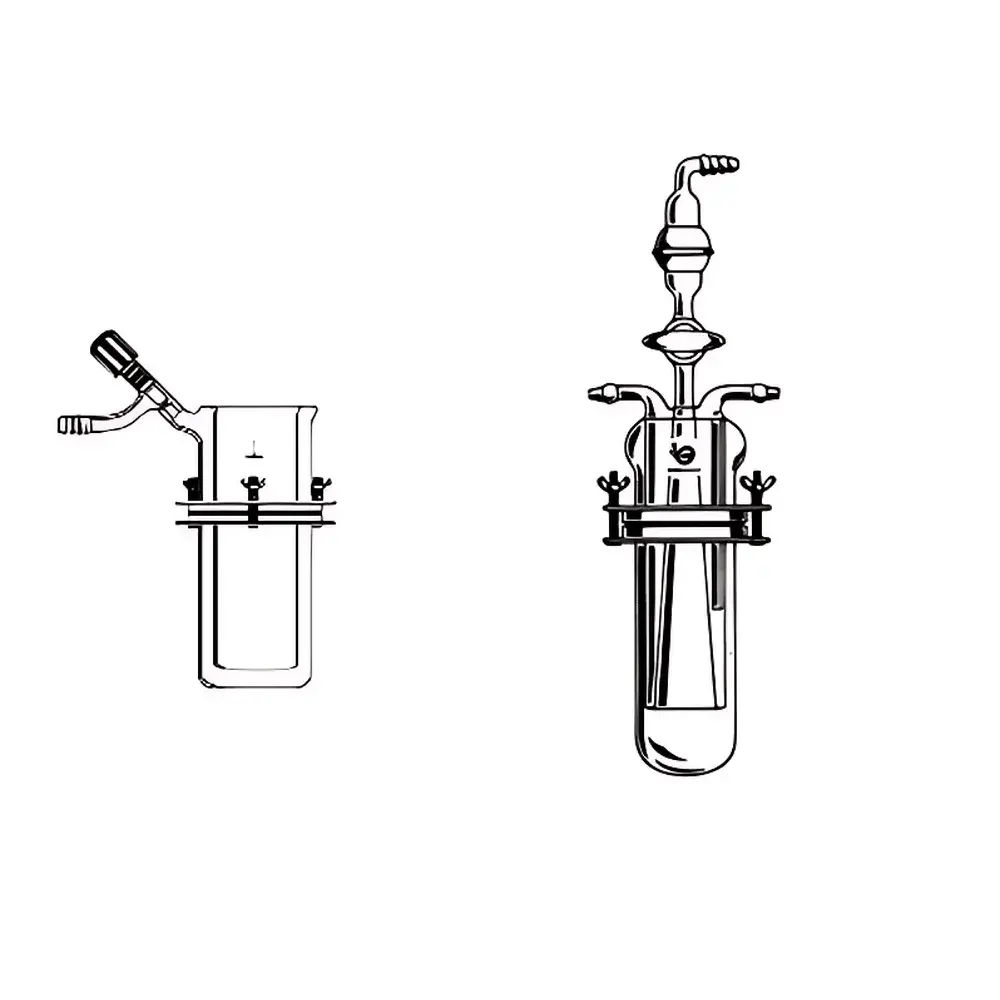
CreaPhys DSU Modular Vacuum Sublimation Apparatus
| Brand | CreaPhys |
|---|---|
| Origin | Germany |
| Model | DSU |
| Vacuum Level | < 10⁻⁶ mbar (clean & dry system) |
| Temperature Range | Evaporation Zone 100–600 °C, Condensation Zone 60–500 °C |
| ΔT Between Zones | > 200 °C (at 500 °C) |
| Sample Capacity | 0.5–500 g (up to 1000 g) |
| Sublimation Efficiency | up to 97% |
| Construction | Borosilicate Glass (Duran®), Stainless Steel Flanges, Viton/Kalrez Seals |
| Overall Height | ~1500–2000 mm |
| Tube Length | ~630 mm |
| Outer Tube Diameter | ~34 mm |
Overview
The CreaPhys DSU Modular Vacuum Sublimation Apparatus is a high-precision, laboratory-scale thermal purification system engineered for the controlled sublimation and fractional condensation of thermally labile organic compounds and selected inorganic precursors. Operating on the physical principle of solid-to-vapor phase transition under high vacuum, the DSU enables separation based on differential vapor pressure and condensation kinetics—without solvent involvement or decomposition-prone melting steps. Its dual-zone temperature architecture (independently regulated evaporation and deposition zones) ensures steep thermal gradients (>200 °C at operational maxima), critical for selective volatilization and sharp fraction collection. Designed for R&D environments in organic electronics, perovskite photovoltaics, OLED material synthesis, and nanomaterial precursor purification, the DSU supports iterative process optimization under inert or ultra-high-vacuum conditions (<10⁻⁶ mbar with clean, dry system).
Key Features
- Modular borosilicate glass (Duran® 3.3) construction with standardized ISO-KF and Conflat® flange interfaces—enabling rapid reconfiguration for different sample geometries and vacuum protocols.
- Dual independent PID-controlled heating zones: ceramic-insulated evaporation furnace (100–600 °C) and programmable condensation sleeve (60–500 °C), each with integrated Pt100 sensors and ±0.5 °C thermal stability.
- Optimized thermal gradient design minimizes axial heat conduction, suppressing localized decomposition and enabling reproducible separation of multi-component mixtures (e.g., host:dopant systems in emissive layers).
- Viton® or Kalrez® O-ring sealing (LG-1022 compatible) and metal-sealed clamp options (LG-7316) ensure leak-tight integrity down to UHV conditions; validated via helium leak testing per ASTM E493.
- Integrated pressure monitoring with capacitance manometer (1×10⁻⁷–1000 mbar range) and turbo-molecular pump interface (not included) for full vacuum control and data logging.
- CE-compliant electrical architecture with overtemperature cutoff, ground-fault protection, and emergency stop—certified to IEC 61010-1:2010 for laboratory equipment safety.
Sample Compatibility & Compliance
The DSU accommodates solid powders, crystalline flakes, and low-melting-point organics—including small-molecule emitters (e.g., Alq₃, TPD), charge transport materials (e.g., NPB, Spiro-OMeTAD), metal-organic frameworks (MOFs), and halide-based precursors (e.g., PbI₂, CsBr). It excludes highly reactive metals (e.g., alkali metals), hygroscopic salts without pre-drying, and polymers with Tg > 400 °C. The system complies with ISO 17025 requirements for method validation in analytical laboratories and supports GLP documentation workflows. All glass components meet DIN ISO 3585 standards; stainless steel parts conform to ASTM A276 Type 316L. Vacuum performance adheres to ISO 27893 for residual gas analysis compatibility.
Software & Data Management
Temperature profiles, vacuum readings, and runtime logs are captured via optional RS485/USB interface to CreaPhys ControlSuite™ v3.2—a Windows-based application supporting multi-step ramp/soak programming, real-time graphing, and CSV export. Audit trails include user ID, timestamp, setpoint deviations, and alarm events—fully compliant with FDA 21 CFR Part 11 when deployed with electronic signature modules and networked domain authentication. Data files retain metadata (batch ID, ambient RH, pump oil age) for traceability across purification campaigns.
Applications
- Purification of high-purity emissive dopants and host matrices for solution-processed and vacuum-deposited OLEDs.
- Removal of synthetic by-products and metal catalyst residues from conjugated polymers and small-molecule semiconductors.
- Isolation of volatile metal halides for perovskite precursor libraries (e.g., FAI, MAI, SnI₂).
- Thermal fractionation of asymmetric molecules exhibiting polymorphic sublimation behavior.
- Stability assessment of sublimable compounds under extended hold conditions at defined ΔT (e.g., 48-hr isothermal studies at 450 °C).
FAQ
What vacuum pumping configuration is required to achieve <10⁻⁶ mbar?
A turbomolecular pump (≥200 L/s) backed by a dry scroll pump (≤1×10⁻³ mbar base pressure) is recommended; system bake-out at 120 °C for 4 hours prior to operation improves ultimate vacuum.
Can the DSU be used for simultaneous sublimation and condensation of multiple fractions?
Yes—via optional multi-zone condensation sleeves with independently heated segments (DSU-MC variant), enabling spatially resolved fraction collection across a single run.
Is calibration traceable to national standards?
Temperature sensors are factory-calibrated against NIST-traceable reference cells; users may perform in-situ verification using high-purity metal fixed points (In, Sn, Zn) per ISO/IEC 17025 Clause 6.6.
How is cross-contamination prevented between runs?
All glass surfaces are accessible for manual cleaning with anhydrous ethanol and nitrogen purge; optional quartz-lined evaporation boats reduce carbon residue carryover.
Does CreaPhys provide method development support?
Yes—application engineers offer remote protocol optimization (heating rate, dwell time, pressure ramping) based on DSC/TGA data provided by the user.
Related Products



