
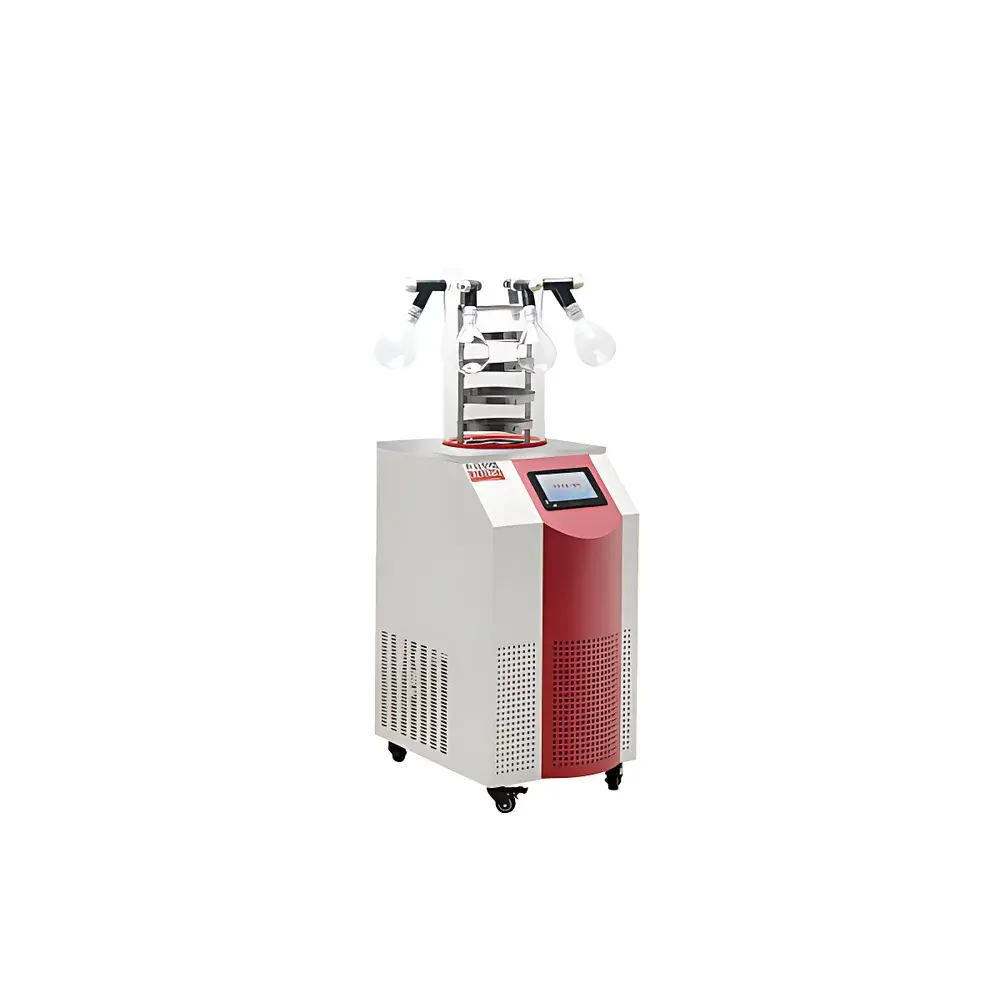
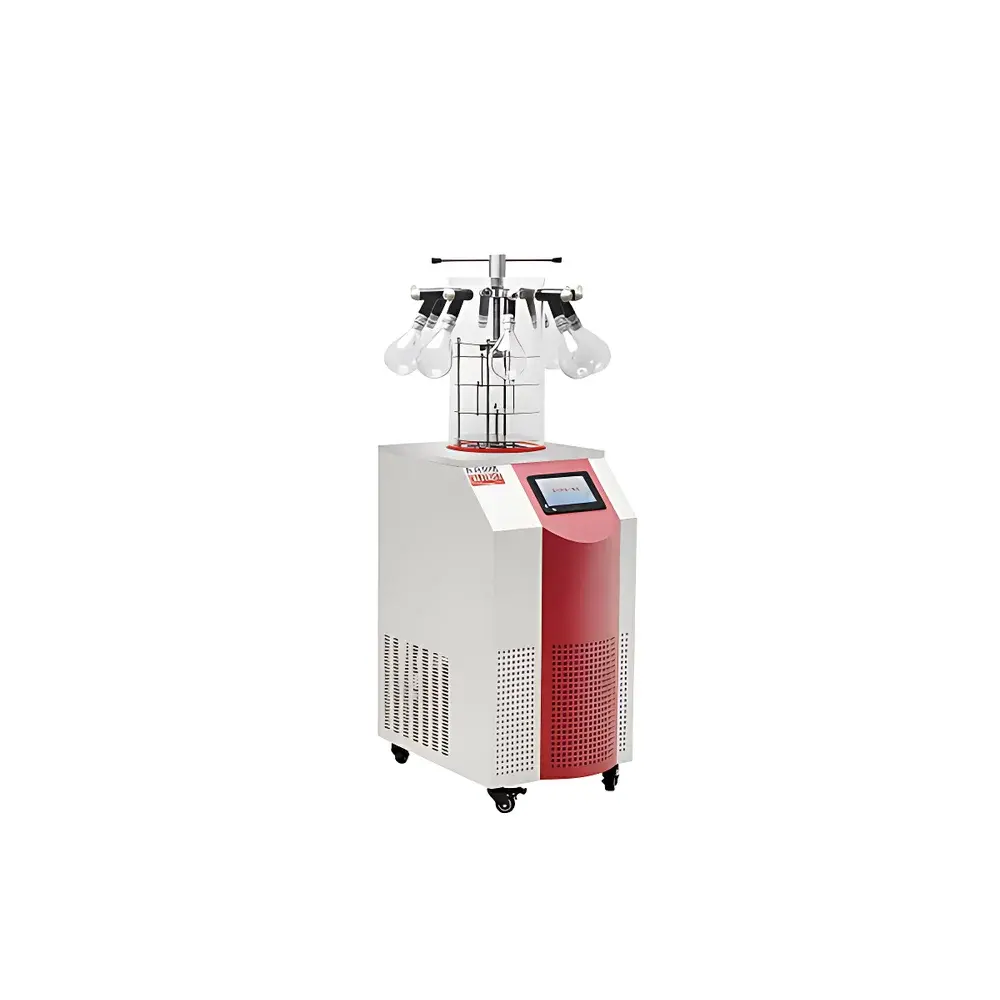
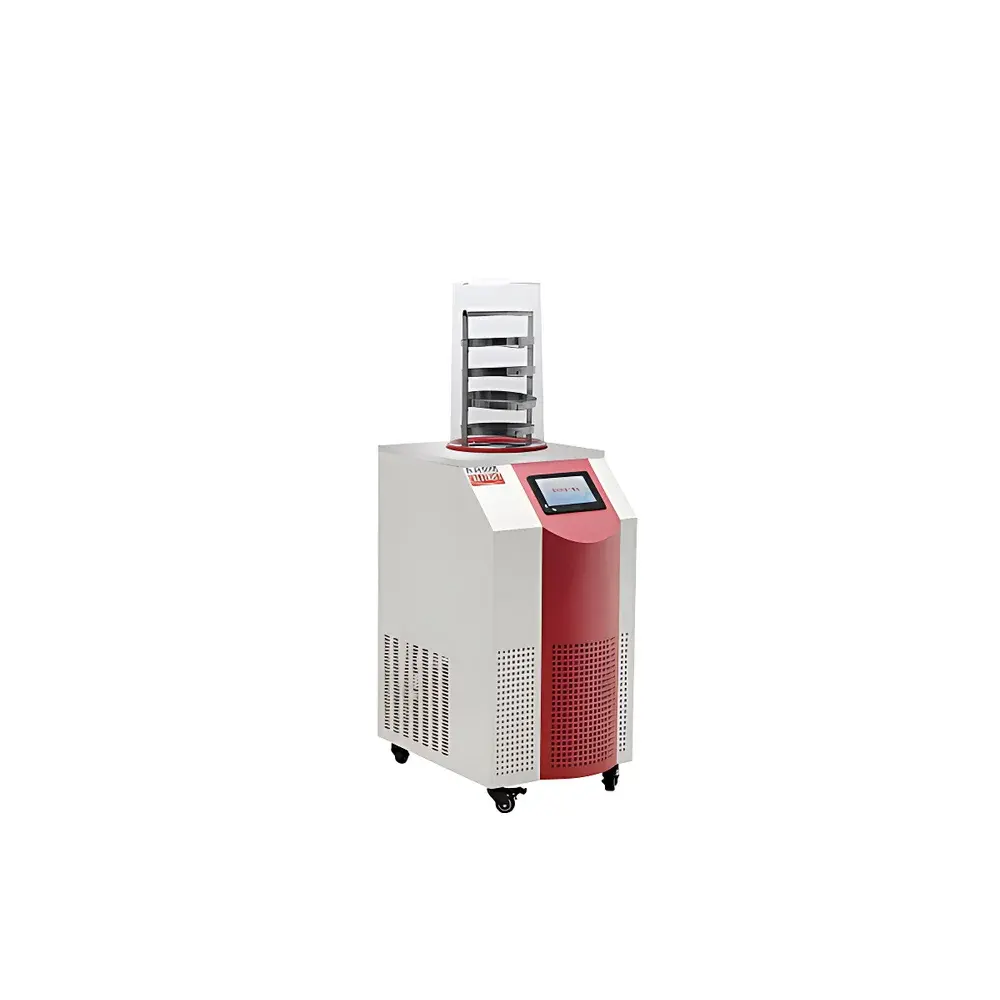
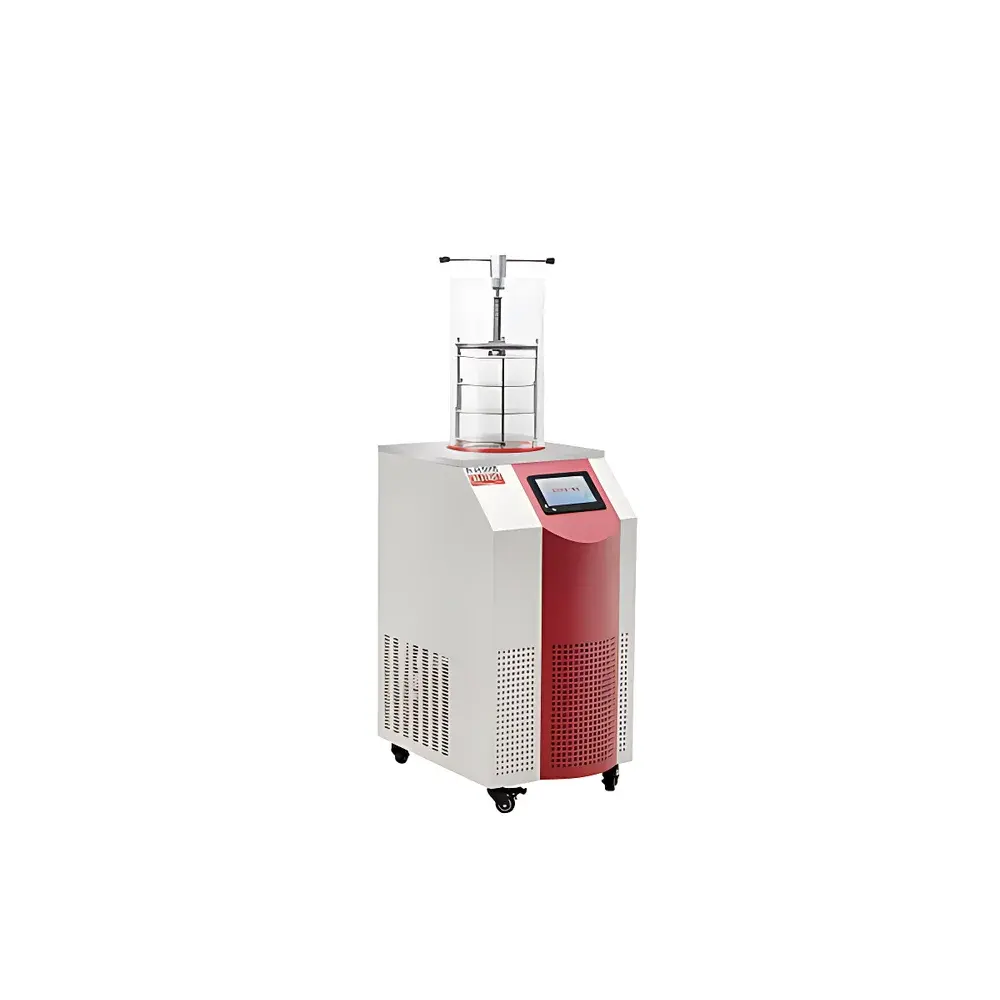
CREATRUST CTFD-12 Series Benchtop/Lab-Scale Vertical Freeze Dryer
| Brand | CREATRUST |
|---|---|
| Origin | Shandong, China |
| Manufacturer Type | Authorized Distributor |
| Product Category | Domestic |
| Model | CTFD-12 Series |
| Instrument Type | Manifold-Type |
| Scale | Pilot-Scale |
| Lyophilization Area | 0.12–0.18 m² |
| Ultimate Vacuum | <10 Pa |
| Condensate Capacity (24 h) | 4 kg/24 h |
| Cold Trap Temperature | ≤−55 °C / ≤−80 °C |
Overview
The CREATRUST CTFD-12 Series is a vertically oriented, benchtop-compatible laboratory freeze dryer engineered for pilot-scale lyophilization under controlled low-temperature and high-vacuum conditions. Based on the fundamental principles of sublimation—where ice transitions directly from solid to vapor phase under reduced pressure—the system enables gentle, solvent-free dehydration of thermolabile biologicals, pharmaceuticals, and sensitive research samples. Its vertical architecture minimizes footprint while maintaining structural rigidity and thermal stability essential for reproducible cycle development. Designed for compliance with core laboratory workflow requirements, the CTFD-12 series supports method transfer from analytical-scale drying to early-stage process optimization, serving as a critical bridge between R&D and small-batch manufacturing.
Key Features
- Modular configuration options: Standard, Stoppering (with hydraulic or manual lid compression), Manifold, and Manifold-Stoppering variants—enabling flexible adaptation to vial-based, flask-based, or bulk tray drying protocols.
- Dual cold trap temperature capability: Selectable operation at ≤−55 °C (standard) or ≤−80 °C (optional ultra-low configuration) to accommodate diverse eutectic points and maximize condensation efficiency for volatile solvents such as tert-butanol or acetonitrile.
- High-efficiency refrigeration system: Equipped with imported hermetic compressors delivering rapid cooldown (<30 min to −55 °C) and stable thermal load management across extended cycles.
- 7-inch full-color capacitive touchscreen HMI: Real-time simultaneous display of shelf temperature (if equipped), cold trap temperature, chamber pressure (in Pa), and primary drying progress via resistance temperature detector (RTD) feedback.
- Integrated data handling: USB port supports export of time-stamped log files (CSV format) containing all monitored parameters at user-defined intervals (1–60 s), compliant with GLP documentation practices.
- Optional functional modules: Electric defrosting for cold trap maintenance, inert gas backfill valve (N₂ or argon compatible), and electrically heated shelves (±0.5 °C uniformity) for precise secondary drying and formulation-specific annealing studies.
Sample Compatibility & Compliance
The CTFD-12 series accommodates standard pharmaceutical glassware including 12 mm, 16 mm, and 22 mm diameter serum vials (up to 260 units per cycle in manifold mode), as well as custom trays (200 mm Ø × 20 mm H) supporting 4–6 shelf levels. It meets baseline mechanical and vacuum safety requirements aligned with IEC 61010-1 for laboratory electrical equipment. While not certified for GMP production environments, its operational repeatability, traceable parameter logging, and configurable drying profiles support method validation activities consistent with USP <1208>, ISO 22059:2021 (lyophilization terminology), and ASTM F2720-22 (freeze-drying process characterization). The system’s vacuum integrity (<10 Pa ultimate pressure) and condensate capacity (4 kg/24 h) satisfy typical requirements for small-molecule APIs, monoclonal antibody intermediates, diagnostic reagents, and microbial culture preservation.
Software & Data Management
The embedded control firmware provides programmable multi-step drying protocols—including pre-freezing ramp rates, hold durations, primary drying ramp/slope control, and secondary drying temperature gradients. All setpoints and actual values are timestamped and stored locally. Exported CSV logs include column headers compatible with Excel, MATLAB, and statistical process control (SPC) platforms. Audit trail functionality (via optional password-protected user roles) supports basic 21 CFR Part 11 readiness when paired with institutional IT policies governing electronic records. No cloud connectivity or remote access features are included—ensuring data sovereignty and alignment with institutional cybersecurity frameworks.
Applications
- Biopharmaceutical R&D: Stabilization of live attenuated vaccines (e.g., BCG, measles, influenza), recombinant proteins, and plasmid DNA formulations.
- Clinical sample banking: Long-term cryopreservation of human tissues (cornea, skin grafts, arterial segments), hematopoietic stem cells, and extracellular vesicles without cryoprotectant-induced artifacts.
- Food science research: Dehydration of probiotic cultures, enzyme powders, and botanical extracts while retaining enzymatic activity and volatile aroma profiles.
- Material science: Preparation of porous scaffolds for tissue engineering and aerogel precursors requiring controlled ice nucleation and pore morphology.
- Academic teaching labs: Demonstrating phase behavior, mass transfer limitations, and collapse temperature (Tc) determination using differential scanning calorimetry (DSC)-correlated runs.
FAQ
What is the maximum allowable sample volume per cycle in tray mode?
Up to 1800 mL total loading capacity (at 10 mm fill depth), distributed across 4–6 stainless-steel trays (200 mm Ø × 20 mm H).
Is the system compatible with organic solvent-containing formulations?
Yes—when configured with the ≤−80 °C cold trap option and appropriate vacuum pump oil (e.g., perfluoropolyether-based), it safely condenses low-boiling-point solvents including ethanol, acetone, and ethyl acetate.
Can shelf temperature be controlled during primary drying?
Only with the optional electrically heated shelf module; standard models operate in fixed-shelf (ambient or pre-cooled) mode.
Does the unit include a vacuum pump?
No—vacuum pumping is provided by an external two-stage rotary vane or dry scroll pump (recommended ultimate vacuum ≤1 × 10⁻² Pa); pump selection must account for vapor load and chemical compatibility.
How is calibration traceability addressed?
RTD sensors are factory-calibrated against NIST-traceable references; users may perform field verification using certified dry-well calibrators—full recalibration services are available through authorized CREATRUST service centers.



