
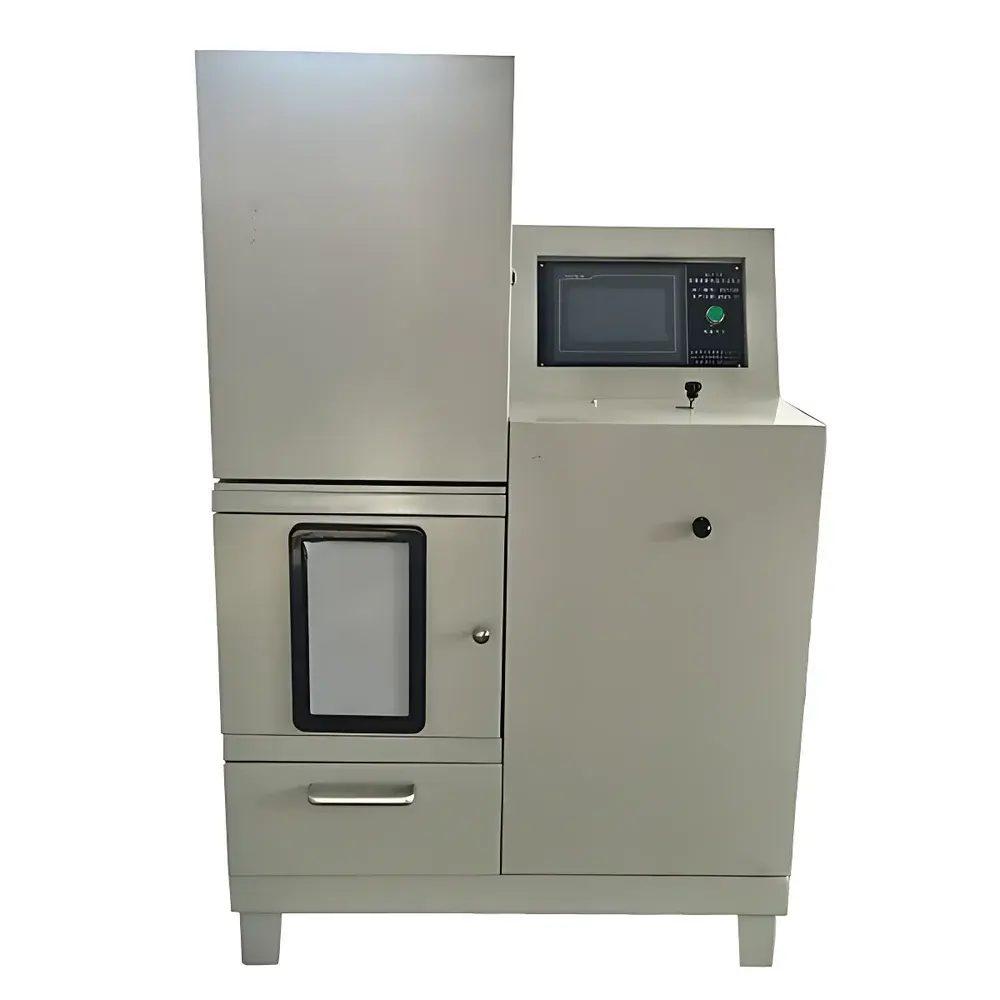
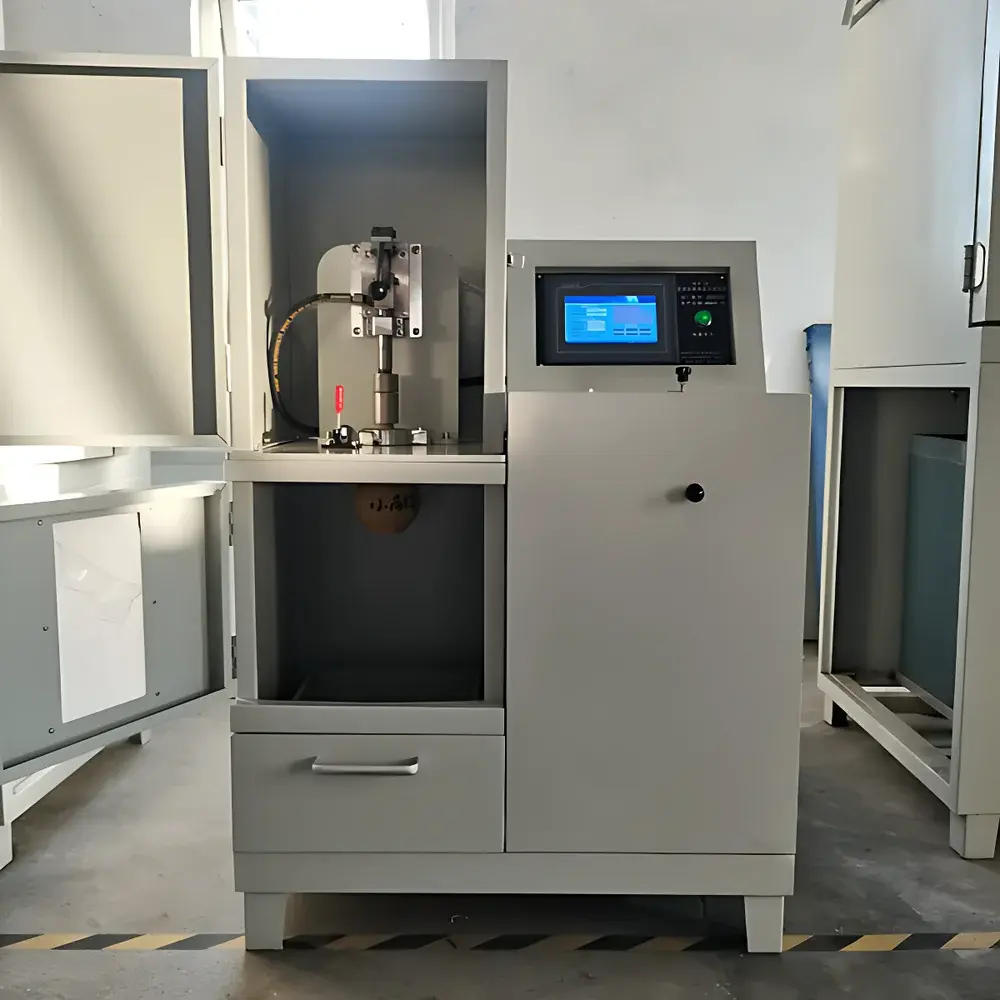
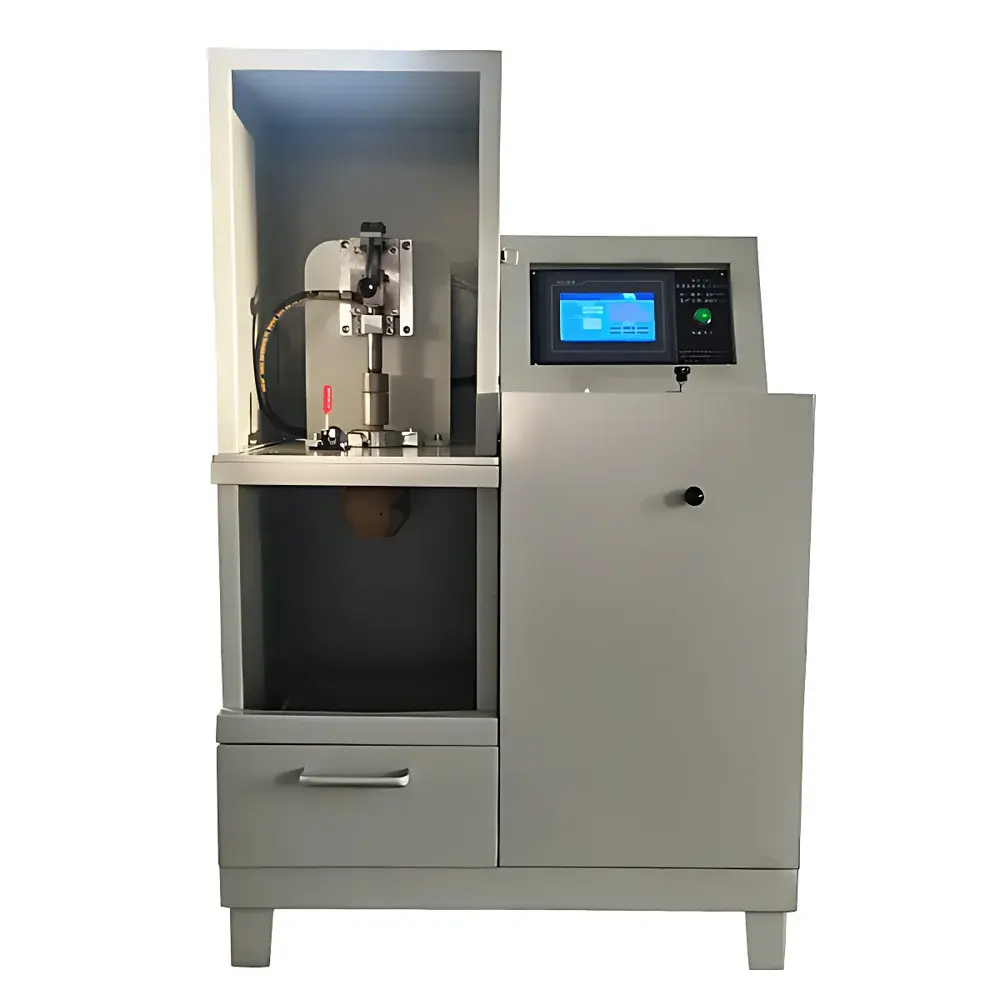
ZHENHUAFENXI BLP-10 Glass Bottle Internal Pressure Tester
| Brand | ZHENHUAFENXI |
|---|---|
| Origin | Hunan, China |
| Model | BLP-10 |
| Sensor Range | 0–6 MPa (safety overload: 7.2 MPa) |
| Accuracy | <0.5% FS |
| Display Resolution | 0.001 MPa |
| Pressure Ramp Rate | 0.58 ± 0.1 MPa/s (4 ± 1 bar/s) |
| Test Media | Deionized Water |
| Operating Temperature | 5–40 °C |
| Power Supply | 220 V, 50 Hz, 0.6 kW |
| Test Modes | Pass/Fail (Method A), Incremental (Method A), Destructive (Method B) |
| Compliance | GB/T 4546–2008, ISO 7458:1989 |
Overview
The ZHENHUAFENXI BLP-10 Glass Bottle Internal Pressure Tester is an engineered solution for quantitative mechanical integrity assessment of rigid glass containers used in pharmaceutical, beverage, and cosmetic packaging. It operates on the principle of controlled hydrostatic pressurization—applying calibrated internal water pressure to simulate real-world filling, sterilization, and transport stresses. The instrument implements two standardized test protocols defined in GB/T 4546–2008 and ISO 7458:1989: Method A (constant-pressure hold at 60 s or incremental ramp) and Method B (destructive ramp-to-failure with calculation of Pr = 1.38P₆₀ + 0.1783 MPa). Unlike pneumatic systems, this tester uses water as the pressurization medium to eliminate compressibility artifacts and ensure direct, traceable force transmission to the bottle interior—critical for reproducible rupture threshold determination.
Key Features
- Triple-mode operation: programmable Pass/Fail (60 s hold), Incremental (stepwise pressure increase), and Destructive (ramp-to-failure) testing per ISO/GB standards
- High-fidelity pressure acquisition: 0–6 MPa sensor with ≤0.5% full-scale error and 0.001 MPa display resolution ensures metrological rigor for regulatory submissions
- Precise ramp control: linear pressurization at 0.58 ± 0.1 MPa/s (equivalent to 4 ± 1 bar/s), independently verified via internal flow calibration
- Dual real-time displays: simultaneous LED readouts of actual pressure, setpoint, calculated P₆₀ value, and cumulative test count
- Integrated thermal management: stable operation across 5–40 °C ambient range without active cooling—suitable for QC labs and production floor deployment
- Modular fixture system: customizable clamping assemblies accommodate standard vials (e.g., 10–100 mL), infusion bottles (50–1000 mL), and irregular geometries per user specification
- Fail-safe architecture: automatic pressure relief upon reaching preset limit or bottle rupture; no manual venting required
Sample Compatibility & Compliance
The BLP-10 is validated for seamless integration into GLP- and GMP-aligned quality systems. It supports all common soda-lime and borosilicate glass containers—including Type I, II, and III pharmaceutical vials, ampoules, and parenteral infusion bottles—with wall thicknesses ≥0.8 mm and neck diameters 12–32 mm. All test data—including peak rupture pressure, time-to-failure, and pass/fail status—are timestamped and stored locally. While the instrument itself does not include electronic audit trail functionality, its analog-digital hybrid architecture permits connection to external LIMS or ELN platforms via RS-232 output (optional). Compliance documentation includes factory calibration certificates traceable to CNAS-accredited reference standards, and full alignment with GB/T 4546–2008 Annex A (hydrostatic method) and ISO 7458:1989 Clause 5 (test procedure validation).
Software & Data Management
The BLP-10 operates via embedded microcontroller firmware—no PC dependency required for core operation. All test parameters (target pressure, ramp rate, hold duration) are configured via front-panel keypad with password-protected administrator mode. Results are displayed in real time and printed via integrated thermal printer using plain-language Chinese output (configurable to English firmware upon request). Raw pressure vs. time profiles are not stored internally; however, the device outputs ASCII-formatted serial data (baud rate 9600, N, 8, 1) containing test ID, date/time stamp, mode, final pressure, P₆₀ derivation, and pass/fail flag—enabling automated ingestion into validated data acquisition software compliant with FDA 21 CFR Part 11 requirements when paired with appropriate middleware.
Applications
- Pharmaceutical primary packaging validation: routine release testing of sterile vials and infusion bottles per USP and EP 3.2.1
- Process qualification: correlation of annealing cycle parameters with measurable internal pressure resistance
- Supplier qualification: objective comparison of batch-to-batch consistency across multiple glass manufacturers
- Root cause analysis: differentiation between surface flaw-induced failure (low P₆₀, brittle fracture) and bulk defect failure (higher P₆₀, ductile deformation)
- Regulatory submission support: generation of pressure-resistance datasets for ANDA, NDA, and CMC sections requiring mechanical stability evidence
FAQ
What is the maximum allowable test pressure, and how is overpressure protection implemented?
The sensor is rated for 0–6 MPa continuous operation with a certified safety overrange of 7.2 MPa. A redundant mechanical pressure relief valve activates at 6.3 MPa, independent of electronic control.
Can the BLP-10 be used for plastic or metal containers?
No—it is specifically engineered for rigid glass substrates. Plastic containers exhibit viscoelastic creep under sustained hydrostatic load, invalidating P₆₀ interpretation per GB/T 4546.
Is calibration traceable to national standards?
Yes—each unit ships with a CNAS-accredited calibration certificate referencing SI-traceable deadweight testers, valid for 12 months under normal use.
How is water managed between tests to prevent cross-contamination?
The system employs gravity-fed drainage directly to facility plumbing; the test chamber and pressure lines are flushed with deionized water after each cycle, and no residual media remains in contact with subsequent samples.
Does the instrument support automated reporting for 21 CFR Part 11 compliance?
The base configuration provides electronic records but lacks digital signature, audit trail, and role-based access control. These features require integration with validated third-party data management software.



