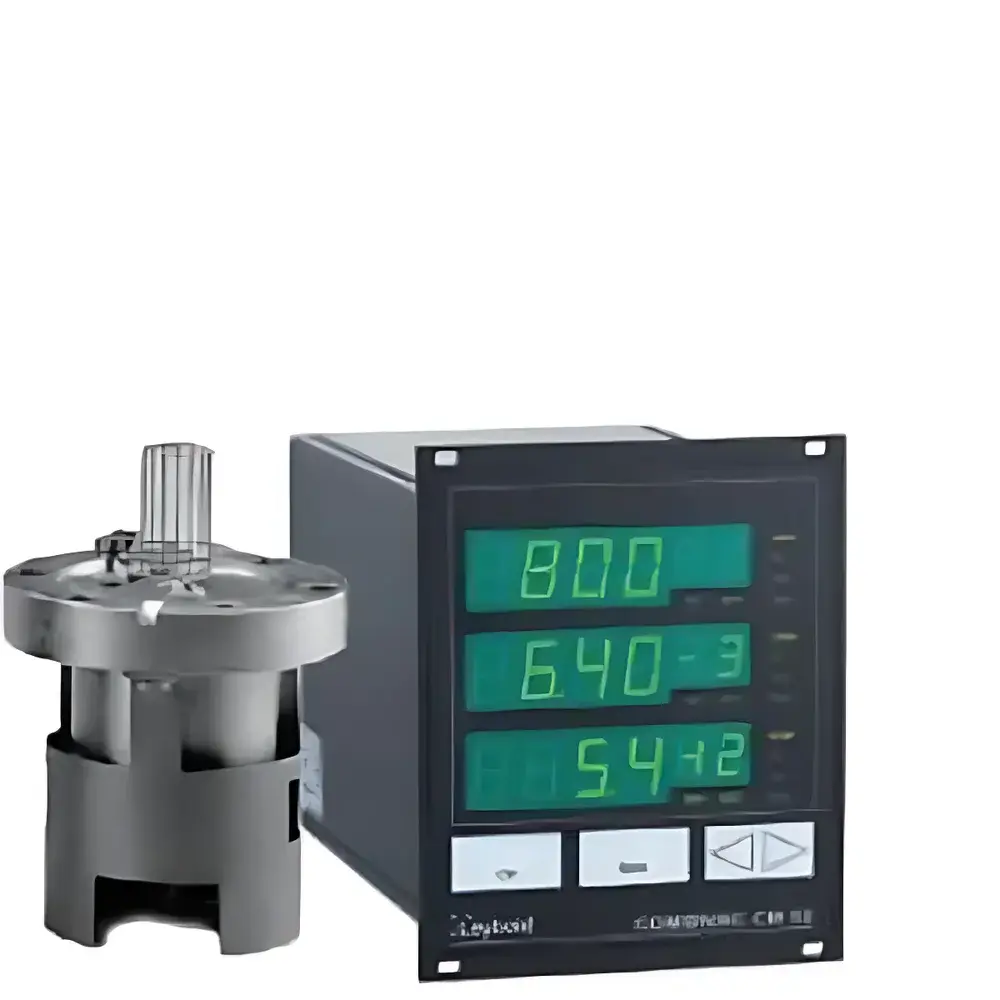
Dantec Dynamics VV Volumetric Particle Image Velocimeter
| Brand | Dantec Dynamics |
|---|---|
| Origin | Denmark |
| Model | VV |
| Measurement Capability | 3D3C (Three-Dimensional, Three-Component) |
| Velocity Range | 0–300 m/s |
| Measurement Volume | 200 mm × 200 mm × 40 mm |
| Accuracy | ±1% of measured velocity |
| Temporal Resolution | Low-frequency acquisition (configurable via camera framing rate and laser repetition rate) |
| Particle Seeding Density | 0.05–0.07 particles per pixel (PPP) |
| Camera Configuration | 2–4 synchronized high-speed CMOS cameras |
| Illumination | Volumetric light sheet or tomographic LED/laser array |
| Software Platform | DynamicStudio with GPU-accelerated volumetric reconstruction (up to 240 CUDA cores) |
Overview
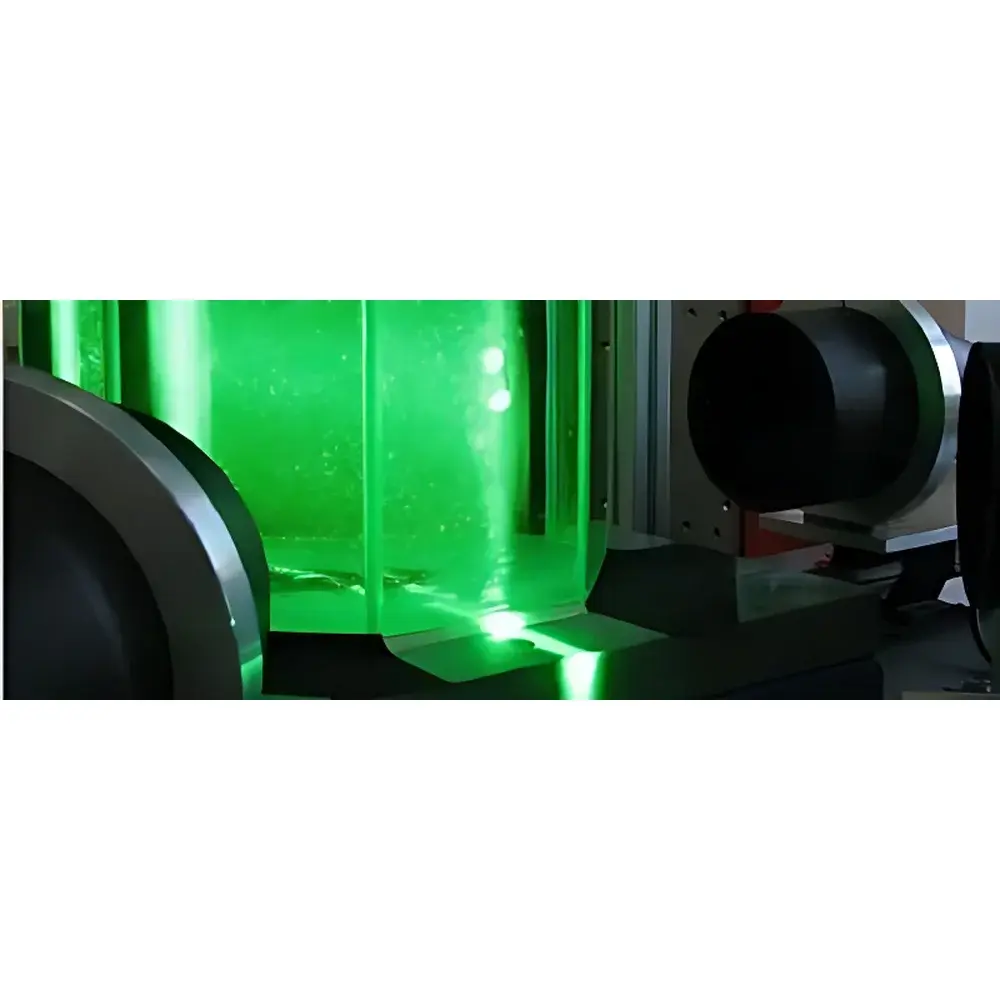
The Dantec Dynamics VV Volumetric Particle Image Velocimeter is a research-grade, full-volume, three-dimensional, three-component (3D3C) fluid velocity measurement system engineered for quantitative experimental fluid dynamics. Unlike planar PIV or stereo-PIV—both limited to two-dimensional or quasi-3D projections—the VV system captures the complete Lagrangian and Eulerian kinematics of turbulent, transitional, or laminar flows within a defined measurement volume. It operates on the fundamental principle of volumetric particle image velocimetry (VPIV), combining time-resolved, multi-view imaging with advanced optical tomography and volumetric reconstruction algorithms. The system integrates high-sensitivity, high-frame-rate CMOS cameras, telecentric or Scheimpflug-corrected optics, and precisely controlled volumetric illumination (e.g., light-sheet or multi-angle LED arrays) to resolve particle displacements in all three spatial dimensions across successive time steps. This enables direct quantification of vorticity, strain rate tensors, material acceleration, and coherent structure evolution—critical for validating high-fidelity CFD simulations, optimizing combustion devices, or studying cardiovascular hemodynamics.
Key Features
- True 3D3C velocity field acquisition across customizable volumes up to 200 mm × 200 mm × 40 mm
- Modular camera architecture supporting 2-, 3-, or 4-camera configurations for trade-offs between resolution, depth-of-field, and reconstruction fidelity
- Multi-algorithm reconstruction engine: VPTV (Volumetric Particle Tracking Velocimetry) for low-seeding densities (<0.05 PPP), TPTV (Tomographic PTV) for medium seeding (0.05–0.1 PPP), and 3D-LSM (Least Squares Matching) for high-density, high-fidelity Eulerian fields
- GPU-accelerated processing pipeline in DynamicStudio—capable of reconstructing >1 million 3D vectors per second using up to 240 CUDA cores
- Support for both Lagrangian trajectory analysis (particle pathlines, residence time distributions) and Eulerian field analysis (Q-criterion, λ₂, divergence, enstrophy)
- Hardware synchronization via TTL triggers and PTPv2 (Precision Time Protocol) for sub-microsecond inter-camera timing accuracy
- Scalable acquisition architecture: distributed TCP/IP-based data streaming from multiple cameras to centralized storage nodes
Sample Compatibility & Compliance
The VV system is compatible with standard PIV seeding media—including hollow glass spheres (HGS), titanium dioxide, or fluorescent polystyrene particles—optimized for refractive index matching in air, water, or silicone oil environments. Its optical design accommodates transparent or semi-transparent test sections (e.g., acrylic, borosilicate, or fused silica windows) with minimal distortion. For regulated applications in biomedical or industrial R&D, DynamicStudio supports audit-trail logging, user-access controls, and electronic signatures compliant with FDA 21 CFR Part 11 requirements. Data provenance—including raw image timestamps, calibration metadata, reconstruction parameters, and versioned algorithm selection—is embedded in HDF5-formatted output files, ensuring traceability under GLP and ISO/IEC 17025 frameworks. All hardware components meet CE, RoHS, and IEC 61000-6-3 electromagnetic compatibility standards.
Software & Data Management
DynamicStudio serves as the unified software platform for acquisition, calibration, reconstruction, post-processing, and visualization. Its modular architecture includes dedicated modules for self-calibration (using checkerboard or pinhole targets), volumetric triangulation, iterative 3D-LSM refinement, and time-resolved vector field interpolation. All reconstruction workflows are scriptable via Python API (PyDynamicStudio), enabling integration into automated testing pipelines or machine-learning training loops. Output formats include HDF5 (for archival and MATLAB/Python analysis), VTK (for ParaView/VisIt), and CSV (for spreadsheet-based reporting). Real-time 3D vector field rendering supports stereoscopic display via active shutter or passive polarized 3D glasses, allowing direct perception of internal flow topology—including vortex cores, shear layers, and stagnation zones—without projection artifacts. Batch processing queues support unattended overnight reconstruction of large time-series datasets (e.g., 500+ frames at 1280×1024 resolution).
Applications
- Combustion aerodynamics: Cold-flow characterization of low-swirl burner nozzles, including inner perforated plate recirculation zones and outer annular shear layers
- Cardiovascular biomechanics: Quantitative 3D flow mapping in anatomically accurate silicone heart valve models, resolving post-valvular jets, regurgitant vortices, and wall shear stress gradients
- Turbulence research: Time-resolved evolution of vortex rings—from laminar inception through Kelvin–Helmholtz instability to turbulent breakdown—visualized via iso-surfaces of Q-criterion and axial velocity components
- Aerospace boundary layer studies: Volumetric interrogation of transition onset, streak amplification, and bypass mechanisms in wind tunnel test sections
- Microfluidics and lab-on-chip systems: High-magnification 3D3C velocity profiling in microchannels with complex cross-sectional geometries
FAQ
Can an existing 2D PIV system be upgraded to volumetric capability?
Yes—the VV system is designed for backward compatibility. Existing Dantec Dynamics PIV hardware (cameras, lasers, synchronizers) can be retrofitted with additional cameras, volumetric illumination optics, and DynamicStudio VV license modules.
What is the minimum required particle seeding density for reliable 3D reconstruction?
For VPTV-based tracking, optimal performance begins at 0.05 particles per pixel (PPP); TPTV extends robustness to ~0.07 PPP; 3D-LSM maintains fidelity up to 0.15 PPP depending on optical contrast and signal-to-noise ratio.
Does DynamicStudio support automated calibration validation?
Yes—calibration residuals are computed and visualized in real time during target-based self-calibration, with RMS reprojection error reported per camera and globally across the volume.
Is GPU acceleration mandatory for volumetric reconstruction?
While CPU-based reconstruction is supported for small volumes or proof-of-concept studies, GPU acceleration (NVIDIA Pascal or newer) is strongly recommended for production-scale datasets to achieve practical turnaround times.
How does the system handle optical distortions from curved or thick windows?
DynamicStudio includes ray-tracing-based correction modules that accept measured window geometry and refractive index profiles to compensate for refraction-induced ray bending in non-planar test sections.