
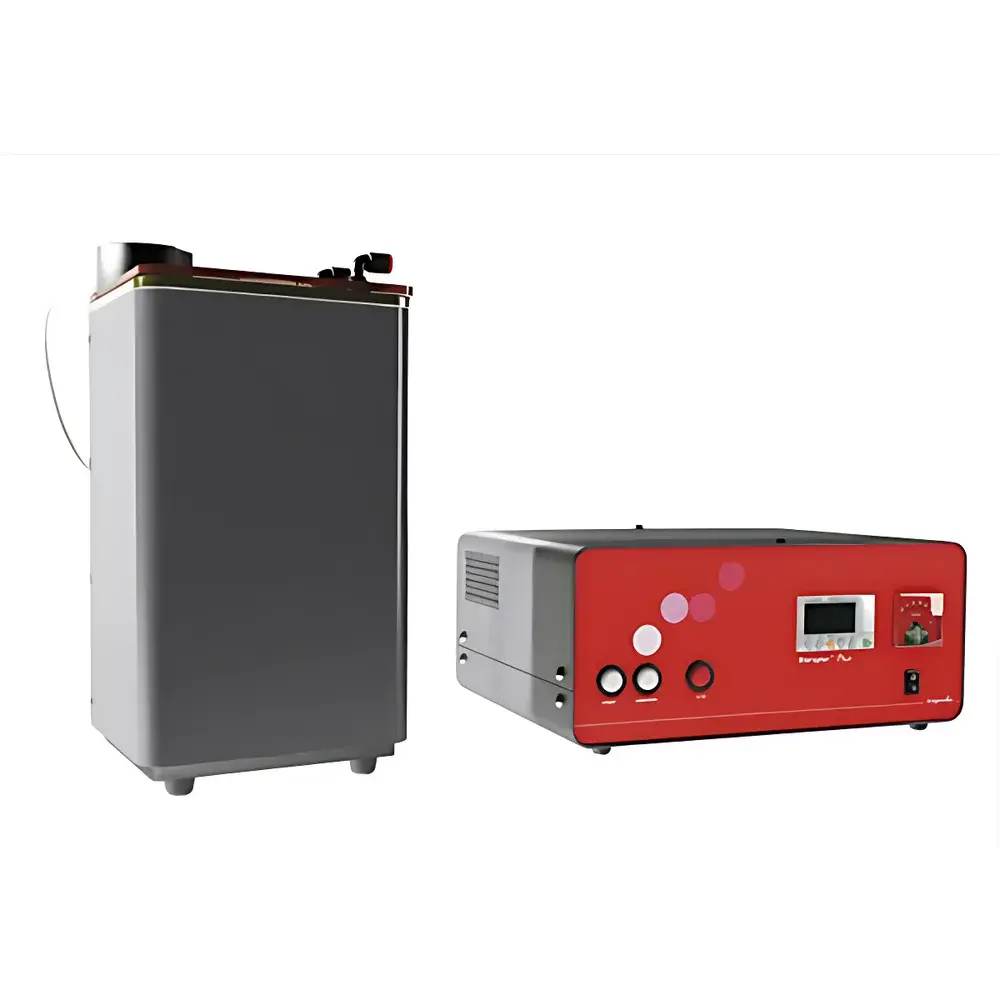
Diagenode Bioruptor Plus UCD-300 Non-Contact Ultrasonic Sonicator
| Brand | Diagenode |
|---|---|
| Origin | Belgium |
| Model | UCD-300 (Plus) |
| Instrument Type | Non-contact Ultrasonic Cell Disruptor |
| Ultrasonic Power | 160–320 W |
| Operating Frequency | 40 kHz (typical, fixed-frequency transducer array) |
| Temperature Range | −20 °C to +40 °C (with optional chiller integration) |
| Sample Volume Capacity | 5 µL – 20 mL (dependent on adapter configuration) |
| Throughput | 1–12 samples per run (6–12 standard with rotating rack |
| Cooling Method | External recirculating chiller or integrated Peltier-assisted bath temperature control |
Overview
The Diagenode Bioruptor Plus UCD-300 is a non-contact, water-bath-based ultrasonic sonicator engineered for reproducible, scalable, and biosafe cell lysis and chromatin shearing. Unlike probe-type sonicators that rely on direct mechanical coupling between tip and sample—introducing variability in energy delivery, cross-contamination risk, and aerosol generation—the Bioruptor Plus employs a bottom-mounted transducer array that uniformly energizes the entire water bath. This design establishes a controlled cavitation field across all sample tubes simultaneously, enabling consistent acoustic energy transfer through the tube walls without physical contact. The system operates at a fixed frequency of 40 kHz, optimized for efficient microbubble nucleation and collapse within aqueous biological matrices. Its closed-tube architecture eliminates airborne bioaerosols, making it compliant with BSL-2 and BSL-3 containment requirements for pathogenic samples (e.g., Mycobacterium tuberculosis, enveloped viruses). It is widely adopted in epigenetics laboratories as a GLP-aligned tool for Chromatin Immunoprecipitation (ChIP), ChIP-seq, CUT&RUN, and nuclear extract preparation where fragment size distribution, batch-to-batch reproducibility, and operator safety are critical.
Key Features
- Non-contact transduction: Ultrasound energy transmitted through water bath and tube walls—no probe insertion, no sample contamination, no aerosol generation.
- Automated tube rotation: Continuous 360° orbital rotation during sonication ensures homogeneous energy exposure and minimizes standing-wave interference and localized overheating.
- Dual-power mode: Selectable 160 W or 320 W output for fine-tuned intensity control across diverse sample viscosities and cell types (e.g., yeast, mammalian nuclei, bacterial pellets).
- Cryogenic compatibility: Integrated temperature monitoring and external chiller port support stable operation from −20 °C to +40 °C—essential for preserving epitope integrity during ChIP workflows.
- Modular throughput: Supports 1–12 samples per run using interchangeable aluminum adapters for 0.5 mL, 1.5 mL, 15 mL, and 50 mL tubes—including low-volume adapters for as little as 5 µL input.
- Programmable protocol memory: Stores up to 99 user-defined methods with cycle count, on/off duration, power level, and temperature setpoint—enabling SOP-driven execution and audit-ready traceability.
Sample Compatibility & Compliance
The Bioruptor Plus accommodates a broad range of biological specimens: cultured mammalian cells, primary tissues, yeast, Gram-positive and Gram-negative bacteria, and isolated nuclei. Its sealed-tube format meets ISO 15190:2020 (medical laboratories — requirements for safety) and supports compliance with CLIA, CAP, and GLP documentation standards. When operated with validated protocols and calibrated chillers, it fulfills the technical prerequisites for USP <1058> Analytical Instrument Qualification and FDA 21 CFR Part 11 data integrity requirements when paired with Diagenode’s optional Bioruptor Control Software (v3.x+), which logs timestamps, parameter changes, and operator IDs with electronic signature capability.
Software & Data Management
Bioruptor Control Software (Windows-based, USB-connected) provides full remote operation, real-time temperature feedback, and method versioning. Each run generates a timestamped .csv log file containing start/stop times, cumulative energy delivered (J), average bath temperature, and deviation alerts. Audit trails are exportable for regulatory review. The software supports IQ/OQ documentation templates aligned with ASTM E2500-13 (Standard Guide for Specification, Design, and Verification of Pharmaceutical and Biopharmaceutical Manufacturing Systems) and facilitates integration into LIMS environments via CSV or XML export. No cloud dependency or subscription model—data remains on-site and under institutional control.
Applications
- Chromatin shearing for ChIP, ChIP-qPCR, and ChIP-seq with tight fragment size distributions (100–500 bp typical).
- Preparation of soluble protein extracts for co-immunoprecipitation (Co-IP) and native PAGE.
- Membrane protein solubilization while retaining tertiary structure and ligand-binding capacity.
- High-throughput DNA fragmentation prior to library prep for Illumina, PacBio, and Oxford Nanopore sequencing platforms.
- Homogenization of fibrous or lipid-rich tissues (e.g., brain, adipose, plant material) without phenol-phase separation artifacts.
- Cell lysis for RNA extraction where RNase inhibition and minimal heat-induced degradation are critical.
FAQ
How does the Bioruptor Plus achieve better reproducibility than probe sonicators?
It eliminates operator-dependent variables (tip depth, lateral pressure, tip wear) and ensures identical acoustic loading across all samples via uniform bath cavitation and continuous rotation—validated by inter-laboratory ring trials published in Nature Protocols (2017;12:1076–1091).
Can I use standard microcentrifuge tubes without modification?
Yes—0.5 mL and 1.5 mL tubes are compatible out-of-the-box; no specialized consumables or coupling gels required.
Is temperature control precise enough for sensitive epigenetic applications?
With an external chiller (±0.3 °C stability), bath temperature remains within ±0.5 °C of setpoint throughout 30-min runs—sufficient to prevent histone deacetylation artifacts during ChIP.
What maintenance is required?
Annual transducer impedance verification and water bath descaling (using 10% acetic acid); no consumable parts beyond standard lab tubes.
Does it support 21 CFR Part 11 compliance?
Yes—when used with Bioruptor Control Software v3.2+, electronic signatures, audit trails, and role-based access control meet Part 11 technical criteria for regulated biopharma environments.



