
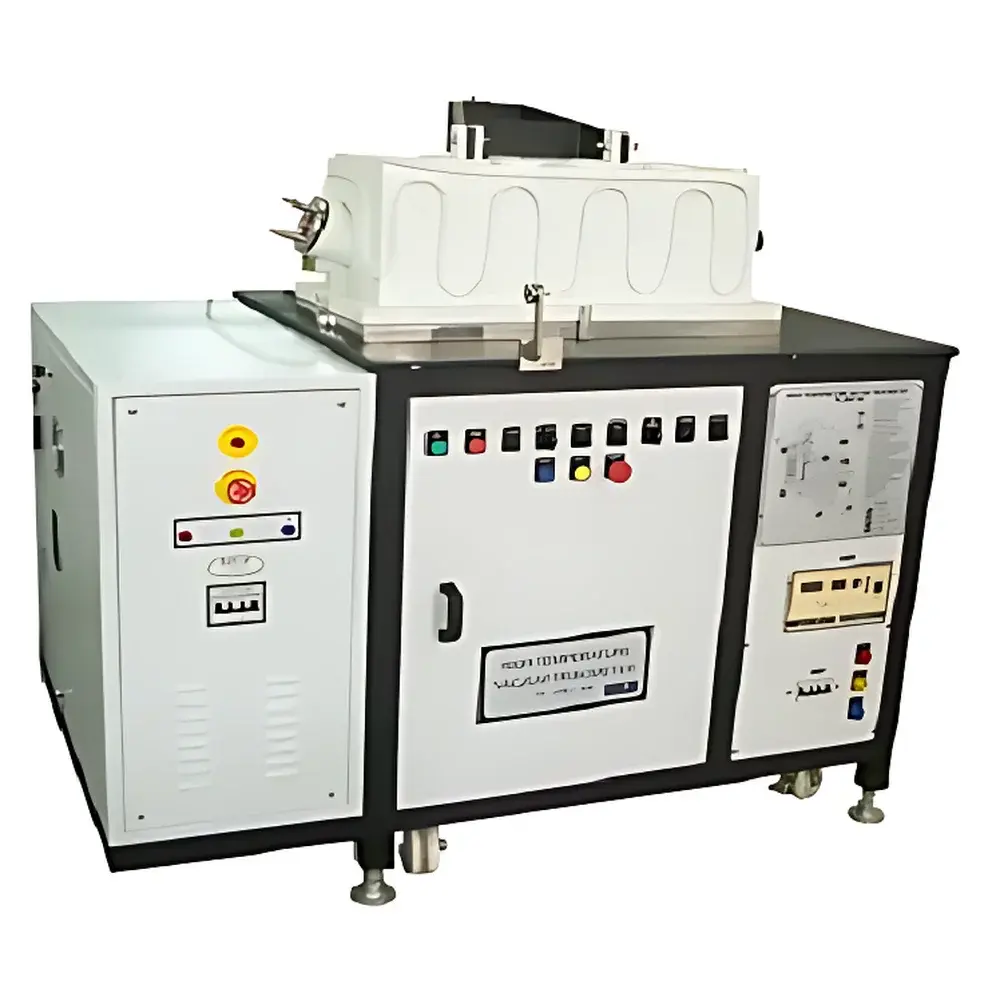
Ducom TR-20-HTVT High-Temperature Vacuum Tribological Tester
| Brand | Ducom |
|---|---|
| Origin | USA |
| Model | TR-20-HTVT |
| Maximum Friction Force | 20 N |
| Friction Force Resolution | 0.4 mN |
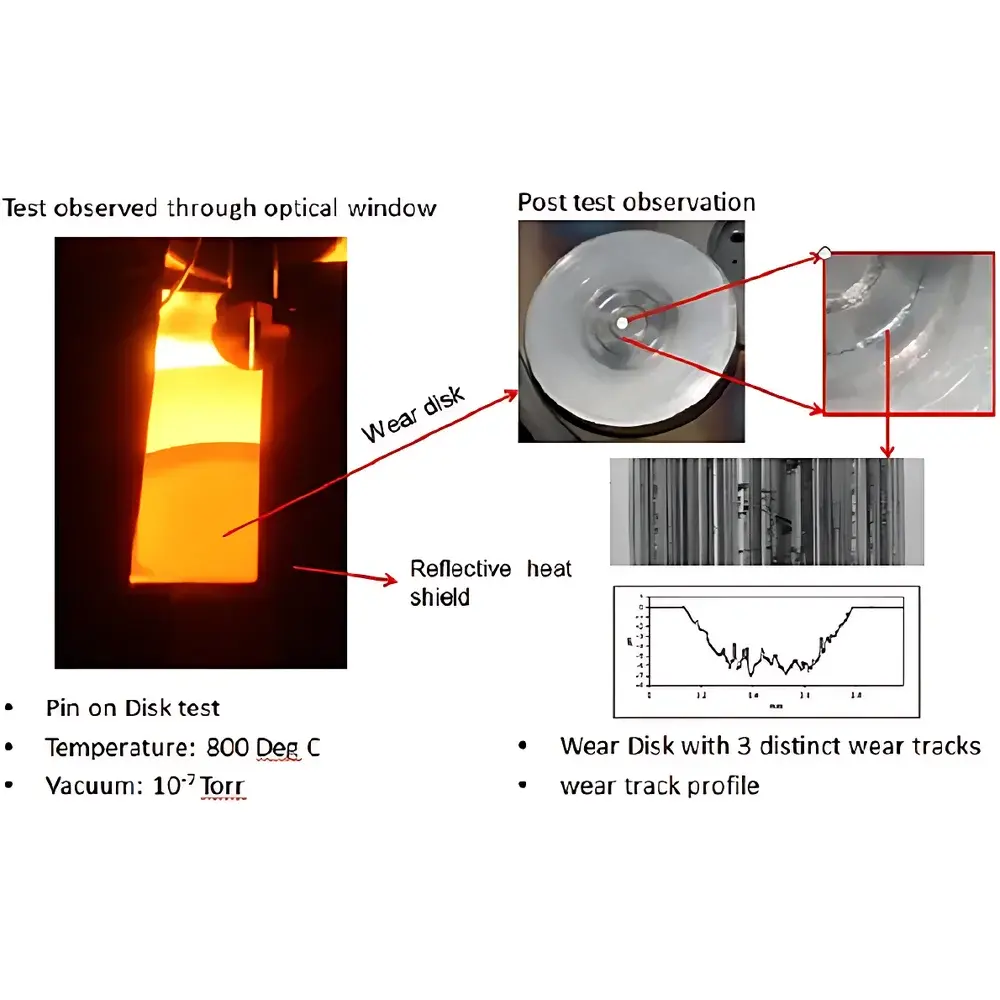
| Maximum Temperature | 800 °C |
| Operating Environment | High Vacuum (down to 10⁻⁷ mbar) or Controlled Atmosphere (inert gas, humidified air) |
| Sliding Modes | Unidirectional (CW/CCW), Bidirectional (angular oscillation), Spiral/Programmable Wear Tracks |
| Load Control | Programmable (constant, ramp, stepped) |
| Rotational Speed Range | 0.1–2000 rpm |
| Wear Track Diameter | 15–70 mm |
| Sample Geometry | Pin/Ball (Ø3–10 mm) vs. Rotating Disk (Ø100 mm) |
| Temperature Control Resolution | ±1 °C |
| Displacement Resolution | 0.1 µm |
| Angular Oscillation Frequency | 0.1–5 Hz |
| Stroke Angle Range | 0–10° |
Overview
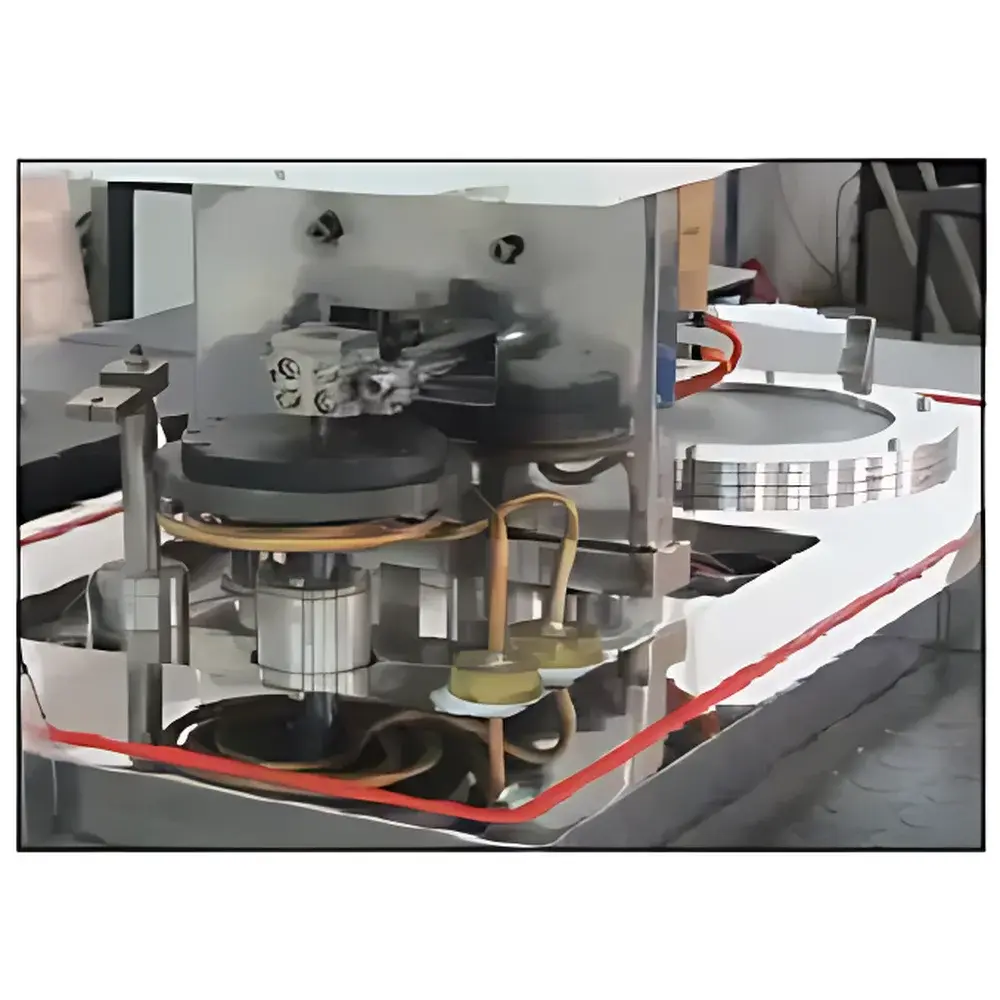
The Ducom TR-20-HTVT is a high-precision, modular pin-on-disk (POD) tribological tester engineered for quantitative evaluation of friction, wear, and lubrication behavior under extreme thermal and environmental conditions. It operates on the fundamental principle of controlled sliding contact between a stationary upper specimen (pin or ball) and a rotating or oscillating lower disk, with real-time measurement of normal load, tangential friction force, temperature, and displacement. Unlike conventional tribometers, the TR-20-HTVT integrates simultaneous high-temperature capability (up to 800 °C), ultra-high vacuum operation (≤10⁻⁷ mbar), and programmable motion profiles—enabling simulation of service environments encountered in aerospace bearing systems, nuclear reactor components, high-temperature coatings, and advanced solid-lubricant development. Its architecture adheres to metrological traceability standards, with calibrated load cells, thermocouple-integrated heating zones, and vacuum-compatible motion actuators—all validated per ISO/IEC 17025 calibration protocols.
Key Features
- Triple-environment flexibility: seamless transition between high vacuum (10⁻⁷ mbar), inert gas (Ar/N₂), and humidity-controlled air (10–85% RH) via integrated environmental chamber
- Independent dual-zone thermal control: furnace-heated disk (RT–800 °C) with liquid-cooled spindle and vacuum chamber housing, ensuring thermal stability without outgassing or sensor drift
- Bidirectional angular oscillation module: software-defined frequency (0.1–5 Hz) and stroke angle (0–10°), eliminating mechanical reconfiguration for reciprocating wear studies per ASTM G133
- Programmable load profiles: constant, linear ramp, or multi-step loading sequences synchronized with speed, temperature, and time variables
- Multi-trajectory wear mapping: automated radial positioning enables spiral, concentric, or discrete-track testing; supports standardized wear volume calculation per ASTM G99 Annex A3
- Vacuum-compatible metrology: all sensors—including 20 N load cell (0.4 mN resolution), K-type thermocouples, and LVDT displacement transducers—are certified for UHV service and bake-out compatibility
Sample Compatibility & Compliance
The TR-20-HTVT accommodates standard and custom tribopairs per ASTM G99 (pin-on-disk), ASTM G133 (linearly oscillating), and ISO 20808 (high-temperature wear). Compatible specimens include metallic pins (Cu, steel EN31, Inconel 600), ceramic balls (Al₂O₃, Si₃N₄), thin-film coatings (CrN, DLC), and polymer composites. The system meets mechanical safety requirements per ISO 12100 and electromagnetic compatibility per IEC 61326-1. Environmental control modules comply with ASTM E2050 for humidity generation and ASTM F2256 for vacuum system integrity verification. Data acquisition satisfies FDA 21 CFR Part 11 requirements for electronic records and signatures when configured with WinDucom’s audit-trail-enabled software mode.
Software & Data Management
WinDucom v5.2 provides fully integrated control, acquisition, analysis, and reporting across four functional modules: Device Control (real-time PID regulation of temperature, speed, load), Data Acquisition (synchronized sampling at 1 kHz), Post-Processing (friction coefficient μ = Ff/Fn, specific wear rate k = V/(Fn·s), temperature-dependent wear kinetics), and Visualization (overlay plots, statistical trend charts, ASCII/CSV export). All raw data are timestamped, digitally signed, and stored with metadata including calibration certificates, operator ID, and environmental log files. Audit trails record parameter changes, user logins, and report generations—fully compliant with GLP and GMP documentation workflows.
Applications
- High-temperature solid lubricant screening for turbine blade interfaces and space mechanisms
- Oxidation-assisted wear kinetics of Ni-based superalloys under simulated combustion environments
- Tribochemical degradation of diamond-like carbon (DLC) coatings in vacuum microelectronics packaging
- Humidity-accelerated wear of biomedical CoCrMo alloys under simulated synovial fluid conditions
- Validation of ASTM D7421-compliant low-friction greases for electric vehicle motor bearings
- Corrosion-wear synergy studies in controlled H₂S/N₂ atmospheres for oilfield equipment qualification
FAQ
What vacuum level can the TR-20-HTVT achieve, and how is it maintained during heating?
The system achieves ≤10⁻⁷ mbar using a turbomolecular pump backed by a dry scroll pump. During 800 °C operation, the vacuum chamber and main shaft are actively liquid-cooled to prevent thermal outgassing from seals and maintain pressure stability.
Is temperature uniformity verified across the disk surface?
Yes—disk temperature uniformity is mapped via embedded thermocouple arrays and validated to ±2 °C over the central 80 mm diameter prior to shipment; calibration reports include thermal gradient profiles.
Can wear depth be measured in situ without interrupting the test?
The optional non-contact laser profilometer (sold separately) enables real-time wear scar topography acquisition at 0.1 µm vertical resolution, synchronized with friction data streams.
Does WinDucom support automated pass/fail criteria against industry standards?
Yes—customizable acceptance rules can be defined for parameters such as maximum allowable wear rate (mm³/N·m), friction coefficient threshold, or temperature-induced deviation limits, triggering alerts and halting tests if exceeded.
What maintenance intervals are recommended for vacuum and high-temperature operation?
Vacuum pump oil replacement every 2,000 operating hours; graphite disk heater inspection every 500 cycles above 600 °C; annual recalibration of load cell and thermocouple channels per ISO/IEC 17025.



