
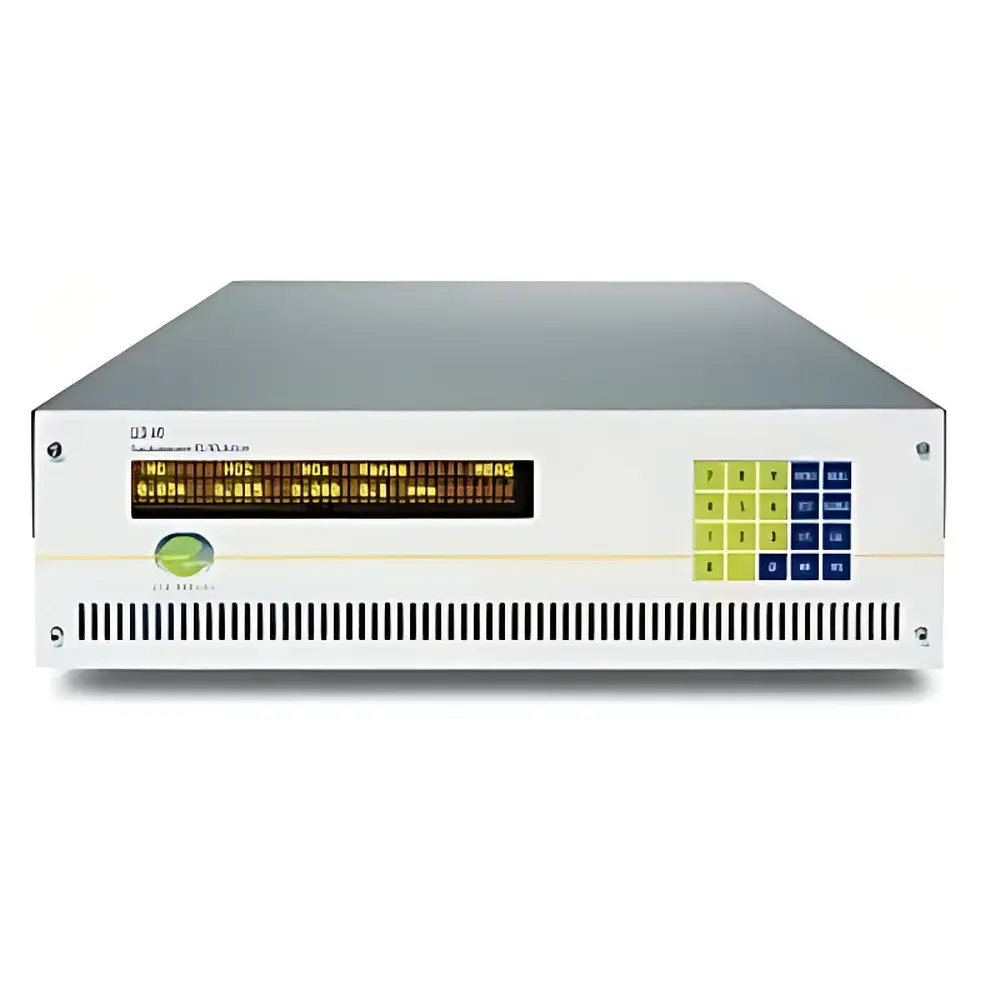
Eco Physics CLD 60 Series Chemiluminescence NO/NO₂/NOₓ Analyzer
| Origin | Switzerland |
|---|---|
| Manufacturer Type | Authorized Distributor |
| Origin Category | Imported |
| Model | CLD 60 Series |
| Pricing | Available Upon Request |
Overview
The Eco Physics CLD 60 Series is a family of high-performance, chemiluminescence-based gas analyzers engineered for precise, real-time quantification of nitrogen oxides (NO, NO₂, and total NOₓ) across an exceptionally wide dynamic concentration range—from sub-parts-per-trillion (ppt) background levels to percent-level flue gas emissions. Based on the well-established principle of gas-phase chemiluminescent reaction between nitric oxide (NO) and ozone (O₃), the CLD 60 Series delivers exceptional selectivity, minimal cross-sensitivity, and rapid response kinetics. Each instrument integrates a proprietary high-voltage ozone generator, optimized reaction chamber geometry, and thermally stabilized detection optics to ensure long-term signal stability and measurement reproducibility under demanding field conditions. Designed and manufactured in Switzerland, the series complies with core requirements of EN 14181 (QAL1/QAL2/QAL3), ISO 7935, and EPA Method 7E for continuous emissions monitoring systems (CEMS), making it suitable for regulatory-grade compliance reporting in industrial, environmental, and research applications.
Key Features
- Ultra-fast response time: T₉₀ ≤ 1 second across all models—enabling dynamic process monitoring and transient emission characterization
- Multi-range capability: Four dedicated configurations (CLD 62, 62 Ox, 63, 64, 66) covering 0.05 ppb to 5,000 ppm NOₓ—each optimized for specific concentration domains and matrix challenges
- Corrosion-resilient architecture: Reaction chamber, restrictor capillaries, and sample path components are constructed from inert, high-grade stainless steel or ceramic-coated alloys—validated for operation in highly acidic, halogen-rich, or particulate-laden flue gases (e.g., waste incineration, cement kilns)
- Integrated thermal ozone decomposition: High-temperature catalytic O₃ destruct unit eliminates need for consumable activated carbon traps—ensuring zero maintenance downtime and eliminating secondary VOC interference
- Low sample demand: Typical sample flow rates range from 35 mL/min (CLD 62) to 300 mL/min (CLD 64/66), reducing vacuum pump load, power consumption, and potential for condensation-induced errors
- Modular NO₂ conversion: Selectable metal (stainless steel) or molybdenum catalyst converters—field-replaceable and certified per EN 14792 for quantitative NO₂-to-NO conversion efficiency ≥95%
- Optional integrated paramagnetic O₂ sensor (CLD 62 Ox): Simultaneous, trace-level O₂ measurement (0–25% vol) with ±0.1% absolute accuracy, supporting combustion efficiency calculations and dilution correction
Sample Compatibility & Compliance
The CLD 60 Series accommodates diverse sampling environments without compromise: hot/wet extractive streams (up to 180 °C, 100% RH), cooled/dried extracts, ambient air, and even human breath matrices. All models meet electromagnetic compatibility (EMC) requirements per IEC 61326-1 and carry CE marking under the EU Measuring Instruments Directive (MID) where applicable. For regulated CEMS deployments, instruments support full audit trails, electronic signatures, and data integrity features aligned with FDA 21 CFR Part 11 and EU Annex 11 expectations when operated with compliant software platforms. Calibration verification protocols conform to ISO 17025-accredited laboratory practices, and factory calibration certificates include traceability to NIST- or PTB-traceable gas standards.
Software & Data Management
Standard Ethernet (LAN) interface enables seamless integration into plant-wide SCADA, DCS, or environmental data acquisition systems (EDAS). The embedded web server supports remote configuration, real-time data streaming (via Modbus TCP or HTTP API), alarm management, and diagnostic logging. Optional Eco Physics AnalyzeSuite™ software provides GLP-compliant data handling—including automatic zero/span validation logs, drift compensation algorithms, and customizable report generation per EN 15267 or US EPA Performance Specification 2 (PS-2). All raw and processed data are timestamped with microsecond resolution and stored locally on industrial-grade SD card (optional RAID backup), ensuring continuity during network outages.
Applications
- Continuous emissions monitoring (CEMS) for thermal power plants, waste-to-energy facilities, and industrial boilers
- Ambient air quality networks (AAQN) requiring sub-ppb NO₂ detection per EU Directive 2008/50/EC and US EPA National Ambient Air Quality Standards (NAAQS)
- Background and remote-site atmospheric research—including high-altitude balloon-borne and mobile laboratory deployments
- Process control and optimization in semiconductor fabrication cleanrooms and chemical synthesis lines
- Mobile source testing: roadside vehicle exhaust screening, chassis dynamometer studies, and non-road engine certification
- Clinical and physiological research: exhaled nitric oxide (FeNO) analysis in pulmonary function laboratories
FAQ
What NO₂ conversion method does the CLD 64 use, and how is its efficiency validated?
The CLD 64 employs a heated molybdenum catalyst converter, certified to achieve ≥95% NO₂-to-NO conversion efficiency per EN 14792. Conversion efficiency is verified during factory calibration using certified NO₂ reference gas and documented in the instrument’s QAL1 certificate.
Can the CLD 60 Series operate unattended for extended periods in remote locations?
Yes—designed for autonomous operation, all models feature internal temperature stabilization, self-diagnostics, and low-power modes. With optional DC power input (12–24 VDC), they support solar-powered deployments for up to 12 months between maintenance cycles.
Is ozone generation adjustable, and how is ozone purity maintained?
Ozone output is dynamically regulated via high-voltage pulse-width modulation, maintaining optimal stoichiometric excess across the full measurement range. Ozone purity (>99.5%) is ensured by proprietary dielectric barrier discharge (DBD) cell design and real-time UV absorbance monitoring.
How does the system handle moisture interference in wet-stack applications?
While primarily intended for conditioned (dried) sample streams, the CLD 62 and 62 Ox models incorporate heated sample lines and Peltier-cooled condensate traps as optional accessories—enabling robust performance in hot/wet extractive configurations per EN 15267-3.
Are firmware updates and calibration tools available to end users?
Yes—Eco Physics provides secure, password-protected firmware update packages and PC-based calibration utilities through its authorized distributor portal. Updates preserve all user-configured parameters and historical data integrity.







