
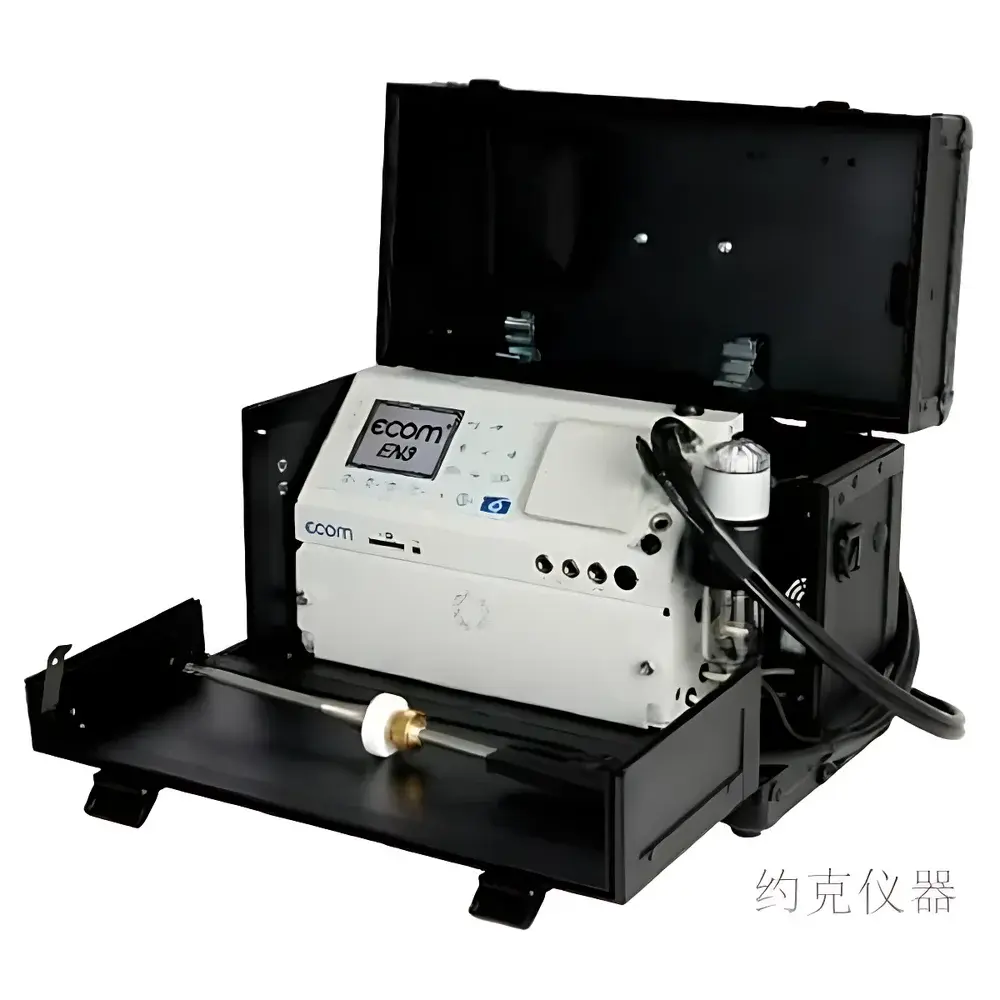
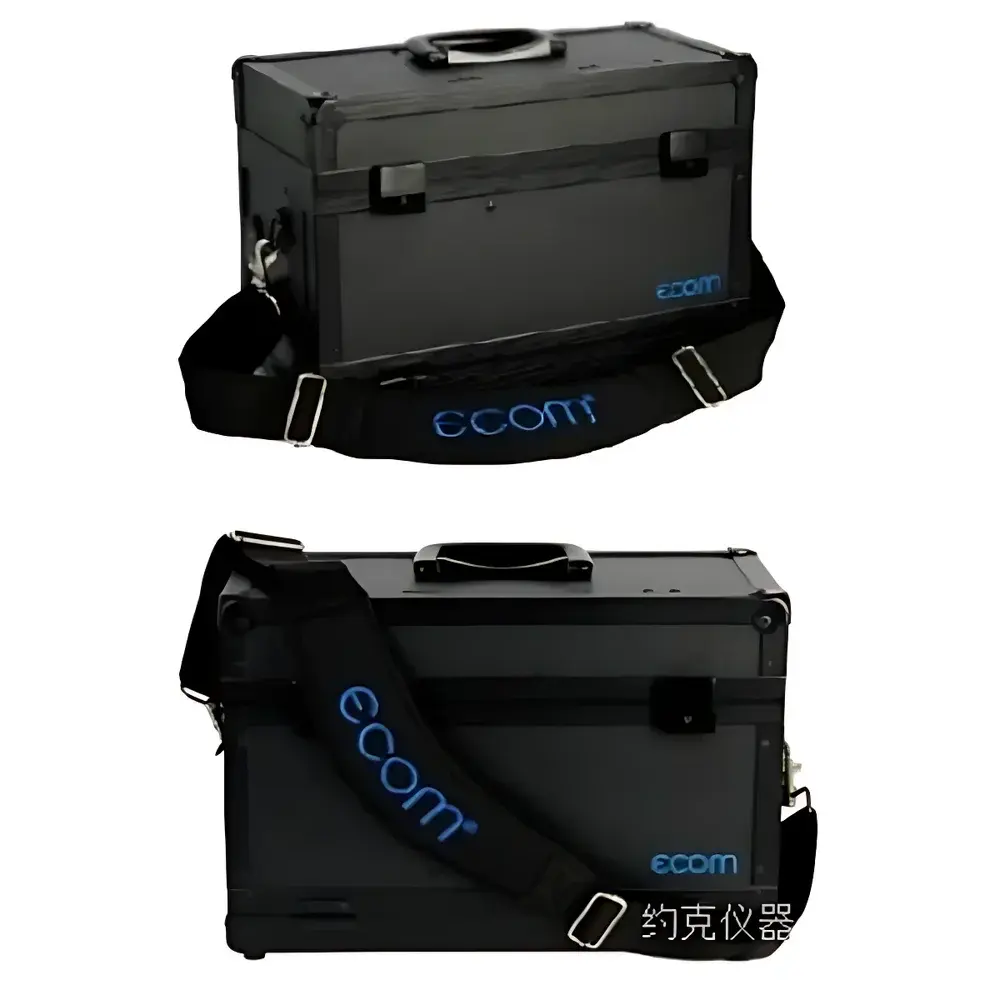
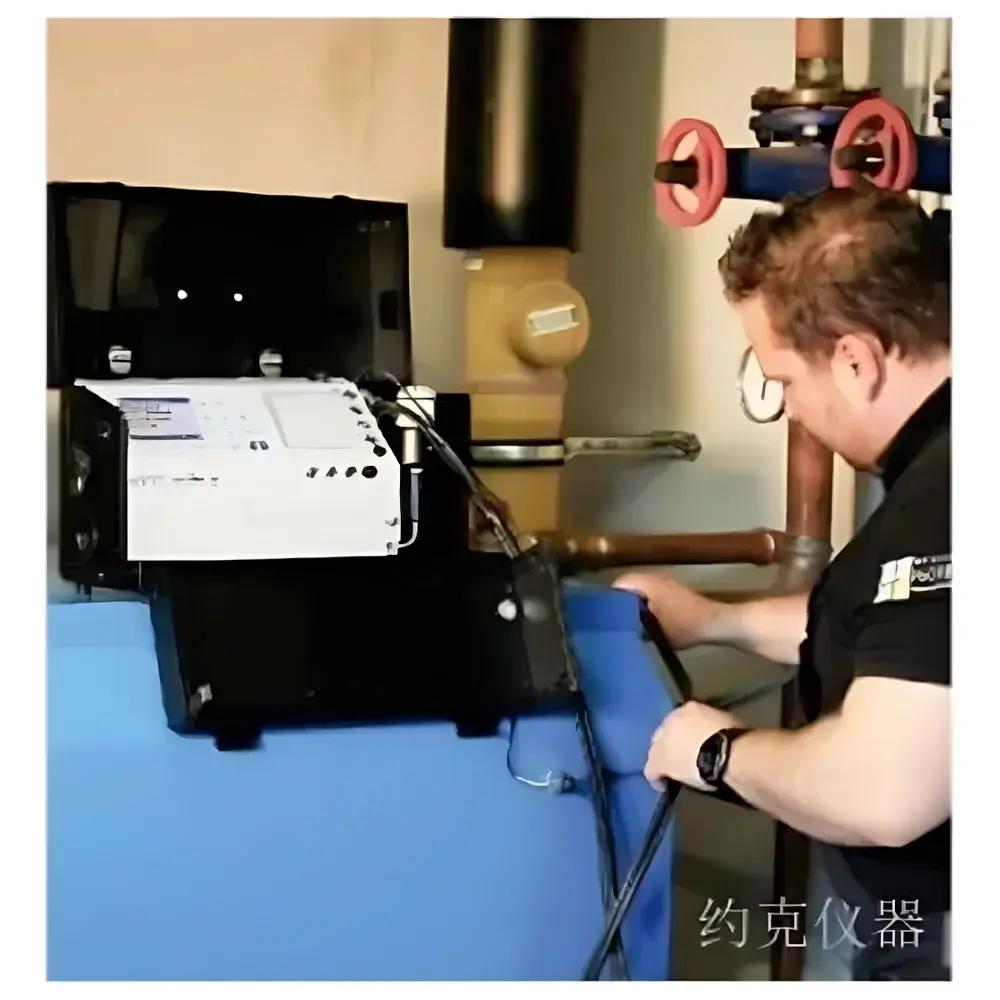
Ecom ecom-EN3 Portable Flue Gas Analyzer
| Brand | Ecom (Czech Republic) |
|---|---|
| Origin | Germany |
| Model | ecom-EN3 |
| Instrument Type | Portable Flue Gas Analyzer |
| Gas Sensors (up to 6) | O₂, CO, NO, NO₂, SO₂, CO₂ (NDIR) or CH₄ (NDIR), H₂S (electrochemical, 0–1000 ppm or 0–5000 ppm) |
| Temperature Measurement | Flue gas & ambient |
| Data Units | ppm, mg/m³, mg/kWh |
| Pump Flow Rate | up to 1.7 L/min |
| Dimensions | ~400 × 275 × 205 mm |
| Weight | ~7 kg (including probe assembly) |
| Optional Features | Peltier cooler with condensate detection, integrated 58 mm thermal printer, Bluetooth, SD card logging, iOS/Android app, automatic smoke opacity (DIN 51418-2), differential pressure flow measurement, auto-calibration, particulate filters for solid fuels |
| Compliance | Designed for EN 15267, EN 14181, VDI 3862, and applicable EU emission monitoring directives |
Overview
The Ecom ecom-EN3 is a CE-marked, portable flue gas analyzer engineered for precision field measurement of combustion emissions in industrial boilers, cogeneration units, biomass plants, biogas facilities, and municipal waste incinerators. It operates on proven electrochemical (EC) and non-dispersive infrared (NDIR) sensing principles—O₂, CO, NO, NO₂, and SO₂ are measured via high-stability EC cells; CO₂ and CH₄ utilize temperature-compensated NDIR detectors; H₂S employs dual-range electrochemical sensors (0–1000 ppm standard, 0–5000 ppm optional). The instrument integrates real-time gas concentration, flue gas temperature (0–650 °C), ambient temperature, differential pressure (±100 hPa), and volumetric flow rate (calculated from ΔP and pitot tube input) into a unified data stream. Its architecture adheres to the metrological framework defined in EN 15267-3 for automated measuring systems (AMS) used in continuous emission monitoring (CEM), supporting periodic verification per EN 14181 QAL2 and AST.
Key Features
- Modular multi-gas configuration: Up to six simultaneous gas channels—including factory-calibrated O₂, CO, NO, NO₂, SO₂, plus either CO₂ (NDIR) or CH₄ (NDIR), and optional H₂S (dual-range EC sensor)
- Integrated Peltier-cooled condensate separator with electronic condensate level monitoring and automatic drain control—critical for high-moisture biogas and biomass applications
- Dual-temperature measurement: K-type thermocouple for flue gas (0–650 °C) and built-in ambient sensor (−20 to +50 °C), both traceable to NIST-equivalent references
- High-reliability sampling pump with LED flow indicator and adjustable flow up to 1.7 L/min; flow stability maintained across backpressures up to 50 hPa
- Differential pressure module (±100 hPa) enabling velocity calculation per ISO 16911-1 using pitot-static probes; supports stack flow quantification without external transmitters
- Onboard thermal printer (58 mm width) with shock-absorbing aluminum housing; printouts include timestamp, calibration status, gas concentrations, and derived parameters (e.g., excess air, efficiency, NOₓ mass flow)
- Embedded Bluetooth 5.0 and microSD slot (up to 32 GB) for wireless data export and long-term unattended logging; compatible with Ecom’s certified PC software (Windows) and validated iOS/Android mobile apps
Sample Compatibility & Compliance
The ecom-EN3 accommodates diverse fuel types—from natural gas and light oil to coal, wood chips, sewage sludge, and landfill/biogas—via application-specific filter kits (e.g., sintered metal filters for fly ash, hydrophobic PTFE membranes for condensing streams). Its Teflon-lined 3 m sampling probe ensures chemical inertness during H₂S, SO₂, and halogenated compound analysis. All gas sensors comply with EN 50104 (O₂), EN 45544-1 (toxic gases), and EN 14625 (CO₂/CH₄ NDIR). The system meets the functional requirements of EN 15267-3 for periodic performance testing (QAL2), supports audit trails for GLP-aligned reporting, and provides full traceability per ISO/IEC 17025 when used with certified calibration gases (ISO 6141, ISO 6145). It is routinely deployed in accordance with VDI 3862 for small-scale combustion plants and DIN 51418-2 for manual smoke number assessment.
Software & Data Management
Ecom’s proprietary desktop software (Ecom-Soft Pro) enables post-processing of time-stamped datasets, compliance report generation (e.g., daily averages, 30-minute means per EU BREFs), and spectral visualization of gas profiles. Raw data exports as CSV or XML with metadata headers—including sensor serial numbers, calibration dates, zero/span drift logs, and environmental compensation flags. The mobile app supports live telemetry, remote firmware updates, and photo-annotated measurement records synced to cloud storage (GDPR-compliant, on-premise deployment optional). All software modules enforce role-based access control and maintain immutable audit trails compliant with FDA 21 CFR Part 11 for regulated environments requiring electronic record integrity.
Applications
- Periodic stack testing per EPA Method 3A, EN 14792, and ISO 12039 for regulatory reporting
- Biogas plant commissioning and process optimization—CH₄/CO₂ ratio tracking, H₂S corrosion risk assessment, and digester efficiency monitoring
- Boiler tuning and combustion efficiency analysis (excess air, lambda, thermal efficiency)
- Waste-to-energy facility QA/QC during start-up, shutdown, and malfunction events
- Academic and R&D studies on alternative fuels, including hydrogen-blended natural gas and pyrolysis syngas characterization
- Pre-compliance screening for installations subject to IED (Industrial Emissions Directive) permit conditions
FAQ
What calibration gases are required for initial setup and routine verification?
Certified calibration gases per ISO 6141 are mandatory: zero gas (N₂ or synthetic air), span gases for each active channel (e.g., 500 ppm CO in N₂, 100 ppm NO in air), and CH₄/CO₂ standards traceable to CRM. Ecom supplies pre-mixed certified blends with uncertainty <2% (k=2).
Does the ecom-EN3 support automatic zero and span checks during operation?
Yes—the instrument features one-button automated zero and span calibration routines that sequence gas switching, flow stabilization, and sensor response validation per EN 14181 QAL3 protocols.
Can the device measure wet-basis concentrations without manual correction?
Yes—integrated condensate management, temperature/pressure compensation, and humidity estimation (via dew point or relative humidity input) enable direct wet-basis reporting in mg/m³ (3% O₂ reference) without post-processing.
Is the thermal printer suitable for outdoor use in variable weather?
The 58 mm printer is housed within an IP54-rated enclosure and operates reliably between −10 °C and +50 °C; paper rolls are moisture-resistant and rated for 10-year archival stability.
How is data integrity ensured during Bluetooth transmission?
All wireless transfers use AES-128 encryption; packet loss is mitigated via TCP-like acknowledgment handshaking, and every transmitted dataset includes SHA-256 checksums verified upon receipt.
Related Products







