
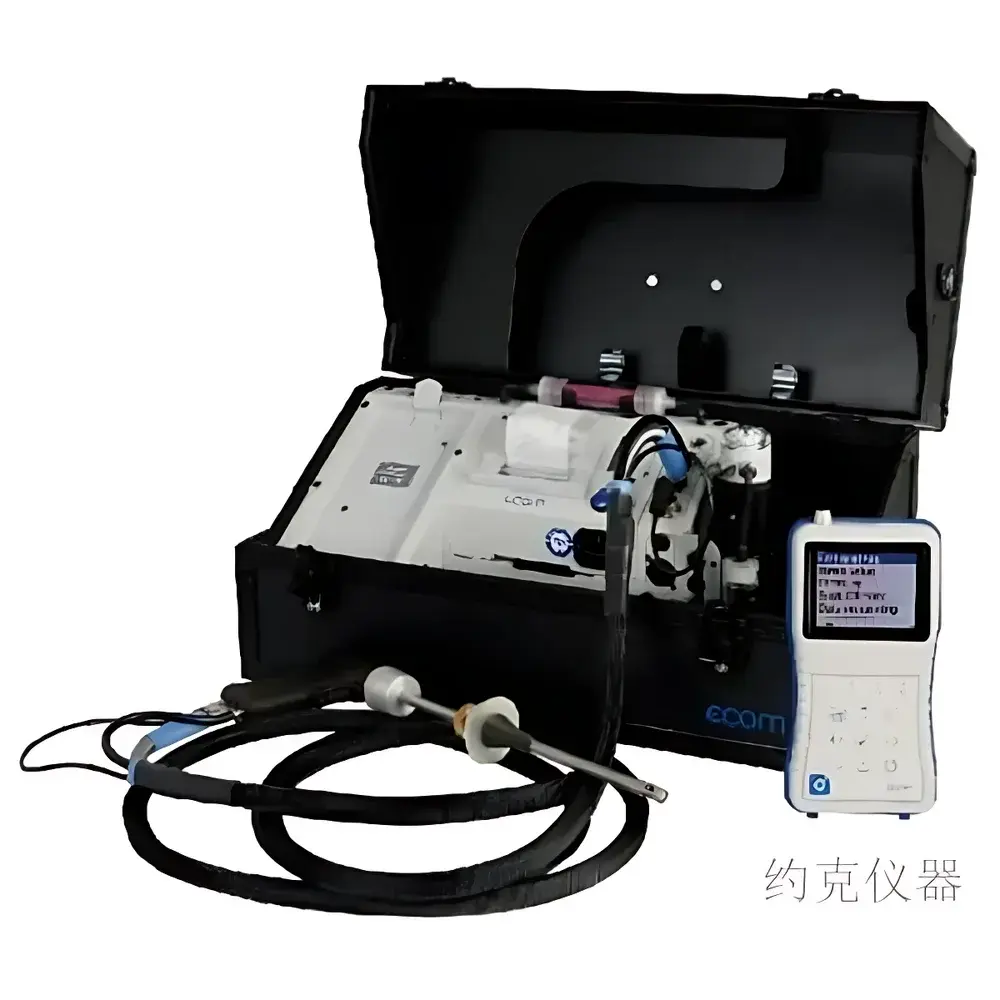
ecom J2KNpro Portable Flue Gas Analyzer
| Brand | ecom (Czech Republic) |
|---|---|
| Origin | Germany |
| Model | J2KNpro |
| Instrument Type | Portable Flue Gas Analyzer |
| Sensor Capacity | Up to 9 sensors |
| Measurable Gas Components | Up to 11 |
| Detection Technologies | Electrochemical (EC), Non-Dispersive Infrared (NDIR), Ultraviolet (UV), Chemiluminescence Detection (CLD), Photoacoustic Spectroscopy (PAS), and Paramagnetic Oxygen (PEL) |
| Dimensions (Main Unit) | 510 × 330 × 250 mm |
| Dimensions (with Heated Sampling System) | 510 × 650 × 250 mm |
| Weight (Main Unit) | ~14 kg |
| Weight (with Heated Sampling System) | ~23 kg |
| Operating Ambient Temperature Range | 0–40 °C (auto-heating/cooling) |
| Condensation Management | Dual-stage Peltier cooler with electronic condensate level monitoring and automatic drainage |
| Gas Flow Rate | Up to 2.6 L/min (digital flow display) |
| CO Auto-Cut-off & Purge Function | Yes |
| Pre-Shutdown Fresh Air Purge | Yes |
| Intermittent Measurement Mode | Programmable (up to multi-day duration) |
| Data Output Units | ppm, mg/m³, mg/kWh, % vol |
| Pressure Compensation | Automatic |
| Calibration | Onboard one-touch calibration (full-system calibration performed in climate-controlled chamber) |
| Integrated Thermal Printer | Yes |
| Connectivity Options | Wi-Fi, Bluetooth, Ethernet, Radio Remote Control (868.135 MHz, CMIIT ID: 2011DJ0261 / 2011DJ0262) |
| Software | Free PC software + iOS/Android apps |
| Compliance | Designed for EN 15267, EN 14181, ISO 12039, ISO 10849, EPA Method 6C, EPA Method 7E, and applicable EU emission monitoring directives |
Overview
The ecom J2KNpro Portable Flue Gas Analyzer is an industrial-grade, multi-technology gas measurement platform engineered for high-accuracy, real-time flue gas analysis in stationary combustion sources—including boilers, furnaces, incinerators, and combined heat and power (CHP) plants. It integrates six complementary detection principles—electrochemical (EC), non-dispersive infrared (NDIR), ultraviolet (UV), chemiluminescence detection (CLD), photoacoustic spectroscopy (PAS), and paramagnetic oxygen (PEL)—within a single, field-deployable chassis. This architecture enables simultaneous, independent quantification of up to 11 gas species (e.g., O₂, CO, CO₂, NO, NO₂, SO₂, H₂S, CH₄, NH₃, CₓHᵧ, and total hydrocarbons) using method-optimized sensor configurations. Unlike fixed-method analyzers, the J2KNpro allows users to select and combine detection technologies per gas component based on required sensitivity, cross-sensitivity tolerance, and regulatory compliance—supporting both routine stack testing and long-term continuous emission monitoring (CEM) validation per EN 14181 QAL1/QAL2 protocols.
Key Features
- Modular sensor architecture supporting up to nine physical sensors—enabling flexible configuration for site-specific regulatory or process requirements.
- Dual-stage Peltier condenser with real-time condensate level sensing and fully automated drainage—ensuring stable sample conditioning across variable dew points and minimizing maintenance intervals.
- Intelligent thermal management system that dynamically heats or cools internal optics and sampling lines between 0 °C and 40 °C ambient, maintaining optimal sensor operating conditions without external climate control.
- CO auto-cut-off and reverse-purge function isolates and flushes the CO channel upon saturation—preserving measurement integrity of all other gas channels during transient over-range events.
- Programmable intermittent measurement mode: supports scheduled sampling intervals (e.g., every 1, 5, or 15 minutes) over durations up to 72 hours—ideal for unattended periodic compliance checks or energy efficiency audits.
- Integrated thermal printer with timestamped reports, direct smoke number (Ringlemann/BS 2742) interface (requires optional smoke sampling kit), and dual-unit display (ppm, mg/m³, mg/kWh, % vol).
- Onboard one-touch calibration routine—executed using pre-characterized reference gases and validated against full-system calibration data generated in certified environmental test chambers.
Sample Compatibility & Compliance
The J2KNpro accommodates diverse sampling configurations—including standard stainless-steel probe assemblies, NOx-specific low-adsorption tubing, and fully heated sampling trains (up to 180 °C) for wet-stack or high-moisture applications. Its pressure-compensated flow path ensures accurate volumetric reporting under varying draft conditions. The analyzer meets the performance criteria defined in EN 15267-3 (Type Approval of Automated Measuring Systems), EN 14181 (Quality Assurance of AMS), and ISO 12039 (determination of CO, CO₂, O₂, NOx, SO2 in flue gases). For U.S. applications, it supports EPA Methods 6C (SO2), 7E (NOx), and 10 (O₂), and is compatible with 40 CFR Part 60 PS-17 and PS-18 verification procedures. All firmware and data logging modules are structured to support audit-ready GLP/GMP traceability, including user-access logs, calibration history, and alarm event timestamps.
Software & Data Management
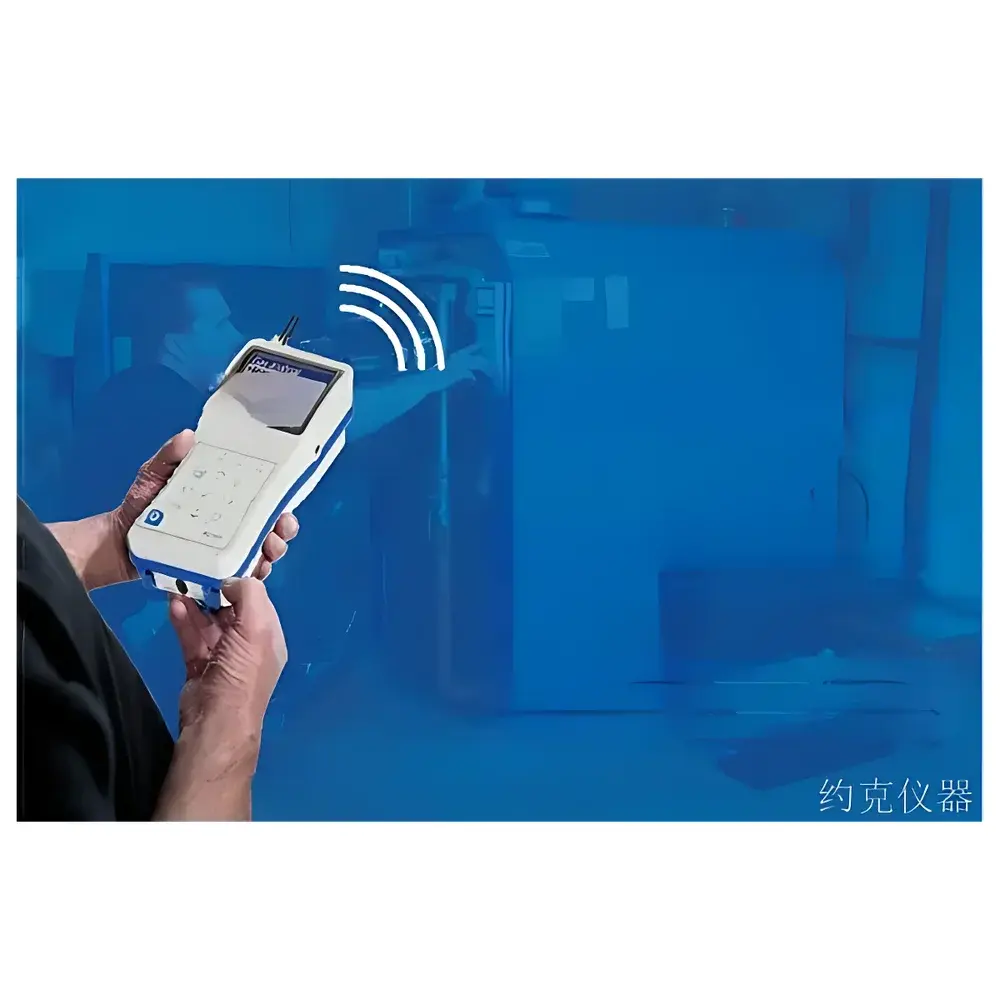
The J2KNpro ships with ecom’s cross-platform software suite—offering real-time visualization, automated report generation (PDF/CSV), and configurable alarm thresholds. PC software provides full access to raw sensor diagnostics, zero/span drift tracking, and compliance report templates aligned with EU IED Annex V and German TA Luft formats. Mobile applications (iOS/Android) enable remote instrument status monitoring, live data streaming, and post-test annotation. The integrated radio remote control unit operates at 868.135 MHz (CMIIT ID certified) and maintains robust, obstacle-penetrating connectivity—capable of sustaining uninterrupted data transmission through concrete or metal enclosures. All wireless communication layers implement AES-128 encryption and session authentication, satisfying data integrity requirements under ISO/IEC 27001-aligned IT security policies.
Applications
- Regulatory stack testing for compliance with EU Industrial Emissions Directive (IED), U.S. Clean Air Act Title V, and China’s GB 13271–2014.
- Combustion optimization and boiler efficiency assessment (e.g., excess air tuning, lambda calculation, thermal loss analysis).
- Continuous emission monitoring system (CEMS) performance verification and QA/QC auditing per EN 14181.
- Waste-to-energy plant emissions profiling—including dioxin precursor screening (via Cl₂, HCl, NOx, CO correlation metrics).
- R&D applications requiring multi-technique gas speciation—such as catalyst evaluation, fuel switching studies, and biomass co-firing characterization.
FAQ
Does the J2KNpro support automatic calibration verification (ACV) per EN 14181?
Yes—the instrument includes programmable ACV sequences with built-in reference gas valves and time-stamped audit trails compatible with QAL2 requirements.
Can the heated sampling system be retrofitted to an existing J2KNpro unit?
Yes—field-upgrade kits are available; installation requires factory recalibration and updated configuration files.
Is PAS technology used for all gas components or only specific ones?
PAS is applied selectively—for example, for NH₃ and CH₄ where NDIR exhibits interference; sensor selection is configured per application during commissioning.
What is the maximum allowable particulate loading for the standard probe?
The standard probe is rated for ≤ 5 g/Nm³; for higher-load applications, optional ceramic filter cartridges and cyclonic pre-separators are recommended.
How is data integrity ensured during radio transmission?
All radio packets include CRC-32 checksums, sequence numbering, and retransmission logic—guaranteeing lossless delivery even in electrically noisy industrial environments.
Related Products







