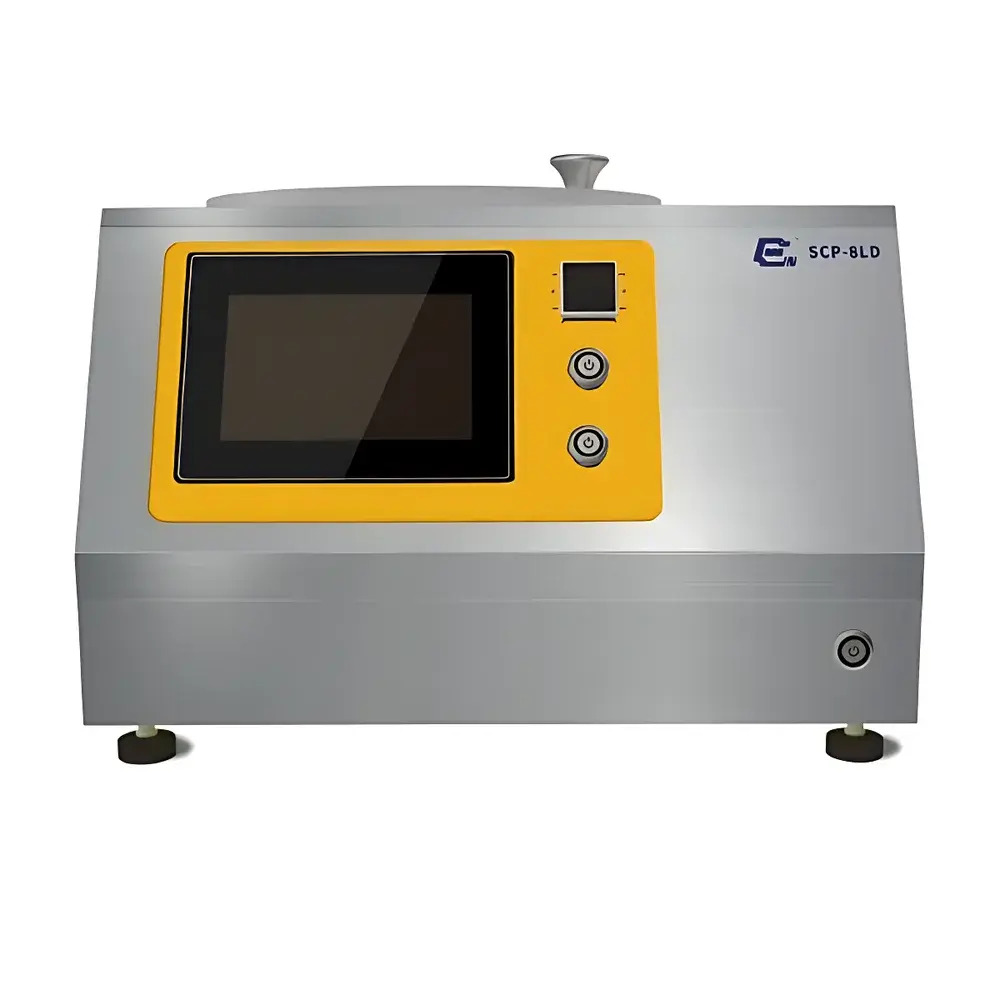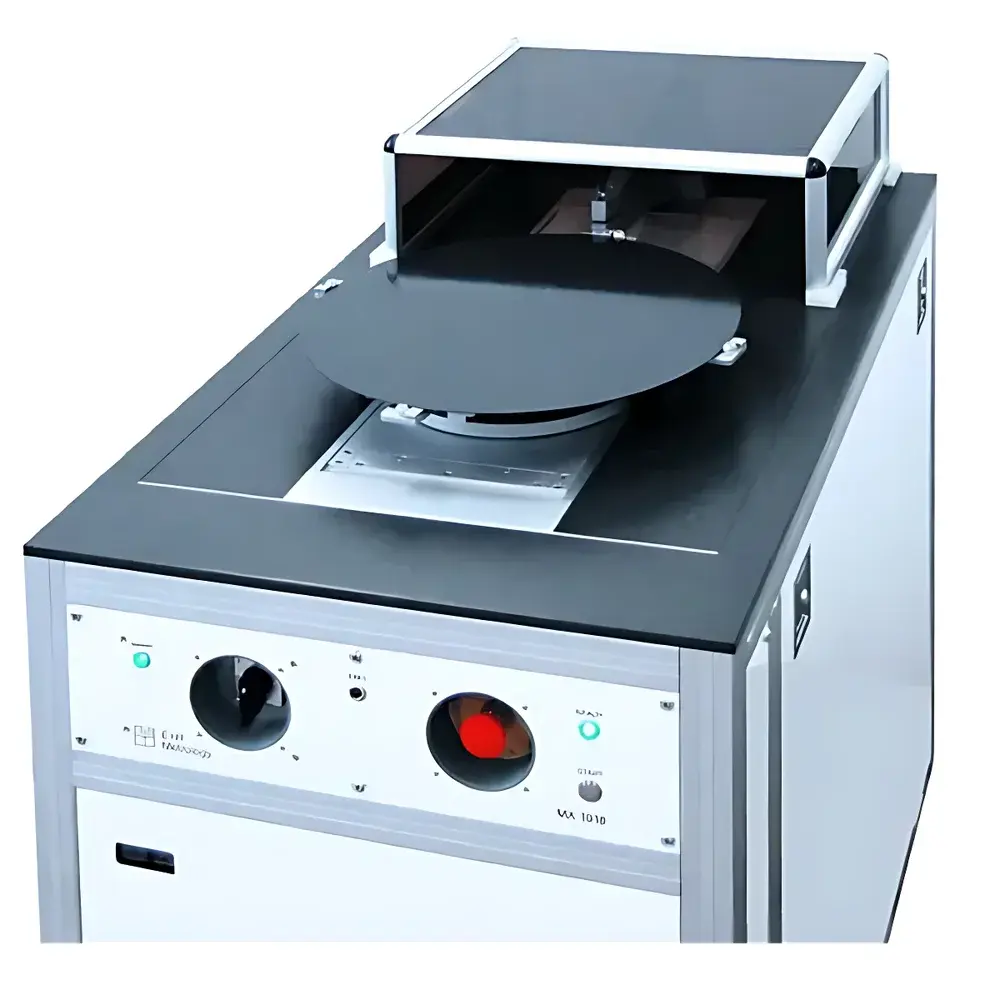
E+H Metrology MX 1018 High-Resolution Wafer Thickness and Total Thickness Variation (TTV) Measurement System
| Brand | E+H Metrology |
|---|---|
| Origin | Germany |
| Manufacturer Type | Authorized Distributor |
| Origin Category | Imported |
| Model | MX 1018 |
| Pricing | Upon Request |
| Wafer Diameters | 200 mm, 300 mm, 450 mm |
| Measurement Accuracy | ±0.3 µm |
| Vertical Resolution | 10 nm |
| Lateral Spatial Resolution | 1 mm |
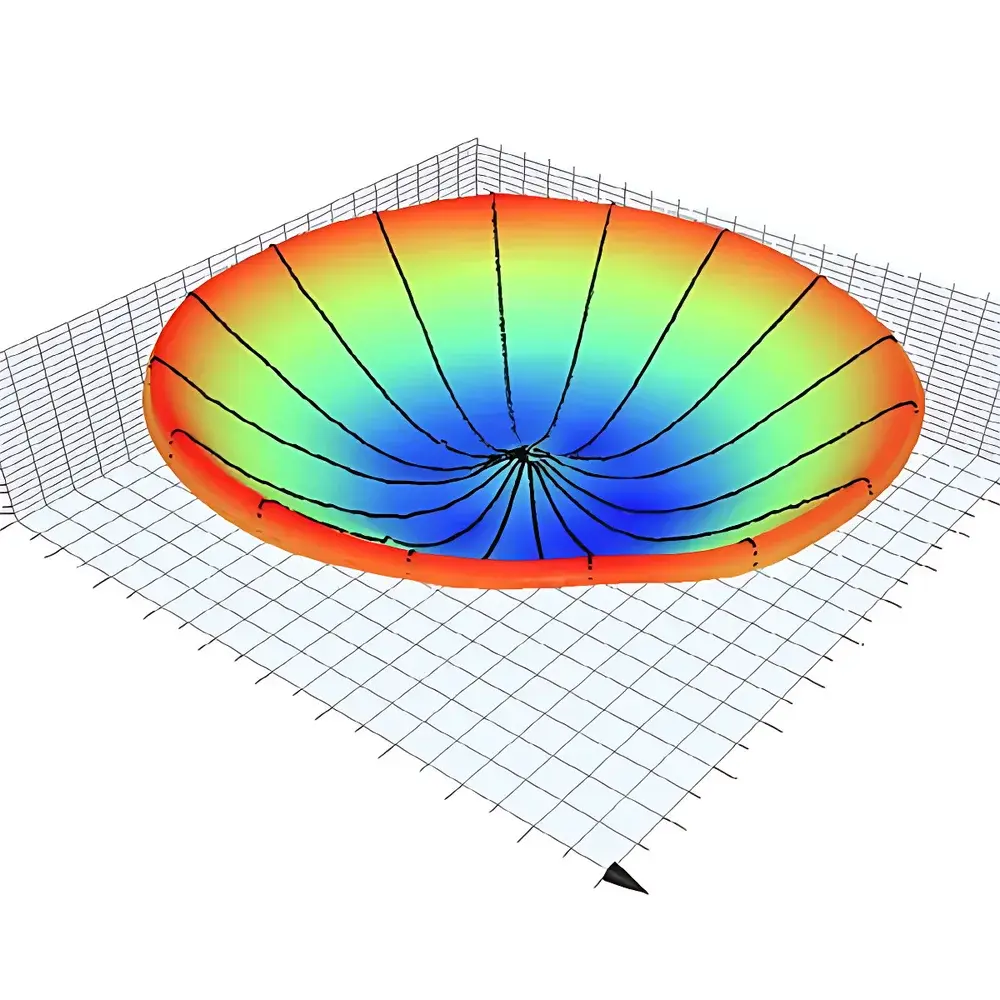
| Scan Profiles | Up to 8 radial scans (standard: 4 at 45° intervals) |
| Software Platform | MX-NT |
| Measurement Types | Single-point thickness, full-surface TTV, bow, warp, site flatness |
Overview
The E+H Metrology MX 1018 is a non-contact, high-precision capacitive metrology system engineered for deterministic measurement of silicon wafer thickness and total thickness variation (TTV) across 200 mm, 300 mm, and 450 mm substrates. Operating on the principle of differential capacitance sensing, the instrument employs dual high-stability capacitive probes mounted in a symmetric, temperature-compensated head assembly. As the wafer traverses beneath the sensor pair—either manually or via integrated robotic handling—the system acquires synchronized analog voltage signals proportional to the instantaneous gap between each probe and the wafer’s front and back surfaces. Real-time subtraction yields localized thickness values with sub-nanometer signal stability. Unlike optical interferometric or eddy-current methods, capacitive metrology delivers immunity to surface reflectivity variations, oxide layer interference, and ambient light conditions—critical advantages in post-grind, post-polish, and epitaxial process monitoring where surface finish and dielectric uniformity are highly variable.
Key Features
- Dual-capacitor probe architecture enabling simultaneous front-surface and back-surface position tracking with drift-compensated electronics
- Configurable radial scanning: standard four-profile acquisition at 45° angular increments; expandable to eight profiles for enhanced spatial coverage and statistical robustness
- Sub-micron mechanical repeatability (< ±0.1 µm) achieved through granite baseplate, air-bearing linear stage, and servo-controlled Z-axis positioning
- Integrated thermal stabilization: internal temperature sensors monitor probe head and stage housing; real-time compensation algorithms mitigate thermal expansion-induced errors
- Modular hardware interface compliant with SECS/GEM protocol, supporting direct integration into 300 mm FOUP-based automated material handling systems (AMHS) and cluster tools
- Calibration traceability to PTB (Physikalisch-Technische Bundesanstalt) standards, with documented uncertainty budgets per ISO/IEC 17025 requirements
Sample Compatibility & Compliance
The MX 1018 accommodates bare silicon, SiC, GaN, and SOI wafers within thickness ranges from 200 µm to 1,500 µm. It supports both unpatterned and lightly patterned substrates (with topography amplitude < 5 µm P–V), provided surface roughness (Ra) remains below 0.5 nm—typical of post-CMP or post-grind surfaces. The system meets SEMI S2/S8 safety and ergonomics requirements and complies with CE marking directives (EMC 2014/30/EU, Low Voltage 2014/35/EU). For regulated environments, MX-NT software supports audit trail logging, electronic signatures, and user role-based access control aligned with FDA 21 CFR Part 11 and EU Annex 11 expectations. Calibration records, measurement reports, and configuration logs are exportable in CSV, XML, and PDF/A-1b formats for GLP/GMP documentation workflows.
Software & Data Management
MX-NT is a Windows-based, deterministic metrology application built on a real-time data acquisition kernel. It provides synchronized visualization of raw capacitance signals, compensated thickness maps, and derived parameters—including TTV, bow (ASTM F1390), warp (SEMI MF-1530), and site flatness (SEMI MF-1395). All measurements are timestamped and tagged with operator ID, recipe name, lot ID, and environmental metadata (ambient temperature, humidity). Data integrity is enforced via SHA-256 hashing of raw acquisitions and immutable journaling of all parameter changes. The software includes built-in SPC charting (X-bar/R, Cpk, Ppk), automated pass/fail classification against user-defined tolerances, and configurable report templates compliant with internal quality management systems (QMS) and customer-facing PPAP submissions.
Applications
The MX 1018 serves as a reference-grade metrology tool in three critical semiconductor manufacturing domains: (1) Process development labs evaluating grinding wheel wear, slurry chemistry effects, and polishing pad conditioning on TTV evolution; (2) Front-end-of-line (FEOL) process control for epitaxial layer uniformity validation prior to gate stack deposition; and (3) Final wafer acceptance testing (FWAT) in outsourced semiconductor assembly and test (OSAT) facilities. Its speed (< 8 seconds per 300 mm wafer with 4-scan configuration) and reproducibility (GR&R < 5% at 6σ) make it suitable for 100% inline inspection in high-mix, low-volume R&D fabs and for statistical process control (SPC) sampling in high-volume production lines. The system is routinely deployed after backgrinding, chemical-mechanical planarization (CMP), and temporary bonding/debonding processes.
FAQ
What wafer diameters does the MX 1018 support?
The system is mechanically and software-configured for 200 mm, 300 mm, and 450 mm silicon wafers, with automatic diameter recognition via edge-detection routines.
Is vacuum chucking required for measurement stability?
No—capacitive sensing is non-contact and does not require physical clamping; however, optional vacuum chucks are available for applications requiring precise rotational alignment during multi-scan acquisition.
Can MX-NT generate reports compliant with IATF 16949 or ISO 9001?
Yes—customizable report templates include mandatory fields for calibration status, operator certification, equipment ID, and measurement uncertainty statements, fully traceable to internal QMS requirements.
How is probe calibration maintained over time?
E+H Metrology recommends annual recalibration using NIST-traceable step-height artifacts; field verification is supported via onboard reference spheres and daily drift-check routines embedded in MX-NT.
Does the system support integration with MES or SAP QM modules?
Through its OPC UA server interface and configurable REST API endpoints, MX-NT enables bidirectional data exchange with enterprise manufacturing execution systems (MES) and quality management modules (QM) without custom middleware.