
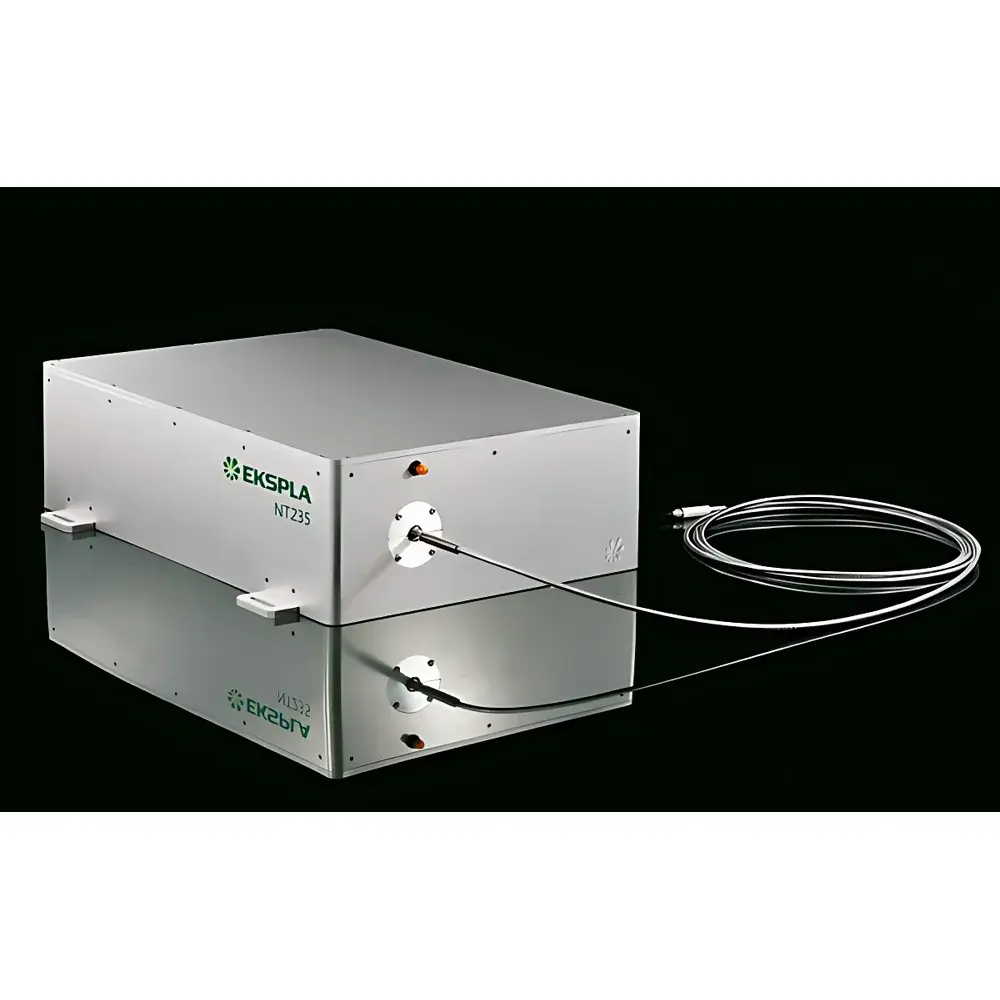
Ekspla NT235 Tunable Near-Infrared DPSS Laser System
| Brand | Ekspla |
|---|---|
| Origin | Lithuania |
| Manufacturer Type | Original Equipment Manufacturer (OEM) |
| Product Category | Imported Scientific Instrument |
| Model | NT235 |
| Laser Type | Diode-Pumped Solid-State (DPSS) Laser with Integrated Optical Parametric Oscillator (OPO) |
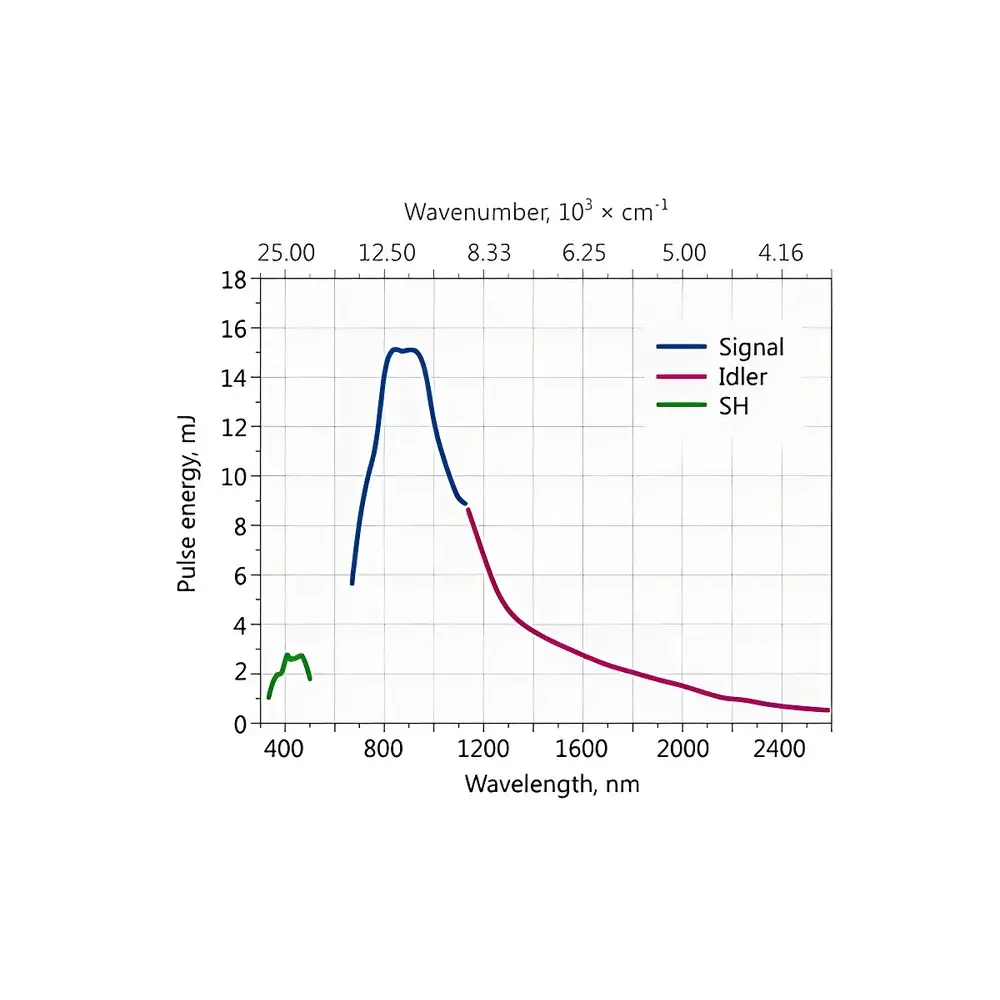
| Wavelength Tuning Range | 335–2600 nm |
| Pulse Repetition Rate | 100 Hz |
| OPO Output Energy | Up to 15 mJ @ 100 Hz |
| UV Output Energy (e.g., 3rd Harmonic) | >3 mJ @ 100 Hz |
| Spectral Linewidth | <10 cm⁻¹ |
| Pulse Duration | 3–6 ns |
| Control Interface | USB + LabVIEW™ Driver |
| Remote Operation | Handheld Control Box |
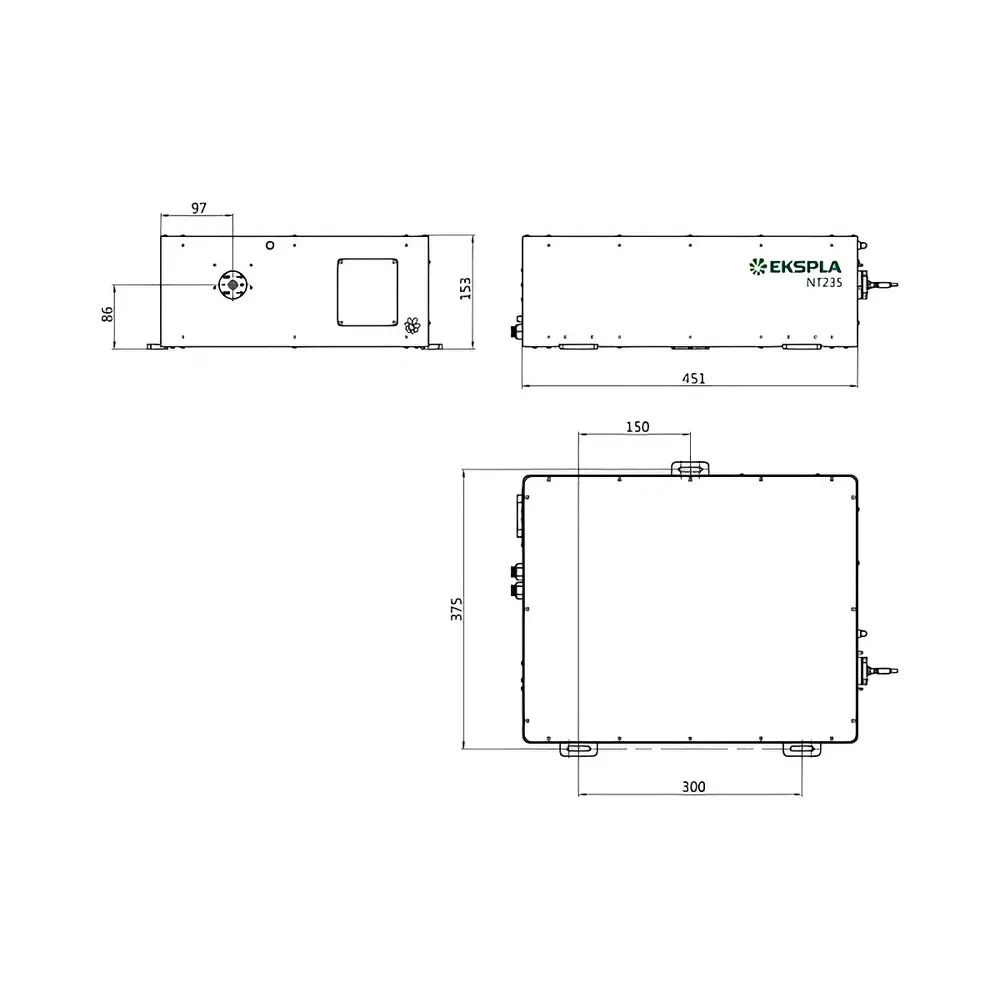
| Enclosure | Compact, Rugged Monolithic Chassis |
| Compliance | CE Marked, RoHS Compliant, Designed for Class 1 Laser Safety Enclosure Integration |
Overview
The Ekspla NT235 is a fully integrated, turnkey tunable laser system combining a diode-pumped solid-state (DPSS) pump laser and a synchronously pumped optical parametric oscillator (OPO) within a single, thermally stabilized monolithic chassis. Engineered for high-reproducibility pulsed operation in demanding laboratory and industrial R&D environments, the NT235 delivers broadband wavelength coverage from the ultraviolet (335 nm) through the visible and into the near-infrared (up to 2600 nm) without manual realignment or external optics. Its core architecture leverages Nd:YAG fundamental emission at 1064 nm, frequency-doubled to 532 nm for OPO pumping, enabling efficient, stable parametric generation across multiple spectral regions. The system operates at a fixed 100 Hz pulse repetition rate with pulse durations between 3 and 6 nanoseconds—optimized for time-resolved spectroscopic techniques requiring precise temporal gating and high peak power. All critical thermal, mechanical, and electronic subsystems are co-located and actively regulated to minimize drift, ensuring long-term pointing stability (<25 µrad/h) and spectral repeatability (<0.1 nm over 8 h).
Key Features
- Single-chassis integration of DPSS pump laser and OPO—eliminates alignment sensitivity and reduces footprint by >40% versus modular alternatives
- Automated, motorized wavelength tuning across 335–2600 nm via software-controlled grating and crystal angle positioning
- OPO output energy up to 15 mJ per pulse at 100 Hz, with UV harmonic generation (>3 mJ at 355 nm) enabled via internal BBO or LBO crystals
- Spectral linewidth <10 cm⁻¹ (FWHM), suitable for resonant excitation in molecular spectroscopy and isotope-selective photochemistry
- USB 2.0 interface with full LabVIEW™ driver suite (NI-VISA compatible), supporting remote parameter scripting, pulse synchronization (TTL/RS-232), and real-time energy monitoring
- Ruggedized aluminum chassis with passive and active thermal management—designed for continuous operation in ambient lab conditions (15–30 °C, non-condensing)
Sample Compatibility & Compliance
The NT235 is compatible with standard optical tables, vacuum chambers (via optional beam port feedthroughs), and commercial spectrometers, transient absorption setups, and time-correlated single-photon counting (TCSPC) systems. Its beam specifications—including M² <1.3, ellipticity <1.2, and spatial mode stability—ensure reliable coupling into fiber optics (e.g., UV-grade silica, core diameters ≥200 µm) and nonlinear crystals for further harmonic generation. The system conforms to IEC 60825-1:2014 (Class 4 laser product when unenclosed; Class 1 when installed in interlocked enclosures), carries CE marking under the EU Machinery and EMC Directives, and complies with RoHS 2011/65/EU. It supports GLP/GMP-aligned operation through configurable audit trails in the control software and meets baseline requirements for FDA 21 CFR Part 11 compliance when deployed with validated LabVIEW™ applications.
Software & Data Management
Control is executed via Ekspla’s proprietary LaserStudio™ software (Windows 10/11, 64-bit), providing intuitive GUI-based wavelength selection, energy calibration, pulse delay programming, and multi-channel trigger sequencing. All operational parameters—including crystal angles, pump energy, OPO cavity length, and harmonic selector status—are logged with timestamps and user annotations in HDF5 format. Export options include CSV and MATLAB-compatible .mat files. The LabVIEW™ driver exposes low-level VIs for custom automation workflows, including closed-loop energy stabilization using integrated photodiode feedback and synchronization with external detectors (e.g., streak cameras, gated ICCDs). Firmware updates are delivered via secure HTTPS portal with SHA-256 signature verification.
Applications
- Laser-Induced Fluorescence (LIF): Selective excitation of aromatic amino acids, chlorophyll derivatives, and quantum dots across UV–NIR bands
- Flash Photolysis: Nanosecond-resolved kinetics of photoactive proteins (e.g., rhodopsin, cryptochrome) and photocatalytic intermediates
- Photoacoustic Imaging: High-energy NIR pulses (700–1300 nm) for deep-tissue contrast generation with sub-millimeter spatial resolution
- Time-Resolved Vibrational Spectroscopy: Pump–probe studies of C–H, O–H, and N–H stretching modes using tunable mid-IR idler output (1400–2600 nm)
- Primary Radiometric Calibration: Traceable wavelength and energy standards for spectroradiometer validation per ISO/IEC 17025-accredited labs
FAQ
What safety certifications does the NT235 hold?
The NT235 is CE-marked and compliant with IEC 60825-1:2014 for laser safety. When operated within an interlocked Class 1 enclosure, it satisfies occupational exposure limits per ANSI Z136.1.
Can the system be upgraded for higher repetition rates?
No—the NT235 is engineered for fixed 100 Hz operation to maintain thermal equilibrium and OPO conversion efficiency. Higher-repetition-rate variants (e.g., NT242 series) require separate platform design.
Is external water cooling required?
No—integrated thermoelectric coolers and convection-enhanced heatsinks enable air-cooled operation across the full specification range.
How is wavelength calibration verified?
Each unit undergoes factory calibration using a NIST-traceable wavemeter (Bristol 621A); calibration coefficients are embedded in firmware and accessible via software query.
Does the LabVIEW™ driver support Linux or macOS?
The official driver is Windows-only; however, USB HID communication protocols are documented, enabling third-party implementation on other platforms via libusb.




