
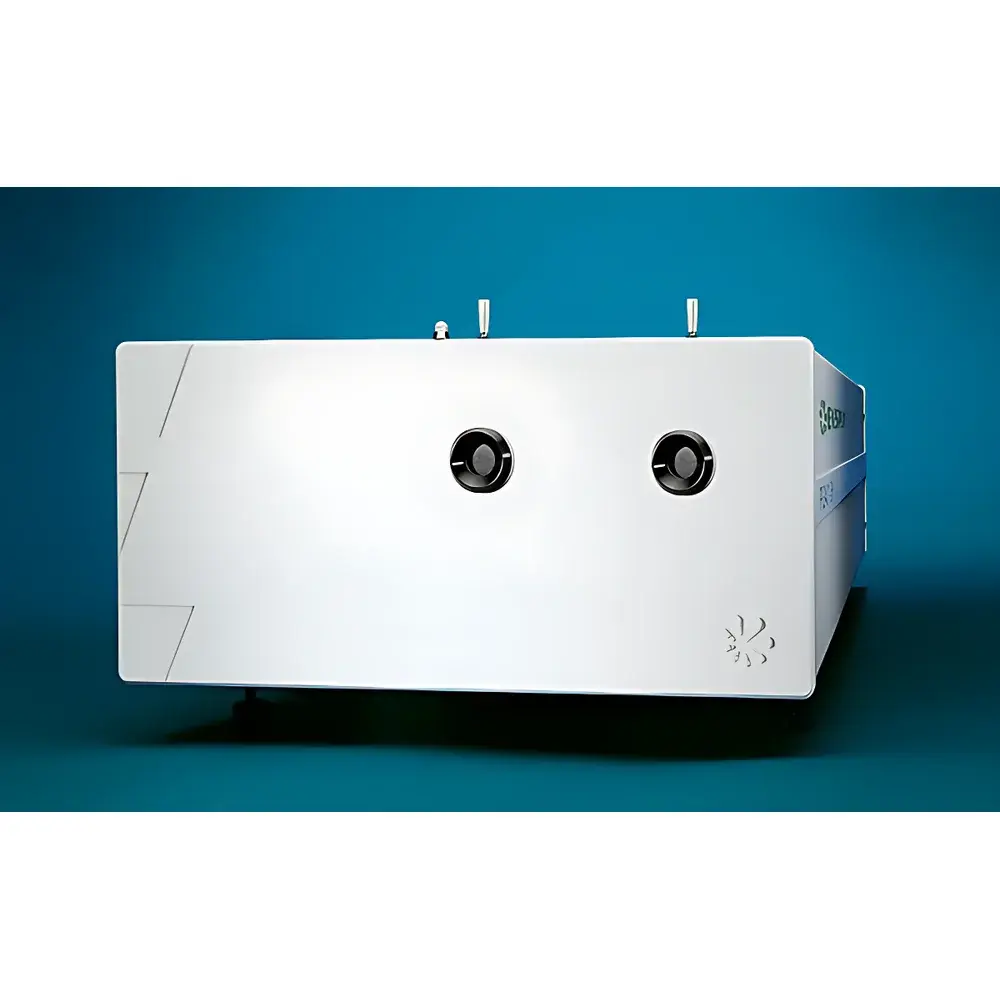
Ekspla PGX01 Picosecond Optical Parametric Amplifier (OPA)
| Brand | Ekspla |
|---|---|
| Origin | Lithuania |
| Manufacturer Type | OEM Manufacturer (not distributor) |
| Product Category | Imported Scientific Laser System |
| Model | PGX01 |
| Laser Type | Solid-State Pumped OPA |
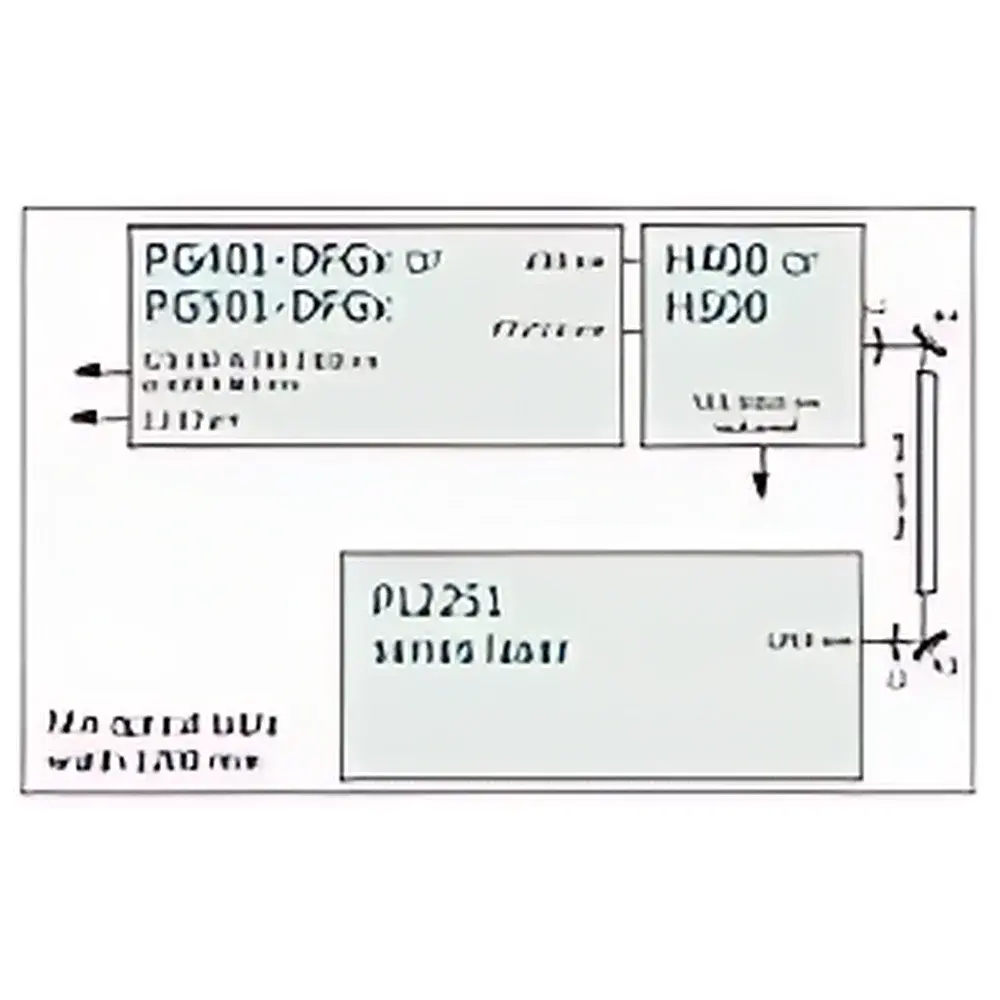
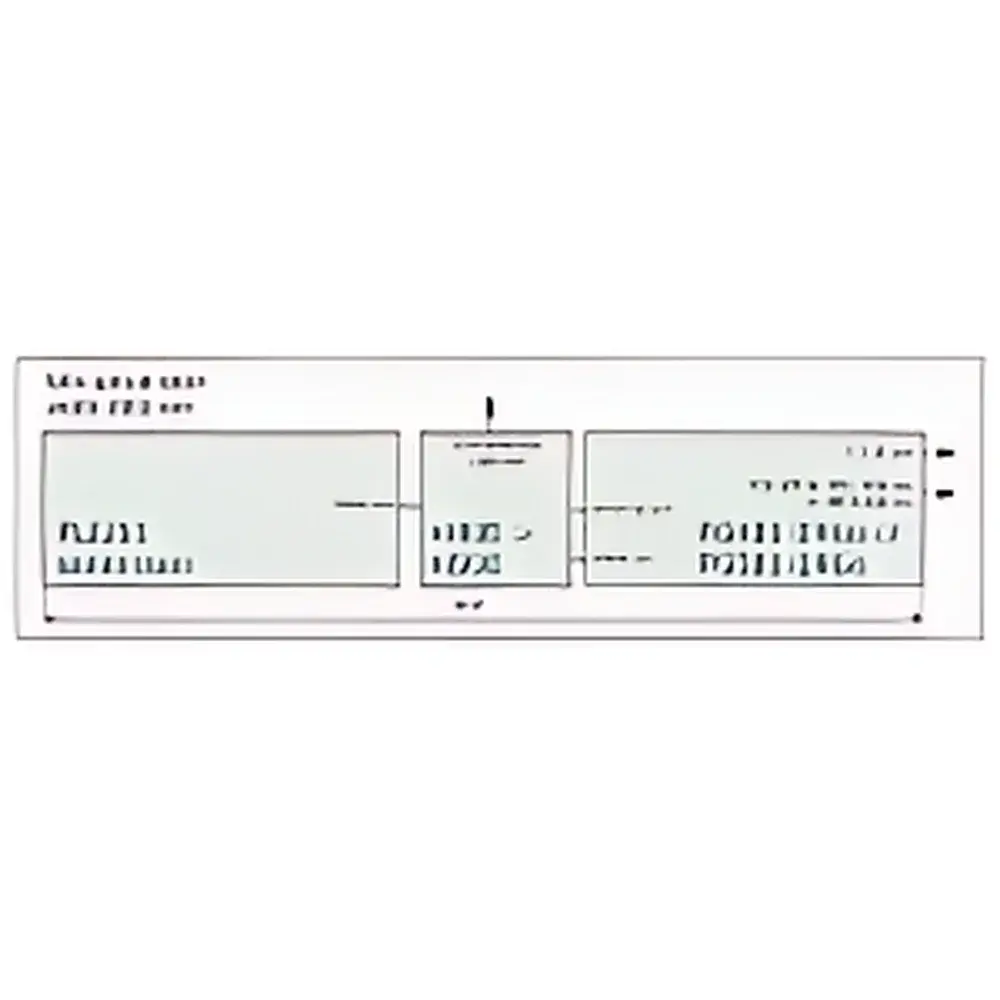
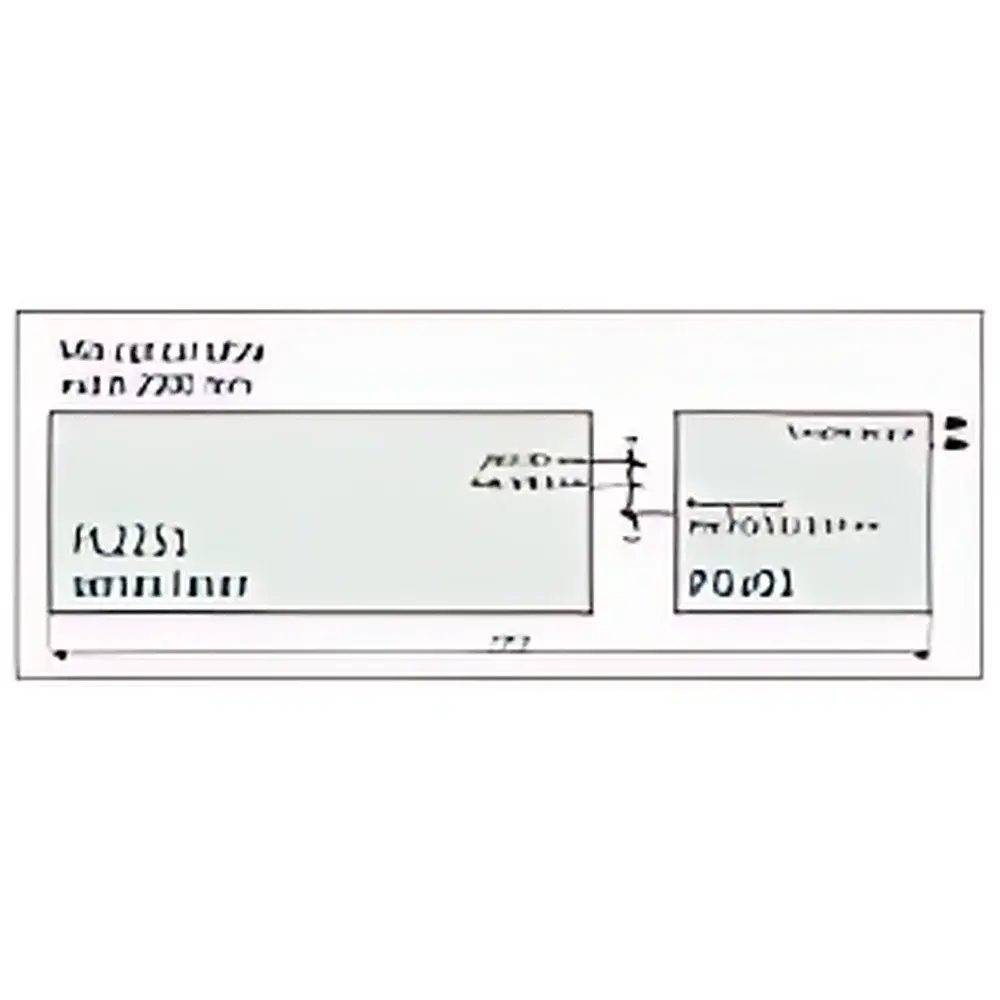
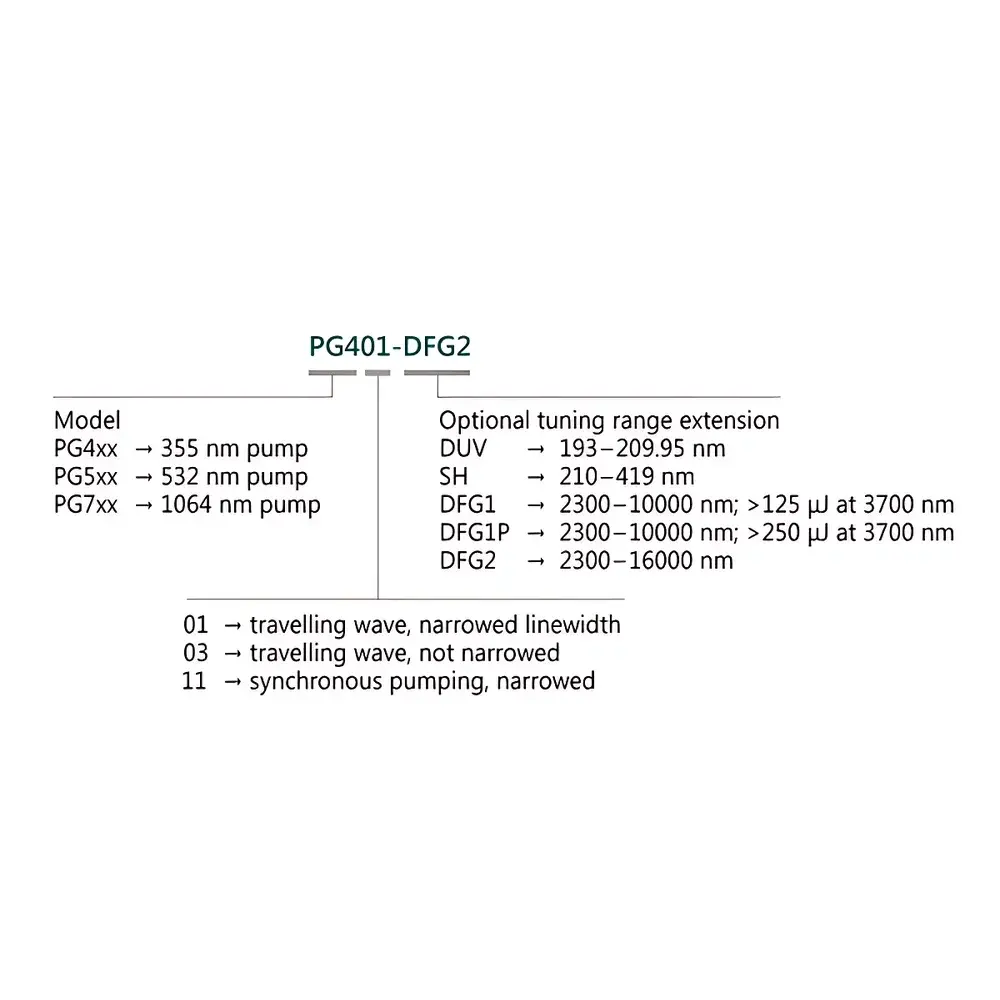
| Tuning Range | 193–2300 nm and 420–10000 nm (dual-stage configuration) |
| Pulse Width | <10 ps (FWHM, pump-limited) |
| Peak Power | >50 MW (at 1 kHz, 1 mJ pump) |
| Spectral Bandwidth | <6 cm⁻¹ (typical, signal/idler) |
| Tuning Mechanism | Motorized Grating & Crystal Angle Control |
| Interface | USB 2.0 (standard), RS-232 (optional) |
| Software Control | LabVIEW™ drivers included, PC-based GUI for full parameter automation |
| Compliance | CE marked, RoHS compliant, Class 4 Laser Product per IEC 60825-1 |
Overview
The Ekspla PGX01 is a high-performance, picosecond optical parametric amplifier engineered for ultrafast nonlinear optics research. Based on synchronously pumped, solid-state Nd:YAG or Nd:YLF laser architecture, the PGX01 delivers tunable, narrow-bandwidth output across two complementary spectral domains: deep ultraviolet (193–2300 nm) and near-to-mid-infrared (420–10000 nm). Its operation relies on noncollinear optical parametric amplification in β-barium borate (BBO) and potassium titanyl phosphate (KTP) crystals, enabling precise phase-matching control and exceptional pulse-to-pulse stability. With sub-10 ps pulse duration, >50 MW peak power at 1 kHz repetition rate, and spectral resolution better than 6 cm⁻¹, the system supports time-resolved measurements requiring high temporal coherence and minimal group delay dispersion. Designed for integration into advanced ultrafast laboratories, the PGX01 operates as a turnkey source for pump-probe spectroscopy, coherent Raman techniques, and surface-sensitive nonlinear optical microscopy.
Key Features
- Motorized, software-controlled tuning across two broad spectral ranges—193–2300 nm (UV–NIR) and 420–10000 nm (VIS–MIR)—without manual realignment
- Narrow spectral bandwidth (<6 cm⁻¹) achieved via intracavity etalon stabilization and precision crystal angle adjustment
- High peak power output (>50 MW) with excellent pulse energy stability (<1.5% RMS over 8 hours)
- Integrated USB 2.0 interface with full LabVIEW™ driver suite; optional RS-232 support for legacy control environments
- Compact, air-cooled design with industrial-grade mechanical housing and vibration-damped optical baseplate
- Compliant with IEC 60825-1 Class 4 laser safety standards; includes interlock-ready shutter interface and key-switch enable
Sample Compatibility & Compliance
The PGX01 is compatible with standard ultrafast optical tables, vacuum-compatible beamlines (with optional purged enclosure), and cryogenic sample stages operating from 4 K to 300 K. Its output beam exhibits M² <1.3 and divergence <1.5 mrad, facilitating efficient coupling into single-mode fibers, hollow-core waveguides, or confocal microscope objectives. The system meets ISO 10110 optical surface quality requirements for all internal optics and adheres to EU Directive 2014/30/EU (EMC) and 2011/65/EU (RoHS). For regulated environments—including GLP-compliant spectroscopy labs and pharmaceutical R&D facilities—the PGX01 supports audit-ready logging when paired with third-party data acquisition systems compliant with FDA 21 CFR Part 11 requirements.
Software & Data Management
The PGX01 ships with Ekspla’s proprietary OPA Control Suite—a Windows-based GUI enabling real-time wavelength selection, pulse energy monitoring, crystal positioning feedback, and automated scan sequencing. All parameters are accessible via LabVIEW™ VIs, MATLAB® instrument control toolbox, and Python (PyVISA) APIs. Timestamped metadata—including pump energy, crystal angles, ambient temperature, and shutter status—is embedded in HDF5-formatted output files. The system supports synchronized triggering with external detectors (e.g., streak cameras, gated ICCDs) at jitter <200 ps, ensuring phase-locked acquisition for femtosecond-resolution pump-probe experiments.
Applications
- Vibrational sum-frequency generation (v-SFG) spectroscopy for monolayer molecular orientation analysis at solid–liquid and solid–gas interfaces
- Surface second-harmonic generation (surface-SHG) for noninvasive characterization of centrosymmetric material symmetry breaking
- Coherent anti-Stokes Raman scattering (CARS) imaging with background-free vibrational contrast in biological tissues
- Z-scan measurements for third-order nonlinear susceptibility (χ⁽³⁾) quantification in novel 2D materials and perovskites
- Pump–probe transient absorption spectroscopy tracking excited-state dynamics in photocatalysts and quantum dots
- Laser-induced fluorescence (LIF) with tunable excitation for species-selective detection in combustion diagnostics and plasma chemistry
FAQ
What pump lasers are compatible with the PGX01?
The PGX01 is optimized for injection with frequency-doubled or tripled Nd:YAG (532 nm, 355 nm) or Nd:YLF (527 nm) picosecond oscillators delivering ≥1 mJ pulse energy at 1–10 kHz repetition rates.
Can the PGX01 be integrated into a vacuum beamline?
Yes—optional vacuum-compatible versions include CF-63 flanged output ports, bakeable kinematic mounts, and sealed motorized actuators rated for ≤10⁻⁶ mbar operation.
Is remote diagnostics supported?
Remote firmware updates and diagnostic log retrieval are enabled via SSH access to the onboard Linux controller; no proprietary cloud dependency is required.
Does the system include alignment aids?
Yes—integrated HeNe pilot beam, IR viewer compatibility, and real-time beam profiling via optional CMOS-based camera module with pixel-level intensity calibration.
What maintenance intervals are recommended?
Optical alignment verification every 6 months; BBO/KTP crystal inspection annually; full factory recalibration recommended every 24 months or after 5000 operating hours.





