
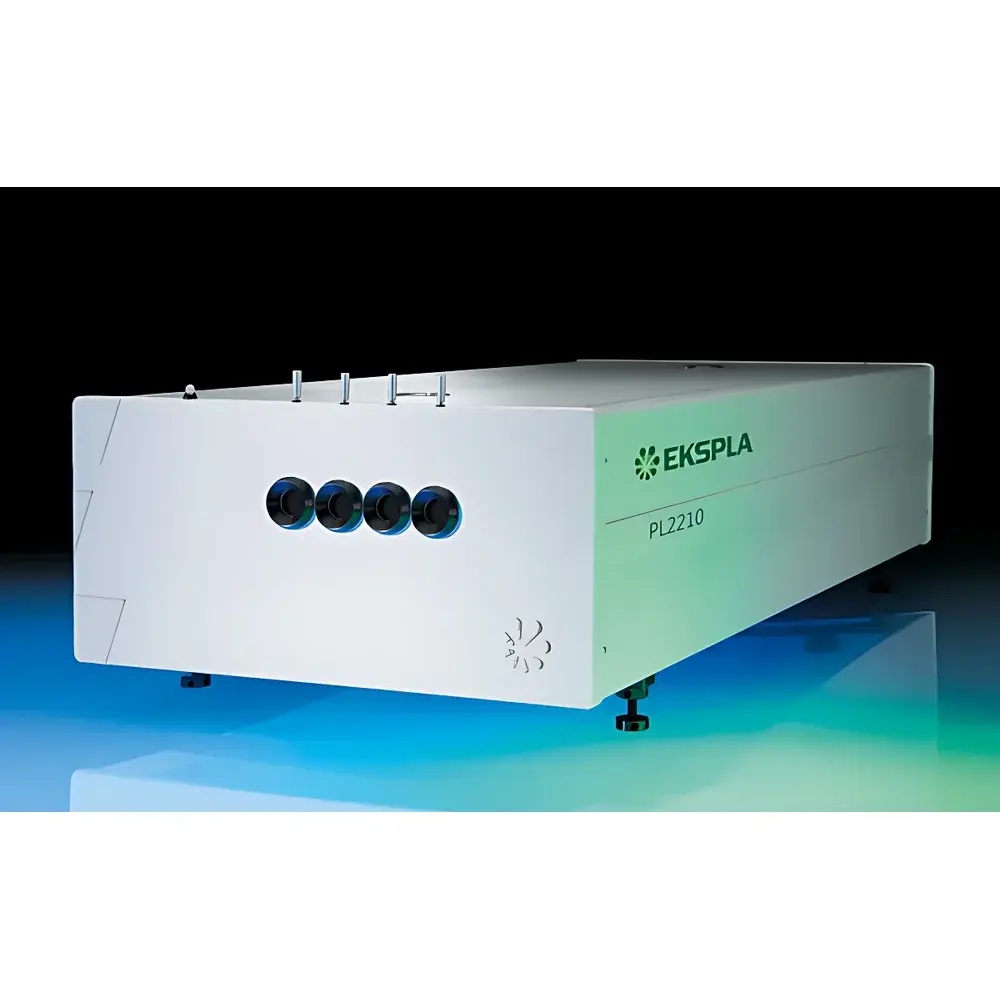
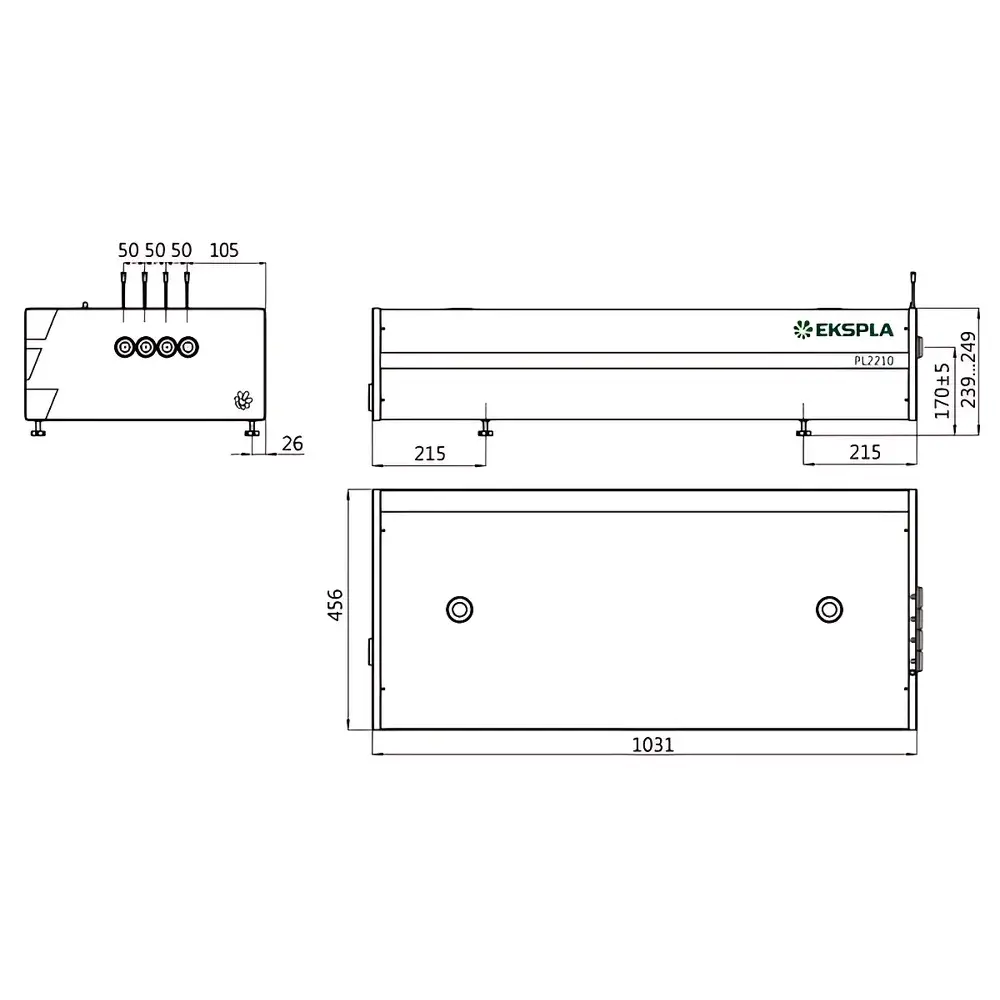
Ekspla PL2210 Picosecond Pulsed Laser System
| Brand | Ekspla |
|---|---|
| Origin | Lithuania |
| Manufacturer Type | Original Equipment Manufacturer (OEM) |
| Product Category | Imported Diode-Pumped Solid-State (DPSS) Picosecond Laser |
| Model | PL2210 |
| Pulse Energy (1064 nm) | 0.7 mJ (up to 2 kHz) |
| Pulse Duration (FWHM) | <80 ps |
| Repetition Rate | Up to 2 kHz |
| Cooling | Air-Cooled (No External Chiller Required) |
| Control Interface | USB (RS232 Optional), LabVIEW™ Drivers Included |
| Harmonic Generation | Optional Temperature-Stabilized SHG/THG/FHG (LBO/BBO Crystals) |
| SYNC OUT Jitter | <10 ps RMS |
| Trigger Lead Adjustment | 0.25 ns Steps, Up to ±150 µs (PRETRIG Option) |
Overview
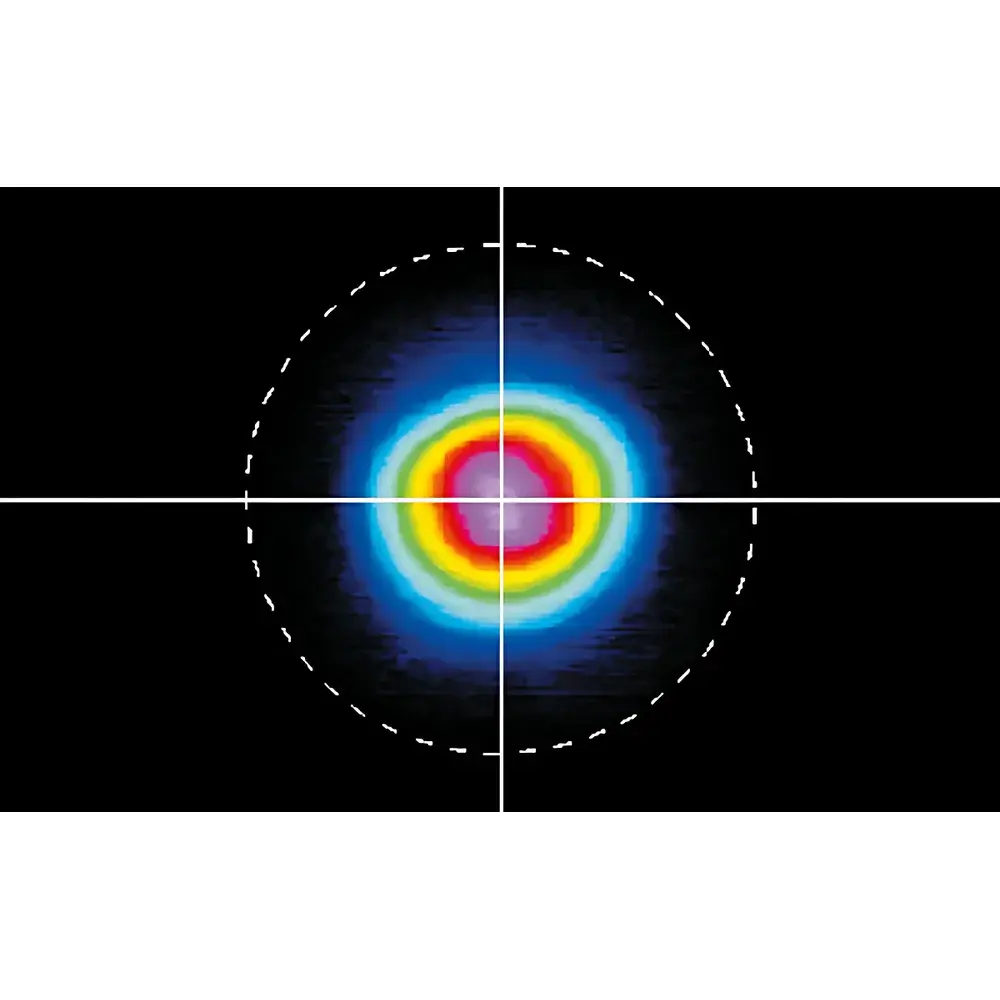
The Ekspla PL2210 is a diode-pumped, air-cooled, mode-locked Nd:YAG picosecond laser system engineered for high-repetition-rate, high-stability ultrafast applications. Operating at the fundamental wavelength of 1064 nm, it delivers sub-80 ps pulses with up to 0.7 mJ pulse energy at repetition rates scalable from single-shot to 2 kHz. Its monolithic, all-solid-state architecture eliminates reliance on water cooling or flashlamp pumping—ensuring robustness, long-term stability, and minimal maintenance in demanding laboratory and industrial environments. The laser employs passive mode-locking combined with active cavity control to achieve excellent pulse-to-pulse energy stability (<1.5% RMS over 8 hours) and superior beam quality (M² < 1.3), critical for nonlinear optical conversion and time-resolved measurements. Designed in accordance with ISO 11146 and IEC 60825-1 safety standards, the PL2210 integrates comprehensive interlock circuitry, Class 4 laser housing compliance, and real-time internal diagnostics for operational integrity.
Key Features
- Diode-pumped, air-cooled Nd:YAG gain medium—no external chiller or deionized water loop required
- Turn-key operation with integrated thermal management and automatic alignment stabilization
- Low-jitter synchronization output (<10 ps RMS jitter) with digitally adjustable lead/delay (±150 µs range, 0.25 ns resolution)
- Remote control via intuitive backlit keypad or PC-based GUI (Windows® compatible) with full parameter logging
- LabVIEW™ drivers and SCPI-compliant command set for seamless integration into automated test benches and custom DAQ systems
- Optional pulse picker (–PC option) enabling integer division of repetition rate down to single-shot mode and suppression of quasi-CW background at 1064 nm
- Phase-locked loop (–PLL) and femtosecond-synchronization (–FS) options for precise timing alignment with external RF sources or other ultrafast laser systems
Sample Compatibility & Compliance
The PL2210 is compatible with standard optical tables, vacuum chambers, and ultra-high-vacuum (UHV) beamlines when equipped with appropriate beam delivery optics. Its TEM₀₀ Gaussian output profile ensures efficient coupling into single-mode fibers, OPO cavities, and streak camera slit apertures. Harmonic generation modules (SHG/THG/FHG) utilize angle-tuned, oven-controlled LBO and BBO crystals meeting ISO 10110 surface quality specifications; harmonic separation optics provide >30 dB spectral isolation between harmonics. The system complies with EU CE marking directives (2014/35/EU, 2014/30/EU), RoHS 2011/65/EU, and laser safety requirements per EN 60825-1:2014. All firmware and control software support audit trails and user-access-level configuration—facilitating GLP/GMP-aligned workflows where traceability and instrument qualification are mandatory.
Software & Data Management
Control software includes real-time monitoring of diode current, cavity temperature, pulse energy (via internal photodiode calibration), and repetition rate stability. Logged data is exported in CSV and HDF5 formats, supporting post-acquisition analysis in MATLAB®, Python (NumPy/Pandas), or Igor Pro. The LabVIEW™ driver package provides VIs for pulse energy feedback loops, external trigger gating, and synchronized acquisition with oscilloscopes or time-correlated single-photon counting (TCSPC) modules. Firmware updates are performed via secure USB interface with SHA-256 signature verification. Optional FDA 21 CFR Part 11 compliance package includes electronic signatures, role-based access control, and immutable audit logs for regulated environments.
Applications
- Time-resolved fluorescence spectroscopy and transient absorption measurements requiring precise pump-probe delay control
- Optical parametric generation (OPG), amplification (OPA), and oscillation (OPO) pumping with narrow spectral bandwidth and high temporal contrast
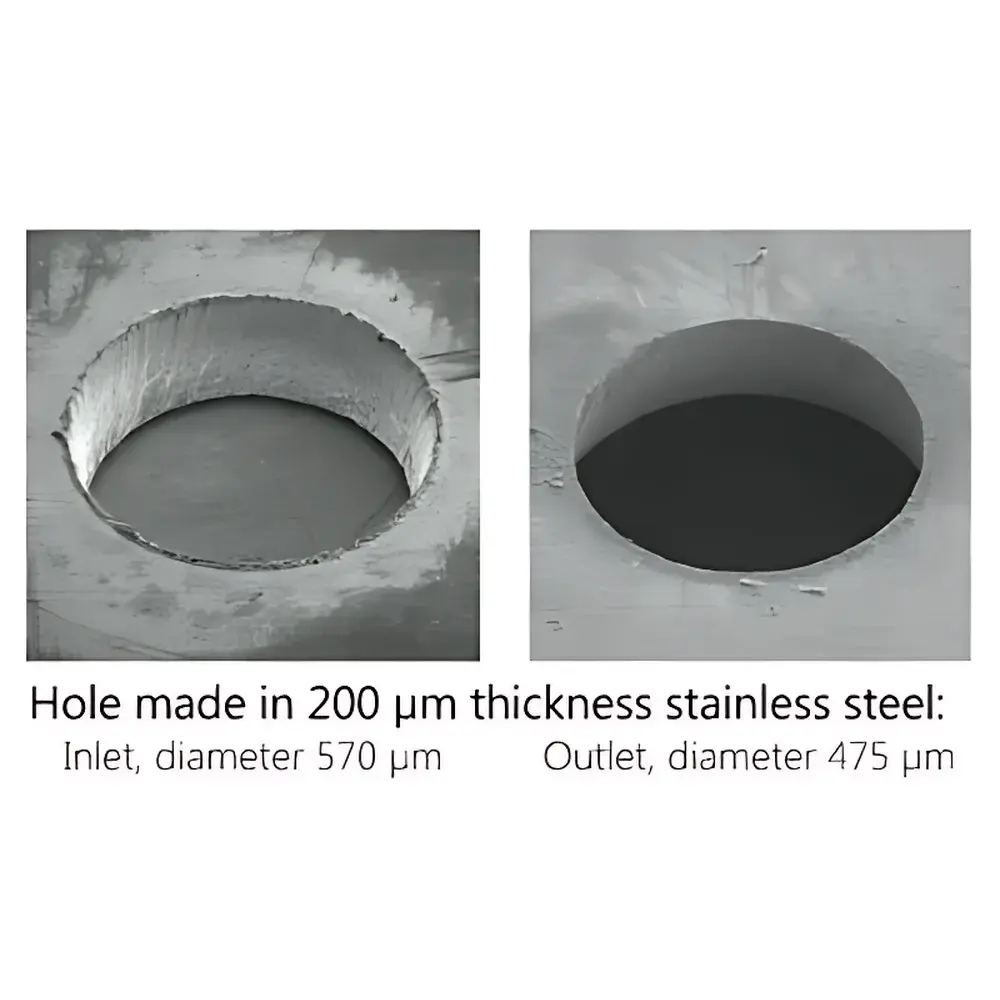
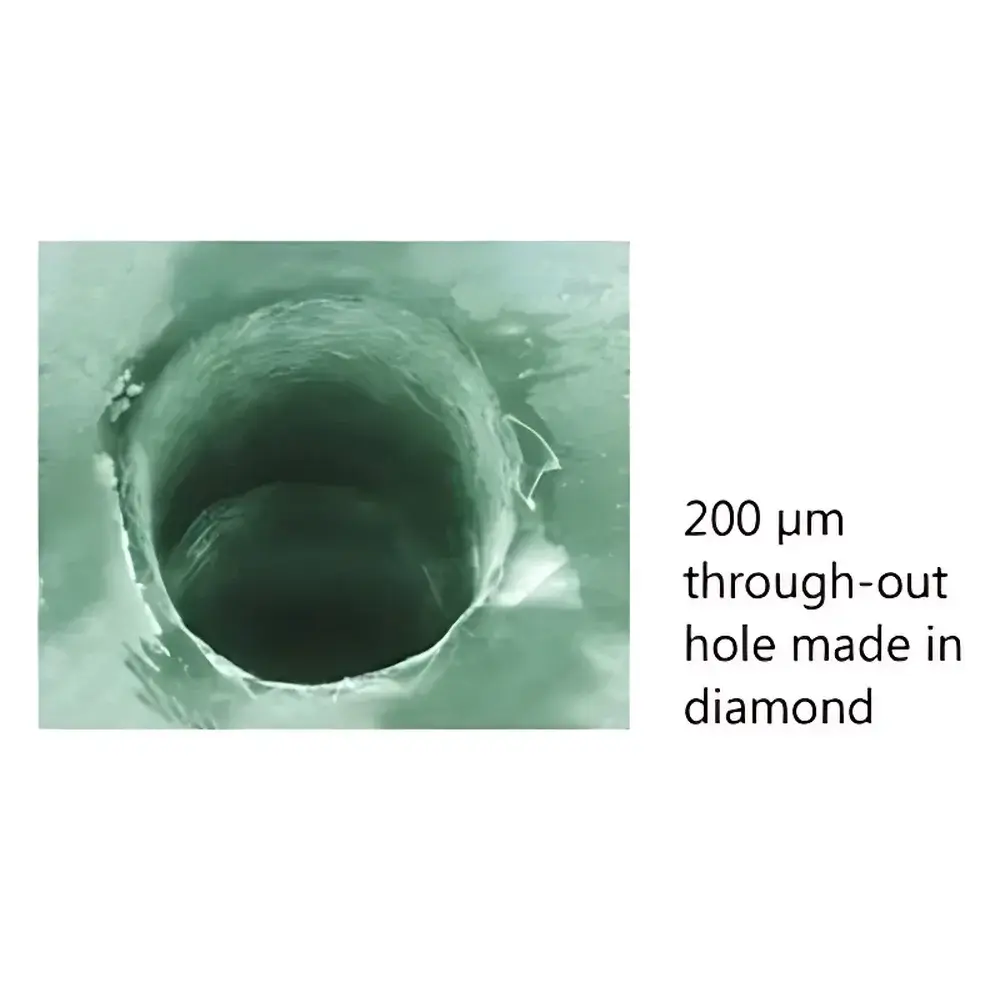
- Ultrafast micromachining of transparent dielectrics, thin-film ablation, and laser-induced forward transfer (LIFT)
- Streak camera triggering for plasma diagnostics, carrier dynamics in semiconductors, and combustion imaging
- Nonlinear microscopy (e.g., multiphoton excitation, second-harmonic generation imaging) with reduced photodamage
- Terahertz generation via optical rectification in ZnTe or GaP crystals
FAQ
What is the typical pulse duration and energy stability specification for the PL2210 at 1064 nm?
The PL2210 delivers pulses with FWHM <80 ps and pulse energy stability better than ±1.5% RMS over 8-hour continuous operation under ambient temperature fluctuations of ±2 °C.
Can the PL2210 be synchronized to an external 80 MHz oscillator?
Yes—using the –FS (femtosecond synchronization) option, the laser’s cavity can be phase-locked to an external reference with sub-100 fs timing jitter relative to the master oscillator.
Is harmonic generation included as standard or optional?
Harmonic generation modules (SHG/THG/FHG) are optional and field-installable; each includes temperature-stabilized crystal ovens, motorized tuning stages, and spectral filtering optimized for >75% conversion efficiency at rated input power.
Does the –PC pulse picker option affect harmonic output power?
Yes—the –PC option reduces both fundamental and harmonic output by approximately 20% due to intracavity loss introduced by the electro-optic modulator; however, it enables precise repetition rate control and eliminates low-intensity CW background critical for high-dynamic-range detection.
What documentation is provided for IQ/OQ/PQ validation?
Ekspla supplies a Factory Acceptance Test (FAT) report, detailed optical and electrical schematics, calibration certificates traceable to NIST standards, and a GAMP 5-aligned validation protocol template for user-executed installation, operational, and performance qualification.





